
BuddhistCatholicContemplativeEvangelicalGeneral ChristianHinduJewishLatter-day SaintMuslimNew VisionsProgressive Christian
Beliefs
- Buddhist
- Catholic
- Contemplative
- Evangelical
- General Christian
- Hindu
- Jewish
- Latter-day Saint
- More Voices
- Muslim
- New Visions
- Pagan
- Progressive Christian
Topics
- Religion News
- Food and Religion
- Sports and Religion
- Religious Art
- Religious Music and Entertainment
- Religious Events
- History and Religion
- Style and Religion
- Politics and Religion
- Women in Religion
- Recreation Outdoors and Religion
- Business Finance and Religion
- Careers Workplace and Religion
- Education and Religion
- Family Parenting and Religion
- Health Fitness and Religion
- Home and Religion
- Relationships and Religion
- Technology and Religion
- Travel and Religion
Columnists
- Buddhist Columnists
- Business Finance and Religion Columnists
- Careers Workplace and Religion Columnists
- Catholic Columnists
- Contemplative Columnists
- Education and Religion Columnists
- Evangelists Columnists
- Family Parenting and Religion Columnists
- General Christian Columnists
- Health Fitness and Religion Columnists
- Hindu Columnists
- History and Religion Columnists
- Home and Religion Columnists
- Jewish Columnists
- More Voices Columnists
- Latter Day Columnists
- Muslim Columnists
- New Visions Columnists
- Nonreligious Columnists
- Pagan Columnists
- Politics and Religion Columnists
- Progressive Columnists
- Recreation Outdoors and Religion Columnists
- Relationships and Religion Columnists
- Religion News Columnists
- Religious Art Columnists
- Religious Events Columnists
- Religious Music and Entertainment Columnists
- Sports and Religion Columnists
- Style and Religion Columnists
- Technology and Religion Columnists
- Travel and Religion Columnists
- Women in Religion Columnists
Resource Library
- 2026 Calendar
- Library of World Religions
- The 100 Most Holy Places on Earth
- Patheos Answers
- Podcasts
- Videos
- Faith Leaders Database
- Anglican Episcopalian
- Bahai
- Baptist
- Buddhism
- Christianity
- Confucianism
- Eastern Orthodoxy
- Hinduism
- Holiness and Pentecostal
- ISKCON
- Islam
- Judaism
- Lutheran
- Methodist
- The Church of Jesus Christ of Latter-day Saints
- New Age
- Paganism
- Presbytarian and Reformed
- Protestantism
- Religion Behind the Scenes
- Roman Catholic
- Scientology
- Shia Islam
- Sikhism
- Sufism
- Sunni Islam
- Taoism
- Zen
- See all religions
Research Tools
 Ad-Free & Subscriber Log-In Subscription Support
Ad-Free & Subscriber Log-In Subscription Support
Follow Patheos 

- Trending:
- Forgiveness
- |
- Marriage
- |
- Consciousness
- |
- Death Penalty
- |
- Election
- |
- Halloween

- Home
- General Christian
- Religion News
- Comparison Between Religious Conversion and Deconversion
Comparison Between Religious Conversion and Deconversion
Last updated on: January 3, 2023 at 11:59 am by Joel Furches
Comparison Between Religious Conversion and Deconversion 2023-01-03T11:59:19-05:00 Joel Furches
Patheos Explore the world's faith through different perspectives on religion and spirituality! Patheos has the views of the prevalent religions and spiritualities of the world.

It has long been argued in religious conversion studies whether there is a significant difference between conversion and deconversion. One line of reasoning goes something like this: every conversion to something is a deconversion away from something else. So that a person who becomes a Christian is changing a great deal of his or her worldview as a result of the conversion, and discarding old notions as a result. The reverse would also be true. A person deconverting from Christianity would be changing worldviews to adopt new standards and ideas.
As a researcher, I reject this idea. Deconversion is marked by a significant and ongoing rejection of and aversion towards religious ideas. This is signified by the fact that the self-labeled atheist identifies specifically with his or her rejection of religion, not an embrace of some alternative to religion (as opposed to, for instance, a Christian who converts to Islam, and identifies with a new and distinct religion). It is also signified by the rising prominence of the idea of “spiritual abuse” and “religious trauma syndrome” which are relatively new terms and ideas in the literature, but also increasingly visible in the “deconstruction” community.
The question then becomes, can any sort of comparison be made between models of religious conversion and models of religious deconversion? In order to examine this question, let us look at one of the earliest and most influential models of religious conversion:
THE LOFTLAND AND STARK MODEL FOR CONVERSION HAS SEVEN STEPS. ROUGHLY:
1.) Chronic Stressor
2.) Problem-Solving Behavior
3.) Religious Seeking
4.) Encounter Divine Precept (turning point or moment of inspiration)
5.) Forms bond with one or more religious individuals
6.) Reduction of bonds with extra-religious individuals
7.) Increase in religious interactions
I COULD FORM A ROUGHLY ANALOGICAL DECONVERSION MODEL AS FOLLOWS:
1.) Introduction of a new life stressor
2.) solution seeking behavior
3.) failure in finding religious solutions
4.) trigger event (a specific event or doubt that gives the individual permission to begin questioning their beliefs)
5.) deconstruction or tinkering
6.) rejection of religious practices and community
7.) seeking replacement community/practices
This is a somewhat modified version of my five-stage model, but it does contain some important steps not included in my original model.
Notice that in step 7, the person has not rejected the religious community in favor of a new community. Rather, they seek a new community AFTER they have left the religion. It was the rejection of the religion, not the introduction of a new community which drove the behavior.
On the other hand, religious conversion frequently FOLLOWS the introduction to a new community. In other words, they become attracted to a person or community, and adopt those beliefs and practices following that attraction.
So whereas conversion is the acceptance of a new life based on an attraction to that community, DEconversion is the rejection of a community followed by the search for a substitute lifestyle and community.
Search for Community
This search for a new community is significant. Among the most powerful mental health benefits of religion is the in-built sense of community and shared values it offers. As I have stated elsewhere, the type of person who deconverts is the type of person who is deeply involved in his or her religion. Going from having a strong community to having no community at all is a difficult, and often ongoing problem. People who adopt the label of “atheist” frequently report feeling marginalized, and compare the process of revealing their atheism to friends and family to the so-called “coming out of the closet” for homosexual individuals. They indicate that this is frequently accompanied by rejection and isolation from family and peers.
This is very much the reverse of standard conversion models, which all report the discovery and acceptance into a community as the hallmark of conversion. I am not aware of any models that exist which detail how a person converts to a religion in a private way, involving no religious community. No doubt such things have happened at some point in history, but we have no data by which to model this process.
On the other hand, deconversion is almost universally a very private process, and deconverts report a sense of isolation and mental anguish associated with gradually losing their beliefs (although frequently a sense of relief or freedom upon discarding the beliefs entirely). They report that their religious peers are unwilling to discuss their doubts and questions, and they frequently begin to engage with atheist or skeptic materials because these better reflect their developing thoughts and personal problems with religion.
Conclusion
There are some shared features that accompany any kind of change in worldview, however there is something particularly unique about becoming convinced of the wrongness of your existing worldview apart from adopting an equivalent replacement view. Herein lies the fundamental difference between deconversion and conversion.
Previous Post

October 10, 2022
The Deconversion Crisis
Next Post

October 20, 2022 What Christian Denomination Should You Belong To? Here's How To Choose
Browse Our Archives
Select a Category biography Conversion Stories Deconversion Stories Historical Religious Figures Psychology Uncategorized
Select a Month December 2024 November 2024 September 2024 August 2024 July 2024 March 2024 January 2024 December 2023 November 2023 October 2023 September 2023 August 2023 July 2023 June 2023 May 2023 April 2023 March 2023 February 2023 January 2023 December 2022 November 2022 October 2022 September 2022
Follow Us!
TAKE THE
Religious Wisdom Quiz
What does "Ichabod" mean?
Select your answer to see how you score.
Blessed son God's gift Holy child No glory
Related posts from Switching Sides

Complex Simplicity - A Book Review

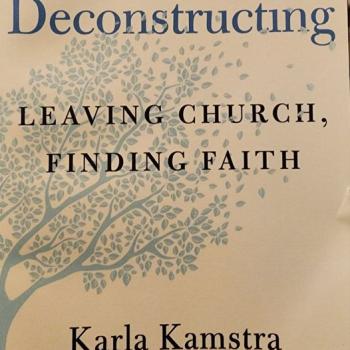
Book Review: Deconstructing, Leaving Church, Finding Faith

Consequences of Ideas: Philosophy and Deconversion
TRENDING AT PATHEOS General Christian

Seventy and Five Years Old: God Still Starts...
There is a small detail tucked into Genesis 12 that I skipped...

A Biblical Vision of Success in Christian Life...
The Concern and Quest Recent trends and tendencies I note around me...

Indigenous Peoples’ Day and the Church
Indigenous' Peoples Day or Columbus Day? Depending on where you live...

When Spiritual Growth Looks Like Losing Ground
Four Passive Spiritual Disciplines: An Introduction When I was a college freshman,...

Faith and Finding Your Current Season
“To everything there is a season,” Ecclesiastes tells us, “and a time...

Did Jesus Fear God's Wrath in Gethsemane?
That Time Jesus Was Terrified Before we begin, let me say at...
view all General Christian blogs
Ad-Free & Subscriber Log-In Subscription Support
- About Us
- 2026 Calendar
- Videos
- Podcasts
- Library of World Religions
- Faith In Media Tracker
- Advertise With Us
- Write for Us
- Privacy Policy
- Terms of Service
- Do Not Sell My Data
- Contact Us
- Radiant Digital
- Manage Newsletter Subscriptions
- Unsubscribe From Notifications
- Sitemap
Copyright 2008-2026, Patheos. All rights reserved.
Subscription Support Ad-Free & Subscriber Log-In
Follow Patheos