
BuddhistCatholicContemplativeEvangelicalGeneral ChristianHinduJewishLatter-day SaintMuslimNew VisionsProgressive Christian
Beliefs
- Buddhist
- Catholic
- Contemplative
- Evangelical
- General Christian
- Hindu
- Jewish
- Latter-day Saint
- More Voices
- Muslim
- New Visions
- Pagan
- Progressive Christian
Topics
- Religion News
- Food and Religion
- Sports and Religion
- Religious Art
- Religious Music and Entertainment
- Religious Events
- History and Religion
- Style and Religion
- Politics and Religion
- Women in Religion
- Recreation Outdoors and Religion
- Business Finance and Religion
- Careers Workplace and Religion
- Education and Religion
- Family Parenting and Religion
- Health Fitness and Religion
- Home and Religion
- Relationships and Religion
- Technology and Religion
- Travel and Religion
Columnists
- Buddhist Columnists
- Business Finance and Religion Columnists
- Careers Workplace and Religion Columnists
- Catholic Columnists
- Contemplative Columnists
- Education and Religion Columnists
- Evangelists Columnists
- Family Parenting and Religion Columnists
- General Christian Columnists
- Health Fitness and Religion Columnists
- Hindu Columnists
- History and Religion Columnists
- Home and Religion Columnists
- Jewish Columnists
- More Voices Columnists
- Latter Day Columnists
- Muslim Columnists
- New Visions Columnists
- Nonreligious Columnists
- Pagan Columnists
- Politics and Religion Columnists
- Progressive Columnists
- Recreation Outdoors and Religion Columnists
- Relationships and Religion Columnists
- Religion News Columnists
- Religious Art Columnists
- Religious Events Columnists
- Religious Music and Entertainment Columnists
- Sports and Religion Columnists
- Style and Religion Columnists
- Technology and Religion Columnists
- Travel and Religion Columnists
- Women in Religion Columnists
Resource Library
- 2026 Calendar
- Library of World Religions
- The 100 Most Holy Places on Earth
- Patheos Answers
- Podcasts
- Videos
- Faith Leaders Database
- Anglican Episcopalian
- Bahai
- Baptist
- Buddhism
- Christianity
- Confucianism
- Eastern Orthodoxy
- Hinduism
- Holiness and Pentecostal
- ISKCON
- Islam
- Judaism
- Lutheran
- Methodist
- The Church of Jesus Christ of Latter-day Saints
- New Age
- Paganism
- Presbytarian and Reformed
- Protestantism
- Religion Behind the Scenes
- Roman Catholic
- Scientology
- Shia Islam
- Sikhism
- Sufism
- Sunni Islam
- Taoism
- Zen
- See all religions
Research Tools
 Ad-Free & Subscriber Log-In Subscription Support
Ad-Free & Subscriber Log-In Subscription Support
Follow Patheos 

- Trending:
- Forgiveness
- |
- Marriage
- |
- Consciousness
- |
- Death Penalty
- |
- Election
- |
- Halloween

- Home
- General Christian
- Religion News
- Losing my Religion: Deconversion or Disaffiliation?
Losing my Religion: Deconversion or Disaffiliation?
Last updated on: January 3, 2023 at 11:56 am by Joel Furches
Losing my Religion: Deconversion or Disaffiliation? 2023-01-03T11:56:20-05:00 Joel Furches
Patheos Explore the world's faith through different perspectives on religion and spirituality! Patheos has the views of the prevalent religions and spiritualities of the world.

The first several articles in this column focused on the history of conversion research. Understanding how religious conversion works is important to understanding how deconversion works. But it has come time to dig into the features of deconversion.
Deconversion research is still in its infancy in comparison to conversion research. And so the first task of the researcher is to define what “deconversion” means. The leading figure in deconversion research is currently Dr. John Marriott. In his book The Anatomy of Deconversion he says, “the term deconversion refers to the rejection of Christian beliefs, disengagement from a Christian community, and having no religious affiliation.”
This casts a broader net than one might think. The first volume of the Atheism and Secularity compendium throws out dozens of terms to refer to individuals not associating with religion, including “secular, irreligious, nonreligious, and antireligious.” Each of these terms has its own subtle distinction from every other, even if they all share the common feature of not being religious. One might add to this list the terms “agnostic,” and “apatheist,” which mean “don’t know” and “don’t care” respectively. The Pew Report Survey offers four options for those who do not associate with religion: atheist, agnostic, spiritual-but-not-religious, and the infamous “none.”
As of this writing, the box that is getting checked more and more frequently on these forms is “none.”
Surely there exists some level of nuance between a person who exits their religious circle, sheds their religious beliefs, and then checks the “none” box, versus the person who checks the “atheist” box. Atheism, after all, makes certain definite statements about the nature of religion and the approach to God. “None” is a failure to commit to any position, and stays out of the religion game entirely – including attempts to discredit or debunk religion.
For Dr. Marriott, it matters not which category or label the person lands upon once they exit their religious tradition, just that the exit occurs. For this writer, however, an important distinction must be made.
Labels for the Non-religious
Many years ago, when Christianity was the social norm and Communism was preceded by the adjective “Godless,” people exited or failed to enter religious traditions, but only a fringe of the population would go so far as to adopt the term “atheist.” It was a bold and aggressive stance to take, and would require some justification from society at large. In most cases, these religious exiters would remain “cultural” or “nominal” Christians, or they would back out of the religion game entirely and assert that it “just isn’t my thing.” The church tended to differentiate between those who left religion and denied God, versus those who quietly backed out of the church never to return. The former were “apostates”, and the latter were “backsliders.” Generally, the Church assumed that apostates were probably never religious to begin with, whereas backsliders were still “saved” but needed to get back on track with God.
In modern days, this distinction still exists. There are those who exit the church never to return, but do not immediately open a YouTube channel to rail against the evils of religion, write blogs condemning the Evangelical Right, or publish e-books debunking God. In fact, some of these people might still admit that there is probably some kind of spiritual force out there, and may even retain the moral notions and political ideas they held when attending church. However it isn’t of interest to them, and they prefer to stay out of the God game entirely.
And then there is the strikingly expanding subculture of the irreligious – meaning those who take firm stances in opposition to religion and the idea of God or the supernatural. There are a seemingly endless litany of labels adopted by this irreligious subculture, but for the purposes of deconversion research, we are primarily interested in whether the person leaves the religion game entirely, or takes an aggressively anti-religious stance. Because presumably there are different processes by which the two individuals exit their churches.
For the purposes of this column, “deconversion” refers to the process by which one goes from identifying as “Christian,” and lands on identifying as “atheist” or some similar anti-religious label. For those who end up in the “None” column, we will use the term “disaffiliation.”
Disaffiliation
William James spoke of religious conversion as a shift of emphasis in identity. His illustration was this: Let’s say a president goes out camping. He discards the suit, the office, the political rhetoric, and puts on outdoorsman clothes and lingo. Suddenly what you’re seeing is an outdoorsman, not a president. Same guy, and the president is still in there, but he’s shifted his behavior to emphasize a different set of characteristics. This is a good illustration for Disaffiliation. Imagine a guy who goes to church on Sunday, hangs out with work buddies during the week talking about their favorite Netflix series, goes online and argues about politics, and then plays sports on Saturdays. Most people are like this: they have a range of interests and a variety of social groups. Under Disaffiliation, other interests begin to rise in priority for the person and religion becomes less of a priority. The person gradually shifts their identity to favor other interests over religion until religious interests are entirely discarded.
Once religious interests are discarded, the person may or may not experience a change in personal values. They may or may not begin to find religion distasteful. But one thing separates them from a deconvert: their identity no longer has any relationship with religion. Atheism is a stance which remains in relationship to religion, even if that relationship is defined by its opposition to religion. There is still a great deal more commitment when checking the “Atheist” box than there is the “None” box.
Deconversion
As discussed in the previous section, disaffiliates generally consider their religion as one facet of a number of competing interests. Deconverts, on the other hand, are almost always strongly committed to their religious identity. Religion forms the core of their self-image such that stepping away from religion generates an identity crisis. The resolution to this crisis is to adopt an identity which stands in opposition to his or her previous identity as a Christian.
One possible exception to this involves individuals who have suffered abuse within their religious context. The radical separation from the church is not in response to an identity crisis so much as it is hostility toward the community he or she sees as responsible for his or her abuse.
Conclusion
For the purposes of this column, when talking about “deconversion” we are talking about individuals who once reported their identity as “Christian” but began, at some point, to report their identity as some flavor of anti-religious, be that atheist, agnostic, skeptic, free thinker, or similar labels.
This column will primarily focus on deconverts rather than disaffiliates.
Previous Post

September 13, 2022
Human Sacrifice and Witch Hunts
Next Post

September 26, 2022 Five Things that Motivate Deconversion
Browse Our Archives
Select a Category biography Conversion Stories Deconversion Stories Historical Religious Figures Psychology Uncategorized
Select a Month December 2024 November 2024 September 2024 August 2024 July 2024 March 2024 January 2024 December 2023 November 2023 October 2023 September 2023 August 2023 July 2023 June 2023 May 2023 April 2023 March 2023 February 2023 January 2023 December 2022 November 2022 October 2022 September 2022
Follow Us!
TAKE THE
Religious Wisdom Quiz
Who did Jesus call out of the tomb after four days?
Select your answer to see how you score.
Lazarus Bartimaeus Jairus Mary
Related posts from Switching Sides
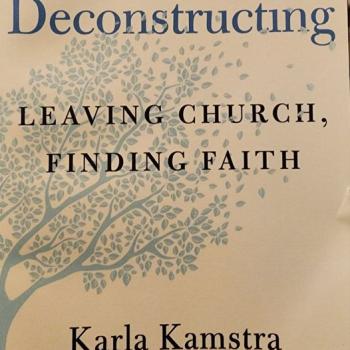
Book Review: Deconstructing, Leaving Church, Finding Faith

Consequences of Ideas: Philosophy and Deconversion
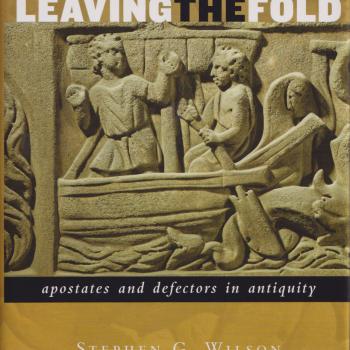
Deconversion in the Ancient World: The Research

Craving Confidence: A Simple Model to Explain Deconversion
TRENDING AT PATHEOS General Christian

Seventy and Five Years Old: God Still Starts...
There is a small detail tucked into Genesis 12 that I skipped...

A Biblical Vision of Success in Christian Life...
The Concern and Quest Recent trends and tendencies I note around me...

Indigenous Peoples’ Day and the Church
Indigenous' Peoples Day or Columbus Day? Depending on where you live...

When Spiritual Growth Looks Like Losing Ground
Four Passive Spiritual Disciplines: An Introduction When I was a college freshman,...

Faith and Finding Your Current Season
“To everything there is a season,” Ecclesiastes tells us, “and a time...

Did Jesus Fear God's Wrath in Gethsemane?
That Time Jesus Was Terrified Before we begin, let me say at...
view all General Christian blogs
Ad-Free & Subscriber Log-In Subscription Support
- About Us
- 2026 Calendar
- Videos
- Podcasts
- Library of World Religions
- Faith In Media Tracker
- Advertise With Us
- Write for Us
- Privacy Policy
- Terms of Service
- Do Not Sell My Data
- Contact Us
- Radiant Digital
- Manage Newsletter Subscriptions
- Unsubscribe From Notifications
- Sitemap
Copyright 2008-2026, Patheos. All rights reserved.
Subscription Support Ad-Free & Subscriber Log-In
Follow Patheos