
BuddhistCatholicContemplativeEvangelicalGeneral ChristianHinduJewishLatter-day SaintMuslimNew VisionsProgressive Christian
Beliefs
- Buddhist
- Catholic
- Contemplative
- Evangelical
- General Christian
- Hindu
- Jewish
- Latter-day Saint
- More Voices
- Muslim
- New Visions
- Pagan
- Progressive Christian
Topics
- Religion News
- Food and Religion
- Sports and Religion
- Religious Art
- Religious Music and Entertainment
- Religious Events
- History and Religion
- Style and Religion
- Politics and Religion
- Women in Religion
- Recreation Outdoors and Religion
- Business Finance and Religion
- Careers Workplace and Religion
- Education and Religion
- Family Parenting and Religion
- Health Fitness and Religion
- Home and Religion
- Relationships and Religion
- Technology and Religion
- Travel and Religion
Columnists
- Buddhist Columnists
- Business Finance and Religion Columnists
- Careers Workplace and Religion Columnists
- Catholic Columnists
- Contemplative Columnists
- Education and Religion Columnists
- Evangelists Columnists
- Family Parenting and Religion Columnists
- General Christian Columnists
- Health Fitness and Religion Columnists
- Hindu Columnists
- History and Religion Columnists
- Home and Religion Columnists
- Jewish Columnists
- More Voices Columnists
- Latter Day Columnists
- Muslim Columnists
- New Visions Columnists
- Nonreligious Columnists
- Pagan Columnists
- Politics and Religion Columnists
- Progressive Columnists
- Recreation Outdoors and Religion Columnists
- Relationships and Religion Columnists
- Religion News Columnists
- Religious Art Columnists
- Religious Events Columnists
- Religious Music and Entertainment Columnists
- Sports and Religion Columnists
- Style and Religion Columnists
- Technology and Religion Columnists
- Travel and Religion Columnists
- Women in Religion Columnists
Resource Library
- 2026 Calendar
- Library of World Religions
- The 100 Most Holy Places on Earth
- Patheos Answers
- Podcasts
- Videos
- Faith Leaders Database
- Anglican Episcopalian
- Bahai
- Baptist
- Buddhism
- Christianity
- Confucianism
- Eastern Orthodoxy
- Hinduism
- Holiness and Pentecostal
- ISKCON
- Islam
- Judaism
- Lutheran
- Methodist
- The Church of Jesus Christ of Latter-day Saints
- New Age
- Paganism
- Presbytarian and Reformed
- Protestantism
- Religion Behind the Scenes
- Roman Catholic
- Scientology
- Shia Islam
- Sikhism
- Sufism
- Sunni Islam
- Taoism
- Zen
- See all religions
Research Tools
 Ad-Free & Subscriber Log-In Subscription Support
Ad-Free & Subscriber Log-In Subscription Support
Follow Patheos 

- Trending:
- Forgiveness
- |
- Marriage
- |
- Consciousness
- |
- Death Penalty
- |
- Election
- |
- Halloween
 suspended in her jar
- Home
- Catholic
- Four Takeaways from Oprah’s Interview with the Duke and Duchess of Sussex
Four Takeaways from Oprah’s Interview with the Duke and Duchess of Sussex
Last updated on: March 10, 2021 at 1:30 pm by Rebecca Bratten Weiss
Four Takeaways from Oprah’s Interview with the Duke and Duchess of Sussex 2021-03-10T13:30:41-04:00 Rebecca Bratten Weiss
Patheos Explore the world's faith through different perspectives on religion and spirituality! Patheos has the views of the prevalent religions and spiritualities of the world.
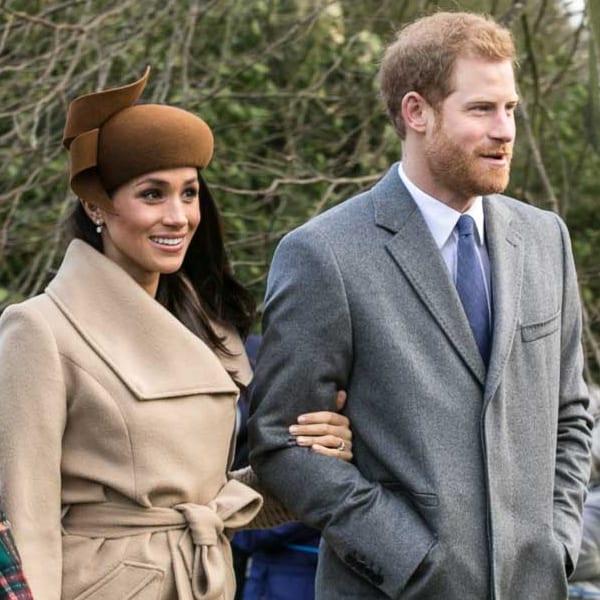
Reactions to Oprah’s candid interview with the Duke and Duchess of Sussex (or Prince Harry and Meghan Markle, as standard headlines refer to them) have ranged from one pole of outrage, directed at the British royal family, to an opposite pole of outrage, directed at the Duke and Duchess themselves, but especially at Meghan Markle. Why some United States citizens are so deeply invested in the lives of British monarchy is a fascinating question, but in this case, one can be entirely indifferent to the ongoing drama in the Windsor family and still take an interest in the interview. Because what this young couple has experienced is all too familiar to many of us. Whether we care about the lives of the royals or not, there is much we can take away from their experience, and how the public has reacted to it.
Racism is deeply ingrained in the European class system.
As citizens of the United States, it may be easy for some of us overlook how racist Europe is, since they didn’t have an entire centuries-old economic system and culture based on chattel slavery, nor institutions and laws to keep racism in place after slavery was abolished—at least, not visibly so. We need to remember, though, that it was European nations who first instituted chattel slavery of black Africans, and European colonizers who organized it on this continent. When the white colonizers decided they wanted to be free of monarchy and aristocratic caste structures they did not simultaneously get rid of the racism that had accompanied them. And neither did the monarchs or aristocrats. Those of us occasionally tempted to romanticize monarchy should take seriously the realty that, when it comes to the historical European model, you can not separate these class structures from structures of white supremacy. The way in which the British royals, British media, and British public regarded Meghan Markle as opposed to the way they regarded Kate Middleton (a commoner) should make this apparent.
Abusers count on silence from their victims.
One reason abuse flourishes is that survivors of abuse are coerced into feeling they must be silent about what they experienced. This is the case across the board, whether we’re talking about survivors of clergy sex abuse, survivors of domestic violence, survivors of child abuse, and survivors of racism. Abusers, especially when they are members of a privileged demographic, anticipate that the public will defend them, if a victim decides to speak out. And survivors know this too. Assault victims know they will be blamed for bringing it on themselves, children know they will be blamed for smearing the good name of a religious leader, and non-white persons know they will be accused of “playing the race card.” When survivors speak out, as Meghan Markle has done, the reaction is often to accuse them of wanting attention and stirring up drama. People are inclined to defend institutions rather than persons, especially when the institution is long-lived, powerful, and beloved–such as, say, the British monarchy, or the Roman Catholic Church. People certainly do not want to admit that the institutions they feel warmly about are problematic, abusive, or racist.
Yet speaking out is absolutely essential.
When one has been abused, discriminated against, and harassed, one is also forced to accept the false narrative the abuser constructs. As Azar Nafisi discusses in her work Reading Lolita in Tehran, the ultimate assault on the child who is preyed on throughout the novel Lolita is that her story is stolen from her and replaced by the story of her abuser. He even overwrites her name. This is also what happens in totalitarian regimes, and in authoritarian theocracies. When one is a victim of abuse who is also a celebrity, the false narrative about one becomes a public possession. Media tabloids broadcast it. People happily believe it. There is no getting away from that cruel glare of publicity, no going back simply to being a private person, and above all no hope for peace as long as that false narrative hangs over one. Going public may be difficult and it will certainly upset many people. But it is crucial to shine the light on the truth, even if people don’t want to see it.
We white people often don’t want to work on our own racism.
So many racist comments from so many random white persons on the internet—casual racism, sneering racism, unconscious racism. Set this alongside the silent indifference, on the part of so many white women, to Meghan Markle’s suffering through experiences that are familiar to so many of us, and which money can’t solve: miscarriage, post-partum depression, suicidal ideation. Why did so many white women enthuse over Kate Middleton as a public face of motherhood, while now ignoring Meghan Markle when she speaks powerfully about issues so many mothers face? Are we reluctant to center a Black woman’s pain because we feel our own must be more special? Duchess or not, wealthy or not, Meghan Markle’s story is one of being the target of intersecting forces of oppression, both racism and misogyny. We should be compelled to work on our own racial prejudices, while also doing the work of dismantling these structures and institutions of oppression which are so powerful that even a wealthy and beautiful young duchess was harmed by them.


Next Post

March 12, 2021 Immigrants: They Need Us, and We Need Them
Browse Our Archives
Select a Category abortion anti-semitism art Atwood Betrothed church clergy abuse coronavirus culture economics education environmentalism ethics faith family feminism gardening gun violence immigration Judaism literature MaddAddam New Pro Life Movement news pandemic personalism poem politics politics blue Pope Francis racism religion salvation sexuality social justice spirituality Station eleven Stephen King The Stand Trump Uncategorized war World Health Organization
Select a Month March 2021 February 2021 January 2021 December 2020 November 2020 October 2020 September 2020 August 2020 July 2020 June 2020 May 2020 April 2020 March 2020 February 2020 January 2020 December 2019 November 2019 October 2019 September 2019 August 2019 July 2019 June 2019 May 2019 April 2019 March 2019 February 2019 January 2019 December 2018 November 2018 October 2018 September 2018 August 2018 July 2018 June 2018 May 2018 April 2018 March 2018 February 2018 January 2018 December 2017 November 2017 October 2017 September 2017 August 2017 July 2017 June 2017 May 2017 April 2017 March 2017 February 2017 January 2017 December 2016 November 2016 October 2016 September 2016 August 2016 July 2016 June 2016 May 2016 April 2016 March 2016 February 2016
Follow Us!
TAKE THE
Religious Wisdom Quiz
Which parable teaches its listener to "Love your neighbor as yourself"?
Select your answer to see how you score.
The Lost Sheep The Mustard Seed The Talents The Good Samaritan
Support this
Column


Related posts from suspended in her jar

Immigrants: They Need Us, and We Need Them

Catholics Are De-Toxing From their Experiences With Traumatic...

How Has the Pandemic Changed Us? Has It...

Rush Limbaugh Would Never Have Succeeded In an...
TRENDING AT PATHEOS Catholic

Creation, Preservation, and Teleology in Catholic Theology
As I write this, it is very early Monday morning. Like millions...

The Parable Of The Sower And The Word...
One of Christ’s most famous parables is that of the sower who...

Rejecting Doom: Christian Hope And Human Action
Christianity is a religion of hope. We are to have hope and...

Why I Choose the Eucharist Over the Sermon
Choose the Eucharist, Not the Sermon What are we supposed to get...

5 Design Elements Found in Spiritually Rooted Homes
Putting Spirituality Into Home Decor Our homes are more than our living...

Credo: A Story of God Told with the...
About 10 years ago, I began to imagine a personal "Credo" that...
view all Catholic blogs
Ad-Free & Subscriber Log-In Subscription Support
- About Us
- 2026 Calendar
- Videos
- Podcasts
- Library of World Religions
- Faith In Media Tracker
- Advertise With Us
- Write for Us
- Privacy Policy
- Terms of Service
- Do Not Sell My Data
- Contact Us
- Radiant Digital
- Manage Newsletter Subscriptions
- Unsubscribe From Notifications
- Sitemap
Copyright 2008-2026, Patheos. All rights reserved.
Subscription Support Ad-Free & Subscriber Log-In
Follow Patheos