
BuddhistCatholicContemplativeEvangelicalGeneral ChristianHinduJewishLatter-day SaintMuslimNew VisionsProgressive Christian
Beliefs
- Buddhist
- Catholic
- Contemplative
- Evangelical
- General Christian
- Hindu
- Jewish
- Latter-day Saint
- More Voices
- Muslim
- New Visions
- Pagan
- Progressive Christian
Topics
- Religion News
- Food and Religion
- Sports and Religion
- Religious Art
- Religious Music and Entertainment
- Religious Events
- History and Religion
- Style and Religion
- Politics and Religion
- Women in Religion
- Recreation Outdoors and Religion
- Business Finance and Religion
- Careers Workplace and Religion
- Education and Religion
- Family Parenting and Religion
- Health Fitness and Religion
- Home and Religion
- Relationships and Religion
- Technology and Religion
- Travel and Religion
Columnists
- Buddhist Columnists
- Business Finance and Religion Columnists
- Careers Workplace and Religion Columnists
- Catholic Columnists
- Contemplative Columnists
- Education and Religion Columnists
- Evangelists Columnists
- Family Parenting and Religion Columnists
- General Christian Columnists
- Health Fitness and Religion Columnists
- Hindu Columnists
- History and Religion Columnists
- Home and Religion Columnists
- Jewish Columnists
- More Voices Columnists
- Latter Day Columnists
- Muslim Columnists
- New Visions Columnists
- Nonreligious Columnists
- Pagan Columnists
- Politics and Religion Columnists
- Progressive Columnists
- Recreation Outdoors and Religion Columnists
- Relationships and Religion Columnists
- Religion News Columnists
- Religious Art Columnists
- Religious Events Columnists
- Religious Music and Entertainment Columnists
- Sports and Religion Columnists
- Style and Religion Columnists
- Technology and Religion Columnists
- Travel and Religion Columnists
- Women in Religion Columnists
Resource Library
- 2026 Calendar
- Library of World Religions
- The 100 Most Holy Places on Earth
- Patheos Answers
- Podcasts
- Videos
- Faith Leaders Database
- Anglican Episcopalian
- Bahai
- Baptist
- Buddhism
- Christianity
- Confucianism
- Eastern Orthodoxy
- Hinduism
- Holiness and Pentecostal
- ISKCON
- Islam
- Judaism
- Lutheran
- Methodist
- The Church of Jesus Christ of Latter-day Saints
- New Age
- Paganism
- Presbytarian and Reformed
- Protestantism
- Religion Behind the Scenes
- Roman Catholic
- Scientology
- Shia Islam
- Sikhism
- Sufism
- Sunni Islam
- Taoism
- Zen
- See all religions
Research Tools
 Ad-Free & Subscriber Log-In Subscription Support
Ad-Free & Subscriber Log-In Subscription Support
Follow Patheos 

- Trending:
- Forgiveness
- |
- Marriage
- |
- Consciousness
- |
- Death Penalty
- |
- Election
- |
- Halloween
 suspended in her jar
- Home
- Catholic
- People are in Therapy to Recover from Religion – We Need to Ask Why
People are in Therapy to Recover from Religion – We Need to Ask Why
Last updated on: February 15, 2021 at 10:42 pm by Rebecca Bratten Weiss
People are in Therapy to Recover from Religion – We Need to Ask Why 2021-02-15T22:42:35-04:00 Rebecca Bratten Weiss
Patheos Explore the world's faith through different perspectives on religion and spirituality! Patheos has the views of the prevalent religions and spiritualities of the world.
I was standing with my hands clasped, head down, in a large brightly lit chapel. Five or six students my age stood around me, heads also bowed, hands on my shoulders. They were quietly murmuring. The sounds they were making were not in the English language, or any language at all.
After a few minutes the murmuring began to grow uneasy. Through my slitted eyes I saw them glancing at each other. Then I caught the whispering:
Is she doing anything?
Is anything happening yet?
I was not in a cult, exactly. I was in the middle of my sophomore year at a Catholic liberal arts university where I was pursuing my B.A. in philosophy and would ultimately earn an M.A. as well.
The school was small and insular, located atop a hill overlooking a grimy steel town. The university and the town had little interaction with one another. The university was more connected with its network of ideologically similar communities and institutions, including various covenant communities, and the Third Order Regular Franciscan friars, who ran the school. It was also connected with the Charismatic Renewal—a movement that could be summarized as “Pentecostalism for Catholics”, complete with speaking in tongues, prophesying, dancing around the chapel, being slain in the spirit (“flopping over” as my friends and I called it), and off-the-cuff-exorcisms.
I was going through a period of searching, which was why I was studying philosophy in the first place. I felt I needed to sample as many ideas and spiritualities that came my way, in order to tap into some wellspring of meaning that would give me guidance. As an intellectual, I didn’t think much of the charismatic events on campus. They seemed hysterical and sub-rational. Still, I figured I’d give it a try, so I signed up, with a friend, for their “Life in the Spirit” program, which would culminate with the laying on of hands, at which point I would—presumably—receive the gifts of the spirit.
I didn’t expect to babble or flop over, and I was not disappointed, though the students gathered around me apparently were, to judge from their whispers.
Nothing is happening.
I was pleased that nothing happened. Perhaps the true gift to me, from the Spirit, was a capacity to discern when something is not only balderdash, but dangerous balderdash. Or maybe I had already seen a lot of weird shit and was not disposed to be impressed by displays of supposedly supernatural events, especially if they were patently useless.
Babbling in tongues and uttering indiscernible prophetic Words is not useful. It has nothing in common with the stories passed down and recorded in the Book of Acts, of how the Spirit gave the apostles gifts of true prophecy, healing, and the ability actually to speak and understand different languages. That would have been useful, especially if I’d been slacking on my German studies. And healing would be useful, but those who claim to be able to do it never can. They take people’s faith and their money and walk away. Sometimes the people die due to lack of actual health care.
Fake faith-healers are an obvious source of mischief in religious groups, but during my time on the edges of the charismatic movement, I saw a lot that was less overt. The amateur exorcisms that went on at that campus did a lot of damage. It was bad enough to have a priest inform you that you have a “spirit of disobedience,” meaning a demon of disobedience—and that happened often, in confessionals and spiritual direction.
Worse though were the “exorcisms” themselves. Often people who were subjected to them displayed classic behavior one would associate with lurid films about possession: gargling, foaming at the mouth, uttering guttural nonsense, flailing and twitching. Afterwards the people were usually not better, but worse—dazed, troubled, out of touch.
I believe now that these impressionable and vulnerable young persons were under the psychological influence of manipulative spiritual leaders and were probably having seizures induced by stress. I also think the power of suggestion was at work, often in an atmosphere of mob frenzy.
Looking back now I also understand that the movement itself, though no doubt involving many decent and well-meaning people, was fundamentally dangerous, and that the spiritual leaders on campus were using their authority abusively. “By their fruits you shall know them” is a good spiritual dictum.
And the fruit born from that movement was widespread trauma.
People should not have to go to therapy to recover from their experience in a religious tradition or faith community. No, not every faith tradition is for everyone. Yes, people will sometimes be turned off by unpleasant practitioners of a faith, or even upset at unscrupulous religious leaders. As we have been informed ad nauseam, there is that “human element” in the church. But that human element should not be at once so unrestrained, and so toxic.
What I saw in the charismatic movement at that institution, and in covenant communities, and among the apparition-chasers we would encounter later was not simply human frailty. It was deeply evil.
Since then, I have encountered so many people who are still recovering from the trauma they experienced due to religion—my religion, specifically, though I don’t doubt there are also people recovering from trauma induced by other denominations and religions too. We need to address this. People who enter into a faith community in search of connection, meaning, truth, and goodness should not end up having to flee, wounded. They should not have to be in therapy for years.
I don’t know whether I should be in therapy or not. Maybe I got lucky. Maybe I’m in denial. Maybe I don’t believe I can even find a reliable therapist in my area. I do know that I am in an ongoing process of deprogramming from the years I spent inducing in myself a willingness to believe in an authoritarian interpretation of religion which I now understand to be a fabrication, contrary to the Gospels, contrary to the teachings of Jesus. Its fruits are all wrong. Yet for a long time I dedicated my learning and my intellectual capacity to convincing myself and others that our subservience was somehow freedom. I did so, God help me, under the impression that I was experiencing intellectual freedom.
A church that wounds, a church that heals.
A theme running through my posts here, which was inspired by my friend H.L. Vogl’s guest piece on “two Catholic churches,” is that the church really does have two completely distinct faces, and that they are in opposition to each other. One of these churches harms. And I don’t just mean the clergy abuse, and the cover-ups, and the defenses of abusers–though this alone should be a wake-up call. I mean the manipulative spiritual direction, the distorted moral code foisted on consciences, the use of religion as a bludgeon, bad theologies of suffering, people forced to stay with abusive partners, LGBTQ persons shamed and outcast, unmarried pregnant women fired by Catholic organizations, and church leaders enabling fascist political movements.
And that’s just now. Dive into our history and the list gets long enough to fill an encyclopedia.
Yet there is that other church, and it is a church that heals. I don’t mean fake faith healings, either.
A few years ago I managed to catch a snippet of season two of The Handmaid’s Tale on Hulu. A scene I vividly remember is when the protagonist is hiding away from an authoritarian theocracy that would like reduce her to a tool for procreation. When she realizes that the abandoned complex she is hiding in was once used as an execution chamber, she builds a shrine and recites the Catholic prayers for the dead.
That moment has stayed with me as an image of a faith practice that is a comfort for the oppressed and reminded me that the God we worship is the God who casts down the mighty and lifts up the poor, who lays low mountains to bring justice to the land. I think also of how white colonizers forced a white Christianity onto indigenous groups, how white slavers abused Black slaves with a white God—and how these oppressed peoples discovered their own Christianity, the faith of the downtrodden who hunger for righteousness, who found Christ with a face like their own. I think of Juan Diego meeting Mary of Nazareth in the guide of an Aztec princess.
Religion ought to be, not a bulwark for oppressive powers, but a solace for the oppressed. It certainly should not be traumatizing wounded people further. We should not have to be looking out for signs of spiritual abuse, especially in spaces where we are going for community, wholesomeness, safety–yet, just yesterday, fellow Patheos writer Mary Pezzulo addressed just this issue.
Catholics have a responsibility to look at the extent to which we have permitted our religion to be co-opted by authoritarian and abusive powers. The proof is all around us, in the lives that have been blighted by their experience of “good Christian folks.”
We should not be trying to unite these two “sides” of the church, or reach a compromise between them, any more than we should try to reach a compromise between the abuser who beats their victim and the physician who tries to heal them.
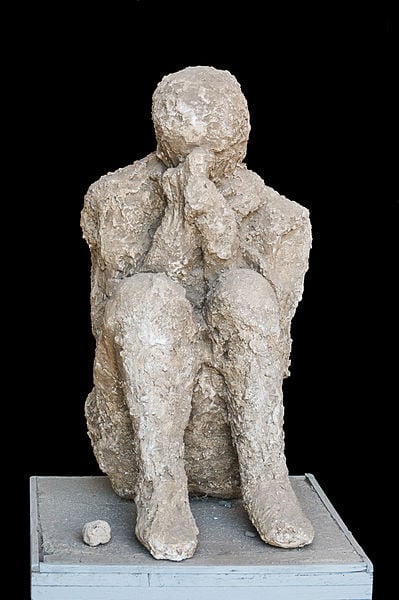
Image credit: Cast_sitting_victim_Pompeii.jpg
Previous Post

February 10, 2021
We Need to Be Honest When We Talk about Abortion
Next Post

February 21, 2021 Rush Limbaugh Would Never Have Succeeded In an Ethical Society
Browse Our Archives
Select a Category abortion anti-semitism art Atwood Betrothed church clergy abuse coronavirus culture economics education environmentalism ethics faith family feminism gardening gun violence immigration Judaism literature MaddAddam New Pro Life Movement news pandemic personalism poem politics politics blue Pope Francis racism religion salvation sexuality social justice spirituality Station eleven Stephen King The Stand Trump Uncategorized war World Health Organization
Select a Month March 2021 February 2021 January 2021 December 2020 November 2020 October 2020 September 2020 August 2020 July 2020 June 2020 May 2020 April 2020 March 2020 February 2020 January 2020 December 2019 November 2019 October 2019 September 2019 August 2019 July 2019 June 2019 May 2019 April 2019 March 2019 February 2019 January 2019 December 2018 November 2018 October 2018 September 2018 August 2018 July 2018 June 2018 May 2018 April 2018 March 2018 February 2018 January 2018 December 2017 November 2017 October 2017 September 2017 August 2017 July 2017 June 2017 May 2017 April 2017 March 2017 February 2017 January 2017 December 2016 November 2016 October 2016 September 2016 August 2016 July 2016 June 2016 May 2016 April 2016 March 2016 February 2016
Follow Us!
TAKE THE
Religious Wisdom Quiz
Who was the mother of Samuel?
Select your answer to see how you score.
Hannah Deborah Rebekah Ruth
Support this
Column


Related posts from suspended in her jar

Four Takeaways from Oprah’s Interview with the Duke...

Catholics Are De-Toxing From their Experiences With Traumatic...

How Has the Pandemic Changed Us? Has It...

Rush Limbaugh Would Never Have Succeeded In an...
TRENDING AT PATHEOS Catholic

Rejecting Doom: Christian Hope And Human Action
Christianity is a religion of hope. We are to have hope and...

It’s What Comes From Within Which Matters
One of the most difficult things for us to understand is why...

Why I Choose the Eucharist Over the Sermon
Choose the Eucharist, Not the Sermon What are we supposed to get...

5 Design Elements Found in Spiritually Rooted Homes
Putting Spirituality Into Home Decor Our homes are more than our living...

Credo: A Story of God Told with the...
About 10 years ago, I began to imagine a personal "Credo" that...

The Anatomy of Divine Revelation in Catholic Thought
The claim that God has made Himself known to human beings is...
view all Catholic blogs
Ad-Free & Subscriber Log-In Subscription Support
- About Us
- 2026 Calendar
- Videos
- Podcasts
- Library of World Religions
- Faith In Media Tracker
- Advertise With Us
- Write for Us
- Privacy Policy
- Terms of Service
- Do Not Sell My Data
- Contact Us
- Radiant Digital
- Manage Newsletter Subscriptions
- Unsubscribe From Notifications
- Sitemap
Copyright 2008-2026, Patheos. All rights reserved.
Subscription Support Ad-Free & Subscriber Log-In
Follow Patheos