
BuddhistCatholicContemplativeEvangelicalGeneral ChristianHinduJewishLatter-day SaintMuslimNew VisionsProgressive Christian
Beliefs
- Buddhist
- Catholic
- Contemplative
- Evangelical
- General Christian
- Hindu
- Jewish
- Latter-day Saint
- More Voices
- Muslim
- New Visions
- Pagan
- Progressive Christian
Topics
- Religion News
- Food and Religion
- Sports and Religion
- Religious Art
- Religious Music and Entertainment
- Religious Events
- History and Religion
- Style and Religion
- Politics and Religion
- Women in Religion
- Recreation Outdoors and Religion
- Business Finance and Religion
- Careers Workplace and Religion
- Education and Religion
- Family Parenting and Religion
- Health Fitness and Religion
- Home and Religion
- Relationships and Religion
- Technology and Religion
- Travel and Religion
Columnists
- Buddhist Columnists
- Business Finance and Religion Columnists
- Careers Workplace and Religion Columnists
- Catholic Columnists
- Contemplative Columnists
- Education and Religion Columnists
- Evangelists Columnists
- Family Parenting and Religion Columnists
- General Christian Columnists
- Health Fitness and Religion Columnists
- Hindu Columnists
- History and Religion Columnists
- Home and Religion Columnists
- Jewish Columnists
- More Voices Columnists
- Latter Day Columnists
- Muslim Columnists
- New Visions Columnists
- Nonreligious Columnists
- Pagan Columnists
- Politics and Religion Columnists
- Progressive Columnists
- Recreation Outdoors and Religion Columnists
- Relationships and Religion Columnists
- Religion News Columnists
- Religious Art Columnists
- Religious Events Columnists
- Religious Music and Entertainment Columnists
- Sports and Religion Columnists
- Style and Religion Columnists
- Technology and Religion Columnists
- Travel and Religion Columnists
- Women in Religion Columnists
Resource Library
- 2026 Calendar
- Library of World Religions
- The 100 Most Holy Places on Earth
- Patheos Answers
- Podcasts
- Videos
- Faith Leaders Database
- Anglican Episcopalian
- Bahai
- Baptist
- Buddhism
- Christianity
- Confucianism
- Eastern Orthodoxy
- Hinduism
- Holiness and Pentecostal
- ISKCON
- Islam
- Judaism
- Lutheran
- Methodist
- The Church of Jesus Christ of Latter-day Saints
- New Age
- Paganism
- Presbytarian and Reformed
- Protestantism
- Religion Behind the Scenes
- Roman Catholic
- Scientology
- Shia Islam
- Sikhism
- Sufism
- Sunni Islam
- Taoism
- Zen
- See all religions
Research Tools
 Ad-Free & Subscriber Log-In Subscription Support
Ad-Free & Subscriber Log-In Subscription Support
Follow Patheos 

- Trending:
- Forgiveness
- |
- Marriage
- |
- Consciousness
- |
- Death Penalty
- |
- Election
- |
- Halloween
 suspended in her jar
- Home
- Catholic
- The Real Significance of Writing King Lear in Quarantine
The Real Significance of Writing King Lear in Quarantine
Last updated on: November 14, 2020 at 9:46 pm by Rebecca Bratten Weiss
The Real Significance of Writing King Lear in Quarantine 2020-11-14T21:46:27-04:00 Rebecca Bratten Weiss
Patheos Explore the world's faith through different perspectives on religion and spirituality! Patheos has the views of the prevalent religions and spiritualities of the world.
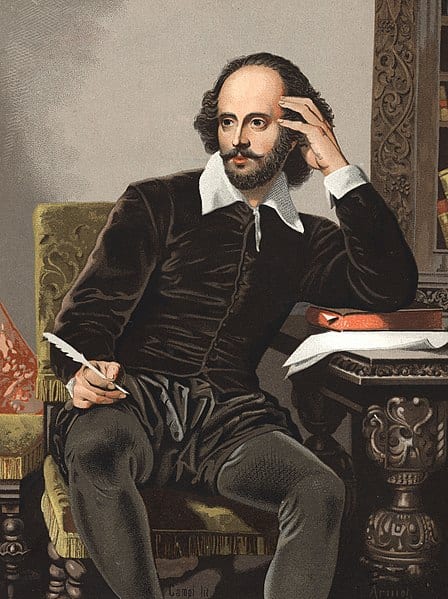
Remember back when we first went into lockdown, when we were “all in this together,” when we posted pictures of ourselves posing as famous paintings, and rattled our pots and pans in the streets to thank our essential workers? Those times feel long ago. Apparently, people assumed that a two-week lockdown would give everyone a nice breather, then we’d emerge into a bright new plague-free world. Perhaps people did not listen to the scientific experts, refused to believe them, or let themselves be swayed by politically-motivated conspiracy theories; whatever the reason, it’s a very different pandemic scene now.
Some of us live in reality. Others do not.
Anti-maskers have made flouting common sense, ethics, and health precautions a matter of valor. Those of us who care about the survival of our more vulnerable friends and family will not be able to have family gatherings for quite a while, thanks to the irresponsibility of others whose recklessness affects everyone around them. Yet somehow we are not allowed to be angry at these people – nor at those who voted for ethno-nationalism and incompetence twice in a row – because this is too “divisive.” We are supposed to look on the bright side of life, as we slide precipitously into stark dystopia.
The numbers are spiking, even more alarmingly than the experts anticipated. Lacking any real leadership on a federal level, the relative safety of a particular region is contingent both upon the strength of its local leadership, and the moral sensibilities of its populace.
The Trump contingent said “it will be gone after the election.” Please note, for posterity, how wrong they were. It is not gone. And unfortunately we have to wait for January for Trump to be gone. Biden will initiate a plan for containing the pandemic when he steps in, but will it be too late by then? How many will die, before this is over? Which friends whom we are missing now will no longer be alive to greet us, on the other side?
Remember when we were supposed to be using our quarantine creatively?
When we were reminded, cheerily, that Shakespeare wrote King Lear while the plague swept through London? Remember how, at first, we thought we’d use our lockdown time to finish off that novel or play we were working on? Then reality settled in, with all the anxiety and existential dread entailed. The massive inequalities in our society were exposed. While nurses had to sleep in basements to avoid infecting their families, and workers went months without paychecks, the wealthy had nothing worse to fear than an involuntary staycation. Taylor Swift spent her quarantine in her big haunted mansion writing songs about teen love triangles, with no relevance to the lives of working class people struggling to survive. Many of us, with no haunted mansions built by wealthy heiresses, but still with bills to pay, had no time to write or create. Others experienced creative paralysis. I know people who have been unable to write for months on end. And for many whose art depends on performance, this has been a time when they have been unable to create, and are deprived of any profits of their creation.
The other day I was reminded, again, about Shakespeare writing Lear in quarantine, and I think we missed the real point of those stories about artists producing great works in plague time. These stories should not be used to shame us into using our isolation more productively. They should serve as a reminder of the resilience of the human spirit and the role of art in survival.
Artists making art in quarantine are not doing so as a fun hobby. Edvard Munch not only quarantined, but contracted the Spanish Flu. While in recovery he documented this experience, in his Self-Portrait With the Spanish Flu. After Giovanni Boccaccio’s parents died of bubonic plague in Florence, he fled to a villa in the countryside, and wrote the Decameron.
It is a mistake to imagine these artists blithely summoning the muses while enjoying a little relaxing sit-in. It was a mistake for us to expect our own lockdown to be that way. How could we think of King Lear as the fanciful creation of a cheery soul enjoying his quiet time? These artists created work in times of loss, sorrow, rage, and uncertainty. They were not polishing up neglected manuscripts because there was nothing else to do. They created art as a mode of survival.
In Shakespeare’s case, with the theatres closed, actors out of work, managers with nothing to manage, the concept of survival was real and material, not just existential. There was a good chance that the plague would destroy his career, leaving him penniless and futureless.
As Andrew Dickson writes,
When you know this, it’s hard not to hear the echoes in Lear, arguably the bleakest tragedy Shakespeare wrote. The mood in the city must have been ghastly – deserted streets and closed shops, dogs running free, carers carrying three-foot staffs painted red so everyone else kept their distance, church bells tolling endlessly for funerals – and something similar seems to be happening in the bleached-out world of the play.
The great art produced in time of plague, war, and civil unrest is born out of suffering. This is not something anyone would seek out or want to repeat. It also is not necessarily within the artist’s control. Finding oneself silent, unable to make art in quarantine, is not a failure of creativity, because silence is also a valid response to pain.
We are not meeting this moment with moral seriousness.
Our culture of instant gratification, which pursues surface freedom over genuine liberation, does not dispose us to make art that meets the needs of dire times. In our refusal to take the pandemic seriously, refusal to quarantine, refusal to mourn, refusal to sit silently with an understanding of what’s at stake, we have closed the door to the gift of creation. Sure, any pop star with extra time on their hands can write yet another pop love song, but sometimes pop love songs aren’t going to cut it. We need Lear; we need to be able to rant and rave on a blasted heath, and ask the ultimate questions about life, death, justice, and love. We need to be honest about the fact that the questions might not be answered, even if this upsets people.
Whether silent or vocal, those of us who are sitting with these questions find ourselves in a new isolation, not simply the isolation of quarantine. What we see, and fear, others pretend is not real. “Are we the crazy ones?” we ask each other.
Ironically, while we may not be creating King Lear, we are having a Lear moment. Lear brought about his own tragic downfall through his arrogance, blindness, and irresponsibility: our national characteristics, writ large for the world to see. Where this will lead, it is hard to say: that is why we are alarmed, sometimes alarmed into silence.
The future is uncertain. But we know it will be hard. If we can make good art, it will acknowledge this. It probably will not be cheerful.
image credit: https://commons.wikimedia.org/wiki/File:William-shakespeare-portrait-of-william-shakespeare
Previous Post
November 9, 2020
Voting Out Fascism Is Just the Beginning
Next Post
November 20, 2020 Being Thankful When You Do Not Understand
Browse Our Archives
Select a Category abortion anti-semitism art Atwood Betrothed church clergy abuse coronavirus culture economics education environmentalism ethics faith family feminism gardening gun violence immigration Judaism literature MaddAddam New Pro Life Movement news pandemic personalism poem politics politics blue Pope Francis racism religion salvation sexuality social justice spirituality Station eleven Stephen King The Stand Trump Uncategorized war World Health Organization
Select a Month March 2021 February 2021 January 2021 December 2020 November 2020 October 2020 September 2020 August 2020 July 2020 June 2020 May 2020 April 2020 March 2020 February 2020 January 2020 December 2019 November 2019 October 2019 September 2019 August 2019 July 2019 June 2019 May 2019 April 2019 March 2019 February 2019 January 2019 December 2018 November 2018 October 2018 September 2018 August 2018 July 2018 June 2018 May 2018 April 2018 March 2018 February 2018 January 2018 December 2017 November 2017 October 2017 September 2017 August 2017 July 2017 June 2017 May 2017 April 2017 March 2017 February 2017 January 2017 December 2016 November 2016 October 2016 September 2016 August 2016 July 2016 June 2016 May 2016 April 2016 March 2016 February 2016
Follow Us!
TAKE THE
Religious Wisdom Quiz
What did Lamentations describe happening to Jerusalem?
Select your answer to see how you score.
Its blessing and expansion Its rebuilding Its destruction and mourning Its prosperity
Support this
Column


Related posts from suspended in her jar

Immigrants: They Need Us, and We Need Them

Four Takeaways from Oprah’s Interview with the Duke...

How Has the Pandemic Changed Us? Has It...

Rush Limbaugh Would Never Have Succeeded In an...
TRENDING AT PATHEOS Catholic

Creation, Preservation, and Teleology in Catholic Theology
As I write this, it is very early Monday morning. Like millions...

The Parable Of The Sower And The Word...
One of Christ’s most famous parables is that of the sower who...

Rejecting Doom: Christian Hope And Human Action
Christianity is a religion of hope. We are to have hope and...

Why I Choose the Eucharist Over the Sermon
Choose the Eucharist, Not the Sermon What are we supposed to get...

5 Design Elements Found in Spiritually Rooted Homes
Putting Spirituality Into Home Decor Our homes are more than our living...

Credo: A Story of God Told with the...
About 10 years ago, I began to imagine a personal "Credo" that...
view all Catholic blogs
Ad-Free & Subscriber Log-In Subscription Support
- About Us
- 2026 Calendar
- Videos
- Podcasts
- Library of World Religions
- Faith In Media Tracker
- Advertise With Us
- Write for Us
- Privacy Policy
- Terms of Service
- Do Not Sell My Data
- Contact Us
- Radiant Digital
- Manage Newsletter Subscriptions
- Unsubscribe From Notifications
- Sitemap
Copyright 2008-2026, Patheos. All rights reserved.
Subscription Support Ad-Free & Subscriber Log-In
Follow Patheos