
BuddhistCatholicContemplativeEvangelicalGeneral ChristianHinduJewishLatter-day SaintMuslimNew VisionsProgressive Christian
Beliefs
- Buddhist
- Catholic
- Contemplative
- Evangelical
- General Christian
- Hindu
- Jewish
- Latter-day Saint
- More Voices
- Muslim
- New Visions
- Pagan
- Progressive Christian
Topics
- Religion News
- Food and Religion
- Sports and Religion
- Religious Art
- Religious Music and Entertainment
- Religious Events
- History and Religion
- Style and Religion
- Politics and Religion
- Women in Religion
- Recreation Outdoors and Religion
- Business Finance and Religion
- Careers Workplace and Religion
- Education and Religion
- Family Parenting and Religion
- Health Fitness and Religion
- Home and Religion
- Relationships and Religion
- Technology and Religion
- Travel and Religion
Columnists
- Buddhist Columnists
- Business Finance and Religion Columnists
- Careers Workplace and Religion Columnists
- Catholic Columnists
- Contemplative Columnists
- Education and Religion Columnists
- Evangelists Columnists
- Family Parenting and Religion Columnists
- General Christian Columnists
- Health Fitness and Religion Columnists
- Hindu Columnists
- History and Religion Columnists
- Home and Religion Columnists
- Jewish Columnists
- More Voices Columnists
- Latter Day Columnists
- Muslim Columnists
- New Visions Columnists
- Nonreligious Columnists
- Pagan Columnists
- Politics and Religion Columnists
- Progressive Columnists
- Recreation Outdoors and Religion Columnists
- Relationships and Religion Columnists
- Religion News Columnists
- Religious Art Columnists
- Religious Events Columnists
- Religious Music and Entertainment Columnists
- Sports and Religion Columnists
- Style and Religion Columnists
- Technology and Religion Columnists
- Travel and Religion Columnists
- Women in Religion Columnists
Resource Library
- 2026 Calendar
- Library of World Religions
- The 100 Most Holy Places on Earth
- Patheos Answers
- Podcasts
- Videos
- Faith Leaders Database
- Anglican Episcopalian
- Bahai
- Baptist
- Buddhism
- Christianity
- Confucianism
- Eastern Orthodoxy
- Hinduism
- Holiness and Pentecostal
- ISKCON
- Islam
- Judaism
- Lutheran
- Methodist
- The Church of Jesus Christ of Latter-day Saints
- New Age
- Paganism
- Presbytarian and Reformed
- Protestantism
- Religion Behind the Scenes
- Roman Catholic
- Scientology
- Shia Islam
- Sikhism
- Sufism
- Sunni Islam
- Taoism
- Zen
- See all religions
Research Tools
 Ad-Free & Subscriber Log-In Subscription Support
Ad-Free & Subscriber Log-In Subscription Support
Follow Patheos 

- Trending:
- Forgiveness
- |
- Marriage
- |
- Consciousness
- |
- Death Penalty
- |
- Election
- |
- Halloween
 suspended in her jar
- Home
- Catholic
- Being Thankful When You Do Not Understand
Being Thankful When You Do Not Understand
Last updated on: November 20, 2020 at 12:20 am by Guest Contributor
Being Thankful When You Do Not Understand 2020-11-20T00:20:46-04:00 Guest Contributor
Patheos Explore the world's faith through different perspectives on religion and spirituality! Patheos has the views of the prevalent religions and spiritualities of the world.
by guest writer Gavril Andreicut
As the tradition in most Romanian churches at Thanksgiving is, people gather together to thank God for their blessings. While the testimonies follow a common pattern—words of thanksgiving and stories about God’s work in their lives—what makes me ponder is that I have never heard anyone on a Thanksgiving Day expressing her/his struggle with being thankful. Considering that on the Thanksgiving Day there are so many people who struggle and suffer innocently and with no reasons connected with them directly, should we celebrate our victories without thinking of our brothers and sisters who are struggling with the burdens of life more than us?
The disturbing truth is that, although most Christians claim to care of those who suffer and are marginalized, the reality is different and cannot be easily dismissed. People are so much captivated by their own affairs and lives that they have no time to think about their neighbors. The Bible tells us to be doers of the Word (James 1:22), but we feel comfortable to preach and teach. And while to be concerned with yourself seems most normal, considering that life is a struggle and a competition without an end, the second most important commandment in the Bible is to “love your neighbor like yourself.” (Mark 12:31).
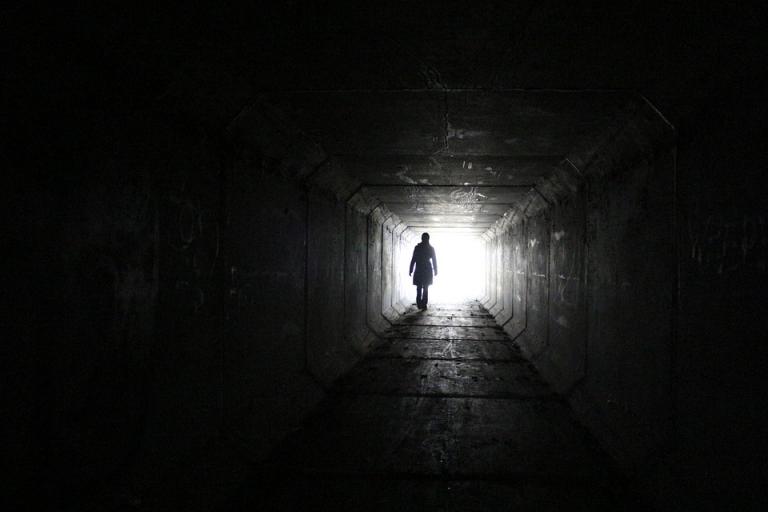
This year, I thank God for my confusion and inability to understand Him. There is (at least) one benefit in my confusion: it draws me near God. Indeed, on this Thanksgiving, my only consolation is in the darkness of God and in His radiant light which blinds anyone who tries to understand Him. The inability to understand God and Christianity (i.e., people who claim to worship and follow God) as I would have liked, humbles me, strengthens my faith, and gives me more desire to be kind and to love.
I am very grateful to God whom, for many reasons, I really do not understand: I am thankful for my wife and daughter, larger family, students, colleagues, church, people, nature. They all contribute to who I am today: a man of faith seeking understanding.
However, my thankfulness is troubled by questions which prevent me from enjoying fully the Thanksgiving Day. In fact, this is not a new feeling; it is something which I have experienced for many years. How can I enjoy fully knowing that so many people—innocent children who suffer hunger and are lacking the basic necessities of life, people who die in wars that are not theirs, innocent people unjustly convicted in courts of law, people who suffer for reasons that do not depend on them—suffer today? Should I just ignore them on this Thanksgiving Day? Can my conscience enjoy this day without asking some questions about God and his ability to take care of His creatures? The answer is no.
Frederick Douglass’s fierce critique of America and American Christianity comes to my mind:
“I hear the mournful wail of millions whose chains, heavy and grievous yesterday, are, today, rendered more intolerable by the jubilee shouts that reach them…. To forget them, to pass lightly over their wrongs, and to chime in with the popular theme, would be treason most scandalous and shocking, and would make me a reproach before God and the world. My subject, then fellow citizens, is American slavery.” (Narrative of the Life of Frederick Douglass)
Douglass’s theme, as it is clear from the text, was slavery, but his thoughts are so pertinent in our days: should we forget at this Thanksgiving those who suffer without much hope? Can we happily and with a clear conscience celebrate at this Thanksgiving knowing that many people, God’s children, are displaced, alone and suffering?
Although I am confused by so many things which I do not understand, I have learned to deal with it. In fact, I am more and more convinced that the problem is not God but the Christians. God is not responsible for those who pass through difficult times and have not many reasons to be thankful today, no, people are responsible for the misery that trouble so many innocent children and people of our society. According to Dietrich Bonhoeffer, who was surprised by a Christianity which compromised itself and did not do anything to oppose Hitler, “God is being pushed more and more out of life, losing more and more ground.” The working hypothesis called “God” should be given up by intellectually honest people: “We are moving toward a completely religionless time; people as they are now simply cannot be religious anymore. Even those who honestly describe themselves as ‘religious’ do not in the least act up to it.” (Letters and Papers from Prison) According to Friedrich Nietzsche, who is often misunderstood, we (people) killed God. And when he said, “God is dead,” he expressed a tragic reality: without God life is tragic and meaningless (The Gay Science).
What do we do with what the Bible teaches us? Salvation certainly does not refer to an after-life community. John Wesley is especially concerned to underline that it begins here on earth, and it implies a total redirection of values. According to Jesus, the entire Bible can be summarized in two commandments: “You shall love the Lord your God with all your heart, and with all your soul, and with all your strength, and with all your mind; and your neighbor as yourself.” (Matthew 22: 37-40) In a word, it means community, and not just the immediate community but the community of all people and God’s creation. In the Parable of Good Samaritan, Jesus ties salvation to these two commandments: “Do this, and you live,” Jesus tells the teacher of the law who had inquired about salvation. (Luke 10:28) Jesus tells us that the person who loves the neighbor is someone who helps those who cannot helped themselves. In this case, the person who loves the neighbor, the sick man fallen on the side of the road, was not the priest or the Levite, people well-positioned socially and financially in society, but a despised Samaritan. Seeing the fallen and needy man, he spends his money to help him recover. After telling this story, Jesus responded to the teacher of the law who had inquired about the inheritance of eternal life, “Go and do likewise.” (Like 10:37) These words of Jesus are certainly valid for us today too. They are a critique of religious passivity. It was not the organized church—i.e., the priest or the Levite—who rescued the suffering man, but a despised Samaritan, a member of the church of these who care and love.
Not showing concern in the less fortunate people tells us what our relationship with God is. A community of Christians who are the body of Christ cannot be happy and at peace when brothers and members of the same body suffer. We should not celebrate happily when the suffering of people in the body of Christ—and in the world—seems unsolvable; it certainly causes at least a general discomfort of the body if not a severe trauma that renders it unable to function properly.
It is completely fine to not to be completely thankful; thankfulness is a divine thing and something which will not be complete while on earth. Jesus’s life is not one which we would characterize as a life of thankfulness. Indeed, his mission was to change and renew a religious people who had forgotten to love God and the neighbor. While he thanked God, he cleaned the Temple because he was not pleased with the spiritual life in God’s Temple. Before his death, Jesus said, “I am deeply grieved, even to death.” He also seems to be reluctant to accept the cross: “If it is possible, let this cup pass from me.” (Matthew 26:38-39) He accepted God’s will but did not thank Him for his sufferings and death. We cannot say that Paul was an entirely thankful man: he always tried to fix the issues in his life according to his will. Yes, he thanked God many times, but it seems that he was in a continuous struggle and controversies with his opponents. We must thank God, but we cannot be happy when things function against God’s design.
My confusion is due to so many things which I do not understand. As mentioned, I do thank God because of the darkness and/or the dazzling rays that blind me; this darkness certainly draws me closer and closer to God. But this does not prevent me from being sad that there are so many people at this Thanksgiving that suffer innocently. I am also sorrowed because the so-called “body of Christ” is far from being what it claims to be. Of course, on earth, the body of Christ cannot be perfect; Jesus Himself was troubled by what any human being is troubled, but he unceasingly tried to change society according to the rules of God’s kingdom. I am very thankful to God for everything—family, friends, church, society—but my thankfulness is shadowed by the fact that we are doing too little to change out society according to God’s standards.
Gavril Andreicut
Chicago, November 15, 2020
Image credit: pixabay-photos-tunnel-silhouette-mysterious-899053.jpg
Previous Post

November 14, 2020
The Real Significance of Writing King Lear in Quarantine
Next Post
November 26, 2020 The Economy of Francis – Both Saint and Pope
Browse Our Archives
Select a Category abortion anti-semitism art Atwood Betrothed church clergy abuse coronavirus culture economics education environmentalism ethics faith family feminism gardening gun violence immigration Judaism literature MaddAddam New Pro Life Movement news pandemic personalism poem politics politics blue Pope Francis racism religion salvation sexuality social justice spirituality Station eleven Stephen King The Stand Trump Uncategorized war World Health Organization
Select a Month March 2021 February 2021 January 2021 December 2020 November 2020 October 2020 September 2020 August 2020 July 2020 June 2020 May 2020 April 2020 March 2020 February 2020 January 2020 December 2019 November 2019 October 2019 September 2019 August 2019 July 2019 June 2019 May 2019 April 2019 March 2019 February 2019 January 2019 December 2018 November 2018 October 2018 September 2018 August 2018 July 2018 June 2018 May 2018 April 2018 March 2018 February 2018 January 2018 December 2017 November 2017 October 2017 September 2017 August 2017 July 2017 June 2017 May 2017 April 2017 March 2017 February 2017 January 2017 December 2016 November 2016 October 2016 September 2016 August 2016 July 2016 June 2016 May 2016 April 2016 March 2016 February 2016
Follow Us!
TAKE THE
Religious Wisdom Quiz
True or False: Job lost all his children, wealth, and health in a single day.
Select your answer to see how you score.
TRUE FALSE
Support this
Column


Related posts from suspended in her jar

Immigrants: They Need Us, and We Need Them

Four Takeaways from Oprah’s Interview with the Duke...

Catholics Are De-Toxing From their Experiences With Traumatic...

How Has the Pandemic Changed Us? Has It...
TRENDING AT PATHEOS Catholic

Rejecting Doom: Christian Hope And Human Action
Christianity is a religion of hope. We are to have hope and...

It’s What Comes From Within Which Matters
One of the most difficult things for us to understand is why...

Why I Choose the Eucharist Over the Sermon
Choose the Eucharist, Not the Sermon What are we supposed to get...

5 Design Elements Found in Spiritually Rooted Homes
Putting Spirituality Into Home Decor Our homes are more than our living...

Credo: A Story of God Told with the...
About 10 years ago, I began to imagine a personal "Credo" that...

The Anatomy of Divine Revelation in Catholic Thought
The claim that God has made Himself known to human beings is...
view all Catholic blogs
Ad-Free & Subscriber Log-In Subscription Support
- About Us
- 2026 Calendar
- Videos
- Podcasts
- Library of World Religions
- Faith In Media Tracker
- Advertise With Us
- Write for Us
- Privacy Policy
- Terms of Service
- Do Not Sell My Data
- Contact Us
- Radiant Digital
- Manage Newsletter Subscriptions
- Unsubscribe From Notifications
- Sitemap
Copyright 2008-2026, Patheos. All rights reserved.
Subscription Support Ad-Free & Subscriber Log-In
Follow Patheos