
BuddhistCatholicContemplativeEvangelicalGeneral ChristianHinduJewishLatter-day SaintMuslimNew VisionsProgressive Christian
Beliefs
- Buddhist
- Catholic
- Contemplative
- Evangelical
- General Christian
- Hindu
- Jewish
- Latter-day Saint
- More Voices
- Muslim
- New Visions
- Pagan
- Progressive Christian
Topics
- Religion News
- Food and Religion
- Sports and Religion
- Religious Art
- Religious Music and Entertainment
- Religious Events
- History and Religion
- Style and Religion
- Politics and Religion
- Women in Religion
- Recreation Outdoors and Religion
- Business Finance and Religion
- Careers Workplace and Religion
- Education and Religion
- Family Parenting and Religion
- Health Fitness and Religion
- Home and Religion
- Relationships and Religion
- Technology and Religion
- Travel and Religion
Columnists
- Buddhist Columnists
- Business Finance and Religion Columnists
- Careers Workplace and Religion Columnists
- Catholic Columnists
- Contemplative Columnists
- Education and Religion Columnists
- Evangelists Columnists
- Family Parenting and Religion Columnists
- General Christian Columnists
- Health Fitness and Religion Columnists
- Hindu Columnists
- History and Religion Columnists
- Home and Religion Columnists
- Jewish Columnists
- More Voices Columnists
- Latter Day Columnists
- Muslim Columnists
- New Visions Columnists
- Nonreligious Columnists
- Pagan Columnists
- Politics and Religion Columnists
- Progressive Columnists
- Recreation Outdoors and Religion Columnists
- Relationships and Religion Columnists
- Religion News Columnists
- Religious Art Columnists
- Religious Events Columnists
- Religious Music and Entertainment Columnists
- Sports and Religion Columnists
- Style and Religion Columnists
- Technology and Religion Columnists
- Travel and Religion Columnists
- Women in Religion Columnists
Resource Library
- 2026 Calendar
- Library of World Religions
- The 100 Most Holy Places on Earth
- Patheos Answers
- Podcasts
- Videos
- Faith Leaders Database
- Anglican Episcopalian
- Bahai
- Baptist
- Buddhism
- Christianity
- Confucianism
- Eastern Orthodoxy
- Hinduism
- Holiness and Pentecostal
- ISKCON
- Islam
- Judaism
- Lutheran
- Methodist
- The Church of Jesus Christ of Latter-day Saints
- New Age
- Paganism
- Presbytarian and Reformed
- Protestantism
- Religion Behind the Scenes
- Roman Catholic
- Scientology
- Shia Islam
- Sikhism
- Sufism
- Sunni Islam
- Taoism
- Zen
- See all religions
Research Tools
 Ad-Free & Subscriber Log-In Subscription Support
Ad-Free & Subscriber Log-In Subscription Support
Follow Patheos 

- Trending:
- Forgiveness
- |
- Marriage
- |
- Consciousness
- |
- Death Penalty
- |
- Election
- |
- Halloween
 suspended in her jar
- Home
- Catholic
- We Are All Called To Question Within Our Faith Tradition
We Are All Called To Question Within Our Faith Tradition
Last updated on: October 4, 2020 at 10:24 am by Guest Contributor
We Are All Called To Question Within Our Faith Tradition 2020-10-04T10:24:46-04:00 Guest Contributor
Patheos Explore the world's faith through different perspectives on religion and spirituality! Patheos has the views of the prevalent religions and spiritualities of the world.
by guest writer William M. Shea, PhD
This is follow up to a previous post, Theological Foundations and the Importance of Tradition
I believe a lot. “I believe in God, the Father Almighty, creator of heaven and earth…” In the act of believing I’m claiming that this is true. Not a proposal, a suggestion or a thought, rather a claim: There IS a Father Almighty, creator… How did it come about that I believe this? On what basis? Do I know that there is such a God? No, I don’t. I know there is God, what the philosopher Thomas Aquinas named Ipsum Esse, “to be Itself,” but what kind of God this is, by myself I know not. Some Catholic theologians may well disagree with me on this point, but I with the use of my limited reason haven’t been able to answer the question, “What kind of God?” Or what is God up to? That I didn’t “figure out” (reason) on my own. I still haven’t. Perhaps you can but I cannot.
What kind of God wills the death of his Son? What kind of God allows the Holocaust? What kind of God sits by while 168 lives are taken by the poor Terry McVeigh, may they all rest in peace? As one of my more insightful colleagues put it a couple of decades ago: “If God exists, He’s out to lunch!”
But In fact I’ve been told that our almighty God is a father, a creator of heaven and earth, and that I can and should believe it. I was told about it by some who, it happens, also believe it to be true, claims it as true. Jews tell me this, my church tells me this. A two thousand year old collection of writings tells me, my own father and mother told me this. At bottom, Jesus of Nazareth tells me this. I believe them all. And the Christians tell me that Jesus is His ‘Son’ and that there is a divine Spirit who is the breath and wisdom and presence of God in the church and in my heart and mind. I am to say ‘Amen!’ to this, and tell all those who will listen just as my community tells me. So I tell you today that there is a Father who is closer to you than your own suffering. Prove it, you say? I say, check your own longings and believe what you long for. Hope it. Love. And don’t despair. Watch what happened on Golgotha and in the rocky tomb and don’t despair. Listen to the Christian churches.
This is the Tradition I wrote about in my last post. Declaring it is the preeminent job of the church. There are many thousands of traditions in many churches but they don’t rank with this. This is named kerygma by Paul, the “good news.” Jesus himself said: “Repent and believe the Good News.” If we don’t do so, the church has no meaning, whatever else it may be about.
Faith is the gift of God which makes belief actual rather than simply possible, and the church is the community of actual faith. First we are able to trust in the gospel and the Lord who speaks it, and then traditions (communal believing and beliefs) make sense inso far as they stack up well against the original gospel. Try this, for example, with the contested Marian dogmas and doctrines of the most ancient churches. In a test of beliefs, ask: does what Catholic and Orthodox churches teach about Mary make sense? When newer western Christian churches tell us that praying to Mary is idolatry, does that protesting tradition make sense? Does the Catholic doctrinal tradition about transformation of bread and wine at the Supper make sense? Do and how do the sacraments make sense in a Christian life which trusts in the Gospel and the teachings of the Lord? What sense do meatless Fridays, confessing sins to a church official, pilgrimages, scapulars and indulgences make? Prayer to saints? And all the contested doctrines and practices (traditions) that have been important in the history of the Christian churches? How do they stack up against the kerygma? And are they worth dividing the churches over?
Not only do we learn by asking these questions, but the church communities themselves learn. Christians (churches) have our traditions of practice and belief and we are all responsible for our “life in Christ.” Not just the leaders, not just the theologians, but all Christians are called to ponder and explore the history and meaning of our beliefs and practices. We all sort out our traditions in the light of faith and in the context of the church, and we do it individually and in common. Testing, evaluating, discerning is what reason is for. We are all called not only to trust and to believe but also to think within the context of faith and belief. And, finally, we are meant to think about faith and belief and practice in a context of a “world” that seems not to have faith and does not believe as we do, and ask what sense it makes to believe and live in a “world” that, it seems, does neither. The church is not an impenetrable bubble. Reason is no outsider to religious faith, it is intrinsic to it. The churches’ history is to a large extent the story of creating and winnowing its beliefs and practices reasonably in addition to its primary feature of proclamation of the Gospel and celebrating it. Think of what went on in the Reformation and at Trent, and especially at Vatican II when the western world was no longer Catholic or even Christian!
Past posts of mine, especially those which have to do with atheism, are examples of my own trying to understand (reason) both my own sometimes timorous beliefs and trust, and to understand the absence of the struggle with faith and belief that atheists claim. From years of wondering and pondering I conclude that genuine atheism, if it exists at all, is as rare as the platypus, in part because I believe that the gift of faith is given to every human being as part of being human. Belief is another issue, and I think that faith is universal in human beings but belief is particular historically. I also think that faith can and does exist in us without our knowing that it does. I think that faith (and reason in fact!) drives every human being toward God even if the person does not know God or believe in God. The seed is there. Karl Rahner wrote about “anonymous Christianity.” I would prefer ‘anonymous religiosity’ but I get his point. The articulation of this universal faith takes myriad forms of belief and practice but some belief and practice is inevitable, even in atheists, if we are lucky enough to survive our almost powerful instinct toward negation with its plaintive cry “Prove it!”
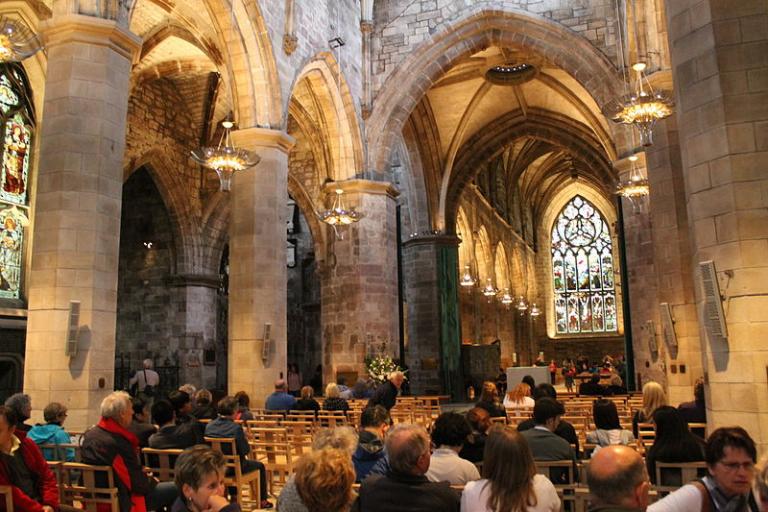
image credit: 800px-Crowded_with_visitors._14810573273.jpg
Previous Post

September 27, 2020
Theological Foundations, and the Importance of Tradition
Next Post

October 6, 2020 "There are *Four* Lights": Trump and the Gaslighting of America
Browse Our Archives
Select a Category abortion anti-semitism art Atwood Betrothed church clergy abuse coronavirus culture economics education environmentalism ethics faith family feminism gardening gun violence immigration Judaism literature MaddAddam New Pro Life Movement news pandemic personalism poem politics politics blue Pope Francis racism religion salvation sexuality social justice spirituality Station eleven Stephen King The Stand Trump Uncategorized war World Health Organization
Select a Month March 2021 February 2021 January 2021 December 2020 November 2020 October 2020 September 2020 August 2020 July 2020 June 2020 May 2020 April 2020 March 2020 February 2020 January 2020 December 2019 November 2019 October 2019 September 2019 August 2019 July 2019 June 2019 May 2019 April 2019 March 2019 February 2019 January 2019 December 2018 November 2018 October 2018 September 2018 August 2018 July 2018 June 2018 May 2018 April 2018 March 2018 February 2018 January 2018 December 2017 November 2017 October 2017 September 2017 August 2017 July 2017 June 2017 May 2017 April 2017 March 2017 February 2017 January 2017 December 2016 November 2016 October 2016 September 2016 August 2016 July 2016 June 2016 May 2016 April 2016 March 2016 February 2016
Follow Us!
TAKE THE
Religious Wisdom Quiz
You have wearied the Lord with your words by saying all who do evil are good in his sight, or by asking where is the God of what?
Select your answer to see how you score.
Justice Truth Judgment Righteousness
Support this
Column


Related posts from suspended in her jar

Immigrants: They Need Us, and We Need Them

Catholics Are De-Toxing From their Experiences With Traumatic...

How Has the Pandemic Changed Us? Has It...

Rush Limbaugh Would Never Have Succeeded In an...
TRENDING AT PATHEOS Catholic

Rejecting Doom: Christian Hope And Human Action
Christianity is a religion of hope. We are to have hope and...

It’s What Comes From Within Which Matters
One of the most difficult things for us to understand is why...

Why I Choose the Eucharist Over the Sermon
Choose the Eucharist, Not the Sermon What are we supposed to get...

5 Design Elements Found in Spiritually Rooted Homes
Putting Spirituality Into Home Decor Our homes are more than our living...

Credo: A Story of God Told with the...
About 10 years ago, I began to imagine a personal "Credo" that...

The Anatomy of Divine Revelation in Catholic Thought
The claim that God has made Himself known to human beings is...
view all Catholic blogs
Ad-Free & Subscriber Log-In Subscription Support
- About Us
- 2026 Calendar
- Videos
- Podcasts
- Library of World Religions
- Faith In Media Tracker
- Advertise With Us
- Write for Us
- Privacy Policy
- Terms of Service
- Do Not Sell My Data
- Contact Us
- Radiant Digital
- Manage Newsletter Subscriptions
- Unsubscribe From Notifications
- Sitemap
Copyright 2008-2026, Patheos. All rights reserved.
Subscription Support Ad-Free & Subscriber Log-In
Follow Patheos