
BuddhistCatholicContemplativeEvangelicalGeneral ChristianHinduJewishLatter-day SaintMuslimNew VisionsProgressive Christian
Beliefs
- Buddhist
- Catholic
- Contemplative
- Evangelical
- General Christian
- Hindu
- Jewish
- Latter-day Saint
- More Voices
- Muslim
- New Visions
- Pagan
- Progressive Christian
Topics
- Religion News
- Food and Religion
- Sports and Religion
- Religious Art
- Religious Music and Entertainment
- Religious Events
- History and Religion
- Style and Religion
- Politics and Religion
- Women in Religion
- Recreation Outdoors and Religion
- Business Finance and Religion
- Careers Workplace and Religion
- Education and Religion
- Family Parenting and Religion
- Health Fitness and Religion
- Home and Religion
- Relationships and Religion
- Technology and Religion
- Travel and Religion
Columnists
- Buddhist Columnists
- Business Finance and Religion Columnists
- Careers Workplace and Religion Columnists
- Catholic Columnists
- Contemplative Columnists
- Education and Religion Columnists
- Evangelists Columnists
- Family Parenting and Religion Columnists
- General Christian Columnists
- Health Fitness and Religion Columnists
- Hindu Columnists
- History and Religion Columnists
- Home and Religion Columnists
- Jewish Columnists
- More Voices Columnists
- Latter Day Columnists
- Muslim Columnists
- New Visions Columnists
- Nonreligious Columnists
- Pagan Columnists
- Politics and Religion Columnists
- Progressive Columnists
- Recreation Outdoors and Religion Columnists
- Relationships and Religion Columnists
- Religion News Columnists
- Religious Art Columnists
- Religious Events Columnists
- Religious Music and Entertainment Columnists
- Sports and Religion Columnists
- Style and Religion Columnists
- Technology and Religion Columnists
- Travel and Religion Columnists
- Women in Religion Columnists
Resource Library
- 2026 Calendar
- Library of World Religions
- The 100 Most Holy Places on Earth
- Patheos Answers
- Podcasts
- Videos
- Faith Leaders Database
- Anglican Episcopalian
- Bahai
- Baptist
- Buddhism
- Christianity
- Confucianism
- Eastern Orthodoxy
- Hinduism
- Holiness and Pentecostal
- ISKCON
- Islam
- Judaism
- Lutheran
- Methodist
- The Church of Jesus Christ of Latter-day Saints
- New Age
- Paganism
- Presbytarian and Reformed
- Protestantism
- Religion Behind the Scenes
- Roman Catholic
- Scientology
- Shia Islam
- Sikhism
- Sufism
- Sunni Islam
- Taoism
- Zen
- See all religions
Research Tools
 Ad-Free & Subscriber Log-In Subscription Support
Ad-Free & Subscriber Log-In Subscription Support
Follow Patheos 

- Trending:
- Forgiveness
- |
- Marriage
- |
- Consciousness
- |
- Death Penalty
- |
- Election
- |
- Halloween
 suspended in her jar
- Home
- Catholic
- Theological Foundations, and the Importance of Tradition
Theological Foundations, and the Importance of Tradition
Last updated on: September 27, 2020 at 9:09 pm by Guest Contributor
Theological Foundations, and the Importance of Tradition 2020-09-27T21:09:36-04:00 Guest Contributor
Patheos Explore the world's faith through different perspectives on religion and spirituality! Patheos has the views of the prevalent religions and spiritualities of the world.
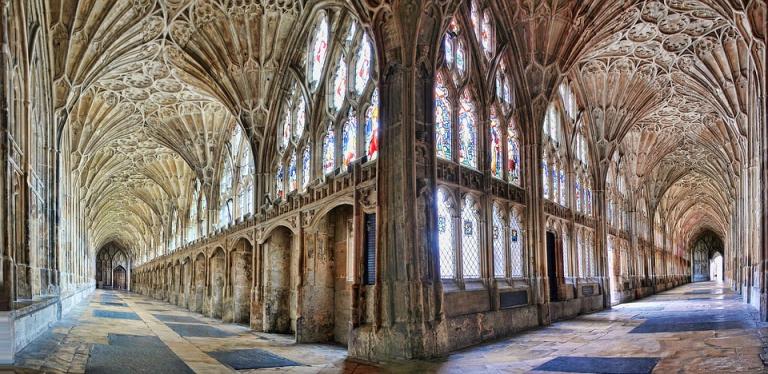
by guest writer William M. Shea, PhD
The great theologians, in my view, are the ones who tie the parts into wholes and who get to the bases of faith: that is, the systematicians and the foundationalists. Frequently enough they are the same people. For example, take Rahner on the Trinity (and every other doctrine! ) and on the foundations of faith; Lonergan on Christology and the Trinity, and on cognitional theory, epistemology, metaphysics and history; or David Tracy on the analogical and dialectical imagination and “conversation” as the heart of the discipline.
Most of us academic types dig one or two holes in our research work and attend fitfully to the whole or to foundations. But there are some among us who can and do aim at “covering the field” as well as taking on the more important individual issues. I tried over my fifty years of teaching and studying to know as much as I could about atheism and about American evangelicalism. I did teach undergraduate courses on New Testament and on Christology but I was hardly an expert in either. I didn’t get past the ecclesiology taught me in seminary and in the documents of Vatican II, and never laid a glove on moral theology. I didn’t try for the whole, and I had a hard enough time being conversant in a few of the parts. The reason for this inadvertence is simple: I followed my own interests rather than letting the field determine my route. I am just not a big picture guy.
But even if you can’t paint the big picture, there is nothing to stop you from trying to make a few connections on the way. Even if you don’t develop a language to take in the whole, maybe you can think enough about relationships between just a few parts to satisfy the longing to understand what’s going on in our minds and hearts. I’ve been trying to do this with what I mean by the terms faith, belief, church, tradition and reason, trying to understand my own life before God and in the church.
Because of my personal and therefore professional interest in atheism and evangelicalism I’ve been led to a few terms which seem basic to understanding myself. I can’t claim any professional standing for my decidedly vulnerable “conclusions” but they put me at more ease with my religious life. Life is lived before it is thought about systematically and I’ve lived long enough to attempt an answer to a very few questions for myself if for no on else. I hesitate to put on paper because it is so simple and should have been obvious at the start. In effect and in some respects, after eighty years I’ve ended up where I started.
I was born into three communities: my family, my country and my church. My family taught me about both country and church. Through decades of learning about both I came to rank the two communities, both of which I prize. From the start, surviving every challenge, for me first the church and then citizenship. {Family transcends both in importance!} Why is that? Because the church has taught me the meaning and value of my being at all, in any community and even taught me the meaning of my family. It taught me and my parents how to live. And it connects me to Jesus Christ and other human beings in a thousand ways. It is the community which tells me to keep my eyes on Him in whatever I do, and if I fail as we all must, it tells me I am forgiven in His name and to start again.
Though I never have been able to slip out of the embrace of this “Body of Christ.” In spite of its leaders’ too frequent shocking and depressing sinfulness, the church remains the community of learning and reconciliation; in other words it remains a living Tradition of memory and anticipation. It is still for me, after eighty years, the same reality my parents told me about before I wore long pants.
Tradition, then, in the broadest sense, is the language in which a community recognizes itself and becomes such. Traditions embrace origins, a past and a future identity in the present. For Jews Abraham, the father of the twelve, and Moses who led the twelve tribes out and told them how to live and in Whom to trust, and Joshua who conquered the cities of Canaan with them, the prophets who reminded the children of Israel of its sin and promise redemption, and the Sages who imparted the wisdom of traditions, and then the feasts, are not merely repeating a past that is far away. Rather it is a past which is active now, was so in the historical past and also in the promise of a future. The Land was given to the Jews not to be lost though they may be scattered and always present in the promised future. Torah is a living word and not a dead letter. The Talmud is the tradition made alive through the disc courses of the rabbis. The current Israel is no mere historical fact devoid of divine and universal significance.
Christian church tradition embraces the story of Israelite redemption, with the same structure of divine call to be a people in which one man akin to Abraham and Moses passes through the darkness of human experience in the Trail of Lights now through death to life, and becomes Himself the tradition which everyone who calls himself a Christian embraces in every age as the revelation of a Path to a promised Land seen now as a Kingdom of Heaven. The gospel accounts of the life and death of Jesus, the letters of the Apostolic and sub-apostolic periods (50 CE through 150CE) witness to the existence and meaning of the God-guided birth, growth and goal of a people, repeated at every sacred moment and action of the believers, witnesses and worshipers of the One Who is, was, and is to come. A delight and a burden, this tradition, as their own has been for the Jews.
I’ve will take up the three other basic terms in the next post: faith, belief and reason.
image credit: gloucester-2391516_960_720.jpg
Next Post
October 4, 2020 We Are All Called To Question Within Our Faith Tradition
Browse Our Archives
Select a Category abortion anti-semitism art Atwood Betrothed church clergy abuse coronavirus culture economics education environmentalism ethics faith family feminism gardening gun violence immigration Judaism literature MaddAddam New Pro Life Movement news pandemic personalism poem politics politics blue Pope Francis racism religion salvation sexuality social justice spirituality Station eleven Stephen King The Stand Trump Uncategorized war World Health Organization
Select a Month March 2021 February 2021 January 2021 December 2020 November 2020 October 2020 September 2020 August 2020 July 2020 June 2020 May 2020 April 2020 March 2020 February 2020 January 2020 December 2019 November 2019 October 2019 September 2019 August 2019 July 2019 June 2019 May 2019 April 2019 March 2019 February 2019 January 2019 December 2018 November 2018 October 2018 September 2018 August 2018 July 2018 June 2018 May 2018 April 2018 March 2018 February 2018 January 2018 December 2017 November 2017 October 2017 September 2017 August 2017 July 2017 June 2017 May 2017 April 2017 March 2017 February 2017 January 2017 December 2016 November 2016 October 2016 September 2016 August 2016 July 2016 June 2016 May 2016 April 2016 March 2016 February 2016
Follow Us!
TAKE THE
Religious Wisdom Quiz
Where was Paul headed when he encountered the risen Christ?
Select your answer to see how you score.
Rome Jerusalem Antioch Damascus
Support this
Column


Related posts from suspended in her jar

Immigrants: They Need Us, and We Need Them

Four Takeaways from Oprah’s Interview with the Duke...

Catholics Are De-Toxing From their Experiences With Traumatic...

How Has the Pandemic Changed Us? Has It...
TRENDING AT PATHEOS Catholic

Creation, Preservation, and Teleology in Catholic Theology
As I write this, it is very early Monday morning. Like millions...

The Parable Of The Sower And The Word...
One of Christ’s most famous parables is that of the sower who...

Rejecting Doom: Christian Hope And Human Action
Christianity is a religion of hope. We are to have hope and...

Why I Choose the Eucharist Over the Sermon
Choose the Eucharist, Not the Sermon What are we supposed to get...

5 Design Elements Found in Spiritually Rooted Homes
Putting Spirituality Into Home Decor Our homes are more than our living...

Credo: A Story of God Told with the...
About 10 years ago, I began to imagine a personal "Credo" that...
view all Catholic blogs
Ad-Free & Subscriber Log-In Subscription Support
- About Us
- 2026 Calendar
- Videos
- Podcasts
- Library of World Religions
- Faith In Media Tracker
- Advertise With Us
- Write for Us
- Privacy Policy
- Terms of Service
- Do Not Sell My Data
- Contact Us
- Radiant Digital
- Manage Newsletter Subscriptions
- Unsubscribe From Notifications
- Sitemap
Copyright 2008-2026, Patheos. All rights reserved.
Subscription Support Ad-Free & Subscriber Log-In
Follow Patheos