
BuddhistCatholicContemplativeEvangelicalGeneral ChristianHinduJewishLatter-day SaintMuslimNew VisionsProgressive Christian
Beliefs
- Buddhist
- Catholic
- Contemplative
- Evangelical
- General Christian
- Hindu
- Jewish
- Latter-day Saint
- More Voices
- Muslim
- New Visions
- Pagan
- Progressive Christian
Topics
- Religion News
- Food and Religion
- Sports and Religion
- Religious Art
- Religious Music and Entertainment
- Religious Events
- History and Religion
- Style and Religion
- Politics and Religion
- Women in Religion
- Recreation Outdoors and Religion
- Business Finance and Religion
- Careers Workplace and Religion
- Education and Religion
- Family Parenting and Religion
- Health Fitness and Religion
- Home and Religion
- Relationships and Religion
- Technology and Religion
- Travel and Religion
Columnists
- Buddhist Columnists
- Business Finance and Religion Columnists
- Careers Workplace and Religion Columnists
- Catholic Columnists
- Contemplative Columnists
- Education and Religion Columnists
- Evangelists Columnists
- Family Parenting and Religion Columnists
- General Christian Columnists
- Health Fitness and Religion Columnists
- Hindu Columnists
- History and Religion Columnists
- Home and Religion Columnists
- Jewish Columnists
- More Voices Columnists
- Latter Day Columnists
- Muslim Columnists
- New Visions Columnists
- Nonreligious Columnists
- Pagan Columnists
- Politics and Religion Columnists
- Progressive Columnists
- Recreation Outdoors and Religion Columnists
- Relationships and Religion Columnists
- Religion News Columnists
- Religious Art Columnists
- Religious Events Columnists
- Religious Music and Entertainment Columnists
- Sports and Religion Columnists
- Style and Religion Columnists
- Technology and Religion Columnists
- Travel and Religion Columnists
- Women in Religion Columnists
Resource Library
- 2026 Calendar
- Library of World Religions
- The 100 Most Holy Places on Earth
- Patheos Answers
- Podcasts
- Videos
- Faith Leaders Database
- Anglican Episcopalian
- Bahai
- Baptist
- Buddhism
- Christianity
- Confucianism
- Eastern Orthodoxy
- Hinduism
- Holiness and Pentecostal
- ISKCON
- Islam
- Judaism
- Lutheran
- Methodist
- The Church of Jesus Christ of Latter-day Saints
- New Age
- Paganism
- Presbytarian and Reformed
- Protestantism
- Religion Behind the Scenes
- Roman Catholic
- Scientology
- Shia Islam
- Sikhism
- Sufism
- Sunni Islam
- Taoism
- Zen
- See all religions
Research Tools
 Ad-Free & Subscriber Log-In Subscription Support
Ad-Free & Subscriber Log-In Subscription Support
Follow Patheos 

- Trending:
- Forgiveness
- |
- Marriage
- |
- Consciousness
- |
- Death Penalty
- |
- Election
- |
- Halloween
 suspended in her jar
- Home
- Catholic
- Toxic Masculinity: What It Is, and What It isn’t
Toxic Masculinity: What It Is, and What It isn’t
Last updated on: August 8, 2020 at 2:24 pm by Rebecca Bratten Weiss
Toxic Masculinity: What It Is, and What It isn’t 2020-08-08T14:24:03-04:00 Rebecca Bratten Weiss
Patheos Explore the world's faith through different perspectives on religion and spirituality! Patheos has the views of the prevalent religions and spiritualities of the world.
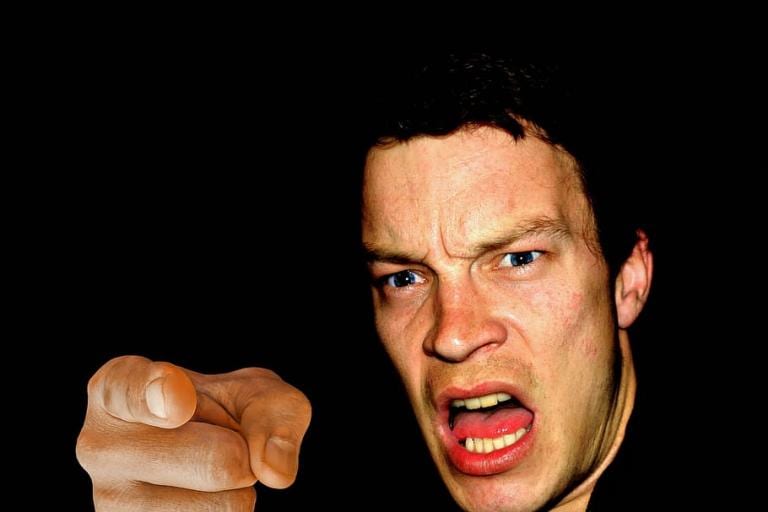
The phrase “toxic masculinity” is both incredibly sociologically useful, and broadly – and perhaps deliberately – misunderstood.
The term is valuable because it allows us to pinpoint sets of culturally conditioned behaviors frequently adopted by men. These behaviors are not natural. They are not ethical. They are damaging to those around them, to themselves, and to society as a whole. When we talk about “toxic masculinity” we talk about these behaviors that men have been trained to enact, not about men per se, nor about “natural” male behavior.
Just as we can point to examples of men enacting toxic masculinity, we can also point to men who have eschewed harmful and dehumanizing paradigms, and instead act as full, flourishing, relational humans. How these men live out and embody “being a man” can be witnessed across a spectrum due to differences in individuals and cultures. But there are many diverse ways of living out life as a man that do not involve the harmful trends of toxic masculinity.
Toxic masculinity is not natural or inborn, but it may seem so, because it is so widespread. From early ages boys are bombarded with images, narratives, and norms that dictate to them that they must “be a man” and what “being a man” entails. Instead of being encouraged to be ethical persons, they are forced into assuming various postures of aggression, dominance, and emotional stuntedness, under the threat of being “less of a man.” Gendered insults about cowardice (‘pussies” or “pansies” or “little girls”) enforce ideas about manly virtue that are flawed both because they are specifically gendered, and because they are not really virtues at all.
Movies and stories depict the heroic male as naturally aggressive, violent towards other men and domineering towards women. The hero is permitted to leave fire, murder, and destruction in his wake, so long as he achieves his heroic (and violent) goal. Men can behave aggressively towards women, and it’s fine, because they are “angry” and male anger is always elevated as worthy. When the man is provoked, especially if he is a straight white man, any possible reaction to provocation is depicted as justified. Even in our ancient myths this idea is enthroned. See the Rage of Achilles.
The ultimate theatre for performative manhood is always the arena of war, but men are granted various substitutes for war where they are similarly expected to manifest their glory specifically by subduing or defeating others – in sports, in the workplace, even in the way men banter and interact socially.
For these men, the prize for victory is often a woman, because within the framework of toxic masculinity women exist only as objects, only as beings for men, whether playthings or trophies. Even in romantic comedies, the prize for the male who has won through his agon of social humiliation is, invariably, a woman – usually a woman younger, more attractive, and more charming than he is. But no one questions the disparity. She is for him. He earned her.
One can see how the phenomenon of the Incel (involuntarily celibate: men who believe it is an injustice that they don’t have romantic partners) in today’s society is fueled by these stories. The man deserves a woman. If a man doesn’t have a woman, he is clearly the victim of cosmic injustice.
Toxic masculinity enforces this idea that men are owed women, and that women can be judged entirely as objects for male gratification.
In order to understand what it meant by toxic masculinity, we need to make several clarifications.
- Masculinity is not the same thing as “being a man.” When we talk about being a man, we talk about everything that is possible in the lives and actions of diverse individual men. Being a man means living as a man, acting in the world as a man, experiencing the world via a man’s body. And because men’s bodies come in many different variations, and bodily manhood can not be reduced to any one necessary or sufficient condition, the best way to talk about being a man is to look at individual men, what they do, how they think, how they feel.
- Masculinity, by contrast, is something more abstract. Some might view it as cognate with “manhood” and a designation for some universal Platonic form in which all individual men participate. This would be the view of gender essentialists. For others who reject gender essentialism as problematic and insufficient, masculinity might be viewed rather as a cultural archetype, a societal norm, a construct, a performance, or even a particular aesthetic. Note, also, that to say “masculinity is not a Platonic universal form” is not the same as saying “masculinity is not real.” A thing can be a construct and still be real.
- Talk about toxic masculinity does not necessarily imply a presumption that all masculinity is toxic. There are some that view the idea or construct of masculinity to be per se harmful, unnatural, and dehumanizing (see Stan Goff on this theme). Others of us do not. I believe, at any rate, that it is possible to entertain ideas about masculinity that are not harmful or limiting. The key is that these ideas a) must not militate against actual conceptions of virtue, b) must not be viewed as normative, c) must not be viewed as exclusive to men or to cis-men only. So, certain postures and performances can be described as specifically masculine in terms of aesthetics and cultural coding. These aesthetics might in fact be beneficial, for some people, in terms of providing them with a blueprint for presenting their own bodily personhood to the world.
- There is no such thing as gendered virtue. There are no virtues that are more specific to men or to women, nor to performances of masculinity or femininity. When humanity is bifurcated in this unnatural way, some virtues allotted to some and other virtues to others, this is precisely how toxic masculinity is seeded. Because it leaves men with a whole dimension of virtue not only undeveloped, but repugnant to them. Women, too, who embrace a stunted idea of femininity, end up less developed as persons and more prone to unethical behavior (see “white women tears”).
- Associations of toxic masculine behaviors (violence, aggression, predation, assault) with “being a man” are profoundly dangerous. We have all seen how this plays out in the wake of the 2016 election. Actions and attitudes modeled by Donald Trump, which any ethical person can see are fundamentally vicious and immoral, were defended as “men will be men.” Bragging about assault was just “locker room talk.” Similarly, Bret Kavanaugh was defended by millions of men who saw mirrored in him their own tendency to prey on women – and to excuse it, as just “what men do.” Women all across the United States suddenly realized – if we had not, already – just how many men are always only a few beers away from committing sexual assault. We realized that in spite of the pretty talk about “chivalry” from so many Christian men, many have been conditioned to circle the wagons and defend a predator even if it means sacrificing a woman’s life, health, and future. We realized that our entire culture fosters this.
- Women (and men) who oppose toxic masculinity are not trying to tear down men. We are not trying to keep men from being strong, brave, assertive, or pioneering. Rather, we are clarifying the distinction between true strength and its false substitute. A strong man, or woman, is not one who needs constantly to be demeaning or subduing others. Courageous people are not necessarily aggressive or brash. Being assertive and defending one’s rights should not mean taking everything as a slight against one’s honor, seeing an insult around every corner, constantly needing to pick a fight, constantly needing to grind others down. On the contrary, aggression in the face of perceived slights, and the need always to be seen as dominant, are traits of weak and poorly disciplined individuals. Unfortunately, it is a lot easier to be noisy and aggressive than it is actually to be courageous and virtuous – which is why, perhaps, the false concept of courage is so popular in our culture. Moreover, being strong and courageous, being a defender of justice and the innocent, is not particular to men. We are all called to act courageously in defense of justice regardless of gender – though, depending on our particular gifts and abilities, what this looks like may differ from one person to the next.
The False Self
It seems to me that a lot of the men who get angry when feminists deconstruct toxic masculinity are angry because they do feel that they themselves are being attacked. If they have spent their lives modeling an ideal of masculinity as aggressive, violent, and predatory, then yes, they are being weighted and found wanting. But not because they are men. Not even because they might happen to model certain traits of masculine performance or aesthetic: being large and muscular, or instance, or being good at manual labor, or even having a deep voice. No, feminists do not have a problem with these traits. Some of us, in fact, rather like them. In my life I have known many men who model behavior that would traditionally be viewed as masculine – men who are large, muscular, physical – who train horses and fix trucks and build houses – who are also kind, generous, empathetic, and gentle.
And regardless of ability or aesthetic, men who are capable of empathy and kindness, who are willing to listen and learn, even to admit when they are wrong, seem far stronger and more courageous than those who are constantly on the alert for any perceived slights to their precious and delicate manly honor.
What we do not like is violence, abuse, assault, aggression, supremacy, and cruelty. We do not like forced, rigid gender roles that cut human beings down into stereotypes. We do not like living in a culture that trains us to create false selves. We do not like having to deal with men who have let these false selves dominate.
What we are objecting to is not men. We are objecting to immorality. And for men who have been accustomed to calling the moral shots, setting up ethical rules to their own advantage, perhaps this does seem like an attack. We aren’t telling them to stop being men, however. We are asking them to wake up and start being human.


Browse Our Archives
Select a Category abortion anti-semitism art Atwood Betrothed church clergy abuse coronavirus culture economics education environmentalism ethics faith family feminism gardening gun violence immigration Judaism literature MaddAddam New Pro Life Movement news pandemic personalism poem politics politics blue Pope Francis racism religion salvation sexuality social justice spirituality Station eleven Stephen King The Stand Trump Uncategorized war World Health Organization
Select a Month March 2021 February 2021 January 2021 December 2020 November 2020 October 2020 September 2020 August 2020 July 2020 June 2020 May 2020 April 2020 March 2020 February 2020 January 2020 December 2019 November 2019 October 2019 September 2019 August 2019 July 2019 June 2019 May 2019 April 2019 March 2019 February 2019 January 2019 December 2018 November 2018 October 2018 September 2018 August 2018 July 2018 June 2018 May 2018 April 2018 March 2018 February 2018 January 2018 December 2017 November 2017 October 2017 September 2017 August 2017 July 2017 June 2017 May 2017 April 2017 March 2017 February 2017 January 2017 December 2016 November 2016 October 2016 September 2016 August 2016 July 2016 June 2016 May 2016 April 2016 March 2016 February 2016
Follow Us!
TAKE THE
Religious Wisdom Quiz
I am the resurrection and the life. Whoever believes in me will live, even though they do what?
Select your answer to see how you score.
Sin Suffer Die Fall
Support this
Column


Related posts from suspended in her jar

Immigrants: They Need Us, and We Need Them

Four Takeaways from Oprah’s Interview with the Duke...

Catholics Are De-Toxing From their Experiences With Traumatic...

How Has the Pandemic Changed Us? Has It...
TRENDING AT PATHEOS Catholic

Rejecting Doom: Christian Hope And Human Action
Christianity is a religion of hope. We are to have hope and...

It’s What Comes From Within Which Matters
One of the most difficult things for us to understand is why...

Why I Choose the Eucharist Over the Sermon
Choose the Eucharist, Not the Sermon What are we supposed to get...

5 Design Elements Found in Spiritually Rooted Homes
Putting Spirituality Into Home Decor Our homes are more than our living...

Credo: A Story of God Told with the...
About 10 years ago, I began to imagine a personal "Credo" that...

The Anatomy of Divine Revelation in Catholic Thought
The claim that God has made Himself known to human beings is...
view all Catholic blogs
Ad-Free & Subscriber Log-In Subscription Support
- About Us
- 2026 Calendar
- Videos
- Podcasts
- Library of World Religions
- Faith In Media Tracker
- Advertise With Us
- Write for Us
- Privacy Policy
- Terms of Service
- Do Not Sell My Data
- Contact Us
- Radiant Digital
- Manage Newsletter Subscriptions
- Unsubscribe From Notifications
- Sitemap
Copyright 2008-2026, Patheos. All rights reserved.
Subscription Support Ad-Free & Subscriber Log-In
Follow Patheos