
BuddhistCatholicContemplativeEvangelicalGeneral ChristianHinduJewishLatter-day SaintMuslimNew VisionsProgressive Christian
Beliefs
- Buddhist
- Catholic
- Contemplative
- Evangelical
- General Christian
- Hindu
- Jewish
- Latter-day Saint
- More Voices
- Muslim
- New Visions
- Pagan
- Progressive Christian
Topics
- Religion News
- Food and Religion
- Sports and Religion
- Religious Art
- Religious Music and Entertainment
- Religious Events
- History and Religion
- Style and Religion
- Politics and Religion
- Women in Religion
- Recreation Outdoors and Religion
- Business Finance and Religion
- Careers Workplace and Religion
- Education and Religion
- Family Parenting and Religion
- Health Fitness and Religion
- Home and Religion
- Relationships and Religion
- Technology and Religion
- Travel and Religion
Columnists
- Buddhist Columnists
- Business Finance and Religion Columnists
- Careers Workplace and Religion Columnists
- Catholic Columnists
- Contemplative Columnists
- Education and Religion Columnists
- Evangelists Columnists
- Family Parenting and Religion Columnists
- General Christian Columnists
- Health Fitness and Religion Columnists
- Hindu Columnists
- History and Religion Columnists
- Home and Religion Columnists
- Jewish Columnists
- More Voices Columnists
- Latter Day Columnists
- Muslim Columnists
- New Visions Columnists
- Nonreligious Columnists
- Pagan Columnists
- Politics and Religion Columnists
- Progressive Columnists
- Recreation Outdoors and Religion Columnists
- Relationships and Religion Columnists
- Religion News Columnists
- Religious Art Columnists
- Religious Events Columnists
- Religious Music and Entertainment Columnists
- Sports and Religion Columnists
- Style and Religion Columnists
- Technology and Religion Columnists
- Travel and Religion Columnists
- Women in Religion Columnists
Resource Library
- 2026 Calendar
- Library of World Religions
- The 100 Most Holy Places on Earth
- Patheos Answers
- Podcasts
- Videos
- Faith Leaders Database
- Anglican Episcopalian
- Bahai
- Baptist
- Buddhism
- Christianity
- Confucianism
- Eastern Orthodoxy
- Hinduism
- Holiness and Pentecostal
- ISKCON
- Islam
- Judaism
- Lutheran
- Methodist
- The Church of Jesus Christ of Latter-day Saints
- New Age
- Paganism
- Presbytarian and Reformed
- Protestantism
- Religion Behind the Scenes
- Roman Catholic
- Scientology
- Shia Islam
- Sikhism
- Sufism
- Sunni Islam
- Taoism
- Zen
- See all religions
Research Tools
 Ad-Free & Subscriber Log-In Subscription Support
Ad-Free & Subscriber Log-In Subscription Support
Follow Patheos 

- Trending:
- Forgiveness
- |
- Marriage
- |
- Consciousness
- |
- Death Penalty
- |
- Election
- |
- Halloween
 suspended in her jar
- Home
- Catholic
- Yes, White People Need to Say Something About Racial Issues – But We Don’t Need to Say a Whole Lot
Yes, White People Need to Say Something About Racial Issues – But We Don’t Need to Say a Whole Lot
Last updated on: June 4, 2020 at 12:48 pm by Rebecca Bratten Weiss
Yes, White People Need to Say Something About Racial Issues – But We Don’t Need to Say a Whole Lot 2020-06-04T12:48:59-04:00 Rebecca Bratten Weiss
Patheos Explore the world's faith through different perspectives on religion and spirituality! Patheos has the views of the prevalent religions and spiritualities of the world.
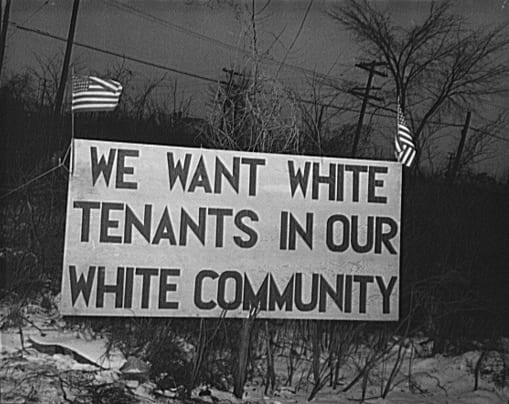
Protests against systemic racism and police violence have been going on for days now, following the murder of George Floyd by a Minneapolis police officer. This is just one of countless instances of state-sponsored violence against Black men and women in our communities. The murder of Floyd, combined with the stresses and uncertainties of pandemic, and the further enabling of racism and prejudice by a racist president, seems to have created a perfect storm of civil unrest.
This is not something we as Christians and citizens can afford to ignore. We have a moral obligation to take cognizance of what is happening, to evaluate the extent to which we may be complicit in it, and ask what we can do to help.
Many people may feel uncomfortable speaking out because they fear they will say the wrong thing, or because they are worried about centering themselves as white people in a conversation that needs to be led by Black people and POC. Or perhaps others may worry that speaking out will look performative – as though posting the right meme, then going back to one’s backyard barbecue, will somehow suffice (it won’t).
Nevertheless I believe that anyone who has a platform in Christian or exclusively white circles does need to speak out about this. Our Black brothers and sisters are not looking to us to craft a design for reform – Black community leaders are doing that already, and our white-savior-hood is not needed. Nor is it our duty to elucidate a nuanced “take” on the matter, especially if our elucidation happens in a chorus of whiteness. There may be nuance when it comes to understanding the intersecting powers and privileges in a particular event, but there is no no room for nuance, when it comes to racism per se. Understanding racism requires work and education, yes, so it is not “simple” in the sense of being easy or one-dimensional.
But there are a few simple and obvious things we can do in the face of racism, including our own racism and racism in our communities: we can start simply by saying, it is wrong. It is a sin. And like any other sin it calls for personal repentance and active penance.
As Christians we participate in the rituals and assert the creeds of a religion which has an unfortunate history with regards to race relations in our nation. The church failed to condemn slavery, failed to excommunicate slave-owners, failed to condemn genocide against indigenous peoples. Clergy and religious kept slaves themselves. Black and Native religious were persecuted by their own white brothers and sisters. Therefore as Christians it is our obligation to reject racism, and to stand with our Black brothers and sisters, to listen to them, to lend them our platforms and our voices.
If you are struggling to articulate what you as a white person have to say on the subject of racial justice you are not alone. Many of us are trying to figure out what to say without coming off as white-savior-y, or performative, or self-centering.
We Are Not the Leaders Here
Here’s a way to think about it: we as white people do not have to craft extended takes on racial issues. We are not the ones who should be leading this conversation because we do not have first-person experience of racial injustice and may inadvertently be harboring many racist ideas ourselves. We will probably be clumsy, and wrong.
So maybe there’s not a lot we need to say, and there’s even a respect in which our silence can be positive – if it’s the silence we place upon ourselves as we step back and listen to Black and Indigenous persons, and people of color. But if we are silent due to indifference, or because we don’t want to rock the boat, this is a negative silence, a toxic silence. It is a silence that cries out to our non-white fellow citizens that we do not care about the injustices they have suffered.
We do need to act, however. We need to research our candidates for political office, locally and nationally, and support those who promote racial reform, vote out those who have been personally racist or who advance systemic racism. We need to donate money, labor, and talents to organizations that promote racial justice. We should be hiring Black speakers to teach us – not expecting them to labor for free. When in white circles we need to use our influence to oppose the kind of racist and derogatory speech that happens because there’s no one else around.
On a personal level we need to work on our own inclinations towards racism. Do we automatically judge people who have Black sounding names? Do we flagrantly appropriate the art and cuisine of non-white cultures, for our own amusement or advancement, without in turn supporting the rights of people in those cultures, or compensating them for our gain? Do we support, financially, individuals and institutions that have been responsible for advancing racial injustice? Have we voted for openly racist candidates because “the economy” or “but abortion”?
Who are we following, on social media, as religious and intellectual leaders? How many of them are non-white?
Maybe think about seeking out some Black, Native, and POC leaders in religion, politics, culture, and the arts. Follow them, buy their books, listen to their podcasts. Retweet them. Amplify their voices. Learn about non-white cultures and what they have to teach us.
And finally, here’s a simple question. Can you say “Black Lives Matter”?
Can you say it simply without embroidery or nuance?
Can you say it without adding “All Lives Matter”?
If you feel the need to say something – but can not bring yourself to say this, just this one simple truth – ask yourself, why?
Black Lives Matter. Period.
image credit:
Wikipedia-We_want_white_tenants-.jpg
Previous Post

May 25, 2020
The Demand to Open Churches Is the Opposite of Christ-Like
Next Post

June 8, 2020 On Retiring Happy and Still Perplexed
Browse Our Archives
Select a Category abortion anti-semitism art Atwood Betrothed church clergy abuse coronavirus culture economics education environmentalism ethics faith family feminism gardening gun violence immigration Judaism literature MaddAddam New Pro Life Movement news pandemic personalism poem politics politics blue Pope Francis racism religion salvation sexuality social justice spirituality Station eleven Stephen King The Stand Trump Uncategorized war World Health Organization
Select a Month March 2021 February 2021 January 2021 December 2020 November 2020 October 2020 September 2020 August 2020 July 2020 June 2020 May 2020 April 2020 March 2020 February 2020 January 2020 December 2019 November 2019 October 2019 September 2019 August 2019 July 2019 June 2019 May 2019 April 2019 March 2019 February 2019 January 2019 December 2018 November 2018 October 2018 September 2018 August 2018 July 2018 June 2018 May 2018 April 2018 March 2018 February 2018 January 2018 December 2017 November 2017 October 2017 September 2017 August 2017 July 2017 June 2017 May 2017 April 2017 March 2017 February 2017 January 2017 December 2016 November 2016 October 2016 September 2016 August 2016 July 2016 June 2016 May 2016 April 2016 March 2016 February 2016
Follow Us!
TAKE THE
Religious Wisdom Quiz
What Christian group believes in the "Plain Dress" tradition?
Select your answer to see how you score.
Amish Presbyterians Methodists Seventh-day Adventists
Support this
Column


Related posts from suspended in her jar

Immigrants: They Need Us, and We Need Them

Four Takeaways from Oprah’s Interview with the Duke...

Catholics Are De-Toxing From their Experiences With Traumatic...

How Has the Pandemic Changed Us? Has It...
TRENDING AT PATHEOS Catholic

Rejecting Doom: Christian Hope And Human Action
Christianity is a religion of hope. We are to have hope and...

It’s What Comes From Within Which Matters
One of the most difficult things for us to understand is why...

Why I Choose the Eucharist Over the Sermon
Choose the Eucharist, Not the Sermon What are we supposed to get...

5 Design Elements Found in Spiritually Rooted Homes
Putting Spirituality Into Home Decor Our homes are more than our living...

Credo: A Story of God Told with the...
About 10 years ago, I began to imagine a personal "Credo" that...

The Anatomy of Divine Revelation in Catholic Thought
The claim that God has made Himself known to human beings is...
view all Catholic blogs
Ad-Free & Subscriber Log-In Subscription Support
- About Us
- 2026 Calendar
- Videos
- Podcasts
- Library of World Religions
- Faith In Media Tracker
- Advertise With Us
- Write for Us
- Privacy Policy
- Terms of Service
- Do Not Sell My Data
- Contact Us
- Radiant Digital
- Manage Newsletter Subscriptions
- Unsubscribe From Notifications
- Sitemap
Copyright 2008-2026, Patheos. All rights reserved.
Subscription Support Ad-Free & Subscriber Log-In
Follow Patheos