
BuddhistCatholicContemplativeEvangelicalGeneral ChristianHinduJewishLatter-day SaintMuslimNew VisionsProgressive Christian
Beliefs
- Buddhist
- Catholic
- Contemplative
- Evangelical
- General Christian
- Hindu
- Jewish
- Latter-day Saint
- More Voices
- Muslim
- New Visions
- Pagan
- Progressive Christian
Topics
- Religion News
- Food and Religion
- Sports and Religion
- Religious Art
- Religious Music and Entertainment
- Religious Events
- History and Religion
- Style and Religion
- Politics and Religion
- Women in Religion
- Recreation Outdoors and Religion
- Business Finance and Religion
- Careers Workplace and Religion
- Education and Religion
- Family Parenting and Religion
- Health Fitness and Religion
- Home and Religion
- Relationships and Religion
- Technology and Religion
- Travel and Religion
Columnists
- Buddhist Columnists
- Business Finance and Religion Columnists
- Careers Workplace and Religion Columnists
- Catholic Columnists
- Contemplative Columnists
- Education and Religion Columnists
- Evangelists Columnists
- Family Parenting and Religion Columnists
- General Christian Columnists
- Health Fitness and Religion Columnists
- Hindu Columnists
- History and Religion Columnists
- Home and Religion Columnists
- Jewish Columnists
- More Voices Columnists
- Latter Day Columnists
- Muslim Columnists
- New Visions Columnists
- Nonreligious Columnists
- Pagan Columnists
- Politics and Religion Columnists
- Progressive Columnists
- Recreation Outdoors and Religion Columnists
- Relationships and Religion Columnists
- Religion News Columnists
- Religious Art Columnists
- Religious Events Columnists
- Religious Music and Entertainment Columnists
- Sports and Religion Columnists
- Style and Religion Columnists
- Technology and Religion Columnists
- Travel and Religion Columnists
- Women in Religion Columnists
Resource Library
- 2026 Calendar
- Library of World Religions
- The 100 Most Holy Places on Earth
- Patheos Answers
- Podcasts
- Videos
- Faith Leaders Database
- Anglican Episcopalian
- Bahai
- Baptist
- Buddhism
- Christianity
- Confucianism
- Eastern Orthodoxy
- Hinduism
- Holiness and Pentecostal
- ISKCON
- Islam
- Judaism
- Lutheran
- Methodist
- The Church of Jesus Christ of Latter-day Saints
- New Age
- Paganism
- Presbytarian and Reformed
- Protestantism
- Religion Behind the Scenes
- Roman Catholic
- Scientology
- Shia Islam
- Sikhism
- Sufism
- Sunni Islam
- Taoism
- Zen
- See all religions
Research Tools
 Ad-Free & Subscriber Log-In Subscription Support
Ad-Free & Subscriber Log-In Subscription Support
Follow Patheos 

- Trending:
- Forgiveness
- |
- Marriage
- |
- Consciousness
- |
- Death Penalty
- |
- Election
- |
- Halloween
 suspended in her jar
- Home
- Catholic
- On Retiring Happy and Still Perplexed
On Retiring Happy and Still Perplexed
Last updated on: June 8, 2020 at 2:30 pm by Guest Contributor
On Retiring Happy and Still Perplexed 2020-06-08T14:30:17-04:00 Guest Contributor
Patheos Explore the world's faith through different perspectives on religion and spirituality! Patheos has the views of the prevalent religions and spiritualities of the world.
by guest writer William M. Shea, PhD
For a big chunk of my life I was a Roman Catholic cleric. I quit in 1980 simply because I couldn’t handle celibacy. I finally, after nineteen years of struggle, decided that as the Scripture has it, “It is not good for the man to be alone.” That truth has increasingly pressed itself upon me during forty years of marriage. I married a really good woman fortunately. This is a marriage made in heaven as far as I am concerned though she has good reason to doubt it. Being a priest was a riveting way of life. Being married is deeply satisfying and hugely expansive, far beyond what I imagined. Both ways of life ripped away at my layers of biases inner storms.
In the decades in the clerical life I never felt at home in rectories or with other priests (not that there weren’t many good moments!) and since I married I haven’t had a day when I didn’t feel at home. Helene is the magnate and I am iron filings. “Being at home” was what I missed most as a priest. We have two sons who never fail to impress me as human beings and now, this very year, we have had two grandsons, Liam and Oscar, who have blown our minds and hearts. God be praised for all that!
Over years “issues” or “questions” arose which I have never escaped, priest or not. I am a religious man whose mind has been pecking at my soul endlessly, wondering why I pray and worship and don’t want to stop. Given this, why in my thirties was I drawn irresistibly to the study of atheists and their mental world? Likewise, why did I in my forties find Protestant Evangelical life, history and faith so intellectually engaging? Why did I get caught up intellectually in the intricacies of knowledge, faith and belief? Why did I rush to questions that cut deeply into my life as a committed Catholic? Now, near the end, I have provisional answers to a couple of them.
First, I knew that God exists even when “empirical evidence” points in the opposite direction, toward atheism, namely pain, violence and death, all of which terrified me in my youth and the first and second of which still do. Given that God exists, a fact that I have known all my life, there remained the question of how I knew that to be so. In addition there is also the question what God is. For me these have been existential and essential questions for much of my adult life. They don’t flood my everyday life but appear whenever I sat down to think. An initial breakthrough occurred when I read Bernard Lonergan’s great book, Insight: A Study of Human Understanding. He kept me busy in my middle years on answering my questions about God.
I settled on answers in this way: I know that God exists because I can’t stop the question and can’t stop praying without becoming less human. My mind and heart reach out to God and won’t stop. I am restless until I rest in God. Also, I don’t know what God is except to say what He is like and what He isn’t like because I simply can’t wrap my mind around God. I even know He isn’t a he, a she or an it. As St. Augustine said in one of his sermons, “If you comprehend it, it isn’t God.” I do know that, given time and energy, I could in principle wrap my mind around anything in the cosmos, but even given time and energy I could not “comprehend” God. There can’t be enough time and energy for that. I know God is not a thing and God is not nothing. What exactly God is I can’t say, and at last I’m not unhappy with this. Note that I’m abstracting from Christian revelation in these philosophical claims and note how close this is to Eastern Orthodox Negative Theology.
Secondly, from my teenage years I loved the church and it has been a fascinating mystery to me. Literally the term ecclesia means “an assembly of the people,” in this case “the pilgrim people who call upon the Name.” In practice, as Jesus pronounced, “Wherever two or three are assembled in my name there I am in the midst of them.” The church is also all those who assemble in the Name wherever and whenever they are. I worried about this when I started teaching Evangelical students at the University of South Florida. Up till that point all I knew was that Jimmy Carter and Roslyn were two of whatever Evangelicals are and that 1976 was the “Year of Evangelicals” according to Time. Starting in 1980 I began to ask myself: Can they be full Christians without pope and bishops, without being Roman Catholic, just the sort of question a monochromatic Catholic like me would ask. In the course of twenty-eight years of thinking, reading, writing and talking, I reached a decision which put me at odds with The Magisterium and likely with serious ecclesiologists. I’ve concluded that one can be a full Christian with or without bishops, popes and priests, and that’s OK. It’s different, it may appear peculiar to an RC but it’s OK!
Implication: I don’t think that Christians are bound to a universal form of governance or worship or practice. I’m OK with Roman and episcopal leadership, but I think those very leaders have made much too much of their office in sacral and ecclesial terms. I think they have made themselves “sacred” and I fully understand why the Reformers had enough of it. At this point in my life I am so embedded in the community ethos and leadership style of Roman Catholicism that I wouldn’t go searching for another. That you don’t have to be Roman Catholic to belong to the Catholic Assembly is what Evangelicals have taught me. They are as Catholic as the pope is. The church is already one even if bickering interminably.
“What evil lurks in the hearts of men”
Finally, I have long and intensely wondered about the relationship between the evils in history and the storms in my own soul. I recoil from Hitler, Mussolini, Stalin, Mao, Pol Pot et al. with all the political energy I can summon. But are they reflections of the storms of my own psychic and emotional life? Are there genies of evil even in the geniuses of good? Remember please that the Nazi leaders with the exception of Goering were Roman Catholics! Are they one of us, or are we one with them? I want to say no. I want to say there are good people and I am among them. Could it be, in some unfathomable way, that the same evil of soul threatens me?
Hitler spoke to but also for the “German soul,” and worse yet, for the human soul, as well as to and for the SS men who counted out the gold teeth of the millions and to my own soul. He did, along with the other mass murders, reveal actual and potential evils that spring from human beings and perhaps even from the cosmos itself — and if so, what again is God? What is Satan? I was as a child instructed weekly by The Shadow: “Who knows what evil lurks in the hearts of men?” Why would God, whom I don’t understand, create a history in which the holocaust is possible, even likely? I don’t understand this at all. There has been no settlement on this question. There had better be but there isn’t yet.
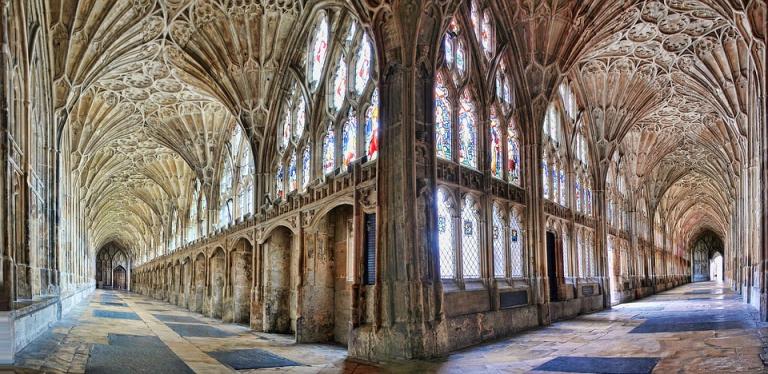
image credit: gloucester-2391516_960_720.jpg

Next Post

June 16, 2020 Why Are We Flying "Treason's Flaunting Rag"? A Military Historian Considers
Browse Our Archives
Select a Category abortion anti-semitism art Atwood Betrothed church clergy abuse coronavirus culture economics education environmentalism ethics faith family feminism gardening gun violence immigration Judaism literature MaddAddam New Pro Life Movement news pandemic personalism poem politics politics blue Pope Francis racism religion salvation sexuality social justice spirituality Station eleven Stephen King The Stand Trump Uncategorized war World Health Organization
Select a Month March 2021 February 2021 January 2021 December 2020 November 2020 October 2020 September 2020 August 2020 July 2020 June 2020 May 2020 April 2020 March 2020 February 2020 January 2020 December 2019 November 2019 October 2019 September 2019 August 2019 July 2019 June 2019 May 2019 April 2019 March 2019 February 2019 January 2019 December 2018 November 2018 October 2018 September 2018 August 2018 July 2018 June 2018 May 2018 April 2018 March 2018 February 2018 January 2018 December 2017 November 2017 October 2017 September 2017 August 2017 July 2017 June 2017 May 2017 April 2017 March 2017 February 2017 January 2017 December 2016 November 2016 October 2016 September 2016 August 2016 July 2016 June 2016 May 2016 April 2016 March 2016 February 2016
Follow Us!
TAKE THE
Religious Wisdom Quiz
What is the central prayer of Christian faith, taught by Jesus?
Select your answer to see how you score.
The Hail Mary The Shema The Lord's Prayer The Jesus Prayer
Support this
Column


Related posts from suspended in her jar

Immigrants: They Need Us, and We Need Them

Four Takeaways from Oprah’s Interview with the Duke...

Catholics Are De-Toxing From their Experiences With Traumatic...

How Has the Pandemic Changed Us? Has It...
TRENDING AT PATHEOS Catholic

Rejecting Doom: Christian Hope And Human Action
Christianity is a religion of hope. We are to have hope and...

It’s What Comes From Within Which Matters
One of the most difficult things for us to understand is why...

Why I Choose the Eucharist Over the Sermon
Choose the Eucharist, Not the Sermon What are we supposed to get...

5 Design Elements Found in Spiritually Rooted Homes
Putting Spirituality Into Home Decor Our homes are more than our living...

Credo: A Story of God Told with the...
About 10 years ago, I began to imagine a personal "Credo" that...

The Anatomy of Divine Revelation in Catholic Thought
The claim that God has made Himself known to human beings is...
view all Catholic blogs
Ad-Free & Subscriber Log-In Subscription Support
- About Us
- 2026 Calendar
- Videos
- Podcasts
- Library of World Religions
- Faith In Media Tracker
- Advertise With Us
- Write for Us
- Privacy Policy
- Terms of Service
- Do Not Sell My Data
- Contact Us
- Radiant Digital
- Manage Newsletter Subscriptions
- Unsubscribe From Notifications
- Sitemap
Copyright 2008-2026, Patheos. All rights reserved.
Subscription Support Ad-Free & Subscriber Log-In
Follow Patheos