
BuddhistCatholicContemplativeEvangelicalGeneral ChristianHinduJewishLatter-day SaintMuslimNew VisionsProgressive Christian
Beliefs
- Buddhist
- Catholic
- Contemplative
- Evangelical
- General Christian
- Hindu
- Jewish
- Latter-day Saint
- More Voices
- Muslim
- New Visions
- Pagan
- Progressive Christian
Topics
- Religion News
- Food and Religion
- Sports and Religion
- Religious Art
- Religious Music and Entertainment
- Religious Events
- History and Religion
- Style and Religion
- Politics and Religion
- Women in Religion
- Recreation Outdoors and Religion
- Business Finance and Religion
- Careers Workplace and Religion
- Education and Religion
- Family Parenting and Religion
- Health Fitness and Religion
- Home and Religion
- Relationships and Religion
- Technology and Religion
- Travel and Religion
Columnists
- Buddhist Columnists
- Business Finance and Religion Columnists
- Careers Workplace and Religion Columnists
- Catholic Columnists
- Contemplative Columnists
- Education and Religion Columnists
- Evangelists Columnists
- Family Parenting and Religion Columnists
- General Christian Columnists
- Health Fitness and Religion Columnists
- Hindu Columnists
- History and Religion Columnists
- Home and Religion Columnists
- Jewish Columnists
- More Voices Columnists
- Latter Day Columnists
- Muslim Columnists
- New Visions Columnists
- Nonreligious Columnists
- Pagan Columnists
- Politics and Religion Columnists
- Progressive Columnists
- Recreation Outdoors and Religion Columnists
- Relationships and Religion Columnists
- Religion News Columnists
- Religious Art Columnists
- Religious Events Columnists
- Religious Music and Entertainment Columnists
- Sports and Religion Columnists
- Style and Religion Columnists
- Technology and Religion Columnists
- Travel and Religion Columnists
- Women in Religion Columnists
Resource Library
- 2026 Calendar
- Library of World Religions
- The 100 Most Holy Places on Earth
- Patheos Answers
- Podcasts
- Videos
- Faith Leaders Database
- Anglican Episcopalian
- Bahai
- Baptist
- Buddhism
- Christianity
- Confucianism
- Eastern Orthodoxy
- Hinduism
- Holiness and Pentecostal
- ISKCON
- Islam
- Judaism
- Lutheran
- Methodist
- The Church of Jesus Christ of Latter-day Saints
- New Age
- Paganism
- Presbytarian and Reformed
- Protestantism
- Religion Behind the Scenes
- Roman Catholic
- Scientology
- Shia Islam
- Sikhism
- Sufism
- Sunni Islam
- Taoism
- Zen
- See all religions
Research Tools
 Ad-Free & Subscriber Log-In Subscription Support
Ad-Free & Subscriber Log-In Subscription Support
Follow Patheos 

- Trending:
- Forgiveness
- |
- Marriage
- |
- Consciousness
- |
- Death Penalty
- |
- Election
- |
- Halloween
 suspended in her jar
- Home
- Catholic
- How We Speak About Death
How We Speak About Death
Last updated on: May 11, 2020 at 9:06 pm by Rebecca Bratten Weiss
How We Speak About Death 2020-05-11T21:06:14-04:00 Rebecca Bratten Weiss
Patheos Explore the world's faith through different perspectives on religion and spirituality! Patheos has the views of the prevalent religions and spiritualities of the world.

Yesterday marks four weeks since my father died. He died on Easter Sunday, in the middle of a pandemic.
Usually we would have had our Easter dinner together with my parents and my daughters’ godparents at my house, but this Easter, due to the requirements of social distancing, we did not. So my children last spoke to my father through the window of my parents’ sun porch. Later I brought over a dinner box for my parents, and my father and I laughed together about the foolishness of people who hate dandelions.
Did I have a premonition that this was the last time I would speak with him? It is hard to say. Everything these days seems taut as wires, sensitive to the smallest reverberation. We go our ways dodging microbes, aware of the repercussions of a touch, a breath. It is hard not to have a general sense of doom.
Later that evening, his heart stopped. He stopped breathing. He died.
I could say, it is four weeks since he passed on, since he left us, since he went to a better place. But I dislike these euphemisms for death. They remind me of the mawkish unrealism Evelyn Waugh depicted in his satiric novel The Loved One, in which the funeral industry runs apace with the entertainment industry in its race to escape the rigorous demands of life enfleshed. No one in that world can be admitted to have died. There is no skull beneath the skin. The skin itself is plastered over with garish cosmetics, and embalmed in sentiment. And for all the frenetic energy poured into these monumental denials, it doesn’t work.
There is nothing really consoling about pretending a dead body isn’t really dead.
My father was a man of large contradictions and strong opinions, and one of those opinions was that one must beware of “nice.” “Nice is a four-letter word,” he liked to remind us. I don’t think he would want to be spoken of as having “passed on”, even if that kind of language makes people feel better. It is not “nice” to rub people’s noses in the inevitability of death. It is much nicer to speak vaguely, to pretend that our bodies are not trundling toward the grave, and that the grave is not a place where bodies swell, split, decompose, mummify. We don’t like to think about what happens to our bodies when we die but, believe me, when one has lost a loved one, we think about it. We can’t pretend it isn’t grotesque and horrifying.
In my family, we never made any secret of this. We were not and are not “nice.” We have all discussed at length how and where we want our dead bodies dealt with: whether buried in a pine box, composted, or burned and made into jewelry. My father wanted to be buried in the back yard and for my husband to dig his grave – near our Pet Cemetery, in fact – but that would not have been practicable, so the cemetery on the hill it was. I don’t really know that it makes it all that easier for us to accept death, because we are overt about it. Dad did not want to go gently to any good night, and neither do his children, but we’d rather at least be direct about what it is we fear.
For Christians who believe in the resurrection of the body it seems evasive to talk as though the body didn’t really die.
And whether one believes in an afterlife or not, pretending that death is not death is not helpful, in the case of bereavement. It sounds like a denial that loss is real, that grief is real. And this attitude of evasiveness may even actively contribute to the harm.
As the COVID-19 numbers keep rising, and thousands around our nation mourn the loss of those who died alone, I see thousands of others shrug off the gravity of these losses. Eighty thousand deaths, what’s the big deal? “No one cares,” one commenter said, regarding a report on local deaths.
I think our culture has been sheltered too long from the effects of our own irresponsibility. We have waged wars in remote regions, targeting poor brown people in foreign lands, rarely feeling the tragedy of war, or being reminded of our own helplessness in the face of brute mortality. Maybe our culture’s reluctance to be real about death is connected with our blithe willingness to mete it out, as long as we don’t have to see it. Whether it’s a Syrian refugee child blown to bits in a remote city or a COVID-19 patient gasping her last in a quarantined room, as long as we don’t have to see them we can go on acting as though they don’t matter. As though death doesn’t matter. As though there is no death – just a flutter of angel wings and a “passing on.”
My father did not pass on. He is dead. His body lies in a wooden box, in a concrete vault six feet beneath the sod, in the little cemetery on the hill that I can see from my kitchen window. This is not a flutter of angel wings. This is real as dirt and stone.
We buried my father with his pockets full of corn and bean seeds, as he was a gardener, a gardener who saved heirloom seeds every year, meticulously, religiously. He will never look forward to another harvest on this earth.
You could talk to me about the pockets full of beans and corn as a sign of hope, but I’m tired of this need to jump straight to hope without spending time in the dark, with our dead, with the memories that will recede day by day into the past and someday be forgotten. The Jewish custom of sitting shiva for the dead acknowledges that it’s a mistake to rush right out of the stage of grieving. Sometimes, let me be honest here, seeds are planted, and no harvest comes.
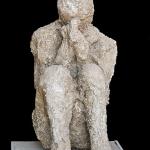
image is from the author’s personal collection
Previous Post
May 3, 2020
How to Stop Talking Nonsense: The Myth of Redemptive Suffering
Next Post

May 15, 2020 What Are We Willing To Sacrifice, To Get Through the Pandemic?
Browse Our Archives
Select a Category abortion anti-semitism art Atwood Betrothed church clergy abuse coronavirus culture economics education environmentalism ethics faith family feminism gardening gun violence immigration Judaism literature MaddAddam New Pro Life Movement news pandemic personalism poem politics politics blue Pope Francis racism religion salvation sexuality social justice spirituality Station eleven Stephen King The Stand Trump Uncategorized war World Health Organization
Select a Month March 2021 February 2021 January 2021 December 2020 November 2020 October 2020 September 2020 August 2020 July 2020 June 2020 May 2020 April 2020 March 2020 February 2020 January 2020 December 2019 November 2019 October 2019 September 2019 August 2019 July 2019 June 2019 May 2019 April 2019 March 2019 February 2019 January 2019 December 2018 November 2018 October 2018 September 2018 August 2018 July 2018 June 2018 May 2018 April 2018 March 2018 February 2018 January 2018 December 2017 November 2017 October 2017 September 2017 August 2017 July 2017 June 2017 May 2017 April 2017 March 2017 February 2017 January 2017 December 2016 November 2016 October 2016 September 2016 August 2016 July 2016 June 2016 May 2016 April 2016 March 2016 February 2016
Follow Us!
TAKE THE
Religious Wisdom Quiz
How many disciples did Jesus call as His closest followers?
Select your answer to see how you score.
Twenty Ten Seven Twelve
Support this
Column


Related posts from suspended in her jar

Immigrants: They Need Us, and We Need Them

Four Takeaways from Oprah’s Interview with the Duke...

Catholics Are De-Toxing From their Experiences With Traumatic...

How Has the Pandemic Changed Us? Has It...
TRENDING AT PATHEOS Catholic

Rejecting Doom: Christian Hope And Human Action
Christianity is a religion of hope. We are to have hope and...

It’s What Comes From Within Which Matters
One of the most difficult things for us to understand is why...

Why I Choose the Eucharist Over the Sermon
Choose the Eucharist, Not the Sermon What are we supposed to get...

5 Design Elements Found in Spiritually Rooted Homes
Putting Spirituality Into Home Decor Our homes are more than our living...

Credo: A Story of God Told with the...
About 10 years ago, I began to imagine a personal "Credo" that...

The Anatomy of Divine Revelation in Catholic Thought
The claim that God has made Himself known to human beings is...
view all Catholic blogs
Ad-Free & Subscriber Log-In Subscription Support
- About Us
- 2026 Calendar
- Videos
- Podcasts
- Library of World Religions
- Faith In Media Tracker
- Advertise With Us
- Write for Us
- Privacy Policy
- Terms of Service
- Do Not Sell My Data
- Contact Us
- Radiant Digital
- Manage Newsletter Subscriptions
- Unsubscribe From Notifications
- Sitemap
Copyright 2008-2026, Patheos. All rights reserved.
Subscription Support Ad-Free & Subscriber Log-In
Follow Patheos