
BuddhistCatholicContemplativeEvangelicalGeneral ChristianHinduJewishLatter-day SaintMuslimNew VisionsProgressive Christian
Beliefs
- Buddhist
- Catholic
- Contemplative
- Evangelical
- General Christian
- Hindu
- Jewish
- Latter-day Saint
- More Voices
- Muslim
- New Visions
- Pagan
- Progressive Christian
Topics
- Religion News
- Food and Religion
- Sports and Religion
- Religious Art
- Religious Music and Entertainment
- Religious Events
- History and Religion
- Style and Religion
- Politics and Religion
- Women in Religion
- Recreation Outdoors and Religion
- Business Finance and Religion
- Careers Workplace and Religion
- Education and Religion
- Family Parenting and Religion
- Health Fitness and Religion
- Home and Religion
- Relationships and Religion
- Technology and Religion
- Travel and Religion
Columnists
- Buddhist Columnists
- Business Finance and Religion Columnists
- Careers Workplace and Religion Columnists
- Catholic Columnists
- Contemplative Columnists
- Education and Religion Columnists
- Evangelists Columnists
- Family Parenting and Religion Columnists
- General Christian Columnists
- Health Fitness and Religion Columnists
- Hindu Columnists
- History and Religion Columnists
- Home and Religion Columnists
- Jewish Columnists
- More Voices Columnists
- Latter Day Columnists
- Muslim Columnists
- New Visions Columnists
- Nonreligious Columnists
- Pagan Columnists
- Politics and Religion Columnists
- Progressive Columnists
- Recreation Outdoors and Religion Columnists
- Relationships and Religion Columnists
- Religion News Columnists
- Religious Art Columnists
- Religious Events Columnists
- Religious Music and Entertainment Columnists
- Sports and Religion Columnists
- Style and Religion Columnists
- Technology and Religion Columnists
- Travel and Religion Columnists
- Women in Religion Columnists
Resource Library
- 2026 Calendar
- Library of World Religions
- The 100 Most Holy Places on Earth
- Patheos Answers
- Podcasts
- Videos
- Faith Leaders Database
- Anglican Episcopalian
- Bahai
- Baptist
- Buddhism
- Christianity
- Confucianism
- Eastern Orthodoxy
- Hinduism
- Holiness and Pentecostal
- ISKCON
- Islam
- Judaism
- Lutheran
- Methodist
- The Church of Jesus Christ of Latter-day Saints
- New Age
- Paganism
- Presbytarian and Reformed
- Protestantism
- Religion Behind the Scenes
- Roman Catholic
- Scientology
- Shia Islam
- Sikhism
- Sufism
- Sunni Islam
- Taoism
- Zen
- See all religions
Research Tools
 Ad-Free & Subscriber Log-In Subscription Support
Ad-Free & Subscriber Log-In Subscription Support
Follow Patheos 

- Trending:
- Forgiveness
- |
- Marriage
- |
- Consciousness
- |
- Death Penalty
- |
- Election
- |
- Halloween
 suspended in her jar
- Home
- Catholic
- Knowing God, and Wondering Still: How Doubting Fits A Life of Faith
Knowing God, and Wondering Still: How Doubting Fits A Life of Faith
Last updated on: March 27, 2020 at 11:45 pm by Guest Contributor
Knowing God, and Wondering Still: How Doubting Fits A Life of Faith 2020-03-27T23:45:19-04:00 Guest Contributor
Patheos Explore the world's faith through different perspectives on religion and spirituality! Patheos has the views of the prevalent religions and spiritualities of the world.
This is the last in a series of essays on faith, religion, and atheism, by guest contributor William M. Shea, PhD
Is religion a matter of knowing or believing?
Both in fact. Let me mention a moment or two in my life that reveal my ambiguity on the answer to the question. I said in a previous post that I am a potential atheist. I remember sharply God’s absence from me for two solid years in the seminary. Psychological loneliness was acute. Every night in prayer I would ask “Where are you? What do you want?” And I felt nothing but absence and silence. For the meaning of that Absence I did not take any account of the teaching of the Christian mystics on the Dark Night of the Soul. Ten years before that the Holocaust was revealed to me in Movietone news films in 1945-46. This shock resulted in a life-long obsessive attention to the history thereof, and was brought to vivid life again every time I met and was befriended by a Jew.[1] Among the documentaries of the Holocaust there are pictures of children walking out of Hell showing the tattooed numbers on their tiny arms. Children!! And where was their God who promised not to abandon His children? I take violence, pain and death to be the only significant counter to the testimony of my people and my own heart that God is Present even in Absence. I don’t understand evil. Hatred and murder of Jews is evil.
How does doubting fit in a life of faith?
It fits a constantly reforming life of faith and its maturation. Kill the questions and you kill the life. The desire for intellectual stasis is important but secondary. Questioning what we think we know is essential to reform and to knowing, and reform is essential to communal history. God according to common religious teaching is “transcendent,” above the possibility of understanding, incomprehensible. So St. Augustine and St. Thomas Aquinas. We cannot know WHAT God is but we can know THAT God is and what God isn’t. I agree with them. I knew that before I read what they wrote but I couldn’t have put it in words without them
God is “felt” before God is affirmed, “felt” as both Presence and Absence in season. Pascal was correct: the heart has reasons that Reason knows not! God is longed for or intended before “felt” (NB. I am not saying sensed) in the mind’s profound reaction to being including one’s own, and to Ipsum Esse (Being Itself), a reaction which may occur in the context of hearing a teaching or a preaching, perhaps reading the Bible or the Koran or the Upanishads, perhaps in a forest, perhaps in an empty or a filled heart and during a sighting of the image of an abandoned man on a cross or a four-year old child with numbers tattooed on its forearm leaving Auschwitz. We are naturally disposed to God, to seek an answer to the question, and so there is longing, discovery and religious faith, community and proclamation. Perhaps even in an immersion in the darkness before we sleep. Behind it all there is the question. “Am I alone?” Aquinas’ advice: Look at nature. Augustine’s answer: Look within.
But questioning, and so doubt, is intrinsic to the path of faith as well as to the path of knowing anything at all. We doubt especially when our culture is breaking up and re-forming. Could it be that I (we, my own people) have been wrong all along? Of course I may be! We were wrong when we put an historical shell around Genesis 1 and 2. Could we be wrong about a Creator? Let’s ponder that. How about the Real Presence? What are we Catholics to think about that, and do we believe it — whatever it is? Is Mary’s virginity a biological fact, a meaningful figure of speech or just silly mythological projection? Is God a dream? How did I ever get from the desire for God to God Present and Absent?
I’ve always known God since my parents, who knew God intimately, taught me about such matters, and from my twenty years of formal Catholic education, and forty more years of academic teaching and reading and thinking, and from eighty years of hanging around and praying with Catholics. I learned that God exists, not only as a matter of belief but as a matter of knowledge, somewhere in that education process even before I was able intellectually to make the distinction between knowing and believing. Frankly, for much of that time my knowing and my believing were a single well-mixed stew. I started getting interested in the question of knowing, believing and God in my seminary years, and began to question my Christian language and believing. Then I spent ten years in doctoral studies at the Columbia University School of Philosophy, and decided to come at the issues through reading atheists and a couple of important Catholic theologians (Karl Rahner and Bernard Lonergan, both Jesuits). In the course of that long period of often anxious reflection I was able to conclude formally that God exists. I also knew that what I meant by the term “God” was very mysterious indeed, and I still hadn’t figured out the difference between knowing and believing. One of the surprising moments in this journey happened when I was defending my dissertation in the midst of which I was asked this question by one of the stars of the Columbia faculty: “Do you mean to say that you know that God exists?” Incredulity appeared on his face, and I said with conviction and to my own surprise “Yes I do.”
When atheists deny the existence of God they in fact deny that empirical reality is intelligible through and through.
Empirical reality doesn’t make much sense on its own. This is the crux. Lonergan puts it in a syllogism:[2]
If the real is completely intelligible, then God exists.
But the real is completely intelligible.
Therefore God exists.
Lest the reader think Lonergan a simpleton who gets off on a tricky little syllogism, remember that the “little syllogism” is preceded by 671 pages of closely argued propaedeutic which I take to be both philosophically convincing and groundbreaking.
But I knew long before I read Insight that God exists, and before I read St. Thomas and St. Augustine as well. How come?
You may well say that I knew it because I was taught to believe it. Yes, we are disposed to believe what we are taught, like great apes. But for us reflective beings there are histories of our communities, and so beliefs and practices develop, change and are subject to correction. We are in a period of correction and cultural change now, and doubt is crucial to that change. We are merging into a universal community far beyond tribalism, we doubt our inherited beliefs and even defend or attack them by argument if we are so disposed. We are in a period of doubt when what we have imagined and built (our world of meaning) is quivering under the force of change and we are disoriented in questioning our worlds of meaning and value. We must take account of it all, and the all is changing. Atheism is a result of change before it is the cause of it, just like we religious people are. And so I know by virtue of my human experience that God exists and I question (doubt) because I also know that I often don’t know what I am talking about, I believe in the What. “I believe in God the Father almighty Creator of heaven and earth…”
But why or how do I believe what I do not know? I believe because I am a Catholic Christian and these are the meanings essential to being a Catholic Christian. I do not believe in abstractions and then, as a result, become a Catholic. I discover that these are the meanings and values of a people whose life I love and then become a Catholic. The church is the matrix from which faith, hope and love issue. This is why it does make some sense to call the church “mother.” I began this love affair with the community at the knees of my parents. I saw what they loved and began to love as they did. The affair began and thrived in spite of the failures of myself and other members of the Body. “Beliefs” follow from immersion in that communal life. The preeminent belief is in the kerygma, the church’s proclamation that Jesus of Nazareth, dead and risen from the tomb, is the one who mediates the God to us whom I know exists and now believe in. Still, I do not know God’s ways when I think of the children with the tabooed numbers on their tiny arms or wonder how a loving Father could make a world in which an innocent man dies in agony on a cross. So when I trust I also must shout “What the hell is going on here?” I hope for yet do not expect an answer to this question but I do trust the church’s proclamation.
[1] This happened so often that I concluded long ago that Jews are a very friendly and honest people. Surely their comedians the funniest in the world. To boot, they are no more clannish than the Irish.
[2] Insight: A Study of Human Understanding ( Philosophical Library, 1957) p.672. On the question of God see Bernard Lonergan, Method in Theology (Herder and Herder, 1972) pp. 13-19; 101-105.
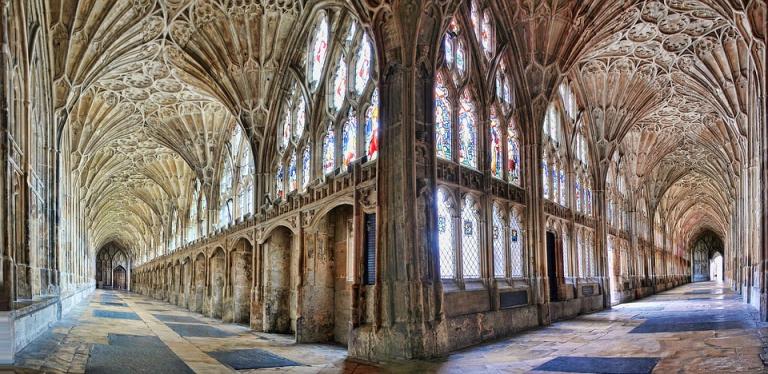
image credit: gloucester-2391516_960_720.jpg
Previous Post

March 24, 2020
Right Wing Leaders Propose Human Sacrifice To Prop Up the One Percent
Next Post
April 10, 2020 The Danger of Faith Without Evidence, Religion Without Immanence
Browse Our Archives
Select a Category abortion anti-semitism art Atwood Betrothed church clergy abuse coronavirus culture economics education environmentalism ethics faith family feminism gardening gun violence immigration Judaism literature MaddAddam New Pro Life Movement news pandemic personalism poem politics politics blue Pope Francis racism religion salvation sexuality social justice spirituality Station eleven Stephen King The Stand Trump Uncategorized war World Health Organization
Select a Month March 2021 February 2021 January 2021 December 2020 November 2020 October 2020 September 2020 August 2020 July 2020 June 2020 May 2020 April 2020 March 2020 February 2020 January 2020 December 2019 November 2019 October 2019 September 2019 August 2019 July 2019 June 2019 May 2019 April 2019 March 2019 February 2019 January 2019 December 2018 November 2018 October 2018 September 2018 August 2018 July 2018 June 2018 May 2018 April 2018 March 2018 February 2018 January 2018 December 2017 November 2017 October 2017 September 2017 August 2017 July 2017 June 2017 May 2017 April 2017 March 2017 February 2017 January 2017 December 2016 November 2016 October 2016 September 2016 August 2016 July 2016 June 2016 May 2016 April 2016 March 2016 February 2016
Follow Us!
TAKE THE
Religious Wisdom Quiz
Who sat at the Beautiful Gate begging before Peter healed him?
Select your answer to see how you score.
A lame man A rich ruler A blind man A Roman centurion
Support this
Column


Related posts from suspended in her jar

Catholics Are De-Toxing From their Experiences With Traumatic...

How Has the Pandemic Changed Us? Has It...

Rush Limbaugh Would Never Have Succeeded In an...
People are in Therapy to Recover from Religion...
TRENDING AT PATHEOS Catholic

Creation, Preservation, and Teleology in Catholic Theology
As I write this, it is very early Monday morning. Like millions...

The Parable Of The Sower And The Word...
One of Christ’s most famous parables is that of the sower who...

Rejecting Doom: Christian Hope And Human Action
Christianity is a religion of hope. We are to have hope and...

Why I Choose the Eucharist Over the Sermon
Choose the Eucharist, Not the Sermon What are we supposed to get...

5 Design Elements Found in Spiritually Rooted Homes
Putting Spirituality Into Home Decor Our homes are more than our living...

Credo: A Story of God Told with the...
About 10 years ago, I began to imagine a personal "Credo" that...
view all Catholic blogs
Ad-Free & Subscriber Log-In Subscription Support
- About Us
- 2026 Calendar
- Videos
- Podcasts
- Library of World Religions
- Faith In Media Tracker
- Advertise With Us
- Write for Us
- Privacy Policy
- Terms of Service
- Do Not Sell My Data
- Contact Us
- Radiant Digital
- Manage Newsletter Subscriptions
- Unsubscribe From Notifications
- Sitemap
Copyright 2008-2026, Patheos. All rights reserved.
Subscription Support Ad-Free & Subscriber Log-In
Follow Patheos