
BuddhistCatholicContemplativeEvangelicalGeneral ChristianHinduJewishLatter-day SaintMuslimNew VisionsProgressive Christian
Beliefs
- Buddhist
- Catholic
- Contemplative
- Evangelical
- General Christian
- Hindu
- Jewish
- Latter-day Saint
- More Voices
- Muslim
- New Visions
- Pagan
- Progressive Christian
Topics
- Religion News
- Food and Religion
- Sports and Religion
- Religious Art
- Religious Music and Entertainment
- Religious Events
- History and Religion
- Style and Religion
- Politics and Religion
- Women in Religion
- Recreation Outdoors and Religion
- Business Finance and Religion
- Careers Workplace and Religion
- Education and Religion
- Family Parenting and Religion
- Health Fitness and Religion
- Home and Religion
- Relationships and Religion
- Technology and Religion
- Travel and Religion
Columnists
- Buddhist Columnists
- Business Finance and Religion Columnists
- Careers Workplace and Religion Columnists
- Catholic Columnists
- Contemplative Columnists
- Education and Religion Columnists
- Evangelists Columnists
- Family Parenting and Religion Columnists
- General Christian Columnists
- Health Fitness and Religion Columnists
- Hindu Columnists
- History and Religion Columnists
- Home and Religion Columnists
- Jewish Columnists
- More Voices Columnists
- Latter Day Columnists
- Muslim Columnists
- New Visions Columnists
- Nonreligious Columnists
- Pagan Columnists
- Politics and Religion Columnists
- Progressive Columnists
- Recreation Outdoors and Religion Columnists
- Relationships and Religion Columnists
- Religion News Columnists
- Religious Art Columnists
- Religious Events Columnists
- Religious Music and Entertainment Columnists
- Sports and Religion Columnists
- Style and Religion Columnists
- Technology and Religion Columnists
- Travel and Religion Columnists
- Women in Religion Columnists
Resource Library
- 2026 Calendar
- Library of World Religions
- The 100 Most Holy Places on Earth
- Patheos Answers
- Podcasts
- Videos
- Faith Leaders Database
- Anglican Episcopalian
- Bahai
- Baptist
- Buddhism
- Christianity
- Confucianism
- Eastern Orthodoxy
- Hinduism
- Holiness and Pentecostal
- ISKCON
- Islam
- Judaism
- Lutheran
- Methodist
- The Church of Jesus Christ of Latter-day Saints
- New Age
- Paganism
- Presbytarian and Reformed
- Protestantism
- Religion Behind the Scenes
- Roman Catholic
- Scientology
- Shia Islam
- Sikhism
- Sufism
- Sunni Islam
- Taoism
- Zen
- See all religions
Research Tools
 Ad-Free & Subscriber Log-In Subscription Support
Ad-Free & Subscriber Log-In Subscription Support
Follow Patheos 

- Trending:
- Forgiveness
- |
- Marriage
- |
- Consciousness
- |
- Death Penalty
- |
- Election
- |
- Halloween
 suspended in her jar
- Home
- Catholic
- Atheists and Christians: Are Atheists Deficient In Love?
Atheists and Christians: Are Atheists Deficient In Love?
Last updated on: March 7, 2020 at 11:30 pm by Guest Contributor
Atheists and Christians: Are Atheists Deficient In Love? 2020-03-07T23:30:37-04:00 Guest Contributor
Patheos Explore the world's faith through different perspectives on religion and spirituality! Patheos has the views of the prevalent religions and spiritualities of the world.
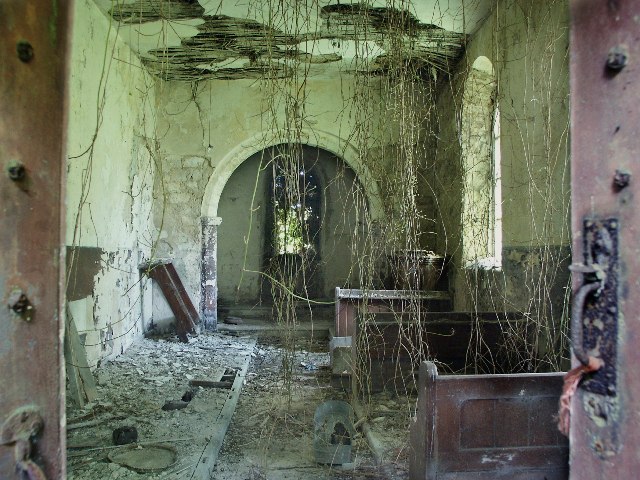
By guest writer William M. Shea, PhD
Beloved, if God so loved us,
we also must love one another.
No one has ever seen God.
Yet, if we love one another, God remains in us,
and his love is brought to perfection in us.
We have come to know and to believe in the love God has for us.
…God is love, and whoever remains in love remains in God and God in him. (1 John 4:11-16)
************************************
Why would Christians think that God does not love atheists? After all, “Yet, if we love one another, God remains in us, and his love is brought to perfection in us.”
Do Christians think that atheists’ love is any less, or any more exclusive, than Christians’ love?
I’ve met and known many atheists in my teaching career, and I haven’t found in them any more deficiency of love for others than I have found in Christians. In many individuals and groups I do detect there is a marked deficiency—Nazis for example and anti-Semites. I have two adult sons, one of whom is, like his parents, a practicing Christian and the other not. I must say, after years of reflection, I conclude that there is love for “one another” in both, and even, a surfeit of “faith” as I conceive it.
Even at the risk of screwing up our understandings of God-talk, a few questions about the endless arguments between atheists and theists are still in order. Are there any new arguments or we voicing the same old ones? I don’t think there is much new going on. Are the arguments properly counter-posed or are they passing one another in the night? I think they are often but not always “passing in the night.” Does incomprehension reign on both sides of the argument? I think so. What are they really fighting about anyway? Not easy to say!
When I run up against a wall of incomprehension, criticism and rejection of the way of life of my fellow Christians, I can react in three ways (and I do!): strenuous and defensive opposition, conversion to the other side of the wall, or deepening my understanding the wall and what is on the other side. The first makes me a warrior in a fruitless war (my Irish Catholic psyche likes this!). The second would make me an atheist. The third, a reflection on atheism and my differences with it would at least put me on the path laid out so vigorously by the last four popes, the path Pope Francis calls the path of understanding and “encounter.” I hope to stay with the third. After all, I’ve been at it for the past fifty years!
An Atheist In Possibility
So here is a starting point in my reflection: the recognition that I am an atheist in possibility (in actuality sometimes for a moment or two), and I have been since the age of ten when my first serious questions about the God of my ancestors and my church community, the Jewish and Christian God, occurred. The occasion was viewing of the Movietone film scenes of the Holocaust and the concurrent personal experience of an agonizing physical injury (1945). I have not and did not become an atheist in actuality except for those few moments in which I felt the dark side. I never left my community of faith and belief, but my faith, hope and belief have passed through the fires of doubt and wonder. How could there be such pain, violence and death if God is living and loving? How could St. James have penned the words above if he lived in the same world I do?
On and off, for long periods of time, for months and once even for two years, I feared there was no one on the other end of my spiritual telephone, for no one was getting back to me, no one answered my questions. I might even go so far as to say that most Christians know exactly what I am talking about, that is, the dark side. Even the saints give evidence of what they called “periods of dryness” when there is silence from other end of the line. Even saints knew about pain and evil and faced death everyday.
The best evidence of my obsession with belief and unbelief is the fact that I chose to spend ten years working on a Ph.D. studying atheism and many other things under professors who did not share my way of life (Roman Catholic), some of whom were confessing atheists. I ended up writing a doctoral study of two atheist professors at that university and later a book on four American atheists. Clarity on the basic philosophical issues at stake was the point of it all. A degree of fairness and accuracy in the dissertation was assured by my affection and admiration for Frederick Woodbridge and John Herman Randall along with John Dewey and George Santayana.
Two Different Atheisms
Allow me to make two distinctions. Among other things in my years of research I found two quite different strands of atheism. One strand clearly sees the meaning and even the value of religion while considering it imaginary. The other strand takes religion to be an aberration of mind and spirit, a threat to the advancement and freedom of humanity, a passing fancy, the detritus of history.
Time and space seem to be the arena of our knowing and even of being. If so , either we cannot know “IT” (agnosticism) or “IT” cannot be (atheism). IT must be “there” or “here” or IT isn’t simply isn’t! The atheist says IT isn’t and the theist says IT isn’t here or there yet IT is. According to the history of the empirical method we have inherited in the West east least since David Hume (d. 1776) what is not within the horizon of our sense experience and cannot be measured in any way, cannot be known: What real must here or there, an object, a thing and the relations between things that can be sensed or measured.
As Frederick Woodbridge put it broadly and bluntly: “If you want to know if the stone is real, kick it.” If you can’t “kick it, ” better silence or denial. Should this simplification be valid there is no basis, no evidence, for concluding that IT exists. But theists (and other religionists) insist there is in fact a “real” even though IT is not kickable. To sharpen up the difference, may I suggest that one side is saying God is nothing and unreal, while the other side is saying God is real but No-thing? The second is where I stand: God real but not a thing. But if God is real yet unkickable how do I know that God is real? One must press hard on that question if philosophical atheism is to be “encountered.” Let’s be frank: there are a lot of very intelligent people who think God is nothing.
A second distinction may help. God is known as the supposition to any and every experience and knowing, to any and every “thing,” implicitly at first but at last brought to the linguistic surface by common sense (religions) and then clarified by explication in an adequate metaphysics. But the Incarnation and Resurrection (the Christian gospel) are believed. This distinction between knowing and believing is crucial to any encounter between atheism and theism. We shouldn’t collapse believing into knowing, and Christians easily do so. But we Christians say: “I believe in God, the Father almighty…” The first Vatican Council (1869) taught that we can know that God exists, but it didn’t teach that we know God to be a trinity of personae in one natura. Such matters intrinsic to Christian faith are believed, not known.
It may help to keep these distinctions in mind as the next post addresses “Atheism and Religions.”
_____________________
N.B. Originally this piece included the statement that “the Parliament of Iceland recently, and with but one negative vote, declared that religion is a mental illness. What a unique moment in the history of parliaments that was!”
I was taken in by what our President calls “fake news” and “a hoax” and I must apologize to my readers. Mea culpa! The essay was intended as satire and posted on patheos.com. The author is Andrew Hall.
Previous Post

February 26, 2020
The Inevitable Impotence of Male-Only “Authority”
Next Post

March 6, 2020 In Case You Were Wondering, We Still Need Feminism
Browse Our Archives
Select a Category abortion anti-semitism art Atwood Betrothed church clergy abuse coronavirus culture economics education environmentalism ethics faith family feminism gardening gun violence immigration Judaism literature MaddAddam New Pro Life Movement news pandemic personalism poem politics politics blue Pope Francis racism religion salvation sexuality social justice spirituality Station eleven Stephen King The Stand Trump Uncategorized war World Health Organization
Select a Month March 2021 February 2021 January 2021 December 2020 November 2020 October 2020 September 2020 August 2020 July 2020 June 2020 May 2020 April 2020 March 2020 February 2020 January 2020 December 2019 November 2019 October 2019 September 2019 August 2019 July 2019 June 2019 May 2019 April 2019 March 2019 February 2019 January 2019 December 2018 November 2018 October 2018 September 2018 August 2018 July 2018 June 2018 May 2018 April 2018 March 2018 February 2018 January 2018 December 2017 November 2017 October 2017 September 2017 August 2017 July 2017 June 2017 May 2017 April 2017 March 2017 February 2017 January 2017 December 2016 November 2016 October 2016 September 2016 August 2016 July 2016 June 2016 May 2016 April 2016 March 2016 February 2016
Follow Us!
TAKE THE
Religious Wisdom Quiz
Who was the Roman governor that sentenced Jesus to be crucified?
Select your answer to see how you score.
Pontius Pilate Caesar Augustus Felix Herod
Support this
Column


Related posts from suspended in her jar

Four Takeaways from Oprah’s Interview with the Duke...

Catholics Are De-Toxing From their Experiences With Traumatic...

How Has the Pandemic Changed Us? Has It...

Rush Limbaugh Would Never Have Succeeded In an...
TRENDING AT PATHEOS Catholic

Rejecting Doom: Christian Hope And Human Action
Christianity is a religion of hope. We are to have hope and...

It’s What Comes From Within Which Matters
One of the most difficult things for us to understand is why...

Why I Choose the Eucharist Over the Sermon
Choose the Eucharist, Not the Sermon What are we supposed to get...

5 Design Elements Found in Spiritually Rooted Homes
Putting Spirituality Into Home Decor Our homes are more than our living...

Credo: A Story of God Told with the...
About 10 years ago, I began to imagine a personal "Credo" that...

The Anatomy of Divine Revelation in Catholic Thought
The claim that God has made Himself known to human beings is...
view all Catholic blogs
Ad-Free & Subscriber Log-In Subscription Support
- About Us
- 2026 Calendar
- Videos
- Podcasts
- Library of World Religions
- Faith In Media Tracker
- Advertise With Us
- Write for Us
- Privacy Policy
- Terms of Service
- Do Not Sell My Data
- Contact Us
- Radiant Digital
- Manage Newsletter Subscriptions
- Unsubscribe From Notifications
- Sitemap
Copyright 2008-2026, Patheos. All rights reserved.
Subscription Support Ad-Free & Subscriber Log-In
Follow Patheos