
BuddhistCatholicContemplativeEvangelicalGeneral ChristianHinduJewishLatter-day SaintMuslimNew VisionsProgressive Christian
Beliefs
- Buddhist
- Catholic
- Contemplative
- Evangelical
- General Christian
- Hindu
- Jewish
- Latter-day Saint
- More Voices
- Muslim
- New Visions
- Pagan
- Progressive Christian
Topics
- Religion News
- Food and Religion
- Sports and Religion
- Religious Art
- Religious Music and Entertainment
- Religious Events
- History and Religion
- Style and Religion
- Politics and Religion
- Women in Religion
- Recreation Outdoors and Religion
- Business Finance and Religion
- Careers Workplace and Religion
- Education and Religion
- Family Parenting and Religion
- Health Fitness and Religion
- Home and Religion
- Relationships and Religion
- Technology and Religion
- Travel and Religion
Columnists
- Buddhist Columnists
- Business Finance and Religion Columnists
- Careers Workplace and Religion Columnists
- Catholic Columnists
- Contemplative Columnists
- Education and Religion Columnists
- Evangelists Columnists
- Family Parenting and Religion Columnists
- General Christian Columnists
- Health Fitness and Religion Columnists
- Hindu Columnists
- History and Religion Columnists
- Home and Religion Columnists
- Jewish Columnists
- More Voices Columnists
- Latter Day Columnists
- Muslim Columnists
- New Visions Columnists
- Nonreligious Columnists
- Pagan Columnists
- Politics and Religion Columnists
- Progressive Columnists
- Recreation Outdoors and Religion Columnists
- Relationships and Religion Columnists
- Religion News Columnists
- Religious Art Columnists
- Religious Events Columnists
- Religious Music and Entertainment Columnists
- Sports and Religion Columnists
- Style and Religion Columnists
- Technology and Religion Columnists
- Travel and Religion Columnists
- Women in Religion Columnists
Resource Library
- 2026 Calendar
- Library of World Religions
- The 100 Most Holy Places on Earth
- Patheos Answers
- Podcasts
- Videos
- Faith Leaders Database
- Anglican Episcopalian
- Bahai
- Baptist
- Buddhism
- Christianity
- Confucianism
- Eastern Orthodoxy
- Hinduism
- Holiness and Pentecostal
- ISKCON
- Islam
- Judaism
- Lutheran
- Methodist
- The Church of Jesus Christ of Latter-day Saints
- New Age
- Paganism
- Presbytarian and Reformed
- Protestantism
- Religion Behind the Scenes
- Roman Catholic
- Scientology
- Shia Islam
- Sikhism
- Sufism
- Sunni Islam
- Taoism
- Zen
- See all religions
Research Tools
 Ad-Free & Subscriber Log-In Subscription Support
Ad-Free & Subscriber Log-In Subscription Support
Follow Patheos 

- Trending:
- Forgiveness
- |
- Marriage
- |
- Consciousness
- |
- Death Penalty
- |
- Election
- |
- Halloween
 suspended in her jar
- Home
- Catholic
- Reclaiming Our Bodies As Subjects: Women and the Objectifying Gaze
Reclaiming Our Bodies As Subjects: Women and the Objectifying Gaze
Last updated on: February 8, 2020 at 11:36 pm by Rebecca Bratten Weiss
Reclaiming Our Bodies As Subjects: Women and the Objectifying Gaze 2020-02-08T23:36:38-04:00 Rebecca Bratten Weiss
Patheos Explore the world's faith through different perspectives on religion and spirituality! Patheos has the views of the prevalent religions and spiritualities of the world.
I have my own thoughts about the Shakira’s and Jennifer Lopez’s performances at the Superbowl halftime show. These thoughts exist at an intersection of my different conflicting feelings and beliefs: as a woman, as a feminist, as an advocate for racial justice, as an artist.
Other people have thoughts, too. Some are expressing outrage at a performance they viewed as “pornographic,” whereas others saw it as an expression of women’s empowerment. My Latina dancer friends have been outspoken about the inherent racism in criticisms of dances that represent their culture, especially at a time when so many immigrants, as well as citizens of Latin descent, are being subjected to both individual and systemic discrimination. But others from Latin cultures are saying, at the same time “no, this is not us – pole dancing is not our culture.”
I do not feel that I have a right to enter this particular debate, as it is not for me to say what Latin culture is or is not.
This is one reason why I feel I should, for the most, part, keep my thoughts about the performance – negative and positive – to myself. There is a debate happening over culture, identity, and justice which I can listen and learn from, but which is not, fundamentally, my conversation.
But what about the conversation insofar as it pertains to the female body?
Because this is a conversation everyone feels entitled to enter. When it comes to a female body there’s no one who doesn’t get to have a say. And that’s another reason why I feel uncomfortable stating my thoughts about the performance: I don’t like the idea of adding my voice to the vast chorus of voices defining, inscribing, judging, and labeling female physicality. There’s too much of that going on already, and every woman, not only those who are paid vast sums to perform for millions, has to endure it.
We talk a lot about how the female body gets reduced to something that exists only for the male gaze. I would like to step further and say, it’s not just about the male gaze. It’s about gaze per se – the reduction of the body to an object. When feminists complain that women are denied agency, we don’t just mean this in a practical sense; we mean a metaphysical and rhetorical framing of women as objects per se, not as agents.What we do, how we live, how we dress – these decisions are not viewed as free choices of an acting subject with personal depth and dignity, but according to how well we, as inert objects, fit into a panorama specifically constructed to suit a certain kind of gaze. Our bodies are props that need to be set up just so. The value of our actions is determined not in terms of inner intentionality, but in terms of what the extrinsic eye has determined that our bodies mean. Like palimpsests, the actual living language of our acting bodies is scrawled over, obscured by the texts telling the viewers how we are to be defined: sexy, modest, slut, hot, virtuous, desperate, pure – how often do we see these adjectives slapped on with zero reference to our own agency, and only in terms of how the viewer feels about what they see when they pin us with their gaze?
How can we truly experience ourselves as agents, as subjects, in a world that only ever judges us as objects?
When we are judged for how our appearance affects others, regardless of intention? When people feel free to define the meaning of our bodies based on their own cultural lexicon, without bothering to understand ours? When our bodies are treated as moral objects, not as moral subjects?
I remember when I began to experience a shift in my sense of physicality – when I moved from the pleasant physicality of childhood to the anxiety of female-ness. As a teen, I wrote in my journal about my sense of loss, the loss of a child body, the gain of a body that seemed to belong to everyone but myself. I remember going on a date, at age seventeen, and suddenly having this sudden sense of paralysis: what should I do with this body? This body that is a problem? A temptation? That I was always being told to cover up and watch out for? A body that could lead men to hell regardless of my intention? It felt like walking around with a time-bomb strapped to my legs and chest, uncertain when it might go off. I didn’t even know what to do with my own hands.
My sense of physical anxiety was compounded by the teachings of conservative religious leaders that pushed purity culture with all its lies and toxicities; but ducking out of purity culture doesn’t mean escaping from the Defining Gaze. It is there in the fashion industry, in comedy, in advertising, entertainment. It is there in the medical industry that treats women as clueless even about our own pain.
Now, many years later, I have a hard-won sense of my body as something that is powerful. I have learned how to live in this world and not be afraid of my own physicality. The aging female body may not be as valued as the teen body, which can more easily be defined in terms of sexiness, or purity, or submission, or fertility, but I have a sense of fully inhabiting my own flesh, of being my own flesh, in a way I did not, in my younger years. I have an awareness of my own complex muscle memories, carrying in my cells skills that have taken years to develop: the knife skills in the hands, the dance skills in the legs, the riding skills in my whole bodily frame. My own sexuality is no longer something plastered on me by an over-writing power, but something in which I move and sense the world around me.
I sometimes wonder what it would have been like to have lived my life never having my own physicality disrupted by the many forces that try to make a woman into anything other than an autonomous acting subject. If I had not been ashamed of being physical, if I could have fully inhabited ever portion of my own skin, as I grew and developed, if my sexuality had not been a matter of discomfort.
How we talk about women, women’s bodies, and women’s physical action makes a difference. When we talk about a woman not as the agent who is the subject of her own story, but as an object that we get to define, it sends a message. Young girls, in particular, are vulnerable to this kind of rhetoric. It distracts them from that supremely human question “how must I live my life?” and replaces it with “am I the right kind of object?”
What if, instead of judging what a woman in the world represents to a particular gaze, we were to talk about women as subjects living in the world, humans who act, move, dance, work, fight, love, give birth, teach, create, preach, heal, rule, read, legislate, judge, sing? If we look at the obstacles women have faced and overcome? If we were to evaluate a woman’s morality not on how she appears to us, as a thing, but on how she acts, as an agent?
“The problem with women being objectified could be solved if women would just cover themselves up more and behave properly.” No. That’s just saying, “be this kind of object, the kind that makes me comfortable – not the kind that makes me uncomfortable.”
“But such and such a woman made an object of herself,” the objection goes. “If a woman doesn’t want to be treated as an object, she shouldn’t act like one.”
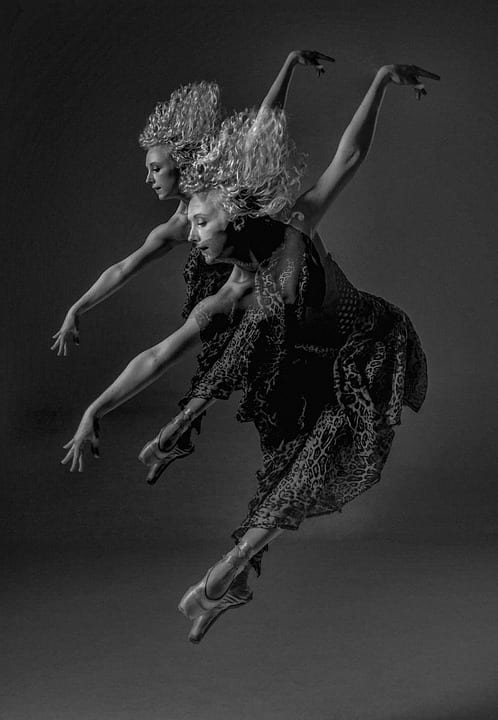
I’m sorry, but such statements, especially about a woman who has worked hard to perform difficult feats and complicated, athletic dance moves – when a woman is powerfully inhabiting her own body, as acting subject – are philosophically ridiculous. The reality, when someone says this sort of thing, is that the speaker is treating a woman as an object – and then blaming her for it. And that’s the enormity of the cultural problem we face, as women, and which we need to change, if we are to hope for a better world for our daughters.
image credit: https://pixabay.com/photos/dancer-dance-woman-dancers-dancing-3581946/

Next Post

February 13, 2020 It's Not the Divisiveness That Is the Problem
Browse Our Archives
Select a Category abortion anti-semitism art Atwood Betrothed church clergy abuse coronavirus culture economics education environmentalism ethics faith family feminism gardening gun violence immigration Judaism literature MaddAddam New Pro Life Movement news pandemic personalism poem politics politics blue Pope Francis racism religion salvation sexuality social justice spirituality Station eleven Stephen King The Stand Trump Uncategorized war World Health Organization
Select a Month March 2021 February 2021 January 2021 December 2020 November 2020 October 2020 September 2020 August 2020 July 2020 June 2020 May 2020 April 2020 March 2020 February 2020 January 2020 December 2019 November 2019 October 2019 September 2019 August 2019 July 2019 June 2019 May 2019 April 2019 March 2019 February 2019 January 2019 December 2018 November 2018 October 2018 September 2018 August 2018 July 2018 June 2018 May 2018 April 2018 March 2018 February 2018 January 2018 December 2017 November 2017 October 2017 September 2017 August 2017 July 2017 June 2017 May 2017 April 2017 March 2017 February 2017 January 2017 December 2016 November 2016 October 2016 September 2016 August 2016 July 2016 June 2016 May 2016 April 2016 March 2016 February 2016
Follow Us!
TAKE THE
Religious Wisdom Quiz
What was the occupation of Lydia, Paul's first convert in Philippi?
Select your answer to see how you score.
Fisherman Tentmaker Dealer in purple cloth Tax collector
Support this
Column


Related posts from suspended in her jar

Immigrants: They Need Us, and We Need Them

Four Takeaways from Oprah’s Interview with the Duke...

Catholics Are De-Toxing From their Experiences With Traumatic...

Rush Limbaugh Would Never Have Succeeded In an...
TRENDING AT PATHEOS Catholic

Rejecting Doom: Christian Hope And Human Action
Christianity is a religion of hope. We are to have hope and...

It’s What Comes From Within Which Matters
One of the most difficult things for us to understand is why...

Why I Choose the Eucharist Over the Sermon
Choose the Eucharist, Not the Sermon What are we supposed to get...

5 Design Elements Found in Spiritually Rooted Homes
Putting Spirituality Into Home Decor Our homes are more than our living...

Credo: A Story of God Told with the...
About 10 years ago, I began to imagine a personal "Credo" that...

The Anatomy of Divine Revelation in Catholic Thought
The claim that God has made Himself known to human beings is...
view all Catholic blogs
Ad-Free & Subscriber Log-In Subscription Support
- About Us
- 2026 Calendar
- Videos
- Podcasts
- Library of World Religions
- Faith In Media Tracker
- Advertise With Us
- Write for Us
- Privacy Policy
- Terms of Service
- Do Not Sell My Data
- Contact Us
- Radiant Digital
- Manage Newsletter Subscriptions
- Unsubscribe From Notifications
- Sitemap
Copyright 2008-2026, Patheos. All rights reserved.
Subscription Support Ad-Free & Subscriber Log-In
Follow Patheos