
BuddhistCatholicContemplativeEvangelicalGeneral ChristianHinduJewishLatter-day SaintMuslimNew VisionsProgressive Christian
Beliefs
- Buddhist
- Catholic
- Contemplative
- Evangelical
- General Christian
- Hindu
- Jewish
- Latter-day Saint
- More Voices
- Muslim
- New Visions
- Pagan
- Progressive Christian
Topics
- Religion News
- Food and Religion
- Sports and Religion
- Religious Art
- Religious Music and Entertainment
- Religious Events
- History and Religion
- Style and Religion
- Politics and Religion
- Women in Religion
- Recreation Outdoors and Religion
- Business Finance and Religion
- Careers Workplace and Religion
- Education and Religion
- Family Parenting and Religion
- Health Fitness and Religion
- Home and Religion
- Relationships and Religion
- Technology and Religion
- Travel and Religion
Columnists
- Buddhist Columnists
- Business Finance and Religion Columnists
- Careers Workplace and Religion Columnists
- Catholic Columnists
- Contemplative Columnists
- Education and Religion Columnists
- Evangelists Columnists
- Family Parenting and Religion Columnists
- General Christian Columnists
- Health Fitness and Religion Columnists
- Hindu Columnists
- History and Religion Columnists
- Home and Religion Columnists
- Jewish Columnists
- More Voices Columnists
- Latter Day Columnists
- Muslim Columnists
- New Visions Columnists
- Nonreligious Columnists
- Pagan Columnists
- Politics and Religion Columnists
- Progressive Columnists
- Recreation Outdoors and Religion Columnists
- Relationships and Religion Columnists
- Religion News Columnists
- Religious Art Columnists
- Religious Events Columnists
- Religious Music and Entertainment Columnists
- Sports and Religion Columnists
- Style and Religion Columnists
- Technology and Religion Columnists
- Travel and Religion Columnists
- Women in Religion Columnists
Resource Library
- 2026 Calendar
- Library of World Religions
- The 100 Most Holy Places on Earth
- Patheos Answers
- Podcasts
- Videos
- Faith Leaders Database
- Anglican Episcopalian
- Bahai
- Baptist
- Buddhism
- Christianity
- Confucianism
- Eastern Orthodoxy
- Hinduism
- Holiness and Pentecostal
- ISKCON
- Islam
- Judaism
- Lutheran
- Methodist
- The Church of Jesus Christ of Latter-day Saints
- New Age
- Paganism
- Presbytarian and Reformed
- Protestantism
- Religion Behind the Scenes
- Roman Catholic
- Scientology
- Shia Islam
- Sikhism
- Sufism
- Sunni Islam
- Taoism
- Zen
- See all religions
Research Tools
 Ad-Free & Subscriber Log-In Subscription Support
Ad-Free & Subscriber Log-In Subscription Support
Follow Patheos 

- Trending:
- Forgiveness
- |
- Marriage
- |
- Consciousness
- |
- Death Penalty
- |
- Election
- |
- Halloween
 suspended in her jar
- Home
- Catholic
- The Flawed Nuptial Imagery in Querida Amazonia – What Can Women Do?
The Flawed Nuptial Imagery in Querida Amazonia – What Can Women Do?
Last updated on: February 16, 2020 at 9:21 pm by Guest Contributor
The Flawed Nuptial Imagery in Querida Amazonia – What Can Women Do? 2020-02-16T21:21:33-04:00 Guest Contributor
Patheos Explore the world's faith through different perspectives on religion and spirituality! Patheos has the views of the prevalent religions and spiritualities of the world.
Preface by Rebecca Bratten Weiss:
There is much that is profound and extraordinary in the post-synodal apostolic exhortation Querida Amazonia. But, inevitably, there is also much that is troubling. One passage that seems especially theologically as well as sociologically problematic came up several times in conversations I had with Catholic women who are working for reform in the church:
Jesus Christ appears as the Spouse of the community that celebrates the Eucharist through the figure of a man who presides as a sign of the one Priest. This dialogue between the Spouse and his Bride, which arises in adoration and sanctifies the community, should not trap us in partial conceptions of power in the Church. The Lord chose to reveal his power and his love through two human faces: the face of his divine Son made man and the face of a creature, a woman, Mary. Women make their contribution to the Church in a way that is properly theirs, by making present the tender strength of Mary, the Mother. As a result, we do not limit ourselves to a functional approach, but enter instead into the inmost structure of the Church. In this way, we will fundamentally realize why, without women, the Church breaks down, and how many communities in the Amazon would have collapsed, had women not been there to sustain them, keep them together and care for them. This shows the kind of power that is typically theirs.
The first thing that struck me as jarring in this passage was the theology of the imago dei. If only men show forth the face of the divine Son, and women only show forth the face of a creature, this suggests that only men, and not women, are made in the image of God. It also suggests that the spousal relationship between a man and a woman is analogous to that between creature and creation. As if the tired dualism of “complementarity” (active/passive, initiation/reception) were not derogatory enough already.
Moreover, the underlying “logic” of denying women expanded roles in the church appears to be “women were crucial in performing these roles that helped hold communities together; therefore, it would not be fitting to allow them officially to take on these roles that helped hold communities together.”
The effectiveness of image, the piquancy of style, the clarity of reasoning, suddenly give way to incoherence, as soon as gender roles come up in this document. This is normal. This is what we women have come to anticipate when it comes to magisterial documents. We’re past the point of just shutting up and buying it, however – past the point simply of murmuring about it; we are ready to stand up and declare why this theology is wrong.
A friend of mine, who was discussing this issue with us, offered the following reflection on the inadequacies of this nuptial imagery, especially at a time when so many women are feeling that they need to leave the institutional church to protect their own sanity.
I share the following guest reflection from a Catholic woman and scholar who would prefer to remain anonymous:
I think the “nuptial imagery” that got so badly distorted in Querida Amazonia is actually very helpful in considering the question of leaving or staying, and why that’s a tricky and personal decision.
Basically, you’re wedded to a groom who is not actually Jesus, but a Jesus-impersonator. He’s constantly trying to manipulate you to stay and has a narcissistic streak, ignores your feelings and needs, and sometimes verbally cuts you down or gaslights you. (We’re not even talking about the physically/sexually abusive situations here—these clearly need to leave to survive.) You do get to live in a spiritual home, which has probably provided you with some comfort and children and neighbors, which you would lose if you leave. Do you?
It mostly depends on whether you believe you can survive and thrive without him. Maybe your income is totally dependent on your loyalty to him, which would make it really hard to leave, maybe impossible, so you stay and keep pleading with him to treat you better and pray for the best.
Maybe he’s gaslighted you so effectively that you believe you can’t survive on your own, even though you have a job and means of income apart from him. Or maybe he’s threatened to kill you (send you to hell or at least cut you off from the lifeblood of God) if you leave, and you believe that. Clearly, you’re better off leaving, but you need other people to support you in overcoming the self-doubt and/or threats.
Maybe you have children that you’d have to leave behind if you left. That’s a really tough one because you want to and can save yourself, but you’re not sure if you can save them from their toxic father. It takes a leap of faith that they’ll survive and hopefully find a way to follow you after you leave.
Or maybe you have a steady source of income unconnected to this narcissistic spouse, self-confidence and/or supportive friends, and you don’t have kids or they’re capable of making good decisions for themselves, so you walk away fairly easily with few regrets. You may miss your old house and your old neighbors sometimes, but your new life is so much happier now, so it was clearly the right decision for you.
Or maybe you have the capacity to leave, but you’re staying because you keep hoping and praying he’ll change. Because you made a commitment and you don’t want to break it, or you don’t want to be a quitter.
In that case, let me share with you what happened in my real life marriage:
I was miserable for the first twelve years of my marriage. No matter what I did to try to communicate clearly and politely what was problematic to me, my husband didn’t seem to care. Sometimes he was verbally abusive, other times he was just annoying and not very helpful. Part of the time I was too vulnerable financially and with small children to even consider leaving. But I finally got to the point where I was resourced enough to not need his financial contributions and my children old enough to speak for themselves. I told my husband I was no longer committed to staying with him and took off my wedding rings. I told him I wanted to take steps toward separation, and started with sleeping in another room.
Then, and only then, he finally listened to my complaints and taking responsibility for changing. He listened to marriage self-help recordings, started seeing a counselor and taking anti-anxiety medication, and helping out more around the house without any complaining about it. He started respecting my autonomy to think differently from him and make my own choices. It’s hard for him to let me choose to do things apart from him because we have different interests and beliefs, but he’s learning not to try to guilt-trip me for that, and to quietly let our differences go or try to understand my perspective.
This is what I hope for the Catholic Church. If the hierarchy could give us autonomy to live out our diverse convictions and gifts, and respect for our dignity and various vocations, it would be best if we never had to permanently move out and divorce. But I think the only chance we have for prompting change is to start a trial separation. And there’s always a risk when you do that, that the church may just hurl more insults at us on the way out the door, change the locks, and be unwilling to change. We have to be prepared for that to happen, mentally accepting the possibility this will be permanent when we walk out that door, even if we don’t want it to be.
We also should resist the pressure or impulse to “renew vows” just because of incremental changes. If we had the resources to break free in the first place, we should try to remain free to leave if they revert to uncaring behaviors again. My wedding rings are still sitting in a jewelry box several months after we started sharing a bed again. And family life continues to be pretty peaceful, if not romantic or euphoric.
If Pope Francis approved women deacons, I probably would stay, as long as I didn’t hear any continued threats from the priesthood that I’d go to hell or not “have Jesus” if I left, but I wouldn’t seek out any paid job in the church that I could be fired from if I spoke out against potential injustices.
The metaphor breaks down, of course, because no one of us leaving or communicating intent to leave has the impact that a wife leaving her husband has. “Wives” of the church have been trickling out for decades, but it’s never added up to something consequential enough for the clergy to chase after us. I really think the only hope for change for the Catholic Church is if people (who are in a reasonable position to do so) “strike” or leave en masse, like they’ve done in Germany. Otherwise it’s each spiritually abused bride for herself.
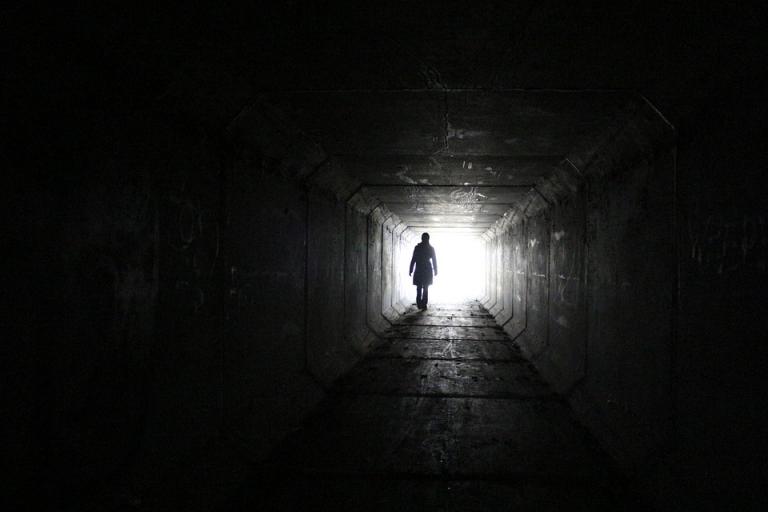
image credit: pixabay-photos-tunnel-silhouette-mysterious-899053.jpg
Previous Post

February 13, 2020
It's Not the Divisiveness That Is the Problem
Next Post

February 19, 2020 Do Catholic Feminists Wish to Smash the Church's Patriarchy?
Browse Our Archives
Select a Category abortion anti-semitism art Atwood Betrothed church clergy abuse coronavirus culture economics education environmentalism ethics faith family feminism gardening gun violence immigration Judaism literature MaddAddam New Pro Life Movement news pandemic personalism poem politics politics blue Pope Francis racism religion salvation sexuality social justice spirituality Station eleven Stephen King The Stand Trump Uncategorized war World Health Organization
Select a Month March 2021 February 2021 January 2021 December 2020 November 2020 October 2020 September 2020 August 2020 July 2020 June 2020 May 2020 April 2020 March 2020 February 2020 January 2020 December 2019 November 2019 October 2019 September 2019 August 2019 July 2019 June 2019 May 2019 April 2019 March 2019 February 2019 January 2019 December 2018 November 2018 October 2018 September 2018 August 2018 July 2018 June 2018 May 2018 April 2018 March 2018 February 2018 January 2018 December 2017 November 2017 October 2017 September 2017 August 2017 July 2017 June 2017 May 2017 April 2017 March 2017 February 2017 January 2017 December 2016 November 2016 October 2016 September 2016 August 2016 July 2016 June 2016 May 2016 April 2016 March 2016 February 2016
Follow Us!
TAKE THE
Religious Wisdom Quiz
What is the central prayer of Christian faith, taught by Jesus?
Select your answer to see how you score.
The Hail Mary The Shema The Lord's Prayer The Jesus Prayer
Support this
Column


Related posts from suspended in her jar

Four Takeaways from Oprah’s Interview with the Duke...

Catholics Are De-Toxing From their Experiences With Traumatic...

How Has the Pandemic Changed Us? Has It...

Rush Limbaugh Would Never Have Succeeded In an...
TRENDING AT PATHEOS Catholic

Rejecting Doom: Christian Hope And Human Action
Christianity is a religion of hope. We are to have hope and...

It’s What Comes From Within Which Matters
One of the most difficult things for us to understand is why...

Why I Choose the Eucharist Over the Sermon
Choose the Eucharist, Not the Sermon What are we supposed to get...

5 Design Elements Found in Spiritually Rooted Homes
Putting Spirituality Into Home Decor Our homes are more than our living...

Credo: A Story of God Told with the...
About 10 years ago, I began to imagine a personal "Credo" that...

The Anatomy of Divine Revelation in Catholic Thought
The claim that God has made Himself known to human beings is...
view all Catholic blogs
Ad-Free & Subscriber Log-In Subscription Support
- About Us
- 2026 Calendar
- Videos
- Podcasts
- Library of World Religions
- Faith In Media Tracker
- Advertise With Us
- Write for Us
- Privacy Policy
- Terms of Service
- Do Not Sell My Data
- Contact Us
- Radiant Digital
- Manage Newsletter Subscriptions
- Unsubscribe From Notifications
- Sitemap
Copyright 2008-2026, Patheos. All rights reserved.
Subscription Support Ad-Free & Subscriber Log-In
Follow Patheos