
BuddhistCatholicContemplativeEvangelicalGeneral ChristianHinduJewishLatter-day SaintMuslimNew VisionsProgressive Christian
Beliefs
- Buddhist
- Catholic
- Contemplative
- Evangelical
- General Christian
- Hindu
- Jewish
- Latter-day Saint
- More Voices
- Muslim
- New Visions
- Pagan
- Progressive Christian
Topics
- Religion News
- Food and Religion
- Sports and Religion
- Religious Art
- Religious Music and Entertainment
- Religious Events
- History and Religion
- Style and Religion
- Politics and Religion
- Women in Religion
- Recreation Outdoors and Religion
- Business Finance and Religion
- Careers Workplace and Religion
- Education and Religion
- Family Parenting and Religion
- Health Fitness and Religion
- Home and Religion
- Relationships and Religion
- Technology and Religion
- Travel and Religion
Columnists
- Buddhist Columnists
- Business Finance and Religion Columnists
- Careers Workplace and Religion Columnists
- Catholic Columnists
- Contemplative Columnists
- Education and Religion Columnists
- Evangelists Columnists
- Family Parenting and Religion Columnists
- General Christian Columnists
- Health Fitness and Religion Columnists
- Hindu Columnists
- History and Religion Columnists
- Home and Religion Columnists
- Jewish Columnists
- More Voices Columnists
- Latter Day Columnists
- Muslim Columnists
- New Visions Columnists
- Nonreligious Columnists
- Pagan Columnists
- Politics and Religion Columnists
- Progressive Columnists
- Recreation Outdoors and Religion Columnists
- Relationships and Religion Columnists
- Religion News Columnists
- Religious Art Columnists
- Religious Events Columnists
- Religious Music and Entertainment Columnists
- Sports and Religion Columnists
- Style and Religion Columnists
- Technology and Religion Columnists
- Travel and Religion Columnists
- Women in Religion Columnists
Resource Library
- 2026 Calendar
- Library of World Religions
- The 100 Most Holy Places on Earth
- Patheos Answers
- Podcasts
- Videos
- Faith Leaders Database
- Anglican Episcopalian
- Bahai
- Baptist
- Buddhism
- Christianity
- Confucianism
- Eastern Orthodoxy
- Hinduism
- Holiness and Pentecostal
- ISKCON
- Islam
- Judaism
- Lutheran
- Methodist
- The Church of Jesus Christ of Latter-day Saints
- New Age
- Paganism
- Presbytarian and Reformed
- Protestantism
- Religion Behind the Scenes
- Roman Catholic
- Scientology
- Shia Islam
- Sikhism
- Sufism
- Sunni Islam
- Taoism
- Zen
- See all religions
Research Tools
 Ad-Free & Subscriber Log-In Subscription Support
Follow Patheos 

- Trending:
- Advent
- |
- Forgiveness
- |
- Thanksgiving
- |
- Election
- |
- Seasonal Holidays
- |
- Marriage
 suspended in her jar
- Home
- Catholic
- Obsession With Feminine Submissiveness Serves Men – Not God
Obsession With Feminine Submissiveness Serves Men – Not God
Last updated on: December 6, 2019 at 12:57 am by Rebecca Bratten Weiss
Obsession With Feminine Submissiveness Serves Men – Not God 2019-12-06T00:57:57-04:00 Rebecca Bratten Weiss
Patheos Explore the world's faith through different perspectives on religion and spirituality! Patheos has the views of the prevalent religions and spiritualities of the world.
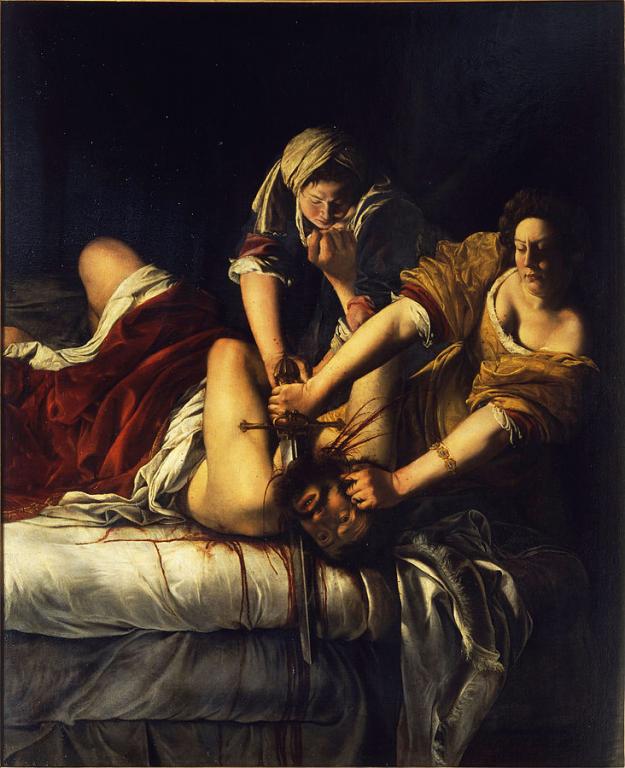
In the conservative Catholic circles in which I was educated, it was common for speakers and writers on gender issues to refer to Mary the Mother of Jesus as a feminine ideal. Young women were admonished to imitate Mary in purity, meekness, humility, and obedience. The image that was presented to us was of a silent, pretty young girl decked out in voluminous robes, head bowed, gaze lowered.
Oh, and Mary was usually depicted as white, of course. Because whiteness equals purity, of course, and young Caucasian women need to see a role model who looks like them.
“Mary like modesty” was the fashion ideal. Feminine submission to authorities, especially male authorities, was the mandated virtue. It was understood that if we married we would follow the pattern set by Mary in wifely submission and obedience.
This approach to female identity can screw with one’s mental health and warp one’s conscience whether one is good at it or not. I was never very good at it, so “Mary like modesty” and “feminine submissiveness” ended up being catalysts, for me, for that famous Catholic guilt we hear so much about.
I was reminded of how damaging this culture is, recently, when a group of far-right Catholics were discussing the question of female submissiveness. The context was this: a woman posting, publicly, about how her fiance had asked her to stop wearing high heels, and she had agreed. While far-right self-styles traditionalists praised her for this, others, even Catholic priests, saw this as problematic. A man dictating fashion preferences to a woman, and not as “this is just me taste,” but in the form of a moral mandate? This is a recipe for abuse.
And it is not Christian.
Having just come from a reading of the Gospel narrative of the Annunciation, my response to this discussion was: where did this obsession with the idea of “feminine obedience” as Christian even come from?
I am glad that my emancipation from a patriarchal power-structure that appropriates Jesus’ teaching has reached this point. I am glad that I can finally see that they, and not I, are the ones twisting and distorting the Gospel.
Yes, we have a few passages in the New Testament in which male writers tell women to submit to their husbands, but what strikes me about those passages is not “how revolutionary and Christian” but rather “how mainstream for the time.” Meekness and obedience were expected of wives in the patriarchal culture of both the Roman empire and Hebrew Palestine. When Peter, Paul, and Timothy say “women should be submissive” they don’t sound like they’re following Christ. They sound like they’re telling these radical Christians to conform to the dominant culture of the world they live in.
Because when it comes to the story of the Nativity, nothing about Mary’s actions strikes me as submissive to men. She does not ask permission of either her father or her betrothed, when the angel approaches her with a startling announcement. And the decision she makes is one which, she knows, could get her stoned to death by her community – but she agrees, anyway. “I am the handmaid of the Lord” she says – not the servant of any man.
We don’t see all that much of Mary in the Gospels. But when we do see her, she is not acting especially meekly or submissively. When she hears that Elizabeth is pregnant she “rushes off” to visit her, not waiting on permission to leave her home, or requiring a male protector. When she arrives and Elizabeth feels the miraculous quickening of the baby within her, Mary’s response is to sing a song of praise that could have gotten her arrested as a revolutionary:
My soul proclaims the greatness of the Lord,
my spirit rejoices in God my Savior;
for he has looked with favor on his lowly servant.
From this day all generations will call me blessed:
the Almighty has done great things for me,
and holy is his Name.
He has mercy on those who fear him
in every generation.
He has shown the strength of his arm,
he has scattered the proud in their conceit.
He has cast down the mighty from their thrones,
and has lifted up the lowly.
He has filled the hungry with good things,
and the rich he has sent away empty.
He has come to the help of his servant Israel
for he has remembered his promise of mercy,
the promise he made to our fathers,
to Abraham and his children forever.
Mary appears at the Wedding of Cana, and manages to boss both her son and the servants. On one hand this seems to me exactly what an organized and no-nonsense Jewish mother would do at an event, when she sees things going badly and wants to fix the situation. But she’s also taking the miraculous into her own hands – deciding for herself when her son’s time has come, to begin his earthly ministry. She shows a spiritual authority over the feast, which takes on liturgical significance because of Jesus’ miraculous work there. If the Wedding at Cana was a foreshadowing of the mass, it was a foreshadowing in which a woman was presiding.
Later, we see that she and the other women stay by the side of Jesus during his condemnation, torture, and death. Most of the men run away, but the women defy Roman authority and religious leadership. They stay.
Mary in the Gospels is acting in accordance with a long line of women who bring about divine will through unruly behavior. Yes, even Eve. If we are to say, as Christians, “o happy fault” – we need to give the woman credit for it. The disobedience of Eve may be deplored by male religious leaders, but it is repeated and reiterated through the Hebrew scriptures in the stories of Sarah, Rebekah, Rachel, and Esther, all of whom disobeyed and defied the men in their lives. Then we have Ruth, who crept into her boss’s bed at night – and Jael who drove a tent-stake into a general’s head – and Judith, who cut the head off of another general, entirely.
The history of women advancing salvation history in both the Old and the New Testaments is a history of unruliness, not submission. The model with which Mary of Nazareth presents us is one of daring autonomy, a woman claiming a direct line to God instead of deferring to a man as God’s representative.
I can see how unnerving this must have been for men at the time, even those who followed Jesus. His male disciples appear often to have been nonplussed by the presence of women in the retinue, trying to shoo them away and keep their teacher all to themselves. But Jesus was not having it.
The successors of these male disciples appear to have carried out their mission to push the women away, rather than to have followed the example of Jesus who obliterated distinctions between man and woman, rich and poor, Jew and gentile. And today obsessions over a false ideal of Christian femininity take us even further from the examples of Jesus and of Mary. Who does a woman serve, when she decides to be submissive to men, to acquiesce to male desires, to be passive in relation to patriarchal authority?
She serves men. She serves their desires, their pride.
She does not serve God.
image credit: https://commons.wikimedia.org/wiki/File:Artemisia_Gentileschi_-_Giuditta_decapita_Oloferne_-_Google_Art_Project-Adjust.jpg
Previous Post
November 27, 2019
Silent No More: A Survivor's Message of Gratitude
Next Post
December 10, 2019 The Message of Advent is a Message of Justice for the Oppressed
Browse Our Archives
Select a Category abortion anti-semitism art Atwood Betrothed church clergy abuse coronavirus culture economics education environmentalism ethics faith family feminism gardening gun violence immigration Judaism literature MaddAddam New Pro Life Movement news pandemic personalism poem politics politics blue Pope Francis racism religion salvation sexuality social justice spirituality Station eleven Stephen King The Stand Trump Uncategorized war World Health Organization
Select a Month March 2021 February 2021 January 2021 December 2020 November 2020 October 2020 September 2020 August 2020 July 2020 June 2020 May 2020 April 2020 March 2020 February 2020 January 2020 December 2019 November 2019 October 2019 September 2019 August 2019 July 2019 June 2019 May 2019 April 2019 March 2019 February 2019 January 2019 December 2018 November 2018 October 2018 September 2018 August 2018 July 2018 June 2018 May 2018 April 2018 March 2018 February 2018 January 2018 December 2017 November 2017 October 2017 September 2017 August 2017 July 2017 June 2017 May 2017 April 2017 March 2017 February 2017 January 2017 December 2016 November 2016 October 2016 September 2016 August 2016 July 2016 June 2016 May 2016 April 2016 March 2016 February 2016
Follow Us!
TAKE THE
Religious Wisdom Quiz
What does "forgive us our trespasses as we forgive"" mean in the Lord's Prayer?
Select your answer to see how you score.
We should forgive others Pray for revenge Hold grudges Ask for wealth
Support this
Column


Related posts from suspended in her jar

Four Takeaways from Oprah’s Interview with the Duke...

Catholics Are De-Toxing From their Experiences With Traumatic...

How Has the Pandemic Changed Us? Has It...

Rush Limbaugh Would Never Have Succeeded In an...
TRENDING AT PATHEOS Catholic

The Kingdom Of God In Ordinary Life And...
The kingdom of God is all around us; it is in us...

How Discretion Guides Us Away From Extremes
Prudence is an important virtue for all of us. While we should...

If Baptism Washes Away Sin, Why Do Catholics...
The seven sacraments stand as the foundation of Catholic ecclesial life. The...

The Power of Setting a Good Example
Remember last August when the Chicago White Sox hosted a "Pope Hat...

A Catholic Critique of Biblical Unitarianism
If the statistics are to be believed, Unitarianism is rising worldwide. Although...

How Grandma Tourism Helps Grandparents Live Their Vocation
Grandma, The New Travel Influencer What started as a nostalgia-inspired social media...
view all Catholic blogs
Ad-Free & Subscriber Log-In Subscription Support
- About Us
- 2026 Calendar
- Videos
- Podcasts
- Library of World Religions
- Faith In Media Tracker
- Advertise With Us
- Write for Us
- Privacy Policy
- Terms of Service
- Do Not Sell My Data
- Contact Us
- Radiant Digital
- Manage Newsletter Subscriptions
- Unsubscribe From Notifications
- Sitemap
Copyright 2008-2026, Patheos, part of the Radiant Digital network of media brands. All rights reserved.
Subscription Support Ad-Free & Subscriber Log-In
Follow Patheos