
BuddhistCatholicContemplativeEvangelicalGeneral ChristianHinduJewishLatter-day SaintMuslimNew VisionsProgressive Christian
Beliefs
- Buddhist
- Catholic
- Contemplative
- Evangelical
- General Christian
- Hindu
- Jewish
- Latter-day Saint
- More Voices
- Muslim
- New Visions
- Pagan
- Progressive Christian
Topics
- Religion News
- Food and Religion
- Sports and Religion
- Religious Art
- Religious Music and Entertainment
- Religious Events
- History and Religion
- Style and Religion
- Politics and Religion
- Women in Religion
- Recreation Outdoors and Religion
- Business Finance and Religion
- Careers Workplace and Religion
- Education and Religion
- Family Parenting and Religion
- Health Fitness and Religion
- Home and Religion
- Relationships and Religion
- Technology and Religion
- Travel and Religion
Columnists
- Buddhist Columnists
- Business Finance and Religion Columnists
- Careers Workplace and Religion Columnists
- Catholic Columnists
- Contemplative Columnists
- Education and Religion Columnists
- Evangelists Columnists
- Family Parenting and Religion Columnists
- General Christian Columnists
- Health Fitness and Religion Columnists
- Hindu Columnists
- History and Religion Columnists
- Home and Religion Columnists
- Jewish Columnists
- More Voices Columnists
- Latter Day Columnists
- Muslim Columnists
- New Visions Columnists
- Nonreligious Columnists
- Pagan Columnists
- Politics and Religion Columnists
- Progressive Columnists
- Recreation Outdoors and Religion Columnists
- Relationships and Religion Columnists
- Religion News Columnists
- Religious Art Columnists
- Religious Events Columnists
- Religious Music and Entertainment Columnists
- Sports and Religion Columnists
- Style and Religion Columnists
- Technology and Religion Columnists
- Travel and Religion Columnists
- Women in Religion Columnists
Resource Library
- 2026 Calendar
- Library of World Religions
- The 100 Most Holy Places on Earth
- Patheos Answers
- Podcasts
- Videos
- Faith Leaders Database
- Anglican Episcopalian
- Bahai
- Baptist
- Buddhism
- Christianity
- Confucianism
- Eastern Orthodoxy
- Hinduism
- Holiness and Pentecostal
- ISKCON
- Islam
- Judaism
- Lutheran
- Methodist
- The Church of Jesus Christ of Latter-day Saints
- New Age
- Paganism
- Presbytarian and Reformed
- Protestantism
- Religion Behind the Scenes
- Roman Catholic
- Scientology
- Shia Islam
- Sikhism
- Sufism
- Sunni Islam
- Taoism
- Zen
- See all religions
Research Tools
 Ad-Free & Subscriber Log-In Subscription Support
Ad-Free & Subscriber Log-In Subscription Support
Follow Patheos 

- Trending:
- Forgiveness
- |
- Marriage
- |
- Consciousness
- |
- Death Penalty
- |
- Election
- |
- Halloween
 suspended in her jar
- Home
- Catholic
- Christmas Is For Everyone, Not Only the True Believers
Christmas Is For Everyone, Not Only the True Believers
Last updated on: December 21, 2019 at 1:11 pm by Rebecca Bratten Weiss
Christmas Is For Everyone, Not Only the True Believers 2019-12-21T13:11:28-04:00 Rebecca Bratten Weiss
Patheos Explore the world's faith through different perspectives on religion and spirituality! Patheos has the views of the prevalent religions and spiritualities of the world.
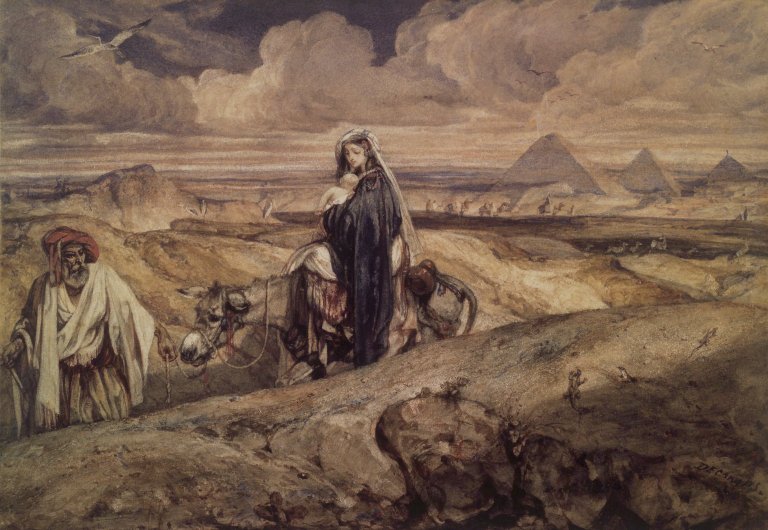
Over a century ago, Friedrich Nietzsche proclaimed the death of God – meaning the loss of a passionate and personal commitment to God, the loss of belief, the death of that civilization some refer to, nostalgically, and perhaps fallaciously, as “Christendom.” For Nietzsche, the great European churches were tombs to a dead god.
Just a few decades later, fascist hordes would use the rhetoric of Christianity, culture, faith, and family to commit systematic genocide on European soil. Since then, talk about recovering western Christian culture often looks like a dogwhistle calling for more violence, more racism, more genocide. At the same time, many Christian artists and intellectuals, aware of an emptiness and sterility in white bourgeois culture, turn to Native and non-white cultures for new possibilities of artistic and religious expression. The defenders of a mythic “West” claim to be upholding an ancient tradition that endured for centuries, rising to its peak in the Middle Ages. But the reality is that a diverse, polyphonic, multicultural – dare I say “syncretic”? – Christianity is more true to the spirit of the Middle Ages, just as a radical egalitarianism, rather than hierarchy and clericalism, is more true to the spirit of the early Church.
What does this have to do with Christmas? Christmas in post-Christendom, in – to borrow a phrase from O’Connor – “Christ-haunted” modernity?
Laments about the loss of a religious sense at Christmas time are popular, and I will join in when it comes to the way our festivities have been commercialized, appropriated by Catholicism. But it seems to me to be foreign to the spirit of Christmas to set up rigid boundaries between who may and may not enter into it. Even for those who do not believe, the central meaning of Christmas and the mythic significance of the original Nativity story resonates. We all long for peace on earth. We long for justice for the oppressed. The story of the long exile of the Israelities, their laments over loss, their yearning for a real and physical savior, becomes the story of our humanity. The manger scene, where we assert that heaven came to earth in a savior, God born into our mortal flesh, is also a scene of uncertainty, mystery, confusion – even if two millennia later we have redrawn it as sentimental and comforting, defined it in terms of set theological terms that allow us to draw lines between belief and unbelief.
I referenced O’Connor earlier, and I will reference her again here: she once said of the Eucharist, “if it’s just a symbol, to hell with it.” This quote gets tossed around quite a lot. I used to toss it myself. But now it looks facile to me. It looks like the post-enlightenment certainty of a modern who desires that everything be neatly packaged into strict definitions, for which truth must be fact, and fact verified. For which a symbol is “just a symbol.”
If the manger scene and the Christmas story are “just a symbol” for many who do not practice the Christian religion, we can view that as nihilistic and empty – if we demand absolute assent and are unwilling to live with mystery. We can write this off as weak or insufficient in comparison with our firm creeds.
The problem is that for many throughout history, a place of shadow and uncertainty is where we end up residing. Is God here? Is God real? Is this sense of divinity a message from heaven? Is this bread God’s body? Demanding hard answers may look like the real faith as opposed to mushy uncertainty, but this reduces faith to a series of merely intellectual operations, denying the element of the physical that is present in symbol and myth – denying the power of ritual in the movements of the body, lighting of candles, singing songs, opening doors.
If we believe that God really came into this world for the salvation of all, at Christmas time, we should not be building walls to cage the divine and keep out those who we deem unworthy. Especially given our history in which the name of God and the rhetoric of Christianity were so often used in the service of earthly powers dedicated to the opposite of everything Christ represents – and given the fact that this is happening again, with rising movements of nationalism and fascism, globally, appropriating the rhetoric of Christianity to justify violence, we should be more wary about assuming that we, the ones with the “right faith” are preeminent. Certainty and definitions have been used too often as weapons and as excuses for violence.
Christians should not be trying to claim the gifts and rituals and mysteries of the nativity only for ourselves. Jesus said he would be found where he first arrived: among the poor, downtrodden, marginalized, and oppressed. And now, as Christians continue to oppress others in the name of Jesus, we should be wary about holding ourselves up as the special ones for whom the gifts of the kingdom are exclusive.
image credit: Brooklyn_Museum_-_The_Flight_into_Egypt_Fuite_en_Égypte_-_Alexandre-Gabriel_Decamps_-_overall.jpg
Previous Post
December 17, 2019
Waiting In Darkness, For the Savior Who Never Came
Next Post
December 28, 2019 So What If Jesus Wasn’t Poor or a Refugee?
Browse Our Archives
Select a Category abortion anti-semitism art Atwood Betrothed church clergy abuse coronavirus culture economics education environmentalism ethics faith family feminism gardening gun violence immigration Judaism literature MaddAddam New Pro Life Movement news pandemic personalism poem politics politics blue Pope Francis racism religion salvation sexuality social justice spirituality Station eleven Stephen King The Stand Trump Uncategorized war World Health Organization
Select a Month March 2021 February 2021 January 2021 December 2020 November 2020 October 2020 September 2020 August 2020 July 2020 June 2020 May 2020 April 2020 March 2020 February 2020 January 2020 December 2019 November 2019 October 2019 September 2019 August 2019 July 2019 June 2019 May 2019 April 2019 March 2019 February 2019 January 2019 December 2018 November 2018 October 2018 September 2018 August 2018 July 2018 June 2018 May 2018 April 2018 March 2018 February 2018 January 2018 December 2017 November 2017 October 2017 September 2017 August 2017 July 2017 June 2017 May 2017 April 2017 March 2017 February 2017 January 2017 December 2016 November 2016 October 2016 September 2016 August 2016 July 2016 June 2016 May 2016 April 2016 March 2016 February 2016
Follow Us!
TAKE THE
Religious Wisdom Quiz
What specific sin does Paul say is against one's own body?
Select your answer to see how you score.
Sexual immorality Drunkenness Self-harm Gluttony
Support this
Column


Related posts from suspended in her jar

Catholics Are De-Toxing From their Experiences With Traumatic...

How Has the Pandemic Changed Us? Has It...

Rush Limbaugh Would Never Have Succeeded In an...
People are in Therapy to Recover from Religion...
TRENDING AT PATHEOS Catholic

Rejecting Doom: Christian Hope And Human Action
Christianity is a religion of hope. We are to have hope and...

It’s What Comes From Within Which Matters
One of the most difficult things for us to understand is why...

Why I Choose the Eucharist Over the Sermon
Choose the Eucharist, Not the Sermon What are we supposed to get...

5 Design Elements Found in Spiritually Rooted Homes
Putting Spirituality Into Home Decor Our homes are more than our living...

Credo: A Story of God Told with the...
About 10 years ago, I began to imagine a personal "Credo" that...

The Anatomy of Divine Revelation in Catholic Thought
The claim that God has made Himself known to human beings is...
view all Catholic blogs
Ad-Free & Subscriber Log-In Subscription Support
- About Us
- 2026 Calendar
- Videos
- Podcasts
- Library of World Religions
- Faith In Media Tracker
- Advertise With Us
- Write for Us
- Privacy Policy
- Terms of Service
- Do Not Sell My Data
- Contact Us
- Radiant Digital
- Manage Newsletter Subscriptions
- Unsubscribe From Notifications
- Sitemap
Copyright 2008-2026, Patheos. All rights reserved.
Subscription Support Ad-Free & Subscriber Log-In
Follow Patheos