
BuddhistCatholicContemplativeEvangelicalGeneral ChristianHinduJewishLatter-day SaintMuslimNew VisionsProgressive Christian
Beliefs
- Buddhist
- Catholic
- Contemplative
- Evangelical
- General Christian
- Hindu
- Jewish
- Latter-day Saint
- More Voices
- Muslim
- New Visions
- Pagan
- Progressive Christian
Topics
- Religion News
- Food and Religion
- Sports and Religion
- Religious Art
- Religious Music and Entertainment
- Religious Events
- History and Religion
- Style and Religion
- Politics and Religion
- Women in Religion
- Recreation Outdoors and Religion
- Business Finance and Religion
- Careers Workplace and Religion
- Education and Religion
- Family Parenting and Religion
- Health Fitness and Religion
- Home and Religion
- Relationships and Religion
- Technology and Religion
- Travel and Religion
Columnists
- Buddhist Columnists
- Business Finance and Religion Columnists
- Careers Workplace and Religion Columnists
- Catholic Columnists
- Contemplative Columnists
- Education and Religion Columnists
- Evangelists Columnists
- Family Parenting and Religion Columnists
- General Christian Columnists
- Health Fitness and Religion Columnists
- Hindu Columnists
- History and Religion Columnists
- Home and Religion Columnists
- Jewish Columnists
- More Voices Columnists
- Latter Day Columnists
- Muslim Columnists
- New Visions Columnists
- Nonreligious Columnists
- Pagan Columnists
- Politics and Religion Columnists
- Progressive Columnists
- Recreation Outdoors and Religion Columnists
- Relationships and Religion Columnists
- Religion News Columnists
- Religious Art Columnists
- Religious Events Columnists
- Religious Music and Entertainment Columnists
- Sports and Religion Columnists
- Style and Religion Columnists
- Technology and Religion Columnists
- Travel and Religion Columnists
- Women in Religion Columnists
Resource Library
- 2026 Calendar
- Library of World Religions
- The 100 Most Holy Places on Earth
- Patheos Answers
- Podcasts
- Videos
- Faith Leaders Database
- Anglican Episcopalian
- Bahai
- Baptist
- Buddhism
- Christianity
- Confucianism
- Eastern Orthodoxy
- Hinduism
- Holiness and Pentecostal
- ISKCON
- Islam
- Judaism
- Lutheran
- Methodist
- The Church of Jesus Christ of Latter-day Saints
- New Age
- Paganism
- Presbytarian and Reformed
- Protestantism
- Religion Behind the Scenes
- Roman Catholic
- Scientology
- Shia Islam
- Sikhism
- Sufism
- Sunni Islam
- Taoism
- Zen
- See all religions
Research Tools
 Ad-Free & Subscriber Log-In Subscription Support
Ad-Free & Subscriber Log-In Subscription Support
Follow Patheos 

- Trending:
- Forgiveness
- |
- Marriage
- |
- Consciousness
- |
- Death Penalty
- |
- Election
- |
- Halloween
 suspended in her jar
- Home
- Catholic
- What Lies At the Root Of the Denial Of “Ecological Sin”?
What Lies At the Root Of the Denial Of “Ecological Sin”?
Last updated on: November 17, 2019 at 12:14 am by Rebecca Bratten Weiss
What Lies At the Root Of the Denial Of “Ecological Sin”? 2019-11-17T00:14:23-04:00 Rebecca Bratten Weiss
Patheos Explore the world's faith through different perspectives on religion and spirituality! Patheos has the views of the prevalent religions and spiritualities of the world.

Pope Francis has said that the Catechism of the Catholic Church will be updated in order to deal with “ecological sins.” This should not be controversial, yet apparently it is. Or if not controversial, it is apparently ”confusing” – which has come to be shorthand for a criticism of the pope under the guise of good-faith naivete. “Ecological sins? Whatever could this mean? What could such sins be?”
This should not be difficult to figure out. Most of us have been educated from an early age to respect our environment, to care for creation, to act responsibly towards nature. This is not something that stands out as some sort of special or arcane moral knowledge; it is simply good citizenship. Throwing garbage around, or wasting our resources, is thoughtless and irresponsible; cleaning up after oneself and conserving what we own is prudent and mature behavior.
Irresponsibility on a personal scale becomes catastrophic on a corporate scale. Your neighbor who fills their yard with trash and broken vehicles is creating an eyesore that affects your property values and possibly even your safety; when a major corporation acts with this level of irresponsibility – dumping toxic waste in rivers, not cleaning up after spills, razing forests, blowing up mountains – the dire effects are far-reaching, not only geographically, but temporally. Generations to come will feel the reverberations of our moral turpitude, as they deal with diminished resources, polluted air and water, extreme weather patterns, and mounting heaps of garbage. If Catholics truly care about the lives unborn – why do we not worry about the condition of the earth they will inherit from us?
In the past, repeatedly, experts on ecology have issued dire warnings regarding the effects of pollution and pesticides. That Rust Belt cities are livable at all today is a testimony to the importance of taking these warnings seriously. Yet the irony, of course, is that when we pay attention and do something to avert the crisis, and the crisis doesn’t come, there will always be those who say there was never any crisis in the first place.
What is strange to me is: why is it so important for them to imagine that human beings can run rough-shod over the earth and leave no trace? The oafishness of the pretense not to know what Francis could possibly mean by ecological sin, has its root in this willful choice to turn away not only from what seems intellectually obvious, but also from a moral and theological call to engagement with the whole of creation: a call to wonder, to opening our eyes, to regaining awe in the face of the unknown, the other, the strange, the alien – that is, living things other than ourselves, living things of no obvious and immediate use to us, which are marvelous simply by virtue of their being.
Christianity has claimed the Hebrew sacred texts as part of the revealed truth of the Christian God, and this means we should take seriously the ideas in Genesis regarding care for creation, as well as the many prophetic texts in which the Kingdom is depicted in terms of peace and harmony among all living things. And in our two thousand year old tradition we have repeatedly emphasized the sacramentality of our faith – the idea of divine presence in the created world, and thus of a religious stance not only towards the special sacred in the tabernacles but towards the everyday sacred, all around us. Consider the stories of St. Francis preaching to the creatures – or St. John Henry Newman’s musing on the mysterious otherness of non-human creatures.
This is our tradition. What’s more, it’s a good tradition. So why reject it and pretend it never existed?
Disdain for the idea of a moral and even religious responsibility towards nature – rejection of the idea of ecological sin – is not a Christian stance. It is not even a pagan one. I’m not sure how to define it, but I do know that an ethos that involves an erasure of the concept of the sacred from the natural world is skirting dangerously close to nihilism.
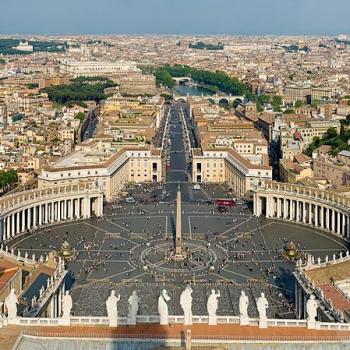
image credit: wikimedia commons
Previous Post

November 11, 2019
No, Celibacy Is Not the Problem
Next Post

November 24, 2019 Which Families Matter? Rethinking the Idea of "Parental Rights"
Browse Our Archives
Select a Category abortion anti-semitism art Atwood Betrothed church clergy abuse coronavirus culture economics education environmentalism ethics faith family feminism gardening gun violence immigration Judaism literature MaddAddam New Pro Life Movement news pandemic personalism poem politics politics blue Pope Francis racism religion salvation sexuality social justice spirituality Station eleven Stephen King The Stand Trump Uncategorized war World Health Organization
Select a Month March 2021 February 2021 January 2021 December 2020 November 2020 October 2020 September 2020 August 2020 July 2020 June 2020 May 2020 April 2020 March 2020 February 2020 January 2020 December 2019 November 2019 October 2019 September 2019 August 2019 July 2019 June 2019 May 2019 April 2019 March 2019 February 2019 January 2019 December 2018 November 2018 October 2018 September 2018 August 2018 July 2018 June 2018 May 2018 April 2018 March 2018 February 2018 January 2018 December 2017 November 2017 October 2017 September 2017 August 2017 July 2017 June 2017 May 2017 April 2017 March 2017 February 2017 January 2017 December 2016 November 2016 October 2016 September 2016 August 2016 July 2016 June 2016 May 2016 April 2016 March 2016 February 2016
Follow Us!
TAKE THE
Religious Wisdom Quiz
What was the primary marriage arrangement type?
Select your answer to see how you score.
Divine intervention Bride selection Arranged by families Love marriage
Support this
Column


Related posts from suspended in her jar

Four Takeaways from Oprah’s Interview with the Duke...

Rush Limbaugh Would Never Have Succeeded In an...

We Need to Be Honest When We Talk...
Who Speaks for the Church? And Which Church?
TRENDING AT PATHEOS Catholic

Rejecting Doom: Christian Hope And Human Action
Christianity is a religion of hope. We are to have hope and...

It’s What Comes From Within Which Matters
One of the most difficult things for us to understand is why...

Why I Choose the Eucharist Over the Sermon
Choose the Eucharist, Not the Sermon What are we supposed to get...

5 Design Elements Found in Spiritually Rooted Homes
Putting Spirituality Into Home Decor Our homes are more than our living...

Credo: A Story of God Told with the...
About 10 years ago, I began to imagine a personal "Credo" that...

The Anatomy of Divine Revelation in Catholic Thought
The claim that God has made Himself known to human beings is...
view all Catholic blogs
Ad-Free & Subscriber Log-In Subscription Support
- About Us
- 2026 Calendar
- Videos
- Podcasts
- Library of World Religions
- Faith In Media Tracker
- Advertise With Us
- Write for Us
- Privacy Policy
- Terms of Service
- Do Not Sell My Data
- Contact Us
- Radiant Digital
- Manage Newsletter Subscriptions
- Unsubscribe From Notifications
- Sitemap
Copyright 2008-2026, Patheos. All rights reserved.
Subscription Support Ad-Free & Subscriber Log-In
Follow Patheos