
BuddhistCatholicContemplativeEvangelicalGeneral ChristianHinduJewishLatter-day SaintMuslimNew VisionsProgressive Christian
Beliefs
- Buddhist
- Catholic
- Contemplative
- Evangelical
- General Christian
- Hindu
- Jewish
- Latter-day Saint
- More Voices
- Muslim
- New Visions
- Pagan
- Progressive Christian
Topics
- Religion News
- Food and Religion
- Sports and Religion
- Religious Art
- Religious Music and Entertainment
- Religious Events
- History and Religion
- Style and Religion
- Politics and Religion
- Women in Religion
- Recreation Outdoors and Religion
- Business Finance and Religion
- Careers Workplace and Religion
- Education and Religion
- Family Parenting and Religion
- Health Fitness and Religion
- Home and Religion
- Relationships and Religion
- Technology and Religion
- Travel and Religion
Columnists
- Buddhist Columnists
- Business Finance and Religion Columnists
- Careers Workplace and Religion Columnists
- Catholic Columnists
- Contemplative Columnists
- Education and Religion Columnists
- Evangelists Columnists
- Family Parenting and Religion Columnists
- General Christian Columnists
- Health Fitness and Religion Columnists
- Hindu Columnists
- History and Religion Columnists
- Home and Religion Columnists
- Jewish Columnists
- More Voices Columnists
- Latter Day Columnists
- Muslim Columnists
- New Visions Columnists
- Nonreligious Columnists
- Pagan Columnists
- Politics and Religion Columnists
- Progressive Columnists
- Recreation Outdoors and Religion Columnists
- Relationships and Religion Columnists
- Religion News Columnists
- Religious Art Columnists
- Religious Events Columnists
- Religious Music and Entertainment Columnists
- Sports and Religion Columnists
- Style and Religion Columnists
- Technology and Religion Columnists
- Travel and Religion Columnists
- Women in Religion Columnists
Resource Library
- 2026 Calendar
- Library of World Religions
- The 100 Most Holy Places on Earth
- Patheos Answers
- Podcasts
- Videos
- Faith Leaders Database
- Anglican Episcopalian
- Bahai
- Baptist
- Buddhism
- Christianity
- Confucianism
- Eastern Orthodoxy
- Hinduism
- Holiness and Pentecostal
- ISKCON
- Islam
- Judaism
- Lutheran
- Methodist
- The Church of Jesus Christ of Latter-day Saints
- New Age
- Paganism
- Presbytarian and Reformed
- Protestantism
- Religion Behind the Scenes
- Roman Catholic
- Scientology
- Shia Islam
- Sikhism
- Sufism
- Sunni Islam
- Taoism
- Zen
- See all religions
Research Tools
 Ad-Free & Subscriber Log-In Subscription Support
Ad-Free & Subscriber Log-In Subscription Support
Follow Patheos 

- Trending:
- Forgiveness
- |
- Marriage
- |
- Consciousness
- |
- Death Penalty
- |
- Election
- |
- Halloween
 suspended in her jar
- Home
- Catholic
- Is There A Fundamental Flaw In the Institutional Church’s Approach To Sex Ethics?
Is There A Fundamental Flaw In the Institutional Church’s Approach To Sex Ethics?
Last updated on: November 4, 2019 at 10:12 pm by Rebecca Bratten Weiss
Is There A Fundamental Flaw In the Institutional Church’s Approach To Sex Ethics? 2019-11-04T22:12:40-04:00 Rebecca Bratten Weiss
Patheos Explore the world's faith through different perspectives on religion and spirituality! Patheos has the views of the prevalent religions and spiritualities of the world.
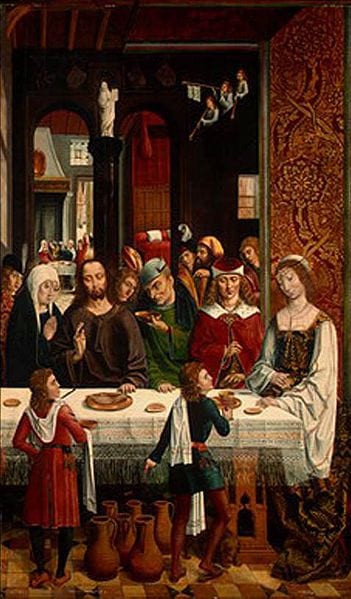
Recent statements by theologian and former president of Ireland Mary McAleese have been making a stir in Catholic circles, prompting reactions in the extremes of both negative and positive.
According to an article by Sarah Mac Donald, McAleese stated that the Catholic priesthood is based around a “fundamental lie”:
She told a conference in TCD on Saturday attended by up to 400 people, including the Provost, Dr Patrick Prendergast, that a clericalised priesthood was not attracting vocations today and that many of those who are attracted to priesthood have a “deeply problematic” sexuality because the Church demands that those priests and seminarians who are not heterosexual pretend to be.
Recalling the six years she spent studying for a doctorate in canon law in Rome, living in the environs of a seminary and monastery, she said she had encountered many young seminarians and priests.
“I became very much aware of the dysfunction at the heart of seminary life and the dysfunction at the heart of much of the priesthood.”
“The number of fake-hetero misogynistic homophobic gays I met frightened me. The homophobia of people who are gay is a lie – it is a vicious lie. But they live it and in living it, apart from making themselves miserable, they also make a lot of other people miserable.” She said that as pastors, “their capacity for dispersing misery is really immense. That worries me greatly.”
McAleese’s observation resonates with much that I have seen in the past few decades of interacting with priests, seminarians, and former seminarians. I even have in mind particular men I knew in college and graduate school who were unable to integrate a holistic and wholesome sexuality into their overall moral character because of the pressure to repress, deny, and self-flagellate.
This is not to say that I oppose priestly celibacy as a discipline: although it is not doctrinally mandated, and has not always been practiced by the church, there are good pragmatic reasons for it priestly celibacy to be maintained, in many cases, if not in all.
My objection is rather to a culture in which humans are not allowed to be gay at all. Not celibate gay. Not unmarried gay. Not chaste gay. This is bad enough in Catholic culture across the board, but now that gay men are barred from the priesthood this means a) abolishing what was traditionally an opportunity for men to knew they would be unhappy in heterosexual marriage to pursue a calling of love and service; b) creating a situation in which men who are gay and drawn to the priesthood will feel obligated to deny their own reality.
What especially struck me in McAleese’s observations, however, was a quotation she highlighted from Pope St. John Paul II’s text Love and Responsibility – a formative read for me in my undergrad years, which gets me wondering about some of the issues I dealt with in my personal life, then and later:
She quoted from a book of theology ‘Love and Responsibility’ by the late Pope St John Paul II which stated that in the act of sex in a marriage, the woman “is a comparatively passive partner whose function it is to accept and experience. For the purpose of the sexual act it is enough for her to be passive and unresisting, so much so that it can even take place without her volition while she is in a state in which she has no awareness at all of what is happening – for instance when she is asleep or unconscious.”
She noted that the late Irish theologian Fr Seán Fagan, who was censured by the Vatican, had questioned Pope John Paul on this saying it sounded like rape. “What happened? Pope John Paul becomes a saint. Seán Fagan becomes silenced. That’s our church,” said Professor McAleese.
Read this, and consider recent debates regarding the role of women in the church, about our requirement to be modest, subservient, submissive, and meek. Read this and consider our ongoing crisis of sexual abuse and institutional cover-up. Also keep in mind certain historical realities, such as the church’s failure insufficiently to condemn slavery even when it meant that Black women were used violently and repeatedly as sexual objects by their white “masters” – or the church’s anemic response to the ongoing and widespread problems of marital rape and forced marriage in general. In fact, in light of what we now understand about the nature of marriage and human sexuality, it is possible that a majority of marriages, for many centuries in Catholic societies, might be eligible for annulments according to our understanding of the necessity for consent, for a marriage to be valid.
I would like to draw out McAleese’s observations and put forth the hypothesis that the Church has been proceeding foremost of its history on the basis of a highly flawed understanding of sex ethics, one more appropriate to the Roman imperial obsession with control and lineage, than to the Christ-like understanding of love, freedom, and equality. There is a tendency to view sex ethics according to a simple binary: procreative married sex good, all other sex bad. This means we have failed to deal with questions of sexual morality that require comprehension of scales of good and evil. Rape has been treated as just one of many failures to keep sex within marriage. Abusive behavior within marriage has been ignored. The emphasis is on sex as something that should be contained within approved structures, and ordered ultimately towards procreation – while questions about bodily autonomy, dignity, equality, consent, and mutuality are neglected. I have even seen Catholics argue that while rape is bad, it isn’t as bad as homosexuality, because at least rape is “natural.”
If we had taken seriously, from the start, the radicality of Christ’s Gospel message, especially the emphasis on love of neighbor and abolition of differences, how might things have proceeded differently? If ideas about the passivity of inferiority of women had been rejected wholesale, from the early church on, instead of being allowed to creep back in from every patriarchal corner? If the emphasis had been less on breeding capacity, more on the love and mutuality imaged in the love of Christ for the Church? If authoritarian structures that allowed humans to treat one another as mere objects, mere property, had been dismantled?
Human nature is human nature, and having a better sense of sexual ethics and sexual anthropology in general would not be some kind of magic cure-all; however, it is notable that while the Church has often been on the forefront in issues of justice, economics, and social responsibility, it has regularly failed as an arbiter of genuinely person-centered, Gospel-based sexual ethics, and has certainly failed as a protector of those at the mercy of predators. Rather, predators have regularly found a home in the church, whether in the ranks of the clergy or as heads of household in “good Catholic marriages.” Pointing the finger at LGBTQ persons and women who use the pill has been a deflection measure for quite some time, but in light of what we are now beginning to see, it may be that this deflection will no longer work so well, and the church leaders will have to come to terms with their own failures not only in terms of action, but in terms of understanding human sexuality at all.
image credit: https://commons.wikimedia.org/wiki/File:Master_Of_The_Catholic_Kings_-_The_Marriage_at_Cana_-_WGA14519.jpg
Previous Post
October 29, 2019
Is The Ban On Ordination of Women Based On A Heresy?
Next Post

November 5, 2019 Drag Queens, Liberalism, and Integralists - Oh My!
Browse Our Archives
Select a Category abortion anti-semitism art Atwood Betrothed church clergy abuse coronavirus culture economics education environmentalism ethics faith family feminism gardening gun violence immigration Judaism literature MaddAddam New Pro Life Movement news pandemic personalism poem politics politics blue Pope Francis racism religion salvation sexuality social justice spirituality Station eleven Stephen King The Stand Trump Uncategorized war World Health Organization
Select a Month March 2021 February 2021 January 2021 December 2020 November 2020 October 2020 September 2020 August 2020 July 2020 June 2020 May 2020 April 2020 March 2020 February 2020 January 2020 December 2019 November 2019 October 2019 September 2019 August 2019 July 2019 June 2019 May 2019 April 2019 March 2019 February 2019 January 2019 December 2018 November 2018 October 2018 September 2018 August 2018 July 2018 June 2018 May 2018 April 2018 March 2018 February 2018 January 2018 December 2017 November 2017 October 2017 September 2017 August 2017 July 2017 June 2017 May 2017 April 2017 March 2017 February 2017 January 2017 December 2016 November 2016 October 2016 September 2016 August 2016 July 2016 June 2016 May 2016 April 2016 March 2016 February 2016
Follow Us!
TAKE THE
Religious Wisdom Quiz
What city did Jesus grow up in?
Select your answer to see how you score.
Capernaum Bethlehem Nazareth Jericho
Support this
Column


Related posts from suspended in her jar

Immigrants: They Need Us, and We Need Them

Four Takeaways from Oprah’s Interview with the Duke...

Catholics Are De-Toxing From their Experiences With Traumatic...

How Has the Pandemic Changed Us? Has It...
TRENDING AT PATHEOS Catholic

Creation, Preservation, and Teleology in Catholic Theology
As I write this, it is very early Monday morning. Like millions...

The Parable Of The Sower And The Word...
One of Christ’s most famous parables is that of the sower who...

Rejecting Doom: Christian Hope And Human Action
Christianity is a religion of hope. We are to have hope and...

Why I Choose the Eucharist Over the Sermon
Choose the Eucharist, Not the Sermon What are we supposed to get...

5 Design Elements Found in Spiritually Rooted Homes
Putting Spirituality Into Home Decor Our homes are more than our living...

Credo: A Story of God Told with the...
About 10 years ago, I began to imagine a personal "Credo" that...
view all Catholic blogs
Ad-Free & Subscriber Log-In Subscription Support
- About Us
- 2026 Calendar
- Videos
- Podcasts
- Library of World Religions
- Faith In Media Tracker
- Advertise With Us
- Write for Us
- Privacy Policy
- Terms of Service
- Do Not Sell My Data
- Contact Us
- Radiant Digital
- Manage Newsletter Subscriptions
- Unsubscribe From Notifications
- Sitemap
Copyright 2008-2026, Patheos. All rights reserved.
Subscription Support Ad-Free & Subscriber Log-In
Follow Patheos