
BuddhistCatholicContemplativeEvangelicalGeneral ChristianHinduJewishLatter-day SaintMuslimNew VisionsProgressive Christian
Beliefs
- Buddhist
- Catholic
- Contemplative
- Evangelical
- General Christian
- Hindu
- Jewish
- Latter-day Saint
- More Voices
- Muslim
- New Visions
- Pagan
- Progressive Christian
Topics
- Religion News
- Food and Religion
- Sports and Religion
- Religious Art
- Religious Music and Entertainment
- Religious Events
- History and Religion
- Style and Religion
- Politics and Religion
- Women in Religion
- Recreation Outdoors and Religion
- Business Finance and Religion
- Careers Workplace and Religion
- Education and Religion
- Family Parenting and Religion
- Health Fitness and Religion
- Home and Religion
- Relationships and Religion
- Technology and Religion
- Travel and Religion
Columnists
- Buddhist Columnists
- Business Finance and Religion Columnists
- Careers Workplace and Religion Columnists
- Catholic Columnists
- Contemplative Columnists
- Education and Religion Columnists
- Evangelists Columnists
- Family Parenting and Religion Columnists
- General Christian Columnists
- Health Fitness and Religion Columnists
- Hindu Columnists
- History and Religion Columnists
- Home and Religion Columnists
- Jewish Columnists
- More Voices Columnists
- Latter Day Columnists
- Muslim Columnists
- New Visions Columnists
- Nonreligious Columnists
- Pagan Columnists
- Politics and Religion Columnists
- Progressive Columnists
- Recreation Outdoors and Religion Columnists
- Relationships and Religion Columnists
- Religion News Columnists
- Religious Art Columnists
- Religious Events Columnists
- Religious Music and Entertainment Columnists
- Sports and Religion Columnists
- Style and Religion Columnists
- Technology and Religion Columnists
- Travel and Religion Columnists
- Women in Religion Columnists
Resource Library
- 2026 Calendar
- Library of World Religions
- The 100 Most Holy Places on Earth
- Patheos Answers
- Podcasts
- Videos
- Faith Leaders Database
- Anglican Episcopalian
- Bahai
- Baptist
- Buddhism
- Christianity
- Confucianism
- Eastern Orthodoxy
- Hinduism
- Holiness and Pentecostal
- ISKCON
- Islam
- Judaism
- Lutheran
- Methodist
- The Church of Jesus Christ of Latter-day Saints
- New Age
- Paganism
- Presbytarian and Reformed
- Protestantism
- Religion Behind the Scenes
- Roman Catholic
- Scientology
- Shia Islam
- Sikhism
- Sufism
- Sunni Islam
- Taoism
- Zen
- See all religions
Research Tools
 Ad-Free & Subscriber Log-In Subscription Support
Ad-Free & Subscriber Log-In Subscription Support
Follow Patheos 

- Trending:
- Forgiveness
- |
- Marriage
- |
- Consciousness
- |
- Death Penalty
- |
- Election
- |
- Halloween
 suspended in her jar
- Home
- Catholic
- Lost In Translation: How Christians Frequently Misunderstand Judaism
Lost In Translation: How Christians Frequently Misunderstand Judaism
Last updated on: October 4, 2019 at 10:48 pm by Guest Contributor
Lost In Translation: How Christians Frequently Misunderstand Judaism 2019-10-04T22:48:25-04:00 Guest Contributor
Patheos Explore the world's faith through different perspectives on religion and spirituality! Patheos has the views of the prevalent religions and spiritualities of the world.
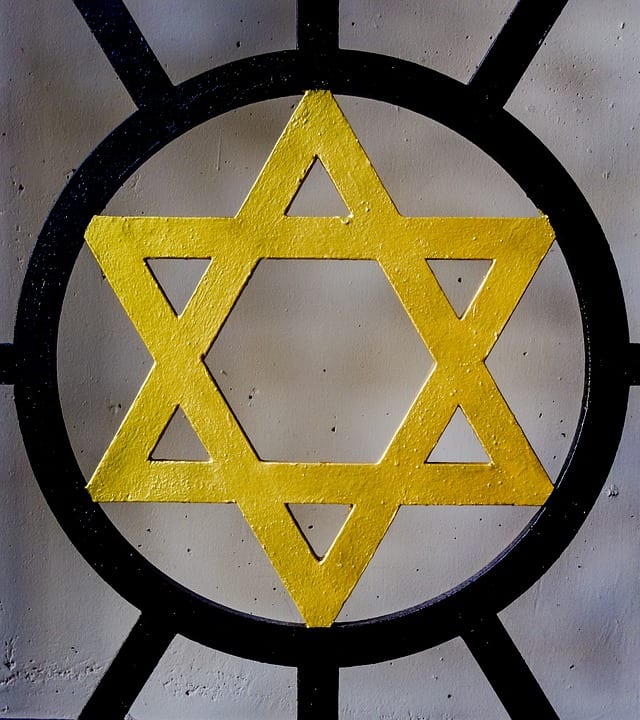
Preface by Rebecca Bratten Weiss
As a Catholic of Jewish ethnicity, with deep personal and religious affinities for the faith tradition of my foremothers, one of my ongoing themes is the state of Jewish / Christian relations. In this column I have repeatedly expressed concerns about how Christians have tolerated, enabled, or even generated anti-Semitism historically and globally. My friend and some-time collaborator Gregory Gronbacher, a convert to Judaism who has spent much time immersed in Catholic academia and culture, shares many of my concerns. I have learned much from my opportunities for dialogue with him over the years, and am happy to have the chance to share his perspectives for my Catholic audiences here at Patheos. At a time when the threat of anti-Semitism looms again, it is important for Catholics better to understand Judaism, especially given that many attempts by Christians to disavow themselves of anti-Jewish sentiment tend inadvertently to further dangerous stereotypes and compound misunderstanding.
__________________________________
by guest writer Gregory Eran Gronbacher
A couple of years ago I changed the religious views section of my Facebook profile to say “Love your neighbor as yourself.”
About three weeks after posting it, a newly acquired friend saw the description and messaged me, “Cool. What denomination are you?” I replied to her, “Reform.” She answered with a surprise, “Wow, I would have never taken you for a Calvinist.”
I explained to her that it was “Reform” as in Reform Judaism.
My newly acquired friend was a theology blogger, with a Masters in Theological Studies from a well-known, regional Christian seminary. Her undergraduate degree was in theology, also from a well established, acclaimed Protestant school in the midwest.
Therefore, her next question blew me away, “If you’re Jewish, why are you quoting Jesus in your Facebook profile?”
Well, true enough, Jesus did say “love your neighbor as yourself.” (Mark 12:30-31) But when he did so, he was quoting Leviticus 19:18, written about a thousand years before he was born.
Informing my friend of this, she replied, “You must be reading a bad translation.” I told her to look at the text for herself, which she did online right then. She immediately apologized and expressed her surprise. To find such a core teaching of love, in Leviticus, no less.
Yes, much can be lost in translation.
Most of my Christian friends misunderstand Judaism. They assume today’s Jews are theologically like the Pharisees from the gospels, mixed with emotional flavoring from Fiddler on the Roof.
I’ve lost count of how many times I’ve been told, often politely and with genuine concern for my soul, why am I “living under a law which can’t give life” or, thankfully, less often, “when will you stop hating Jesus and accept him as the Messiah?”
Full bodied responses take more than a few words, but let’s put to rest the above misunderstandings.
First, Jews are not “under the law.” In fact, I belong to the largest Jewish group in the world – the Reform Movement – which teaches personal autonomy in relation to Jewish tradition – not legalism.
Second, while I’m sure there are some Jews who do, I’ve never a met a Jew who hated Jesus. After all, he was a Jew, no? And we go out of our way to avoid hating our own. In fact, our “rigid law” prohibits us from doing so.
For an excellent overview of how most Jews understand Judaism and Jewish law, see the short and concise Pittsburgh Platform of Reform Judaism.
https://en.wikipedia.org/wiki/Pittsburgh_Platform
Having had been a Christian myself, and having had studied Christian theology and philosophy, I was pleasantly surprised when I began studying Judaism and Jewish theology. Most Jewish authors are well-versed in Christian thought and theology, do their best to represent it fairly, and are appreciative of the many, many positive aspects of Christianity. They do their best to translate it accurately.
One Shabbat evening at Temple, three seminarians from a local seminary came to services. They were well received. After all, hospitality is part of that “strict Jewish law.” The seminarians, being polite and respectful, asked the rabbi if they could gently engage the members of the congregation about their views on Jesus at the social after services. They weren’t looking to convert anyone, they just wanted to learn more. Rabbi said, “Go for it.”
Hearing this conversation from a few feet away, I followed the students, fascinated by what responses I might hear. A few people weren’t sure how to respond or side-stepped the question. But most happily answered. “Jesus is a Jewish sage.” “A wisdom teacher.” “A profound rabbi, reformer, and man of God.” Some went so far as to say “Prophet.”
One woman’s response had me laughing out loud. She had responded positively to the seminarian’s questions about Jesus, so one of them pushed a little further, “Do you think Jesus is God?” The woman said, in a classic, east coast Jewish accent, “Son, my name is Helen Lipschitz. Would I be standing here tonight, a member of this Temple, if I thought Jesus was God? We like him, we don’t worship him.”
As the seminarians learned that evening, Judaism is often misunderstood, something gets lost in translation. And unfortunately, those misunderstandings can help fuel antisemitism on the part of some.
So, why the misunderstandings?
First, few Christians read Jewish authors or Jewish theological texts. And sadly, when they do, they tend to select texts not representative of the best of Jewish thought and scholarship.
Second, many mistakenly think that all Jews are like the Orthodox-Hasidic Jews with side curls, beards, and black hats and coats. They assume all Jews keep Kosher, subscribe to Biblical literalism, and strictly follow Halakhah (Jewish traditional commandments, often called the law.) What they don’t realize is that Orthodoxy makes up about 16% of all Jews. The rest are secular or Liberal.
Third, let’s consider the Pharisees. This movement of First Century Judaism transformed into today’s Rabbis. In the time of Jesus, they were considered one of the more tolerant, open, and spiritually alive group of Jews. Yes, they followed Jewish law, but they weren’t cold-hearted legalists. I’ll refer you to the 30 or so volumes of the Talmud for further reading. The gospel writers used the pharisees as a literary and theological foil in a time when tensions were high between Jews and the emerging Christian communities.
There are many such misunderstandings. If I could offer my Christian friends some insight into what modern Judaism is and isn’t, I’d offer the following to start the conversation:
1. Judaism is Diverse. There are many types of Jews and many traditions. There is diversity in theology, politics, views on Israel, and how to be a good Jew. There’s diversity in ethnicity, national origin – the vast majority of Jewish denominations ordain women and accept LGBTQ+ people, their marriages, ordinations, and so on. As the joke goes, ask three Jews a question, and you’ll get at least six different answers. If you want to understand real Judaism, talk to real Jews and read modern Jewish theology.
2. Judaism is non-creedal with no central authority. There is no answer to the question, “what must Jews believe?” We don’t adhere to creeds. There’s no theological litmus test to be a Jew, no required beliefs. No central authority. Yes, one assumes if you’re going to be Jewish you have some engagement with the Bible, Jewish tradition, and Jewish community. We Jews understand Judaism as an ongoing conversation to which all are invited. Many of my higher-church Christian friends who greatly value theological orthodoxy, find this troubling. How do we find unity? We try our best to love one another and engage Jewish tradition and wisdom as we best understand it. Judaism is much more than just a theology, it’s a people, a community, and a set of commitments.
3. Why are you still waiting for the Messiah? Well, actually, most of us aren’t. Reform Judaism and many other forms of Liberal Judaism – the vast majority of Jews – don’t believe a messiah is coming nor affirm the concept. Besides, we couldn’t even agree on what she’d be like if she came.
4. Aren’t you worried about your salvation? Hmmm. No. Modern Judaism doesn’t believe in original sin – we interpret our Genesis stories differently. Many Jews don’t even believe in an afterlife. Sure, the world is a mess, but it’s not because of an apple and a snake. And yes, I need to engage in self-reflection and repentance, as Judaism encourages. But I’m made whole and find some of my meaning in affirming the Covenant of my People and by affirming human dignity and living a good life. In Judaism, no one has to die for me to be right with God.
I could go on, and in greater depth than a blog post allows. I would, however, be happy to answer questions and engage in dialog. Feel free to reach out to me at [email protected].
Previous Post

October 2, 2019
So, What If Abortion Really Is Driven By White Supremacy?
Next Post

October 6, 2019 Shaking The Dust From My Shoes: A Survivor's Testimony
Browse Our Archives
Select a Category abortion anti-semitism art Atwood Betrothed church clergy abuse coronavirus culture economics education environmentalism ethics faith family feminism gardening gun violence immigration Judaism literature MaddAddam New Pro Life Movement news pandemic personalism poem politics politics blue Pope Francis racism religion salvation sexuality social justice spirituality Station eleven Stephen King The Stand Trump Uncategorized war World Health Organization
Select a Month March 2021 February 2021 January 2021 December 2020 November 2020 October 2020 September 2020 August 2020 July 2020 June 2020 May 2020 April 2020 March 2020 February 2020 January 2020 December 2019 November 2019 October 2019 September 2019 August 2019 July 2019 June 2019 May 2019 April 2019 March 2019 February 2019 January 2019 December 2018 November 2018 October 2018 September 2018 August 2018 July 2018 June 2018 May 2018 April 2018 March 2018 February 2018 January 2018 December 2017 November 2017 October 2017 September 2017 August 2017 July 2017 June 2017 May 2017 April 2017 March 2017 February 2017 January 2017 December 2016 November 2016 October 2016 September 2016 August 2016 July 2016 June 2016 May 2016 April 2016 March 2016 February 2016
Follow Us!
TAKE THE
Religious Wisdom Quiz
What Christian tradition has a worldwide leader known as the Ecumenical Patriarch?
Select your answer to see how you score.
Eastern Orthodox Lutheran Catholic Anglican
Support this
Column


Related posts from suspended in her jar

Immigrants: They Need Us, and We Need Them

Four Takeaways from Oprah’s Interview with the Duke...

Catholics Are De-Toxing From their Experiences With Traumatic...

How Has the Pandemic Changed Us? Has It...
TRENDING AT PATHEOS Catholic

The Parable Of The Sower And The Word...
One of Christ’s most famous parables is that of the sower who...

Rejecting Doom: Christian Hope And Human Action
Christianity is a religion of hope. We are to have hope and...

Why I Choose the Eucharist Over the Sermon
Choose the Eucharist, Not the Sermon What are we supposed to get...

5 Design Elements Found in Spiritually Rooted Homes
Putting Spirituality Into Home Decor Our homes are more than our living...

Credo: A Story of God Told with the...
About 10 years ago, I began to imagine a personal "Credo" that...

The Anatomy of Divine Revelation in Catholic Thought
The claim that God has made Himself known to human beings is...
view all Catholic blogs
Ad-Free & Subscriber Log-In Subscription Support
- About Us
- 2026 Calendar
- Videos
- Podcasts
- Library of World Religions
- Faith In Media Tracker
- Advertise With Us
- Write for Us
- Privacy Policy
- Terms of Service
- Do Not Sell My Data
- Contact Us
- Radiant Digital
- Manage Newsletter Subscriptions
- Unsubscribe From Notifications
- Sitemap
Copyright 2008-2026, Patheos. All rights reserved.
Subscription Support Ad-Free & Subscriber Log-In
Follow Patheos