
BuddhistCatholicContemplativeEvangelicalGeneral ChristianHinduJewishLatter-day SaintMuslimNew VisionsProgressive Christian
Beliefs
- Buddhist
- Catholic
- Contemplative
- Evangelical
- General Christian
- Hindu
- Jewish
- Latter-day Saint
- More Voices
- Muslim
- New Visions
- Pagan
- Progressive Christian
Topics
- Religion News
- Food and Religion
- Sports and Religion
- Religious Art
- Religious Music and Entertainment
- Religious Events
- History and Religion
- Style and Religion
- Politics and Religion
- Women in Religion
- Recreation Outdoors and Religion
- Business Finance and Religion
- Careers Workplace and Religion
- Education and Religion
- Family Parenting and Religion
- Health Fitness and Religion
- Home and Religion
- Relationships and Religion
- Technology and Religion
- Travel and Religion
Columnists
- Buddhist Columnists
- Business Finance and Religion Columnists
- Careers Workplace and Religion Columnists
- Catholic Columnists
- Contemplative Columnists
- Education and Religion Columnists
- Evangelists Columnists
- Family Parenting and Religion Columnists
- General Christian Columnists
- Health Fitness and Religion Columnists
- Hindu Columnists
- History and Religion Columnists
- Home and Religion Columnists
- Jewish Columnists
- More Voices Columnists
- Latter Day Columnists
- Muslim Columnists
- New Visions Columnists
- Nonreligious Columnists
- Pagan Columnists
- Politics and Religion Columnists
- Progressive Columnists
- Recreation Outdoors and Religion Columnists
- Relationships and Religion Columnists
- Religion News Columnists
- Religious Art Columnists
- Religious Events Columnists
- Religious Music and Entertainment Columnists
- Sports and Religion Columnists
- Style and Religion Columnists
- Technology and Religion Columnists
- Travel and Religion Columnists
- Women in Religion Columnists
Resource Library
- 2026 Calendar
- Library of World Religions
- The 100 Most Holy Places on Earth
- Patheos Answers
- Podcasts
- Videos
- Faith Leaders Database
- Anglican Episcopalian
- Bahai
- Baptist
- Buddhism
- Christianity
- Confucianism
- Eastern Orthodoxy
- Hinduism
- Holiness and Pentecostal
- ISKCON
- Islam
- Judaism
- Lutheran
- Methodist
- The Church of Jesus Christ of Latter-day Saints
- New Age
- Paganism
- Presbytarian and Reformed
- Protestantism
- Religion Behind the Scenes
- Roman Catholic
- Scientology
- Shia Islam
- Sikhism
- Sufism
- Sunni Islam
- Taoism
- Zen
- See all religions
Research Tools
 Ad-Free & Subscriber Log-In Subscription Support
Ad-Free & Subscriber Log-In Subscription Support
Follow Patheos 

- Trending:
- Forgiveness
- |
- Marriage
- |
- Consciousness
- |
- Death Penalty
- |
- Election
- |
- Halloween
 suspended in her jar
- Home
- Catholic
- Ecological Atonement, Labor as Spirituality
Ecological Atonement, Labor as Spirituality
Last updated on: October 22, 2019 at 10:55 pm by Rebecca Bratten Weiss
Ecological Atonement, Labor as Spirituality 2019-10-22T22:55:18-04:00 Rebecca Bratten Weiss
Patheos Explore the world's faith through different perspectives on religion and spirituality! Patheos has the views of the prevalent religions and spiritualities of the world.
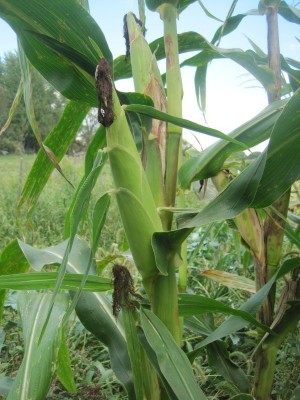
For the past few weeks, I have been overseeing an online multi-genre workshop on eco-writing. Eco-writing could be considered a variation on nature writing, because it deals with the natural world we live in, but it is not simply “writing about nature.” Writing ecologically requires receptivity to modes of communication other than the human, which runs counter to the instincts of the romantic imagination that projects human emotion and meaning onto the natural world. It is fitting that thinking ecologically about the world we live in means holding in check certain impulses to rush out and define things, label them, paint faces on them – because holding ourselves in check is central to ecological responsibility in the moral life, also.
One work we read for the course was Michael Pollan’s essay “Weeds Are Us,” which draws on history and botany to challenge romantic assumptions about the ecological make-up of the world we reside in. We assume that the weeds in our garden are envoys of some pristine untouched wildness; they are not. As Pollan points out:
Weeds, as the field guides indicate, are plants particularly well-adapted to man-made places. They don’t grow in forests or prairies—in “the wild.” Weeds thrive in gardens, meadows, lawns, vacant lots, railroad sidings, hard by dumpsters and in the cracks of sidewalks. They grow where we live, in other words, and hardly anywhere else.
Weeds, contrary to what the romantics assumed, are not wild. They are as much a product of civilization as the hybrid tea rose, or Thoreau’s bean plants. They do better than garden plants for the simple reason that they are better adapted to life in a garden.
Pollan goes on to make the connection between the way weeds dominate the garden, and human domination of the earth. Like ragweed and bindweed, we are not comfortably situated within ecosystems; we are colonizers; we step out of place and barge in uninvited, displacing other entities. The conclusion Pollan draws is a call to action: “doing nothing is not necessarily benign.” We can’t just step back politely and let nature to its thing, because – as with our weeds that have traveled with us in our march across the globe – we have spread around too much already, disrupted too much.
There’s no going back. Even Yellowstone, our country’s greatest “wilderness,” stands in need of careful management—it’s too late in the day simply to “leave it alone.” I have no idea what the best fire policy for Yellowstone might be, but I do know that men and women, armed with scientific knowledge and acting through human institutions, will have to choose one. They will also have to decide how many tourists Yellowstone can support, whether wolves should be reintroduced to help keep the elk population from exploding, and a host of other complicated questions. Today, even Yellowstone must be “gardened.”
There’s a certain irony in the fact that our unrestrained domination, on the basis of our claim to be “lords of the earth” with “dominion over nature” has now put us into a position where we can’t simply retreat and take a neutral position; we are morally obligated to labor to maintain delicate balances, or even restore balances we have upset. It is no longer an option for us to retreat into caves, to reject involvement in social or political projects of ecological responsibility.
From a religious perspective this looks like atonement.
But unlike what we usually consider acts of atonement, there is nothing overtly ritualistic about it. Or, if there is ritual, the ritual entails a careful divesting ourselves of the assumptions we make about our place of nature, and disciplining ourselves to grasp and respect the hard realities of living, physical being.
A recent event at Union Seminary made for a day or two of extra rumpus in Christian circles. The event was part of a class on “Extractivism,” and it entailed the seminarians gathering together and, according to the seminary’s Twitter, confessing to plants:
Together, we held our grief, joy, regret, hope, guilt and sorrow in prayer; offering them to the beings who sustain us but whose gift we too often fail to honor.
Naturally, much of the commentary on this was in either an alarmed or a mocking vein, But writer and Plough editor Veery Huleatt, writing for Washington Post, had a take on the event that is worth considering:
There is physical work to be done in healing and restoring debilitated ecosystems. Fumbling our way toward a better environmental ethic will probably involve some awkwardness and false starts, confessing to plants among them, but refusing to admit our ecological guilt is arguably a worse sin than taking our succulents to church.
I don’t think the seminarians who confessed their sins to plants are misguided or mistaken. I do think that they are corralling their ideas about ritual atonement within a religious framework that has become unused to the idea that the religious is the prophetic, the prophetic is the revolutionary, and the revolution means redemption is made flesh.
This means actual material involvement – as real and messy as Jesus spitting to make mud to smear on a blind man’s eyes.
I sometimes have jokingly said to my family, “my work is my prayer,” when I come in from planting or staking or pruning, in the afternoon. But what is our moral obligation to involve ourselves in eco-systems, as Pollan describes, is not only moral but religious? What if it is vocational – the healing and protection of the earth something to which one might be called by God, whom we revere as Creator and Sustainer? What if it is even sacramental – if divine grace is made real and present in our acts of ecological atonement?
When I talk to my friends who are more interested than I am in spirituality, I find that they speak often of silence, of resting. This initially seems foreign to me. If I try to rest in silence, anxiety floods in. I like to keep busy. Probably if I’d been born later I would have gotten an ADHD diagnosis, or maybe I’m just hyper, I don;t know.
But when I am in my gardens – or working with animals – even though I am not still or necessarily silent, a kind of silence settles in, the clamoring voices that make demands on us as though we were just another resource are silenced. I am beginning to find in this labor a kind of spirituality that is surprising because it seems so physical, so carnal.
I think of the weeds that take root in disrupted places, invasive species sprawling along a foot a day. Weeds are us, Pollan says, and this feels like a pretty decent self-assessment. As a weed I find myself taking root where I don’t belong, crowding out other life-forms.
An ecological spirituality at this crisis in history might be one where the possibility of silence depends upon action. My act of weeding, bent in the soil, might even be a spiritual discipline.
image from the author’s own collection

Next Post

October 27, 2019 Church As Empire? This Is Not the Catholicism I Signed Up For
Browse Our Archives
Select a Category abortion anti-semitism art Atwood Betrothed church clergy abuse coronavirus culture economics education environmentalism ethics faith family feminism gardening gun violence immigration Judaism literature MaddAddam New Pro Life Movement news pandemic personalism poem politics politics blue Pope Francis racism religion salvation sexuality social justice spirituality Station eleven Stephen King The Stand Trump Uncategorized war World Health Organization
Select a Month March 2021 February 2021 January 2021 December 2020 November 2020 October 2020 September 2020 August 2020 July 2020 June 2020 May 2020 April 2020 March 2020 February 2020 January 2020 December 2019 November 2019 October 2019 September 2019 August 2019 July 2019 June 2019 May 2019 April 2019 March 2019 February 2019 January 2019 December 2018 November 2018 October 2018 September 2018 August 2018 July 2018 June 2018 May 2018 April 2018 March 2018 February 2018 January 2018 December 2017 November 2017 October 2017 September 2017 August 2017 July 2017 June 2017 May 2017 April 2017 March 2017 February 2017 January 2017 December 2016 November 2016 October 2016 September 2016 August 2016 July 2016 June 2016 May 2016 April 2016 March 2016 February 2016
Follow Us!
TAKE THE
Religious Wisdom Quiz
How many verses are in the shortest chapter in the Bible?
Select your answer to see how you score.
10 5 2 7
Support this
Column


Related posts from suspended in her jar
What Lies At the Root Of the Denial...
Good Local and Bad Local: An Eco Grower’s...

This Christmas, Catholics Got Outraged at all the...

all these years of yoga, and I'm still...
TRENDING AT PATHEOS Catholic

Rejecting Doom: Christian Hope And Human Action
Christianity is a religion of hope. We are to have hope and...

It’s What Comes From Within Which Matters
One of the most difficult things for us to understand is why...

Why I Choose the Eucharist Over the Sermon
Choose the Eucharist, Not the Sermon What are we supposed to get...

5 Design Elements Found in Spiritually Rooted Homes
Putting Spirituality Into Home Decor Our homes are more than our living...

Credo: A Story of God Told with the...
About 10 years ago, I began to imagine a personal "Credo" that...

The Anatomy of Divine Revelation in Catholic Thought
The claim that God has made Himself known to human beings is...
view all Catholic blogs
Ad-Free & Subscriber Log-In Subscription Support
- About Us
- 2026 Calendar
- Videos
- Podcasts
- Library of World Religions
- Faith In Media Tracker
- Advertise With Us
- Write for Us
- Privacy Policy
- Terms of Service
- Do Not Sell My Data
- Contact Us
- Radiant Digital
- Manage Newsletter Subscriptions
- Unsubscribe From Notifications
- Sitemap
Copyright 2008-2026, Patheos. All rights reserved.
Subscription Support Ad-Free & Subscriber Log-In
Follow Patheos