
BuddhistCatholicContemplativeEvangelicalGeneral ChristianHinduJewishLatter-day SaintMuslimNew VisionsProgressive Christian
Beliefs
- Buddhist
- Catholic
- Contemplative
- Evangelical
- General Christian
- Hindu
- Jewish
- Latter-day Saint
- More Voices
- Muslim
- New Visions
- Pagan
- Progressive Christian
Topics
- Religion News
- Food and Religion
- Sports and Religion
- Religious Art
- Religious Music and Entertainment
- Religious Events
- History and Religion
- Style and Religion
- Politics and Religion
- Women in Religion
- Recreation Outdoors and Religion
- Business Finance and Religion
- Careers Workplace and Religion
- Education and Religion
- Family Parenting and Religion
- Health Fitness and Religion
- Home and Religion
- Relationships and Religion
- Technology and Religion
- Travel and Religion
Columnists
- Buddhist Columnists
- Business Finance and Religion Columnists
- Careers Workplace and Religion Columnists
- Catholic Columnists
- Contemplative Columnists
- Education and Religion Columnists
- Evangelists Columnists
- Family Parenting and Religion Columnists
- General Christian Columnists
- Health Fitness and Religion Columnists
- Hindu Columnists
- History and Religion Columnists
- Home and Religion Columnists
- Jewish Columnists
- More Voices Columnists
- Latter Day Columnists
- Muslim Columnists
- New Visions Columnists
- Nonreligious Columnists
- Pagan Columnists
- Politics and Religion Columnists
- Progressive Columnists
- Recreation Outdoors and Religion Columnists
- Relationships and Religion Columnists
- Religion News Columnists
- Religious Art Columnists
- Religious Events Columnists
- Religious Music and Entertainment Columnists
- Sports and Religion Columnists
- Style and Religion Columnists
- Technology and Religion Columnists
- Travel and Religion Columnists
- Women in Religion Columnists
Resource Library
- 2026 Calendar
- Library of World Religions
- The 100 Most Holy Places on Earth
- Patheos Answers
- Podcasts
- Videos
- Faith Leaders Database
- Anglican Episcopalian
- Bahai
- Baptist
- Buddhism
- Christianity
- Confucianism
- Eastern Orthodoxy
- Hinduism
- Holiness and Pentecostal
- ISKCON
- Islam
- Judaism
- Lutheran
- Methodist
- The Church of Jesus Christ of Latter-day Saints
- New Age
- Paganism
- Presbytarian and Reformed
- Protestantism
- Religion Behind the Scenes
- Roman Catholic
- Scientology
- Shia Islam
- Sikhism
- Sufism
- Sunni Islam
- Taoism
- Zen
- See all religions
Research Tools
 Ad-Free & Subscriber Log-In Subscription Support
Ad-Free & Subscriber Log-In Subscription Support
Follow Patheos 

- Trending:
- Forgiveness
- |
- Marriage
- |
- Consciousness
- |
- Death Penalty
- |
- Election
- |
- Halloween
 suspended in her jar
- Home
- Catholic
- The Catholic Imagination, the Amazon Synod, and the Problem of Colonization
The Catholic Imagination, the Amazon Synod, and the Problem of Colonization
Last updated on: October 14, 2019 at 12:24 pm by Rebecca Bratten Weiss
The Catholic Imagination, the Amazon Synod, and the Problem of Colonization 2019-10-14T12:24:15-04:00 Rebecca Bratten Weiss
Patheos Explore the world's faith through different perspectives on religion and spirituality! Patheos has the views of the prevalent religions and spiritualities of the world.
Yes, the Catholic Church has a racism problem. This has been made painfully evident in recent weeks, between a well known pro-life personality’s racist attacks on a Black bishop, and the unnerving white supremacist backlash against the Amazon Synod. It’s manifested in the tolerance and even enabling of anti-semitism on the part of public Catholics, who are more accurate than I like to admit when they claim to be defending a venerable Catholic tradition.
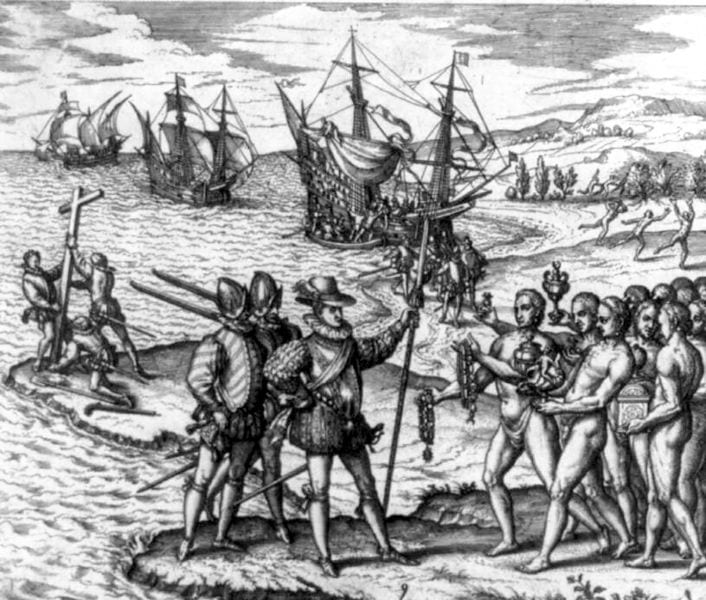
It’s written all over our history. It’s a moral albatross around our communal neck. Not only did we look away from the horrors done to Native peoples by white colonizers, we encouraged them. Not only did we ignore the centuries of kidnapping, rape, abuse, and enslavement of Black Africans by white westerners, we enabled the slave trade and provided a secure and welcoming faith community for slave-owners. We should have been on the side of the oppressed, but repeatedly we were the oppressors. And until we confront our own shameful past and make material amends, and until we deal with the clear and present evil of racism and prejudice in Catholic communities today, it’s questionable whether we have a moral high ground to stand on.
Our legacy of racism in Catholic culture is evident in how we relate to the arts. There is a popular lament, among Catholic academics and writers, that the state of the Catholic imagination is woeful, that Catholic literature isn’t great like it used to be, that there are no new vibrant Catholic artists. The irony is that many of those who do the lamenting are themselves the gatekeepers of Catholic publishing, so they have only themselves to blame if Catholic writing is soporific. In the Catholic publishing world, there are so few opportunities for creative Catholic writers who are willing to push boundaries and ask hard questions. Editors seem to be on the lookout only for writers who combine massive platform with marshmallow content.
But the world of the market is not the world of the imagination. Insofar as there is such thing as a “Catholic imagination” – or at least, “Catholic imaginations” – the failure of the publishing world should not be taken as a failure of the muse. There are excellent Catholic writers and artists working today, and many of them are having trouble finding a publisher who is a) willing to take religious themes seriously, b) willing to step outside the lines of what we are and are not permitted to address.
And there are actual Catholic writers at work in the literary world, recognized by the literary world – but not recognized by Catholics as Catholic, because they don’t fit into the approved boxes for “Catholic writer” as envisioned by a predominantly white male intelligentsia.
The late magnificent Toni Morrison is one. Morrison’s Catholicism, which she herself chose as a young girl, is not just a blip on her timeline. Even her writer name, Toni, was derived from her baptismal name, Anthony – her given name was Chloe. And a profoundly Catholic sacramental vision of church and communion is evident in her work. It just isn’t evident to a reader who thinks that Catholic vision must be white vision – that church must be white church.
Morrison is a Nobel-winning novelist. Why are Catholics not more willing to revere her as part of their canon? Is it because they are only comfortable with a white canon? Is it because they can’t imagine a Gospel message about liberation which doesn’t center them as protagonists? In which they are not the heroes, but the hypocrites, the white men the whited sepulchers? In which the harshest words of Jesus are directed not against some imagined secularist oppressor, but against them?
Another revered Catholic writer, Louise Erdrich, mingles native Tribal themes with Catholic themes in her novels, but how often is recognized as an exemplar of Catholic imagination? Multiply awarded poet Natalie Diaz similarly mingles imagery from her Catholic background with that of the Native experience.
Oh, one might say – but Morrison was lapsed! Erdrich is not orthodox! Diaz writes about her female lover!
Yet we revere the works of serial philanderer Graham Greene, even though his books were condemned by church leaders at the time. We view Evelyn Waugh as a paragon of the Catholic imagination, when what he really channels is the imagination of the British Empire, with rivulets of Catholic guilt running along the edges. Our revered Catholic writers over the generations have not all been pleasant, not all moral, not all orthodox, not all practicing. But we feel comfortable canonizing them as saints of the Catholic imagination because they fit snugly into our western-centric notion of what that entails. In many cases, we have confused western Europe with Catholic Christianity, and vice versa. We have taken a difficult, existentialist writer like Flannery O’Connor and doused her thoroughly with the bleach of white bourgeois religion, until readers have forgotten how violent, vivid, and disturbing her work really is – how much a challenge to the culture of respectability.
It’s not that I don’t love Greene and Waugh. It’s just that when we make them the sole exemplars of some universal “Catholic imagination” we not only flatten them and miss their individuality; we confine ourselves to a narrow understanding of both Catholicism and imagination, continuing to marginalize the non-white, the immigrant, the Native, the colonized. We do in our art what we have already done in our politics.
We are missing out. We are losing the opportunity to learn from Catholic artists who have explored the sacramental through mythologies of the global south, the ecclesial through the tribal. We are specifically missing the social justice dimension of the Catholic imagination, when we ignore the writings of those for whom the cry to heaven for justice is real.
The Amazon Synod is providing us with a real challenge to move past our racist fear and loathing of cultures other than our own. It should remind us that the culture we view as “our own” is already the result of blending, assimilation, enculturation. And, yes, colonization and appropriation, so maybe we should not consider ourselves so morally superior?
But instead of embracing this opportunity for cultural enrichment, for a dynamic awakening of the Catholic imagination to new possibilities of religious expression and ecological rootedness, many Catholics are digging down deeper into racism. The non-western is derided as pagan – as though western Christian art weren’t already filled with Apollos, Sybils, and Athenas. Some have even gone so far as to view the native religions of the Amazon region as “demonic.”
If it’s not white, it’s scary, is the message I’m getting.
I want to say, look at the cultural opportunities! Isn’t this what the Catholic arts world needs right now?
But now that I am seeing the full extent of the racism and bigotry in Catholic circles, I wonder – do we even have the right to look to the religion and culture of the Amazon for inspiration? To claim non-white and non-western Catholic writers or artists as “our own?” Repeatedly, over centuries, white westerners have made claims of cultural and religious superiority, and on the basis of these claims enslaved and colonized indigenous peoples. We have used Christianity as an excuse to tyrannize, “for their own good.” Even today, white missionaries are still acting as agents of the colonizing spirit, and the same Christians who support them then turn around and deny refuge to non-white people fleeing violence in their own countries – violence often caused by the imperialist activities of the U.S. and Europe.
Maybe the western imagination has been sucked dry, or maybe it has been contaminated by too many toxins of racism and prejudice. Maybe it needs a reformation, a purification, or at least a time out. But whatever we as Catholic artists choose to do, to reinvigorate our own Catholic imaginations, I think we need to be cautious, in light of our history, about looking to Native cultures for resources of inspiration for our art, our culture, our heritage, our work.
Because if we aren’t careful this could be just another species of colonization.
Flannery O'Connor'colonization
Previous Post

October 6, 2019
Shaking The Dust From My Shoes: A Survivor's Testimony
Next Post

October 22, 2019 Ecological Atonement, Labor as Spirituality
Browse Our Archives
Select a Category abortion anti-semitism art Atwood Betrothed church clergy abuse coronavirus culture economics education environmentalism ethics faith family feminism gardening gun violence immigration Judaism literature MaddAddam New Pro Life Movement news pandemic personalism poem politics politics blue Pope Francis racism religion salvation sexuality social justice spirituality Station eleven Stephen King The Stand Trump Uncategorized war World Health Organization
Select a Month March 2021 February 2021 January 2021 December 2020 November 2020 October 2020 September 2020 August 2020 July 2020 June 2020 May 2020 April 2020 March 2020 February 2020 January 2020 December 2019 November 2019 October 2019 September 2019 August 2019 July 2019 June 2019 May 2019 April 2019 March 2019 February 2019 January 2019 December 2018 November 2018 October 2018 September 2018 August 2018 July 2018 June 2018 May 2018 April 2018 March 2018 February 2018 January 2018 December 2017 November 2017 October 2017 September 2017 August 2017 July 2017 June 2017 May 2017 April 2017 March 2017 February 2017 January 2017 December 2016 November 2016 October 2016 September 2016 August 2016 July 2016 June 2016 May 2016 April 2016 March 2016 February 2016
Follow Us!
TAKE THE
Religious Wisdom Quiz
What are the names of the two witnesses in Revelation who prophesy for 1,260 days?
Select your answer to see how you score.
They are not named Moses and Elijah Peter and Paul Enoch and Elijah
Support this
Column


Related posts from suspended in her jar

Immigrants: They Need Us, and We Need Them

Four Takeaways from Oprah’s Interview with the Duke...

Rush Limbaugh Would Never Have Succeeded In an...

We Need to Be Honest When We Talk...
TRENDING AT PATHEOS Catholic

Rejecting Doom: Christian Hope And Human Action
Christianity is a religion of hope. We are to have hope and...

It’s What Comes From Within Which Matters
One of the most difficult things for us to understand is why...

Why I Choose the Eucharist Over the Sermon
Choose the Eucharist, Not the Sermon What are we supposed to get...

5 Design Elements Found in Spiritually Rooted Homes
Putting Spirituality Into Home Decor Our homes are more than our living...

Credo: A Story of God Told with the...
About 10 years ago, I began to imagine a personal "Credo" that...

The Anatomy of Divine Revelation in Catholic Thought
The claim that God has made Himself known to human beings is...
view all Catholic blogs
Ad-Free & Subscriber Log-In Subscription Support
- About Us
- 2026 Calendar
- Videos
- Podcasts
- Library of World Religions
- Faith In Media Tracker
- Advertise With Us
- Write for Us
- Privacy Policy
- Terms of Service
- Do Not Sell My Data
- Contact Us
- Radiant Digital
- Manage Newsletter Subscriptions
- Unsubscribe From Notifications
- Sitemap
Copyright 2008-2026, Patheos. All rights reserved.
Subscription Support Ad-Free & Subscriber Log-In
Follow Patheos