
BuddhistCatholicContemplativeEvangelicalGeneral ChristianHinduJewishLatter-day SaintMuslimNew VisionsProgressive Christian
Beliefs
- Buddhist
- Catholic
- Contemplative
- Evangelical
- General Christian
- Hindu
- Jewish
- Latter-day Saint
- More Voices
- Muslim
- New Visions
- Pagan
- Progressive Christian
Topics
- Religion News
- Food and Religion
- Sports and Religion
- Religious Art
- Religious Music and Entertainment
- Religious Events
- History and Religion
- Style and Religion
- Politics and Religion
- Women in Religion
- Recreation Outdoors and Religion
- Business Finance and Religion
- Careers Workplace and Religion
- Education and Religion
- Family Parenting and Religion
- Health Fitness and Religion
- Home and Religion
- Relationships and Religion
- Technology and Religion
- Travel and Religion
Columnists
- Buddhist Columnists
- Business Finance and Religion Columnists
- Careers Workplace and Religion Columnists
- Catholic Columnists
- Contemplative Columnists
- Education and Religion Columnists
- Evangelists Columnists
- Family Parenting and Religion Columnists
- General Christian Columnists
- Health Fitness and Religion Columnists
- Hindu Columnists
- History and Religion Columnists
- Home and Religion Columnists
- Jewish Columnists
- More Voices Columnists
- Latter Day Columnists
- Muslim Columnists
- New Visions Columnists
- Nonreligious Columnists
- Pagan Columnists
- Politics and Religion Columnists
- Progressive Columnists
- Recreation Outdoors and Religion Columnists
- Relationships and Religion Columnists
- Religion News Columnists
- Religious Art Columnists
- Religious Events Columnists
- Religious Music and Entertainment Columnists
- Sports and Religion Columnists
- Style and Religion Columnists
- Technology and Religion Columnists
- Travel and Religion Columnists
- Women in Religion Columnists
Resource Library
- 2026 Calendar
- Library of World Religions
- The 100 Most Holy Places on Earth
- Patheos Answers
- Podcasts
- Videos
- Faith Leaders Database
- Anglican Episcopalian
- Bahai
- Baptist
- Buddhism
- Christianity
- Confucianism
- Eastern Orthodoxy
- Hinduism
- Holiness and Pentecostal
- ISKCON
- Islam
- Judaism
- Lutheran
- Methodist
- The Church of Jesus Christ of Latter-day Saints
- New Age
- Paganism
- Presbytarian and Reformed
- Protestantism
- Religion Behind the Scenes
- Roman Catholic
- Scientology
- Shia Islam
- Sikhism
- Sufism
- Sunni Islam
- Taoism
- Zen
- See all religions
Research Tools
 Ad-Free & Subscriber Log-In Subscription Support
Ad-Free & Subscriber Log-In Subscription Support
Follow Patheos 

- Trending:
- Forgiveness
- |
- Marriage
- |
- Consciousness
- |
- Death Penalty
- |
- Election
- |
- Halloween
 suspended in her jar
- Home
- Catholic
- The Model Needed For Reform: Not Another Protestant Reformation
The Model Needed For Reform: Not Another Protestant Reformation
Last updated on: August 2, 2019 at 11:48 am by Rebecca Bratten Weiss
The Model Needed For Reform: Not Another Protestant Reformation 2019-08-02T11:48:56-04:00 Rebecca Bratten Weiss
Patheos Explore the world's faith through different perspectives on religion and spirituality! Patheos has the views of the prevalent religions and spiritualities of the world.
This is the sixth in the reform series by guest writer William M. Shea
We Catholics should by now have gotten over the shock of the Protestant Reformation though its effects linger. It was a monumental disaster, as was the split between western and eastern churches in the eleventh century. Both happened because of the sin and meanness of spirit, the self-interest and haughtiness of the ordained, and the all-too-frequent conviction of Christians of all stripes that “it’s my way or the highway!” I know that the church needs reform today as it did then (and always will). The proposed goals of reform are based on my perception of what the church looks like now and what it should be, and of the values at stake. The fact that my proposals would be dismissed out of hand by the hierarchy for dogmatic reasons, and even by theologians should they bother to look at them, is no excuse to refrain from stating them as proposals. At the very least a few proposals are useful for turning the searchlight of common concern on dark areas in which The Church has fallen short of the gospel ideals. Since I was once an active part of The Church as distinct from the church I have a tiny share in its present malaise. As a life-long small part of the church I have some responsibility to speak about that which I love before it is too late.
The model of the need for reform is provided not only by the extraordinary blunders of the current, the sixteenth and the eleventh centuries but also by the New Testament picture of the High Priests and Pharisees who are the Catholic hierarchy’s predecessors and models, and its recounting of Jesus’ criticism of them. The popes and bishops themselves gradually adopted facets and meanings of the Jewish priestly caste, as well as of the pagan priesthoods of Rome and the ruling elites of the Empire as models for their own high priesthood. In fact. they look and act like High Priests and Roman governors do they not?
As a statement of the basic soteriology and ecclesiology that underlies my few reform suggestions, I propose the following convictions as essential:
- Jesus is the Savior and Son of God through faith in whom human beings are brought to communal maturity and promised eternal life. I believe with St. Paul and the entire Christian tradition that Jesus’ life, death and resurrection have given us hope of this salvation here and beyond.
- Mercifully the grace of God reaches us all, even the most recalcitrant sinners, through nature and history. God’s plan and God’s grace are meant for the entire human race which is predestined to the kingdom of God. All forms of Christian life and all forms of religious life, and even a life without God in mind, can be and probably are touched by the grace and providence of God. At very least all are called to the one body of Christ.
- All Christians are catholic Christians. They are all members of the same church. The church is already one (it always has been in spite of us) in the unity of faith, hope and love just as the human race is already one in spite of its divisions and deadly tensions. All the churches are the sacrament of God as is Jesus himself. In origin and destiny we are one even if in the meantime we behave badly and sinfully toward one another.
- Christians are meant for life in communities as it was is the beginning. The churches are crucial for finding and maturing in faith, hope and love. The Eucharist, hearing the scriptures, preaching and mission in communities are focal exercises of Christian worship, belief and life.
- The divisions among Christians, and indeed among human beings, are artificial, contrived accidental and sinful especially those caused by the seemingly universal conviction that ‘we’ are right and ‘they’ are wrong. ‘They’ may be, but so then may we, and we all need to grow up searching for and expressing what makes us one, as did the early Christian churches, counting as they did on the Holy Spirit.
- Precise governmental and ritual structures in churches are natural and necessary, but remain adventitious to the process of revelation, salvation and community life. Jesus did not establish a ‘Church’ which is ‘true’ as distinct from churches which are more or less true or which He did not establish. He did not abandon Israel and He does not abandon churches. Every church in which the gospel is preached and life is lived according to that gospel is a more or less true church. They are all equally bound to unity of faith, hope and love. The One True Church, the pure church, is an eschatological reality toward which we are aimed by grace rather than a historical reality, an ideal image subject alas to various ideological manipulations rather than a thing.
- The hierarchism and clericalism that characterize the Roman Catholic Church ( and other Christian churches! ) are not matters of the positive will of God nor the command of Jesus, and have done enough damage to the church historically to lead reasonably to the conclusion that they are blocks to the life of Christian communities under their thrall. They should be eliminated, and the social shape of the Catholic communities restructured. [1]
Universal church – not divided church
The goal of reform today is to recreate a universal church which is a communion of local churches, a community of communities, not a papal monarchy which rules by divine right and controls bishops and churches, producing a formal unity of units rather than a vital community of communities. Some of the Eastern Orthodox and uniate churches along with the Anglican communion might, in small ways, serve as starting points for reflection though they, too, are vigorously possessed by the vices of hierarchy and clericalism. The spread of national conferences of bishops following the second Vatican Council was a step in this direction but were overseen by a nervous “Peter” in the background worried that the conferences just might act in matters of faith and practice without checking in with “Peter.” Only “Peter,” only the monarch, can act and speak for the universal church, so they think! A growing horizontal relationship of bishops and churches was carefully and increasingly hedged in by the ever present and more imposing vertical relationship of individual bishops with the pope. Even when bishops met in Rome in recent synods, the synods could not speak to or for the churches! They had to submit their findings to the pope and his curia who would in turn decide what might be said and omit what they pleased. Pope Francis’ drive to a synodal church is praiseworthy and a courageous step but it must advance to synodal local churches and regional churches. Papolatry must decline as synodality spreads.
[1] A helpful brief summary of the problems of clericalism is Cindy Wooden, “Clericalism: The Culture that Enables Abuse and Insists on Hiding it,” ( Crux, 8/23/18). A compelling and challenging discussion of the ordained priesthood can be found in Garry Wills, Why Priests? A Failed Tradition (NY: Penguin, 2013).
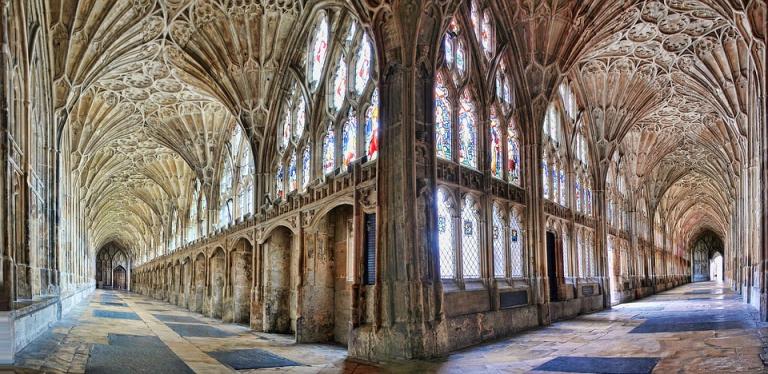
image credit: pixabay

Browse Our Archives
Select a Category abortion anti-semitism art Atwood Betrothed church clergy abuse coronavirus culture economics education environmentalism ethics faith family feminism gardening gun violence immigration Judaism literature MaddAddam New Pro Life Movement news pandemic personalism poem politics politics blue Pope Francis racism religion salvation sexuality social justice spirituality Station eleven Stephen King The Stand Trump Uncategorized war World Health Organization
Select a Month March 2021 February 2021 January 2021 December 2020 November 2020 October 2020 September 2020 August 2020 July 2020 June 2020 May 2020 April 2020 March 2020 February 2020 January 2020 December 2019 November 2019 October 2019 September 2019 August 2019 July 2019 June 2019 May 2019 April 2019 March 2019 February 2019 January 2019 December 2018 November 2018 October 2018 September 2018 August 2018 July 2018 June 2018 May 2018 April 2018 March 2018 February 2018 January 2018 December 2017 November 2017 October 2017 September 2017 August 2017 July 2017 June 2017 May 2017 April 2017 March 2017 February 2017 January 2017 December 2016 November 2016 October 2016 September 2016 August 2016 July 2016 June 2016 May 2016 April 2016 March 2016 February 2016
Follow Us!
TAKE THE
Religious Wisdom Quiz
Who said: "You are a chosen people, a royal priesthood, a holy nation, God's special possession"?
Select your answer to see how you score.
James Paul Moses Peter
Support this
Column


Related posts from suspended in her jar

Four Takeaways from Oprah’s Interview with the Duke...

Catholics Are De-Toxing From their Experiences With Traumatic...

How Has the Pandemic Changed Us? Has It...

Rush Limbaugh Would Never Have Succeeded In an...
TRENDING AT PATHEOS Catholic

Rejecting Doom: Christian Hope And Human Action
Christianity is a religion of hope. We are to have hope and...

It’s What Comes From Within Which Matters
One of the most difficult things for us to understand is why...

Why I Choose the Eucharist Over the Sermon
Choose the Eucharist, Not the Sermon What are we supposed to get...

5 Design Elements Found in Spiritually Rooted Homes
Putting Spirituality Into Home Decor Our homes are more than our living...

Credo: A Story of God Told with the...
About 10 years ago, I began to imagine a personal "Credo" that...

The Anatomy of Divine Revelation in Catholic Thought
The claim that God has made Himself known to human beings is...
view all Catholic blogs
Ad-Free & Subscriber Log-In Subscription Support
- About Us
- 2026 Calendar
- Videos
- Podcasts
- Library of World Religions
- Faith In Media Tracker
- Advertise With Us
- Write for Us
- Privacy Policy
- Terms of Service
- Do Not Sell My Data
- Contact Us
- Radiant Digital
- Manage Newsletter Subscriptions
- Unsubscribe From Notifications
- Sitemap
Copyright 2008-2026, Patheos. All rights reserved.
Subscription Support Ad-Free & Subscriber Log-In
Follow Patheos