
BuddhistCatholicContemplativeEvangelicalGeneral ChristianHinduJewishLatter-day SaintMuslimNew VisionsProgressive Christian
Beliefs
- Buddhist
- Catholic
- Contemplative
- Evangelical
- General Christian
- Hindu
- Jewish
- Latter-day Saint
- More Voices
- Muslim
- New Visions
- Pagan
- Progressive Christian
Topics
- Religion News
- Food and Religion
- Sports and Religion
- Religious Art
- Religious Music and Entertainment
- Religious Events
- History and Religion
- Style and Religion
- Politics and Religion
- Women in Religion
- Recreation Outdoors and Religion
- Business Finance and Religion
- Careers Workplace and Religion
- Education and Religion
- Family Parenting and Religion
- Health Fitness and Religion
- Home and Religion
- Relationships and Religion
- Technology and Religion
- Travel and Religion
Columnists
- Buddhist Columnists
- Business Finance and Religion Columnists
- Careers Workplace and Religion Columnists
- Catholic Columnists
- Contemplative Columnists
- Education and Religion Columnists
- Evangelists Columnists
- Family Parenting and Religion Columnists
- General Christian Columnists
- Health Fitness and Religion Columnists
- Hindu Columnists
- History and Religion Columnists
- Home and Religion Columnists
- Jewish Columnists
- More Voices Columnists
- Latter Day Columnists
- Muslim Columnists
- New Visions Columnists
- Nonreligious Columnists
- Pagan Columnists
- Politics and Religion Columnists
- Progressive Columnists
- Recreation Outdoors and Religion Columnists
- Relationships and Religion Columnists
- Religion News Columnists
- Religious Art Columnists
- Religious Events Columnists
- Religious Music and Entertainment Columnists
- Sports and Religion Columnists
- Style and Religion Columnists
- Technology and Religion Columnists
- Travel and Religion Columnists
- Women in Religion Columnists
Resource Library
- 2026 Calendar
- Library of World Religions
- The 100 Most Holy Places on Earth
- Patheos Answers
- Podcasts
- Videos
- Faith Leaders Database
- Anglican Episcopalian
- Bahai
- Baptist
- Buddhism
- Christianity
- Confucianism
- Eastern Orthodoxy
- Hinduism
- Holiness and Pentecostal
- ISKCON
- Islam
- Judaism
- Lutheran
- Methodist
- The Church of Jesus Christ of Latter-day Saints
- New Age
- Paganism
- Presbytarian and Reformed
- Protestantism
- Religion Behind the Scenes
- Roman Catholic
- Scientology
- Shia Islam
- Sikhism
- Sufism
- Sunni Islam
- Taoism
- Zen
- See all religions
Research Tools
 Ad-Free & Subscriber Log-In Subscription Support
Ad-Free & Subscriber Log-In Subscription Support
Follow Patheos 

- Trending:
- Forgiveness
- |
- Marriage
- |
- Consciousness
- |
- Death Penalty
- |
- Election
- |
- Halloween
 suspended in her jar
- Home
- Catholic
- Seven Steps Towards Ending Clericalism
Seven Steps Towards Ending Clericalism
Last updated on: August 9, 2019 at 12:42 pm by Guest Contributor
Seven Steps Towards Ending Clericalism 2019-08-09T12:42:53-04:00 Guest Contributor
Patheos Explore the world's faith through different perspectives on religion and spirituality! Patheos has the views of the prevalent religions and spiritualities of the world.
This is the seventh in the “Reform” series by guest writer William M. Shea
Answers to serious questions, especially political ones, tend to multiply and to develop and change over time. I began a spectrum slide from William Buckley-Barry Goldwater small-government Republican politics some sixty years ago and have landed in the past few years in the mystery called democratic socialism. I wish I could say that I slid on the basis of pure knowledge but I admit to my slide being a matter largely of opinion, belief and social conviction. In political matters too much is involved to call any one position simply true. The best one can do is call it “informed opinion.” I should be immune, then, to the foolhardiness of suggesting any definitive answer to the question of reform in the Catholic Church. Think of the other possible answers, says my conscience, and then I blush. For example, there is a lot to be said for the episcopal form of church governance.
Think of the complications of understanding a church with a two thousand year history in which many answers to the issue of governance have been tried and in which each form has been subject to abuse and even failure, often extraordinary. None had proved perfect or even reasonably and consistently successful. So my antipathy to the monarchical system of government atop the Catholic Church is a matter of opinion. Like my years’ long slide into democratic socialism, my gradual slide into governmental reform in the church started small with Cardinal Patrick O’Boyle’s crushing of any dissent in the archdiocese of Washington from Pope Paul’s tragic mistake in the matter of contraception (1968). Is there really only one Catholic voice? Can Pope Paul be wrong and pope at the same time? Ultimately, some forty years later, I decided that monarchy, even in the church, is absurd and the dying remnant of the Empire.
Having already expressed the unCatholic conviction that the “the church” is a community of communities before it is a church or the church, an assembly of equals in Christ, not a monarchy or a hierarchy established by heavenly decree, I would like to follow up by marking off a few steps that ought to be taken to make the ideal of the community of Christian communities concrete:
An Independent Judiciary which excludes interference by other ecclesiastical governmental officers and which is capable of adjudicating all responsible charges against church governmental officers. The Judiciary ought to rest on a constitutional bill of judicial rights covering all the baptized with no addendum for a clergy.
Careerism: Keep administrators where they are, in the dioceses in which they were elected or appointed, and keep pastors in their parishes. The wish to change a pastor’s own situation by “going up higher” has become a curse. The curse of “translation” of bishops from diocesan see to see was recognized at the Council of Trent and condemned but alas not eliminated there. Recently Cardinal Gantin wrote a powerful memo condemning it in the contemporary church.[1] The father or mother should stay with the family and not go flitting off to another family. In a Catholic marriage this would be labeled bigamy or divorce.
Clericalism: The current functions of bishop and priest can be carried out in many different configurations and under different titles. However, there should be no distinction in the church between the clergy and laity. The various missions and ministries should be functions assigned to some Christians for some time. Christian teaching and practices on which this division is based or based on it should be eliminated. Such divisions developed in the body of Christ by decisions made in the social history of the church and preserved in and by bureaucracies. [2]
Getting Rid of the Ontological Sign: The division between clergy and laity is reinforced by the doctrine that the sacrament of orders causes a ‘sign’ to be placed on the soul of the recipient marking them eternally as clergy with a special status in the church, in the Kingdom of God, and even in Hell should they go there. The ministers are simply Christians who share, like all Christians, in the priesthood, the prophetic office and the rule of Christ and who are called and accepted by the community to a specific service such as presiding at the Eucharistic table. Baptism/Confirmation is the only “sign” of Christian conversion and dedication that the church needs. No one is forever a minister, an overseer, a prophet, a teacher. Keep ontology out of this discussion of ministry.[3]
The Accoutrements of ‘Sacred’ Office: All of the distinctive marks of the lower and higher clergy which serve to distinguish them from the Christian people and one another are to be abandoned. Thus the functions of presiding at the Eucharistic table, and preaching to and teaching the Christian people (all necessary communal functions) are not to be marked by accoutrements, special dress, peculiar hats, rings made of precious metal and vestments. Priests and bishops are to dress no differently than worshipping and working Christian men and women, any more than Jesus so distinguished Himself from apostles and disciples, or the latter distinguished themselves from one another. So also all ecclesiastical titles and distinctions.
Ending Christendom: All church law is applicable to all Christians in the same way. All Christians and practitioners of other religions are equally subject to the civil laws proper to their culture. Ministers of the gospel are in no way distinct before the law, civil or ecclesiastical. When they commit crimes they are to be treated as criminals.
Gender Distinction: Call women and married men to preside over the Eucharist and become pastors and administrators. Their exclusion is the most glaring bit of false traditionalism in the episcopal and papal playbook. In this matter the highly selective clerical memory called “Tradition” masks misogynism and archaic views of purity.
These seven items are crucial to the reform of the contemporary Catholic Church. Of course they might well be called hyper-puritanism but then the Puritans weren’t entirely fools.
[1] Cardinal Bernard Gantin, http://www.dailycatholic.org/issue/archives/1999Jul/135jul21,vol.10,no.135txt/jul21nv2.htm.
[2] I am not talking about the Pauline distinctions between ministries.
[3] This is an odd position for me to take in view of the fact that after thirty five years of marriage and life outside the clerical world my wife still tells me regularly that I act like a cleric. Maybe there is something to this ontology stuff after all! I prefer to think of it as a psychology: there surely is a clerical mentality which, however, is not at all restricted to the Christian caste.
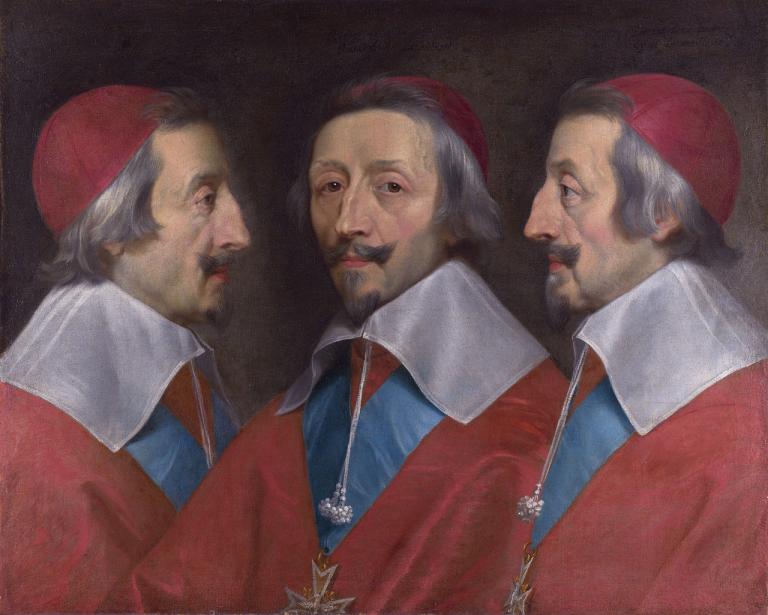
image credit: https://en.wikipedia.org/wiki/File:Triple_Portrait_of_Cardinal_de_Richelieu_probably_1642,_Philippe_de_Champaigne.jpg

Next Post

August 13, 2019 The Right Wing Is Dominant - And Real Courage Means Standing Against It
Browse Our Archives
Select a Category abortion anti-semitism art Atwood Betrothed church clergy abuse coronavirus culture economics education environmentalism ethics faith family feminism gardening gun violence immigration Judaism literature MaddAddam New Pro Life Movement news pandemic personalism poem politics politics blue Pope Francis racism religion salvation sexuality social justice spirituality Station eleven Stephen King The Stand Trump Uncategorized war World Health Organization
Select a Month March 2021 February 2021 January 2021 December 2020 November 2020 October 2020 September 2020 August 2020 July 2020 June 2020 May 2020 April 2020 March 2020 February 2020 January 2020 December 2019 November 2019 October 2019 September 2019 August 2019 July 2019 June 2019 May 2019 April 2019 March 2019 February 2019 January 2019 December 2018 November 2018 October 2018 September 2018 August 2018 July 2018 June 2018 May 2018 April 2018 March 2018 February 2018 January 2018 December 2017 November 2017 October 2017 September 2017 August 2017 July 2017 June 2017 May 2017 April 2017 March 2017 February 2017 January 2017 December 2016 November 2016 October 2016 September 2016 August 2016 July 2016 June 2016 May 2016 April 2016 March 2016 February 2016
Follow Us!
TAKE THE
Religious Wisdom Quiz
What Christian group emphasizes speaking in tongues as evidence of faith?
Select your answer to see how you score.
Catholics Pentecostals Presbyterians Methodists
Support this
Column


Related posts from suspended in her jar

Four Takeaways from Oprah’s Interview with the Duke...

Catholics Are De-Toxing From their Experiences With Traumatic...

How Has the Pandemic Changed Us? Has It...

Rush Limbaugh Would Never Have Succeeded In an...
TRENDING AT PATHEOS Catholic

Rejecting Doom: Christian Hope And Human Action
Christianity is a religion of hope. We are to have hope and...

It’s What Comes From Within Which Matters
One of the most difficult things for us to understand is why...

Why I Choose the Eucharist Over the Sermon
Choose the Eucharist, Not the Sermon What are we supposed to get...

5 Design Elements Found in Spiritually Rooted Homes
Putting Spirituality Into Home Decor Our homes are more than our living...

Credo: A Story of God Told with the...
About 10 years ago, I began to imagine a personal "Credo" that...

The Anatomy of Divine Revelation in Catholic Thought
The claim that God has made Himself known to human beings is...
view all Catholic blogs
Ad-Free & Subscriber Log-In Subscription Support
- About Us
- 2026 Calendar
- Videos
- Podcasts
- Library of World Religions
- Faith In Media Tracker
- Advertise With Us
- Write for Us
- Privacy Policy
- Terms of Service
- Do Not Sell My Data
- Contact Us
- Radiant Digital
- Manage Newsletter Subscriptions
- Unsubscribe From Notifications
- Sitemap
Copyright 2008-2026, Patheos. All rights reserved.
Subscription Support Ad-Free & Subscriber Log-In
Follow Patheos