
BuddhistCatholicContemplativeEvangelicalGeneral ChristianHinduJewishLatter-day SaintMuslimNew VisionsProgressive Christian
Beliefs
- Buddhist
- Catholic
- Contemplative
- Evangelical
- General Christian
- Hindu
- Jewish
- Latter-day Saint
- More Voices
- Muslim
- New Visions
- Pagan
- Progressive Christian
Topics
- Religion News
- Food and Religion
- Sports and Religion
- Religious Art
- Religious Music and Entertainment
- Religious Events
- History and Religion
- Style and Religion
- Politics and Religion
- Women in Religion
- Recreation Outdoors and Religion
- Business Finance and Religion
- Careers Workplace and Religion
- Education and Religion
- Family Parenting and Religion
- Health Fitness and Religion
- Home and Religion
- Relationships and Religion
- Technology and Religion
- Travel and Religion
Columnists
- Buddhist Columnists
- Business Finance and Religion Columnists
- Careers Workplace and Religion Columnists
- Catholic Columnists
- Contemplative Columnists
- Education and Religion Columnists
- Evangelists Columnists
- Family Parenting and Religion Columnists
- General Christian Columnists
- Health Fitness and Religion Columnists
- Hindu Columnists
- History and Religion Columnists
- Home and Religion Columnists
- Jewish Columnists
- More Voices Columnists
- Latter Day Columnists
- Muslim Columnists
- New Visions Columnists
- Nonreligious Columnists
- Pagan Columnists
- Politics and Religion Columnists
- Progressive Columnists
- Recreation Outdoors and Religion Columnists
- Relationships and Religion Columnists
- Religion News Columnists
- Religious Art Columnists
- Religious Events Columnists
- Religious Music and Entertainment Columnists
- Sports and Religion Columnists
- Style and Religion Columnists
- Technology and Religion Columnists
- Travel and Religion Columnists
- Women in Religion Columnists
Resource Library
- 2026 Calendar
- Library of World Religions
- The 100 Most Holy Places on Earth
- Patheos Answers
- Podcasts
- Videos
- Faith Leaders Database
- Anglican Episcopalian
- Bahai
- Baptist
- Buddhism
- Christianity
- Confucianism
- Eastern Orthodoxy
- Hinduism
- Holiness and Pentecostal
- ISKCON
- Islam
- Judaism
- Lutheran
- Methodist
- The Church of Jesus Christ of Latter-day Saints
- New Age
- Paganism
- Presbytarian and Reformed
- Protestantism
- Religion Behind the Scenes
- Roman Catholic
- Scientology
- Shia Islam
- Sikhism
- Sufism
- Sunni Islam
- Taoism
- Zen
- See all religions
Research Tools
 Ad-Free & Subscriber Log-In Subscription Support
Ad-Free & Subscriber Log-In Subscription Support
Follow Patheos 

- Trending:
- Forgiveness
- |
- Marriage
- |
- Consciousness
- |
- Death Penalty
- |
- Election
- |
- Halloween
 suspended in her jar
- Home
- Catholic
- Without Ending Clericalism, There Can Be No True Reform
Without Ending Clericalism, There Can Be No True Reform
Last updated on: August 2, 2019 at 11:27 am by Rebecca Bratten Weiss
Without Ending Clericalism, There Can Be No True Reform 2019-08-02T11:27:23-04:00 Rebecca Bratten Weiss
Patheos Explore the world's faith through different perspectives on religion and spirituality! Patheos has the views of the prevalent religions and spiritualities of the world.
This is part five in the “Reform” Series by Guest Writer William M. Shea
The Aim of Reform
The aim of reform in this age is to put a definitive end to clericalism, that culture of Christian people with regard to governance that has reigned in The Church since The Church aligned itself with the imperial power and structure of the age of Constantine. The papacy is the epitome and font of the culture of clericalism. Clerical culture manifests itself in episcopal and priestly monopoly rule over and ownership of the churches and all other ministries and activities of the churches. The reign of the clerics must be ended because (a) it divides the church illegitimately into clergy and lay, and (b) the ordained ministers have shown themselves to be untrustworthy, (c) it inevitably renders lay Catholics passive in evangelical terms.
Even the churches of the Reformation are afflicted by clericalism, though for the most part in a less virulent, though sometimes more deadly form. The culture of clericalism is ubiquitous in the Catholic churches and is marked somewhat differently in the Eastern Orthodox and Western churches by hierarchical structure, celibacy, and intensity of misogynism. True, clerical culture lasting as it has over fifteen hundred years was a major contributor to the cultures of the West and the East, and it allowed for at least a mediocre spiritual and material ministry to the Christian people. However, it degenerated into monarchism, totalitarianism and corruption both spiritual and material. Every reform movement in the Church has been assimilated by the clerical culture with varying degrees of success, including the early monastic movement East and West, the Western reform movement of the medieval religious orders, the Reformation of the sixteenth century West and even the reforms decreed by Vatican II. The reform impulses of the second Vatican Council were inspired by clerics, yet in fact, after Vatican II, the Roman High Priests put an end to the reforms timorously announced by their predecessors in the Great Council.
Is Clericalism Essential?
Clerical culture is protean and omnivorous. Some would say with reason as well as conviction that the clerical caste system is essential to Catholicism and that without it there would be no Catholic church, that the episcopacy and the priesthood are God’s doing., and that without them the Roman Catholic Church would be just another Protestant “sect.” That may be true from a traditionalist perspective but I think that the Roman Catholic ecclesiastical structure is not normative and the only legitimate form of Christian governance. Orthodox, Anglican, and Protestant traditions are proof of this. “Essential to Roman Catholicism” is one thing; essential to the church catholic is another.
The papacy should not be seen as the will of God for the church in any special way, any more or any less than a Reformed Presbytery or the Southern Baptist Convention or the Dalai Lama. Leadership is generated by the churches in different ways and forms. God does not respect some ecclesiastical arrangements over others. The Mormons have theirs and we Catholics have ours. The papacy is a natural growth (and too frequently a deformation) of the leadership of the Christian communities begun after the capital of the Roman empire was moved to the east and the bishops of Rome began to claim hegemony over the churches of East and West, in effect proclaiming itself the Emperor of Christendom, supporting this gradual but never-ending seizure of spiritual and material power by a variety of claims to divine institution and authority.
Papacy as Monarchy
True, historically speaking, the authority of the bishops of Rome provided a needed check to the attempts of the secular authority to control the bishops and local churches. However, the papacy turned the ministry of the bishops of Rome to an institutionally self-centered crushing or subjection of other gifts of the Holy Spirit to the administrative power of a papal monarchy and the subordination of divine grace to the higher clergy. It seems that most if not all the poor souls who are elected to the papal office are seized immediately by an obsession driving them to assert the rights and privileges of the divine monarchy. If the whole church structure is to be reformed the papacy must be the prime site of the transformation, not only causing reform but undergoing it. However, it is no use waiting on a pope to reform the church. A pope may be counted upon to reform this or that, but not his own divine office and its prerogatives. When John Paul II wrote in Ut unum sint that he hoped the Protestants and Orthodox would help reshape the petrine office in a way that it would be greater service to church unity, I don’t think anyone took him seriously, not even himself.
My father’s friend, Pat Howley (RIP), an IRA man in the old country who was refused absolution by a priest when Pat was in jail for revolutionary activities, often said to me when he was in his cups, “The Irish are a priest-ridden people, Billy.” So they were. Pat kept on saying that to me when I was a seminarian and a priest. He didn’t want me to forget. Catholics are a priest-and-bishop and pope-ridden people to this day.
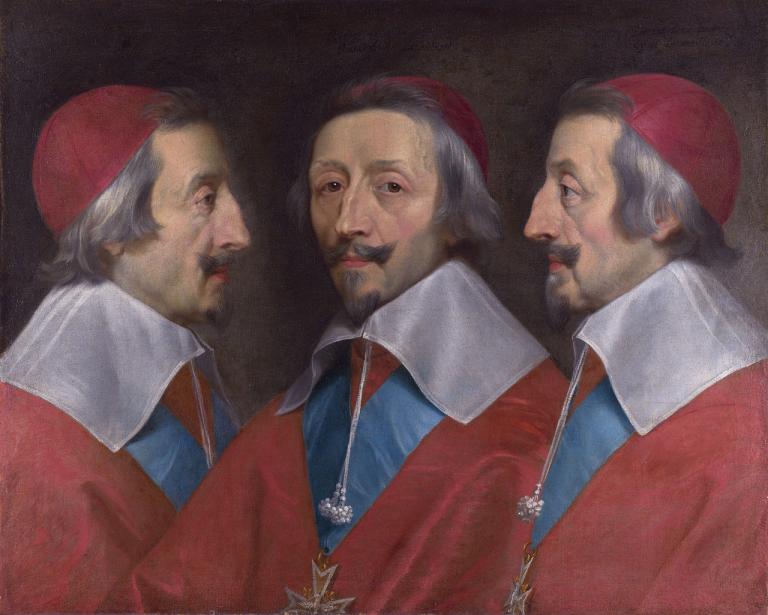
image credit: https://en.wikipedia.org/wiki/File:Triple_Portrait_of_Cardinal_de_Richelieu_probably_1642,_Philippe_de_Champaigne.jpg
Browse Our Archives
Select a Category abortion anti-semitism art Atwood Betrothed church clergy abuse coronavirus culture economics education environmentalism ethics faith family feminism gardening gun violence immigration Judaism literature MaddAddam New Pro Life Movement news pandemic personalism poem politics politics blue Pope Francis racism religion salvation sexuality social justice spirituality Station eleven Stephen King The Stand Trump Uncategorized war World Health Organization
Select a Month March 2021 February 2021 January 2021 December 2020 November 2020 October 2020 September 2020 August 2020 July 2020 June 2020 May 2020 April 2020 March 2020 February 2020 January 2020 December 2019 November 2019 October 2019 September 2019 August 2019 July 2019 June 2019 May 2019 April 2019 March 2019 February 2019 January 2019 December 2018 November 2018 October 2018 September 2018 August 2018 July 2018 June 2018 May 2018 April 2018 March 2018 February 2018 January 2018 December 2017 November 2017 October 2017 September 2017 August 2017 July 2017 June 2017 May 2017 April 2017 March 2017 February 2017 January 2017 December 2016 November 2016 October 2016 September 2016 August 2016 July 2016 June 2016 May 2016 April 2016 March 2016 February 2016
Follow Us!
TAKE THE
Religious Wisdom Quiz
Who visited baby Jesus in the manger?
Select your answer to see how you score.
Fishermen Shepherds Scribes Roman guards
Support this
Column


Related posts from suspended in her jar

Four Takeaways from Oprah’s Interview with the Duke...

Catholics Are De-Toxing From their Experiences With Traumatic...
People are in Therapy to Recover from Religion...
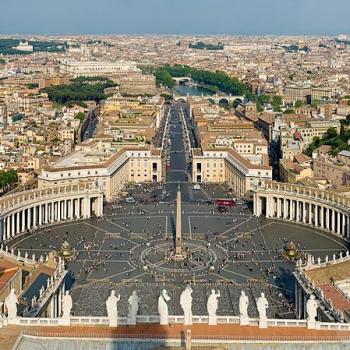
Who Speaks for the Church? And Which Church?
TRENDING AT PATHEOS Catholic

Rejecting Doom: Christian Hope And Human Action
Christianity is a religion of hope. We are to have hope and...

It’s What Comes From Within Which Matters
One of the most difficult things for us to understand is why...

Why I Choose the Eucharist Over the Sermon
Choose the Eucharist, Not the Sermon What are we supposed to get...

5 Design Elements Found in Spiritually Rooted Homes
Putting Spirituality Into Home Decor Our homes are more than our living...

Credo: A Story of God Told with the...
About 10 years ago, I began to imagine a personal "Credo" that...

The Anatomy of Divine Revelation in Catholic Thought
The claim that God has made Himself known to human beings is...
view all Catholic blogs
Ad-Free & Subscriber Log-In Subscription Support
- About Us
- 2026 Calendar
- Videos
- Podcasts
- Library of World Religions
- Faith In Media Tracker
- Advertise With Us
- Write for Us
- Privacy Policy
- Terms of Service
- Do Not Sell My Data
- Contact Us
- Radiant Digital
- Manage Newsletter Subscriptions
- Unsubscribe From Notifications
- Sitemap
Copyright 2008-2026, Patheos. All rights reserved.
Subscription Support Ad-Free & Subscriber Log-In
Follow Patheos