
BuddhistCatholicContemplativeEvangelicalGeneral ChristianHinduJewishLatter-day SaintMuslimNew VisionsProgressive Christian
Beliefs
- Buddhist
- Catholic
- Contemplative
- Evangelical
- General Christian
- Hindu
- Jewish
- Latter-day Saint
- More Voices
- Muslim
- New Visions
- Pagan
- Progressive Christian
Topics
- Religion News
- Food and Religion
- Sports and Religion
- Religious Art
- Religious Music and Entertainment
- Religious Events
- History and Religion
- Style and Religion
- Politics and Religion
- Women in Religion
- Recreation Outdoors and Religion
- Business Finance and Religion
- Careers Workplace and Religion
- Education and Religion
- Family Parenting and Religion
- Health Fitness and Religion
- Home and Religion
- Relationships and Religion
- Technology and Religion
- Travel and Religion
Columnists
- Buddhist Columnists
- Business Finance and Religion Columnists
- Careers Workplace and Religion Columnists
- Catholic Columnists
- Contemplative Columnists
- Education and Religion Columnists
- Evangelists Columnists
- Family Parenting and Religion Columnists
- General Christian Columnists
- Health Fitness and Religion Columnists
- Hindu Columnists
- History and Religion Columnists
- Home and Religion Columnists
- Jewish Columnists
- More Voices Columnists
- Latter Day Columnists
- Muslim Columnists
- New Visions Columnists
- Nonreligious Columnists
- Pagan Columnists
- Politics and Religion Columnists
- Progressive Columnists
- Recreation Outdoors and Religion Columnists
- Relationships and Religion Columnists
- Religion News Columnists
- Religious Art Columnists
- Religious Events Columnists
- Religious Music and Entertainment Columnists
- Sports and Religion Columnists
- Style and Religion Columnists
- Technology and Religion Columnists
- Travel and Religion Columnists
- Women in Religion Columnists
Resource Library
- 2026 Calendar
- Library of World Religions
- The 100 Most Holy Places on Earth
- Patheos Answers
- Podcasts
- Videos
- Faith Leaders Database
- Anglican Episcopalian
- Bahai
- Baptist
- Buddhism
- Christianity
- Confucianism
- Eastern Orthodoxy
- Hinduism
- Holiness and Pentecostal
- ISKCON
- Islam
- Judaism
- Lutheran
- Methodist
- The Church of Jesus Christ of Latter-day Saints
- New Age
- Paganism
- Presbytarian and Reformed
- Protestantism
- Religion Behind the Scenes
- Roman Catholic
- Scientology
- Shia Islam
- Sikhism
- Sufism
- Sunni Islam
- Taoism
- Zen
- See all religions
Research Tools
 Ad-Free & Subscriber Log-In Subscription Support
Ad-Free & Subscriber Log-In Subscription Support
Follow Patheos 

- Trending:
- Forgiveness
- |
- Marriage
- |
- Consciousness
- |
- Death Penalty
- |
- Election
- |
- Halloween
 suspended in her jar
- Home
- Catholic
- Abandoning the Church’s Corrupt Leadership – But Not Abandoning the Church
Abandoning the Church’s Corrupt Leadership – But Not Abandoning the Church
Last updated on: July 20, 2019 at 8:57 pm by Guest Contributor
Abandoning the Church’s Corrupt Leadership – But Not Abandoning the Church 2019-07-20T20:57:48-04:00 Guest Contributor
Patheos Explore the world's faith through different perspectives on religion and spirituality! Patheos has the views of the prevalent religions and spiritualities of the world.
This is part four in the “Reform” series by guest writer William M. Shea
Can significant structural reform in the Catholic church happen?
Most would argue that it cannot on the grounds that the ministerial structure is determined by divine intention (see Lumen gentium, #18-29). The hierarchical structure and the distinction between clergy and laity are in effect dogmas. You cannot be a Catholic when you deny a dogma. Those who oppose the ordination of women to the priesthood (John Paul II) and even to the diaconate would argue so. Some would even include required celibacy in the divine aura though the Greeks, Catholic and Orthodox, seem to have missed that point. To be realistic about the political possibilities, structural reform is unlikely ever to happen.
Can the Catholic Church undergo a significant reformation? I doubt it. It had the opportunity to do so in the sixteenth century and refused. However, I don’t at all doubt that the church will change in response to the current mess… and perhaps for the better (at least for a while, at least here and there). My impossible dream is that the College of Cardinals will sooner or later elect to the papacy a monarch who doesn’t believe in monarchy, and who wants genuine and lasting reform. Perhaps Pope Francis is that man, at least in good part. The bishops need to have their feet held to the fire with charity and persistence by the laity, by religious orders, and by women religious until they summon up the courage to abandon papolatry and their own self-referential office. They are desperately stuck in a tar pit of their own making, apparently loving it, and they need to be pulled out of it by their sisters and brothers who love them and the church enough to put their backs to the wheel of history, to reverse the wheel.
Neither the bishops nor the pope, I fear, are capable of transforming a Church they themselves have made. The church must reform The Church. The Church doesn’t have a strong enough motive for self-reform but the laity and the lower clergy do. The hierarchical Church has run into a dead-end. On the rest of us the responsibility falls.
Historical-theological supposition: In the face of their immorality I am driven to the conclusion that the papacy and the episcopacy are a natural, not a supernatural, development of leadership, and have nothing whatsoever to do with Christ’s institution or the positive will of God – at least no more or less than the development of the Mormon apostles and president or the board of trustees of the Southern Baptist Convention.
That it is divine will that the churches be governed I do not doubt. That they be governed by a sacred hierarchy I do doubt.
I reach this conclusion on the basis of a moral judgment of the bishops and the Vatican’s behavior over the past thirty years (and doubtless more) of betrayal of children and parents. No one could possibly be God’s will for the church who behaves like this. You might as well argue that kings rule by divine right and will no matter what they do. The divine aura that the hierarchy exudes must be the result of human hubris, self-promotion and slight of hand, not of divine providence. Papal and episcopal pretensions are exposed as the action and inaction of a corrupt class and by the never ending list of their victims. “By their fruits shall you know them,” said the Lord. (Mt. 7:16-20) Jesus had something else to say about this situation: “You know how among the gentiles those who seem to exercise authority lord it over them; their great ones make their importance felt. It cannot be that way with you.” (Mark 10:41f) Well, dear Lord, it is that way with us now and my case is proven.
I am tempted to work under a simple and, for me, new rule: never believe what anyone says about their own importance and power, especially so when they drag God and Christ into it. Such men cannot possibly have been anointed by the Holy Spirit. No decent pagan would have acted and not acted as they have and claim divine sponsorship. When they define themselves as the Successors to the Twelve they are wailing for the perpetuation of their own office and their own spiritual superiority. But they have surrendered the latter and should lose the former. Jesus named their predecessors “whitened sepulchers” and the description fits them. Remember: Judas was an apostle and a bishop according to their own interpretation of the Johannine account of the Last Supper as the first ordination and consecration. Judas’ spirit lives on, and none of this is new. It has been going on for ages in various forms exposed by the particular shape of papal power in each age. Nevertheless, let’s begin the struggle to clean up the mess by refusing our trust except where they prove themselves worthy of it. There is no authority where authority is not recognized.
Let us not abandon the church but let us abandon its corrupt leadership. Remember: they have and will abandon our children to the perverts rather than create a ripple on the Tiber.[1]
[1] The bishops did not turn the Jesus movement of the first three centuries into a church monarchy. Taking Ireneaus of Lyons as a prime example, they in fact saved the churches from dissolution in the second and third centuries by preserving a version of the apostolic tradition of teaching about Jesus opposed to Gnostic and other esoteric traditions of teaching. Their success kicked off the idea that they in fact were the “successors of the Apostles,” a bit of a stretch for a disparate crowd of administrators who gradually crowded out the other prominent (charismatic?) ministries in the second and third century churches. See the Didache for a picture of a Christian community at the turn of the first century when the Jesus movement was still a movement and not the Catholic, much less the “Roman” Catholic Church, and Clement’s First Letter to the Corinthians for the still deflated episcopal/presbyteral roles. Apostolic Succession as a doctrine is as “meaningful” in our age as the medieval claims that the bread of the Eucharist bleeds. And it is of a piece with papal jurisdiction and infallibility, and makes no more sense than either of them.
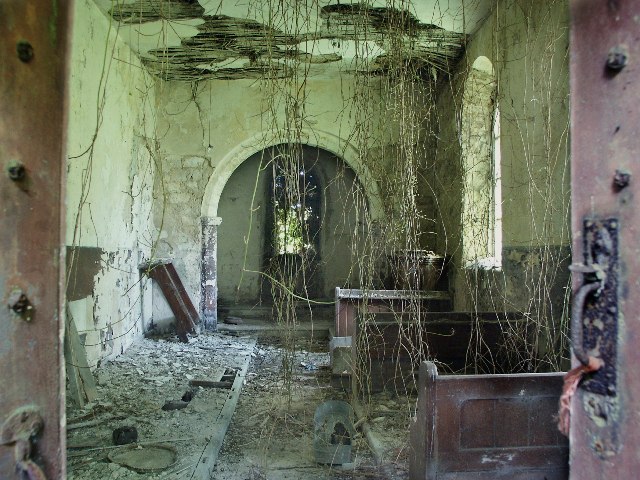
image credit: https://commons.wikimedia.org/wiki/File:St_Peter%27s_Church,_Low_Toynton_-_geograph.org.uk_-_99273.jpg
Next Post

July 25, 2019 Without Ending Clericalism, There Can Be No True Reform
Browse Our Archives
Select a Category abortion anti-semitism art Atwood Betrothed church clergy abuse coronavirus culture economics education environmentalism ethics faith family feminism gardening gun violence immigration Judaism literature MaddAddam New Pro Life Movement news pandemic personalism poem politics politics blue Pope Francis racism religion salvation sexuality social justice spirituality Station eleven Stephen King The Stand Trump Uncategorized war World Health Organization
Select a Month March 2021 February 2021 January 2021 December 2020 November 2020 October 2020 September 2020 August 2020 July 2020 June 2020 May 2020 April 2020 March 2020 February 2020 January 2020 December 2019 November 2019 October 2019 September 2019 August 2019 July 2019 June 2019 May 2019 April 2019 March 2019 February 2019 January 2019 December 2018 November 2018 October 2018 September 2018 August 2018 July 2018 June 2018 May 2018 April 2018 March 2018 February 2018 January 2018 December 2017 November 2017 October 2017 September 2017 August 2017 July 2017 June 2017 May 2017 April 2017 March 2017 February 2017 January 2017 December 2016 November 2016 October 2016 September 2016 August 2016 July 2016 June 2016 May 2016 April 2016 March 2016 February 2016
Follow Us!
TAKE THE
Religious Wisdom Quiz
Who said: "Let us be glad and rejoice and give Him glory, for the marriage of the Lamb has come"?
Select your answer to see how you score.
Jesus A voice from heaven (or the multitude) An angel John
Support this
Column


Related posts from suspended in her jar

Four Takeaways from Oprah’s Interview with the Duke...

Catholics Are De-Toxing From their Experiences With Traumatic...

How Has the Pandemic Changed Us? Has It...

Rush Limbaugh Would Never Have Succeeded In an...
TRENDING AT PATHEOS Catholic

Rejecting Doom: Christian Hope And Human Action
Christianity is a religion of hope. We are to have hope and...

It’s What Comes From Within Which Matters
One of the most difficult things for us to understand is why...

Why I Choose the Eucharist Over the Sermon
Choose the Eucharist, Not the Sermon What are we supposed to get...

5 Design Elements Found in Spiritually Rooted Homes
Putting Spirituality Into Home Decor Our homes are more than our living...

Credo: A Story of God Told with the...
About 10 years ago, I began to imagine a personal "Credo" that...

The Anatomy of Divine Revelation in Catholic Thought
The claim that God has made Himself known to human beings is...
view all Catholic blogs
Ad-Free & Subscriber Log-In Subscription Support
- About Us
- 2026 Calendar
- Videos
- Podcasts
- Library of World Religions
- Faith In Media Tracker
- Advertise With Us
- Write for Us
- Privacy Policy
- Terms of Service
- Do Not Sell My Data
- Contact Us
- Radiant Digital
- Manage Newsletter Subscriptions
- Unsubscribe From Notifications
- Sitemap
Copyright 2008-2026, Patheos. All rights reserved.
Subscription Support Ad-Free & Subscriber Log-In
Follow Patheos