
BuddhistCatholicContemplativeEvangelicalGeneral ChristianHinduJewishLatter-day SaintMuslimNew VisionsProgressive Christian
Beliefs
- Buddhist
- Catholic
- Contemplative
- Evangelical
- General Christian
- Hindu
- Jewish
- Latter-day Saint
- More Voices
- Muslim
- New Visions
- Pagan
- Progressive Christian
Topics
- Religion News
- Food and Religion
- Sports and Religion
- Religious Art
- Religious Music and Entertainment
- Religious Events
- History and Religion
- Style and Religion
- Politics and Religion
- Women in Religion
- Recreation Outdoors and Religion
- Business Finance and Religion
- Careers Workplace and Religion
- Education and Religion
- Family Parenting and Religion
- Health Fitness and Religion
- Home and Religion
- Relationships and Religion
- Technology and Religion
- Travel and Religion
Columnists
- Buddhist Columnists
- Business Finance and Religion Columnists
- Careers Workplace and Religion Columnists
- Catholic Columnists
- Contemplative Columnists
- Education and Religion Columnists
- Evangelists Columnists
- Family Parenting and Religion Columnists
- General Christian Columnists
- Health Fitness and Religion Columnists
- Hindu Columnists
- History and Religion Columnists
- Home and Religion Columnists
- Jewish Columnists
- More Voices Columnists
- Latter Day Columnists
- Muslim Columnists
- New Visions Columnists
- Nonreligious Columnists
- Pagan Columnists
- Politics and Religion Columnists
- Progressive Columnists
- Recreation Outdoors and Religion Columnists
- Relationships and Religion Columnists
- Religion News Columnists
- Religious Art Columnists
- Religious Events Columnists
- Religious Music and Entertainment Columnists
- Sports and Religion Columnists
- Style and Religion Columnists
- Technology and Religion Columnists
- Travel and Religion Columnists
- Women in Religion Columnists
Resource Library
- 2026 Calendar
- Library of World Religions
- The 100 Most Holy Places on Earth
- Patheos Answers
- Podcasts
- Videos
- Faith Leaders Database
- Anglican Episcopalian
- Bahai
- Baptist
- Buddhism
- Christianity
- Confucianism
- Eastern Orthodoxy
- Hinduism
- Holiness and Pentecostal
- ISKCON
- Islam
- Judaism
- Lutheran
- Methodist
- The Church of Jesus Christ of Latter-day Saints
- New Age
- Paganism
- Presbytarian and Reformed
- Protestantism
- Religion Behind the Scenes
- Roman Catholic
- Scientology
- Shia Islam
- Sikhism
- Sufism
- Sunni Islam
- Taoism
- Zen
- See all religions
Research Tools
 Ad-Free & Subscriber Log-In Subscription Support
Ad-Free & Subscriber Log-In Subscription Support
Follow Patheos 

- Trending:
- Forgiveness
- |
- Marriage
- |
- Consciousness
- |
- Death Penalty
- |
- Election
- |
- Halloween
 suspended in her jar
- Home
- Catholic
- Got a Problem With Student Loan Forgiveness? You’re Opposing a Venerable Catholic Tradition
Got a Problem With Student Loan Forgiveness? You’re Opposing a Venerable Catholic Tradition
Last updated on: June 20, 2019 at 2:03 pm by Rebecca Bratten Weiss
Got a Problem With Student Loan Forgiveness? You’re Opposing a Venerable Catholic Tradition 2019-06-20T14:03:14-04:00 Rebecca Bratten Weiss
Patheos Explore the world's faith through different perspectives on religion and spirituality! Patheos has the views of the prevalent religions and spiritualities of the world.
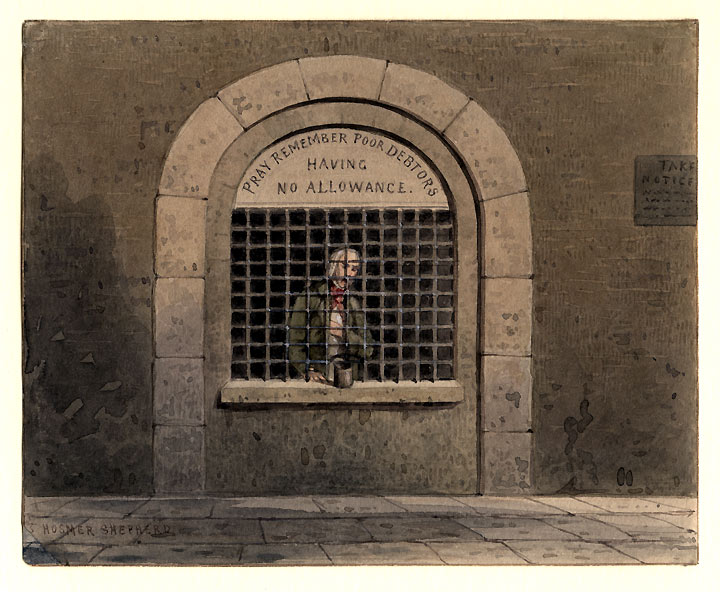
Senator Elizabeth Warren has a plan to cancel student loan debt, and good faithful Catholics are up in arms about this. To their mind, this plan is all about letting a bunch of mooching free-loaders get away with reneging on a contract made. Sure, some of us have already been paying off our student loan debt for the past twenty years. Sure, we’ve paid as much as and more than the amount we originally borrowed. Yes, the loan corporations keep front-ending interest so we’re barely scratching at the principal. None of this matters: we are, apparently, morally obligated in justice to keep on paying and paying and paying until we die.
“This,” one person remarked,” is the nature of a loan. The interest will only keep ticking if you make only minimal payment. That is your choice…buckle up and pay it off…or, stretch payments out to improve for cash flow. Many people use credit to immediately imrpvie their lifestyles. Try adding an additional $100 to loan payments each month and watch how fast the principal diminishes.
You get no sympathy from me…I will wager you live much better than a high school graduate ($30k average annual) or somebody who did not complete high school ($24k average annual, do something you enjoy and don’t work nearly as hard….
The American people made an investment in you. You contracted to repay the loan to get what you want. It is your responsibility to repay the loan with interest. It is a disgrace to not pay your bills or attempt to beggar-thy-poor-neighbor. Manage wisely and be a good stewart of public resources. To whom much has been given, much is expected.”
A loan is what we decide to make it
In the first place, it is sheer inanity to talk about a social construct like a loan as though it had some immutable, unfixed nature. The nature of a loan is in fact whatever we as a society to make it, In a good and just society the nature of a loan will not milk wealth over and over and over again from a worker, far after the original quantity has been compensated.
And, believe it or not, many people do not have that extra one hundred lying around to send spinning off into the eternally sucking black hole of the lender’s appetite. And even if we did, is it really right or just that we should be obliged to give the money for free – because that, fundamentally, is what is happening – to rich corporations instead of getting our kid a new bike for their birthday, or going out for a rare date night with one’s partner? How is that good for families?
Do hard work and excellence pay off? Much depends on the bosses.
Furthermore, many people with college and even graduate degrees are making no more than the average high school graduate, because we were lied to about our job prospects. In my case I thought that stellar academic achievements, proof of scholarship, and a couple of advanced degrees would land me a decent tenure track professorial post. Turns out, there are almost no such jobs, in either of my fields. Everything is farmed out to adjuncts, who are notoriously overworked and underpaid.
When I worked as an adjunct instructor at Franciscan University the most I could bring in, per annum, was around $14,000. Oh, I took side jobs. I asked the dean if he would create a special post for me that would enable me to teach more, in both the departments that contracted me, in return for better and more stable wages. But in spite of my extremely high ratings as an instructor, it was to no avail.
In the meantime, my husband, who has a college degree, was bringing in about the same amount, first as a granite worker and later as a woodworker. When my babies were born, he would come home from work, exhausted, and look after them as I dragged myself off to teach. That whole time period is a bit of a blur, to be honest, because it seems it was all work all the time, with little hope of change. Why give us raises, when we were going to keep on working anyway? When we were doing our best out of a sense of honor, just compensation or not?
This is the magic of western capitalism at work: the relativization of human work at the whim of the employer.
Now that my family is better situated, I have not forgotten how hard it was for so many years, and how others are still trapped in situations where hard work and excellence seem to be of no avail. I don’t expect my debts to vanish any time soon, but at least we have our heads above water.
Even if I were debt free, however, I can not imagine looking at others who are working hard to make the most of a dream that turned out to be a lie, and tell them they have to just keep on paying. I can not imagine blaming them for their choices, when it was the older generation that guided us to make those choices. In this economy, the idea that working harder is the secret to success is laughable, a fossil fantasy for the privileged and out of touch.
But wait – what about the Catholic take on this?
Since I’m seeing so many Catholics clutch their rosary-beads over Senator Warren’s terrible and unjust proposal. And the individual who treated me to the above tirade identifies not only as Catholic, but as part of the Catholic Worker movement – so one would expect his views to be in line with Catholic teaching and Catholic social justice, right?
Such an expectation would be disappointed. Because in reality debt forgiveness has always been part of the Catholic tradition, building on the ancient Judaic tradition of the “Jubilee Year,” a year of forgiveness when the land was allowed to rest and all debts were cancelled.
As Pope John Paul II wrote:
The Jubilee year was meant to restore equality among all of the children of Israel, offering new possibilities to families which had lost their property and even their personal freedom. On the other hand, the jubilee year was a reminder to the rich that a time would come when their Israelite slaves would once again become their equals and would be able to reclaim their rights. At the times prescribed by law, a jubilee year had to be proclaimed to assist those in need
(As the Third Millennium Draws Near, 13).
Debt forgiveness is not some new-fangled secular snowflake notion; it is part of our rich scriptural and moral heritage as Christians.
Furthermore, the church has traditionally condemned the practice of usury – that is, of charging excessive interest, to enrich the lender. This practice was condemned by the church fathers and by Aquinas. Dante places the usurers in the Inferno alongside the “sodomites” – but he seems to like the sodomites better, as most of them were cultured men and poets, as opposed to sordid money-grubbers.
While the church has been, of late, woefully silent on the topic of usury, the teaching has not changed. It may have been relaxed or developed somewhat – fortunately, perhaps, given that its traditional condemnation of all charging of interest ended up being linked with anti-semitism – but it has not changed.
In Canon 915 usurers are still listed among those unworthy to be admitted to communion.
Debt forgiveness, far from being some wild innovation of leftist politics, is a hallowed tradition in the church.
And the charging of outrageous interest is traditionally regarded not only as unjust but gravely sinful and contrary to nature.
Catholics who wish to take a stand against Senator Warren’s plan are free to do so, of course, but they should be aware that in so doing they are not only openly proclaiming their willingness to sentence their fellow citizens to a life of fruitless toil; they are also in open dissent from the teachings of the church. They should not be surprised if we opt to shun them.
image credit: https://commons.wikimedia.org/wiki/File:A_debtor_in_Fleet_Street_Prison_THS.jpg
Previous Post

June 13, 2019
What Makes a Religious Practice “Demonic”?
Next Post

June 22, 2019 On the Need for Radical Moral Reform of the Clergy
Browse Our Archives
Select a Category abortion anti-semitism art Atwood Betrothed church clergy abuse coronavirus culture economics education environmentalism ethics faith family feminism gardening gun violence immigration Judaism literature MaddAddam New Pro Life Movement news pandemic personalism poem politics politics blue Pope Francis racism religion salvation sexuality social justice spirituality Station eleven Stephen King The Stand Trump Uncategorized war World Health Organization
Select a Month March 2021 February 2021 January 2021 December 2020 November 2020 October 2020 September 2020 August 2020 July 2020 June 2020 May 2020 April 2020 March 2020 February 2020 January 2020 December 2019 November 2019 October 2019 September 2019 August 2019 July 2019 June 2019 May 2019 April 2019 March 2019 February 2019 January 2019 December 2018 November 2018 October 2018 September 2018 August 2018 July 2018 June 2018 May 2018 April 2018 March 2018 February 2018 January 2018 December 2017 November 2017 October 2017 September 2017 August 2017 July 2017 June 2017 May 2017 April 2017 March 2017 February 2017 January 2017 December 2016 November 2016 October 2016 September 2016 August 2016 July 2016 June 2016 May 2016 April 2016 March 2016 February 2016
Follow Us!
TAKE THE
Religious Wisdom Quiz
What does the Bible say about pride?
Select your answer to see how you score.
It's always good It goes before a fall Pride is the best It's ignored
Support this
Column


Related posts from suspended in her jar

Immigrants: They Need Us, and We Need Them

Four Takeaways from Oprah’s Interview with the Duke...

Catholics Are De-Toxing From their Experiences With Traumatic...

How Has the Pandemic Changed Us? Has It...
TRENDING AT PATHEOS Catholic

Rejecting Doom: Christian Hope And Human Action
Christianity is a religion of hope. We are to have hope and...

It’s What Comes From Within Which Matters
One of the most difficult things for us to understand is why...

Why I Choose the Eucharist Over the Sermon
Choose the Eucharist, Not the Sermon What are we supposed to get...

5 Design Elements Found in Spiritually Rooted Homes
Putting Spirituality Into Home Decor Our homes are more than our living...

Credo: A Story of God Told with the...
About 10 years ago, I began to imagine a personal "Credo" that...

The Anatomy of Divine Revelation in Catholic Thought
The claim that God has made Himself known to human beings is...
view all Catholic blogs
Ad-Free & Subscriber Log-In Subscription Support
- About Us
- 2026 Calendar
- Videos
- Podcasts
- Library of World Religions
- Faith In Media Tracker
- Advertise With Us
- Write for Us
- Privacy Policy
- Terms of Service
- Do Not Sell My Data
- Contact Us
- Radiant Digital
- Manage Newsletter Subscriptions
- Unsubscribe From Notifications
- Sitemap
Copyright 2008-2026, Patheos. All rights reserved.
Subscription Support Ad-Free & Subscriber Log-In
Follow Patheos