
BuddhistCatholicContemplativeEvangelicalGeneral ChristianHinduJewishLatter-day SaintMuslimNew VisionsProgressive Christian
Beliefs
- Buddhist
- Catholic
- Contemplative
- Evangelical
- General Christian
- Hindu
- Jewish
- Latter-day Saint
- More Voices
- Muslim
- New Visions
- Pagan
- Progressive Christian
Topics
- Religion News
- Food and Religion
- Sports and Religion
- Religious Art
- Religious Music and Entertainment
- Religious Events
- History and Religion
- Style and Religion
- Politics and Religion
- Women in Religion
- Recreation Outdoors and Religion
- Business Finance and Religion
- Careers Workplace and Religion
- Education and Religion
- Family Parenting and Religion
- Health Fitness and Religion
- Home and Religion
- Relationships and Religion
- Technology and Religion
- Travel and Religion
Columnists
- Buddhist Columnists
- Business Finance and Religion Columnists
- Careers Workplace and Religion Columnists
- Catholic Columnists
- Contemplative Columnists
- Education and Religion Columnists
- Evangelists Columnists
- Family Parenting and Religion Columnists
- General Christian Columnists
- Health Fitness and Religion Columnists
- Hindu Columnists
- History and Religion Columnists
- Home and Religion Columnists
- Jewish Columnists
- More Voices Columnists
- Latter Day Columnists
- Muslim Columnists
- New Visions Columnists
- Nonreligious Columnists
- Pagan Columnists
- Politics and Religion Columnists
- Progressive Columnists
- Recreation Outdoors and Religion Columnists
- Relationships and Religion Columnists
- Religion News Columnists
- Religious Art Columnists
- Religious Events Columnists
- Religious Music and Entertainment Columnists
- Sports and Religion Columnists
- Style and Religion Columnists
- Technology and Religion Columnists
- Travel and Religion Columnists
- Women in Religion Columnists
Resource Library
- 2026 Calendar
- Library of World Religions
- The 100 Most Holy Places on Earth
- Patheos Answers
- Podcasts
- Videos
- Faith Leaders Database
- Anglican Episcopalian
- Bahai
- Baptist
- Buddhism
- Christianity
- Confucianism
- Eastern Orthodoxy
- Hinduism
- Holiness and Pentecostal
- ISKCON
- Islam
- Judaism
- Lutheran
- Methodist
- The Church of Jesus Christ of Latter-day Saints
- New Age
- Paganism
- Presbytarian and Reformed
- Protestantism
- Religion Behind the Scenes
- Roman Catholic
- Scientology
- Shia Islam
- Sikhism
- Sufism
- Sunni Islam
- Taoism
- Zen
- See all religions
Research Tools
 Ad-Free & Subscriber Log-In Subscription Support
Ad-Free & Subscriber Log-In Subscription Support
Follow Patheos 

- Trending:
- Forgiveness
- |
- Marriage
- |
- Consciousness
- |
- Death Penalty
- |
- Election
- |
- Halloween
 suspended in her jar
- Home
- Catholic
- It Is Never Appropriate to Tell Someone to “Cover Up” Because of Your Sexual Desires
It Is Never Appropriate to Tell Someone to “Cover Up” Because of Your Sexual Desires
Last updated on: June 8, 2019 at 12:27 am by Rebecca Bratten Weiss
It Is Never Appropriate to Tell Someone to “Cover Up” Because of Your Sexual Desires 2019-06-08T00:27:25-04:00 Rebecca Bratten Weiss
Patheos Explore the world's faith through different perspectives on religion and spirituality! Patheos has the views of the prevalent religions and spiritualities of the world.
One thing I enjoy, when reading Jane Austen, is her depiction of a certain type of social boor who has not altered much in the past three hundred centuries: the man who, setting himself up as an arbiter of propriety, ends up the worst offender against it.
Mr. Collins, who regales the bored young women with sermons, and refuses to take Lizzie’s “no” for an answer, is the prime example of this type. In his obsession over what is correct, especially correct for young ladies, he ends up behaving with marvelous social incorrectness.
Yet not even Mr. Collins, the paragon of boorishness varnished with unctuousness, would have the impropriety to tell a woman to cover her shoulders because of his sexual urges.
Can you even imagine him attempting it? Can you even imagine Austen trying to depict it?
Her metier is the construction of the moment of social cringe, but in the panoply of social cringiness, a man telling a woman to hide away her bosoms lest his sexual paroxysms get the better of him is too cringy even for Austen’s world.
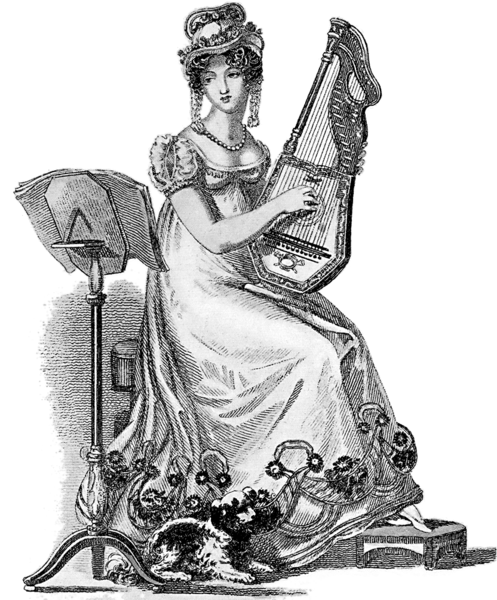
(And lest you imagine that no bosoms were exposed in Austen’s day, may I refer you to art history? Google “regency fashion.”)
For a man to tell a woman that she needs to cover up because of his own sexual desires is the height of crass impropriety.
Yet that is what a number of self-styled conservative religious individuals are defending – in the name of propriety, and of modesty.
Aside from the fact – which I have discussed before – that there is far more to modesty than the issue of bodily exposure – and aside from the fact that traditional Christians seem to lump all extra-marital sexual desire in one big heap labeled “bad” without distinctions – it is never appropriate for one person to tell another “I am having sexual urges because of your body” if they are not already in a mutually consenting relationship of respect and communication.
Because that’s what the “modesty police” are saying, really. Disguised under the language of moral superiority is the subtext: “I am horny” and “it is your fault.” This is not, to get Austenian on you, the subject matter of a gentleman.
The fundamental immodesty of modesty policing
Much has been made of the fact that this kind of declaration victim-blames, placing the responsibility of sexual response on the Other, not on the one experiencing the response. And it has been noted that this approach to the sexuality of bodies is fundamentally objectifying.
What I want to emphasize here is that this approach is, in the terms of traditional morality, fundamentally immodest. It is immodest to force a person to listen to your accounts of your sexual desires, and especially immodest to involve that person in your sexual desires without their consent.
Before you even get to the point of saying “it’s your fault,” pointing the finger at the victim instead of taking responsibility for your own sexual tendencies, you have already violated the dignity of the other person by drawing them into this discussion of your sexual desires, your sexual problems, your lack of self-control, your unappealing angst about it – all without their consent.
In terms of more contemporary understandings of what is or is not appropriate, this is harassment.
Behavior so crass and vulgar, not even an Austen buffoon-villain would try it.
image credit: https://en.wikipedia.org/wiki/File:1819-evening-dress-Ackermanns.png

Previous Post

June 5, 2019
When Did Jesus Call Anyone to a Secondary Role in the Church?
Next Post

June 13, 2019 What Makes a Religious Practice “Demonic”?
Browse Our Archives
Select a Category abortion anti-semitism art Atwood Betrothed church clergy abuse coronavirus culture economics education environmentalism ethics faith family feminism gardening gun violence immigration Judaism literature MaddAddam New Pro Life Movement news pandemic personalism poem politics politics blue Pope Francis racism religion salvation sexuality social justice spirituality Station eleven Stephen King The Stand Trump Uncategorized war World Health Organization
Select a Month March 2021 February 2021 January 2021 December 2020 November 2020 October 2020 September 2020 August 2020 July 2020 June 2020 May 2020 April 2020 March 2020 February 2020 January 2020 December 2019 November 2019 October 2019 September 2019 August 2019 July 2019 June 2019 May 2019 April 2019 March 2019 February 2019 January 2019 December 2018 November 2018 October 2018 September 2018 August 2018 July 2018 June 2018 May 2018 April 2018 March 2018 February 2018 January 2018 December 2017 November 2017 October 2017 September 2017 August 2017 July 2017 June 2017 May 2017 April 2017 March 2017 February 2017 January 2017 December 2016 November 2016 October 2016 September 2016 August 2016 July 2016 June 2016 May 2016 April 2016 March 2016 February 2016
Follow Us!
TAKE THE
Religious Wisdom Quiz
According to Jesus, "Blessed are those who hunger and thirst for." what?
Select your answer to see how you score.
Money Righteousness Popularity Power
Support this
Column


Related posts from suspended in her jar

Four Takeaways from Oprah’s Interview with the Duke...

Catholics Are De-Toxing From their Experiences With Traumatic...

Rush Limbaugh Would Never Have Succeeded In an...

We Need to Be Honest When We Talk...
TRENDING AT PATHEOS Catholic

Rejecting Doom: Christian Hope And Human Action
Christianity is a religion of hope. We are to have hope and...

It’s What Comes From Within Which Matters
One of the most difficult things for us to understand is why...

Why I Choose the Eucharist Over the Sermon
Choose the Eucharist, Not the Sermon What are we supposed to get...

5 Design Elements Found in Spiritually Rooted Homes
Putting Spirituality Into Home Decor Our homes are more than our living...

Credo: A Story of God Told with the...
About 10 years ago, I began to imagine a personal "Credo" that...

The Anatomy of Divine Revelation in Catholic Thought
The claim that God has made Himself known to human beings is...
view all Catholic blogs
Ad-Free & Subscriber Log-In Subscription Support
- About Us
- 2026 Calendar
- Videos
- Podcasts
- Library of World Religions
- Faith In Media Tracker
- Advertise With Us
- Write for Us
- Privacy Policy
- Terms of Service
- Do Not Sell My Data
- Contact Us
- Radiant Digital
- Manage Newsletter Subscriptions
- Unsubscribe From Notifications
- Sitemap
Copyright 2008-2026, Patheos. All rights reserved.
Subscription Support Ad-Free & Subscriber Log-In
Follow Patheos