
BuddhistCatholicContemplativeEvangelicalGeneral ChristianHinduJewishLatter-day SaintMuslimNew VisionsProgressive Christian
Beliefs
- Buddhist
- Catholic
- Contemplative
- Evangelical
- General Christian
- Hindu
- Jewish
- Latter-day Saint
- More Voices
- Muslim
- New Visions
- Pagan
- Progressive Christian
Topics
- Religion News
- Food and Religion
- Sports and Religion
- Religious Art
- Religious Music and Entertainment
- Religious Events
- History and Religion
- Style and Religion
- Politics and Religion
- Women in Religion
- Recreation Outdoors and Religion
- Business Finance and Religion
- Careers Workplace and Religion
- Education and Religion
- Family Parenting and Religion
- Health Fitness and Religion
- Home and Religion
- Relationships and Religion
- Technology and Religion
- Travel and Religion
Columnists
- Buddhist Columnists
- Business Finance and Religion Columnists
- Careers Workplace and Religion Columnists
- Catholic Columnists
- Contemplative Columnists
- Education and Religion Columnists
- Evangelists Columnists
- Family Parenting and Religion Columnists
- General Christian Columnists
- Health Fitness and Religion Columnists
- Hindu Columnists
- History and Religion Columnists
- Home and Religion Columnists
- Jewish Columnists
- More Voices Columnists
- Latter Day Columnists
- Muslim Columnists
- New Visions Columnists
- Nonreligious Columnists
- Pagan Columnists
- Politics and Religion Columnists
- Progressive Columnists
- Recreation Outdoors and Religion Columnists
- Relationships and Religion Columnists
- Religion News Columnists
- Religious Art Columnists
- Religious Events Columnists
- Religious Music and Entertainment Columnists
- Sports and Religion Columnists
- Style and Religion Columnists
- Technology and Religion Columnists
- Travel and Religion Columnists
- Women in Religion Columnists
Resource Library
- 2026 Calendar
- Library of World Religions
- The 100 Most Holy Places on Earth
- Patheos Answers
- Podcasts
- Videos
- Faith Leaders Database
- Anglican Episcopalian
- Bahai
- Baptist
- Buddhism
- Christianity
- Confucianism
- Eastern Orthodoxy
- Hinduism
- Holiness and Pentecostal
- ISKCON
- Islam
- Judaism
- Lutheran
- Methodist
- The Church of Jesus Christ of Latter-day Saints
- New Age
- Paganism
- Presbytarian and Reformed
- Protestantism
- Religion Behind the Scenes
- Roman Catholic
- Scientology
- Shia Islam
- Sikhism
- Sufism
- Sunni Islam
- Taoism
- Zen
- See all religions
Research Tools
 Ad-Free & Subscriber Log-In Subscription Support
Ad-Free & Subscriber Log-In Subscription Support
Follow Patheos 

- Trending:
- Forgiveness
- |
- Marriage
- |
- Consciousness
- |
- Death Penalty
- |
- Election
- |
- Halloween
 suspended in her jar
- Home
- Catholic
- Why Do People Refuse to Believe Victims of Abuse?
Why Do People Refuse to Believe Victims of Abuse?
Last updated on: March 14, 2019 at 11:39 pm by Rebecca Bratten Weiss
Why Do People Refuse to Believe Victims of Abuse? 2019-03-14T23:39:20-04:00 Rebecca Bratten Weiss
Patheos Explore the world's faith through different perspectives on religion and spirituality! Patheos has the views of the prevalent religions and spiritualities of the world.
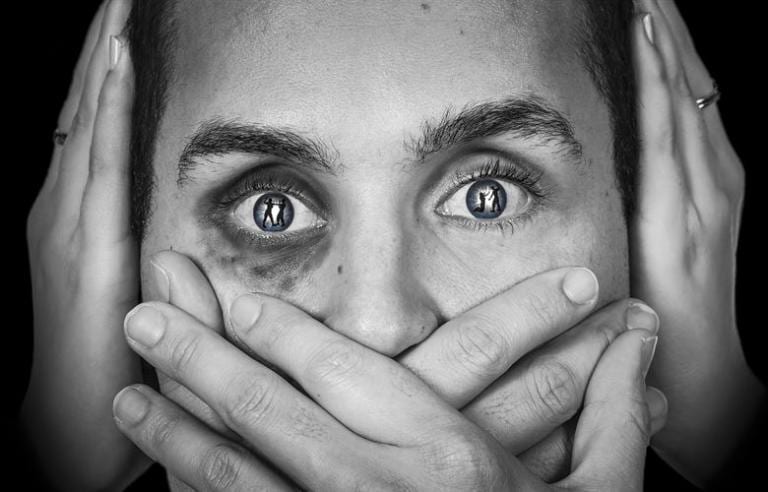
I’ve spent a lot of time, in the past few months, in conversation with abuse survivors.
It’s been painful to hear what they have to say, but my pain in hearing is nothing in comparison to the pain they carry with them – sometimes for most of their lives.
Turning away from these stories is not an option for me, uncomfortable though they may make me. Because in so many cases, the pain survivors carry is multiplied and exacerbated by the fact that over and over no one would listen. No one would believe them.
I’ve had a tiny taste of that frustration myself, when people refused to believe I was telling the truth about the abuse and toxicity I witnessed in a former workplace. Instead of listening, people over-wrote my story of injustice with a narrative that was more comfortable for them:
Maybe I was the problematic one?
I must have been causing drama.
I was probably overreacting.
It takes two to tango.
Anyway these problems are everywhere, so why the big fuss?
A few people just didn’t want to listen – didn’t want to “get involved” or have to take sides.
Revising cherished conceptions can be painful.
As I carried my frustration around with me, it occurred to me that I was getting an insight into the destructive mechanisms at work in the church’s abuse scandals. And the sad thing is that so often these mechanisms are born out of good intentions.
It’s especially difficult for people to believe stories of abuse and injustice when the stories require them to go back and revise a preconception about something or someone that they thought well of. This is true when it comes to the clergy abuse scandal: some people simply refuse to believe it of “a good and holy priest.” And it’s also true of domestic abuse: women are not heard because even their friends refuse to believe it about a man they think well of.
This inability to hear is also associated with a need to protect institutions. People don’t want to believe bad things about the institutional church to which they have given heartfelt allegiance their entire life, on which their identity is based. They don’t want to accept that Catholic institutions they’ve been trained to revere are not only just as bad as secular ones, but sometimes worse. They can’t accept that the institution of Catholic sacramental marriage might be a place for abuse so awful that a woman would need to flee.
This mechanism is at work even in the way women who speak out about the problems with NFP get shut down. We have an official, dominant narrative and we must not let these inconvenient outliers disrupt it.
In order to preserve the approved and cherished narrative, people will quickly shut down the stories of those who do not fit neatly into the mold.
It must have been your fault in some way
It sounds so implausible, you must be exaggerating.
If it was so bad, why didn’t you escape?
What did you do to provoke him?
You must not have been trying hard enough.
You must not have said “no” loudly enough.
Everyone has to bear their crosses, and marriage is a cross.
Bad theology, bad anthropology
If a person’s problem – whether it be the irritation of a failed fertility management system, or the absolute horror of traumatic, systemic abuse – requires us to revise the narratives with which we are comfortable, we often choose a cozy falsehood over a complex and demanding truth. One way we do this is in pretending that all stories are the same, all bodies are the same, all relationships can be fixed in the same way. If we failed where others succeeded – in escaping abuse, in making NFP work, in recovering from trauma – people need to believe that it’s due to some misstep on our part. Because otherwise they’d have to accept the terrifying reality that the good things in their lives are not all the result of their hard work and smart choices, but rather of chance – or, if you like, providence.
The Catholic tradition has always emphasized grace and gratitude, reminding us that what we have is not our own, that we should not preen ourselves on our successes. But this is very foreign to the contemporary American way, which emphasizes a weird mix of radical individualism with a mechanistic and reductive view of the person according to which everyone is made to fit the same template and every situation can be controlled.
Since I began listening – and, really, I began years ago, when students who had been abused or silenced began approaching me – I’ve had to revise an awful lot of my preconceptions. Sometimes this has been painful. But the pain is worth it, if we value truth and justice over comfortable illusions.
To all of those who are still unheard: I’m sorry for the pain you are experiencing.
There can sometimes be a burning need to make yourself heard, not just in general, but to particular people – to have them validate your story, instead of continuing to deny or ignore it. The disbelief or indifference of those you’d hoped you could trust may compound your sense of pain and isolation. And maybe sometimes those people will come around – or, maybe, they won’t, and you might have to step away from them, seek out those who are willing to journey with you. This may make them angry, because when you step away from them they can no longer shape your plot-lines to suit their comfort. It may make them sad, because they did truly care for you, but imperfectly, so long as they clung to an idol more.
And always remember: each person is unique and irreplaceable. Each of our stories is irreducibly our own. And no one else’s personal anecdote or institutional narrative can erase your reality.
image credit: Creator:Airman 1st Class Christopher Quail

Next Post
March 17, 2019 The Worst Possible Way to Respond to a Victim of Abuse
Browse Our Archives
Select a Category abortion anti-semitism art Atwood Betrothed church clergy abuse coronavirus culture economics education environmentalism ethics faith family feminism gardening gun violence immigration Judaism literature MaddAddam New Pro Life Movement news pandemic personalism poem politics politics blue Pope Francis racism religion salvation sexuality social justice spirituality Station eleven Stephen King The Stand Trump Uncategorized war World Health Organization
Select a Month March 2021 February 2021 January 2021 December 2020 November 2020 October 2020 September 2020 August 2020 July 2020 June 2020 May 2020 April 2020 March 2020 February 2020 January 2020 December 2019 November 2019 October 2019 September 2019 August 2019 July 2019 June 2019 May 2019 April 2019 March 2019 February 2019 January 2019 December 2018 November 2018 October 2018 September 2018 August 2018 July 2018 June 2018 May 2018 April 2018 March 2018 February 2018 January 2018 December 2017 November 2017 October 2017 September 2017 August 2017 July 2017 June 2017 May 2017 April 2017 March 2017 February 2017 January 2017 December 2016 November 2016 October 2016 September 2016 August 2016 July 2016 June 2016 May 2016 April 2016 March 2016 February 2016
Follow Us!
TAKE THE
Religious Wisdom Quiz
What does "Gad" mean in Hebrew?
Select your answer to see how you score.
Warrior Joyful Fortune Chosen One
Support this
Column


Related posts from suspended in her jar

Four Takeaways from Oprah’s Interview with the Duke...

Catholics Are De-Toxing From their Experiences With Traumatic...
People are in Therapy to Recover from Religion...
Who Speaks for the Church? And Which Church?
TRENDING AT PATHEOS Catholic

Rejecting Doom: Christian Hope And Human Action
Christianity is a religion of hope. We are to have hope and...

It’s What Comes From Within Which Matters
One of the most difficult things for us to understand is why...

Why I Choose the Eucharist Over the Sermon
Choose the Eucharist, Not the Sermon What are we supposed to get...

5 Design Elements Found in Spiritually Rooted Homes
Putting Spirituality Into Home Decor Our homes are more than our living...

Credo: A Story of God Told with the...
About 10 years ago, I began to imagine a personal "Credo" that...

The Anatomy of Divine Revelation in Catholic Thought
The claim that God has made Himself known to human beings is...
view all Catholic blogs
Ad-Free & Subscriber Log-In Subscription Support
- About Us
- 2026 Calendar
- Videos
- Podcasts
- Library of World Religions
- Faith In Media Tracker
- Advertise With Us
- Write for Us
- Privacy Policy
- Terms of Service
- Do Not Sell My Data
- Contact Us
- Radiant Digital
- Manage Newsletter Subscriptions
- Unsubscribe From Notifications
- Sitemap
Copyright 2008-2026, Patheos. All rights reserved.
Subscription Support Ad-Free & Subscriber Log-In
Follow Patheos