
BuddhistCatholicContemplativeEvangelicalGeneral ChristianHinduJewishLatter-day SaintMuslimNew VisionsProgressive Christian
Beliefs
- Buddhist
- Catholic
- Contemplative
- Evangelical
- General Christian
- Hindu
- Jewish
- Latter-day Saint
- More Voices
- Muslim
- New Visions
- Pagan
- Progressive Christian
Topics
- Religion News
- Food and Religion
- Sports and Religion
- Religious Art
- Religious Music and Entertainment
- Religious Events
- History and Religion
- Style and Religion
- Politics and Religion
- Women in Religion
- Recreation Outdoors and Religion
- Business Finance and Religion
- Careers Workplace and Religion
- Education and Religion
- Family Parenting and Religion
- Health Fitness and Religion
- Home and Religion
- Relationships and Religion
- Technology and Religion
- Travel and Religion
Columnists
- Buddhist Columnists
- Business Finance and Religion Columnists
- Careers Workplace and Religion Columnists
- Catholic Columnists
- Contemplative Columnists
- Education and Religion Columnists
- Evangelists Columnists
- Family Parenting and Religion Columnists
- General Christian Columnists
- Health Fitness and Religion Columnists
- Hindu Columnists
- History and Religion Columnists
- Home and Religion Columnists
- Jewish Columnists
- More Voices Columnists
- Latter Day Columnists
- Muslim Columnists
- New Visions Columnists
- Nonreligious Columnists
- Pagan Columnists
- Politics and Religion Columnists
- Progressive Columnists
- Recreation Outdoors and Religion Columnists
- Relationships and Religion Columnists
- Religion News Columnists
- Religious Art Columnists
- Religious Events Columnists
- Religious Music and Entertainment Columnists
- Sports and Religion Columnists
- Style and Religion Columnists
- Technology and Religion Columnists
- Travel and Religion Columnists
- Women in Religion Columnists
Resource Library
- 2026 Calendar
- Library of World Religions
- The 100 Most Holy Places on Earth
- Patheos Answers
- Podcasts
- Videos
- Faith Leaders Database
- Anglican Episcopalian
- Bahai
- Baptist
- Buddhism
- Christianity
- Confucianism
- Eastern Orthodoxy
- Hinduism
- Holiness and Pentecostal
- ISKCON
- Islam
- Judaism
- Lutheran
- Methodist
- The Church of Jesus Christ of Latter-day Saints
- New Age
- Paganism
- Presbytarian and Reformed
- Protestantism
- Religion Behind the Scenes
- Roman Catholic
- Scientology
- Shia Islam
- Sikhism
- Sufism
- Sunni Islam
- Taoism
- Zen
- See all religions
Research Tools
 Ad-Free & Subscriber Log-In Subscription Support
Ad-Free & Subscriber Log-In Subscription Support
Follow Patheos 

- Trending:
- Forgiveness
- |
- Marriage
- |
- Consciousness
- |
- Death Penalty
- |
- Election
- |
- Halloween
 suspended in her jar
- Home
- Catholic
- Good Local and Bad Local: An Eco Grower’s Perspective
Good Local and Bad Local: An Eco Grower’s Perspective
Last updated on: March 23, 2019 at 11:44 pm by Rebecca Bratten Weiss
Good Local and Bad Local: An Eco Grower’s Perspective 2019-03-23T23:44:22-04:00 Rebecca Bratten Weiss
Patheos Explore the world's faith through different perspectives on religion and spirituality! Patheos has the views of the prevalent religions and spiritualities of the world.
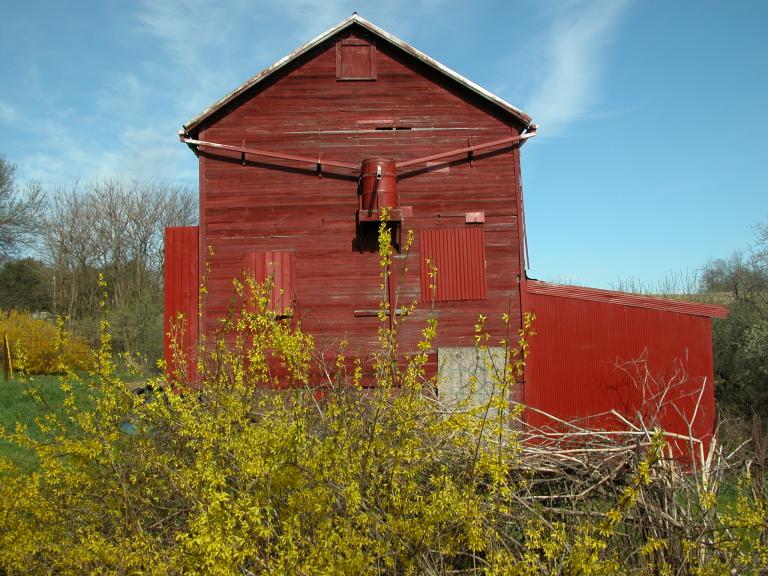
It’s that time of year, again, when the ground begins to thaw and I’m out prepping my garden beds for the growing year. My seedlings are just coming up in trays inside, under my makeshift grow-lights: peppers, lettuce, and cabbage, so far; in theory I’ll get my fourteen varieties of heirloom tomatoes going tomorrow. I managed to prune the apple trees at the correct time this year, and hope to have my potato trenches dug in time for my traditional Good Friday burial of the spuds.
The life of an eco-grower is one that is intimately connected with the seasons, the soil, and the climate, often helplessly so, since our growing methods do not involve aggressive manipulation of nature but rather harmony with it. Part of that harmony means recognizing the reality that I, the human organism, am just one of countless living entities interacting and intersecting on this small square of land. Eco-growing depends on diversity: diversity of micro-organisms, diversity of varietals, and above all a fluidity in response to shifting circumstances.
“Think globally, act locally,” may be a trite mantra, but it’s the essence of what I do. I am aware of my place in a much larger eco-system and socio-economic system than what is immediately at hand. My peppers come from Thailand, the Caribbean, China, and Mexico. My tomatoes comes from Russia, Italy, and the middle east. I even grow a romaine lettuce variety that was developed in Israel, to withstand hot dry weather. What I do connects me with a global community of growers not only present but past: the generations that labored skillfully to develop and preserve their heirloom varieties. Often against the depredations of war and colonization.
But what I do also connects me in a bodily way with the countless organisms – larva, wasps, fungus, nematodes, bacteria, mammals, earthworms, spiders – that share my space. How they thrive relates to how my garden grows. Everything is interconnected, on a local level, but this spirals out into the world.
“Local” in the foodie world has nothing but good connotations. It means the food was grown nearby, in one’s own community, so buying it means investing in the community. It means you can actually go in person and see where the food was produced – “know your farmer, know your food.” Local food is fresher, can be picked riper, and need not be confined to varieties that were developed simply for their capacity to withstand long bumpy journeys in produce trucks. Your carbon footprint is smaller when you buy a local produce item that wasn’t shipped long distances and passed through different intermediaries.
So I was surprised when, a few years ago, I began to encounter people for whom “local” had a whole other set of connotations. Bad ones.
In 2016, I kept hearing about how farmers in the UK were supporting Brexit, and farmers in the US supporting Trump. This was perplexing to me, since both Brexit and the MAGA movement are driven specifically by a desire for homogeneity, a taste for nationalism, a tendency towards xenophobia, and suspicion of immigrants. And for me, working with creation means repudiating all those tendencies. It means embracing diversity, humbly acknowledging my position in a larger web of inter-dependence, rejecting illusions of radical autonomy.
And then I began to see other growers posting anti-immigrant material. People who were growing produce varieties developed in Syria and Mexico, trash-talking refugees whose grandparents may have been responsible for preserving these heirloom seeds, passing them down. I was shocked and dismayed, and – naively – confused. How can you be in this line of work, and not have reverence for all life? How can you be an eco-grower and not love diversity?
This was when I began to see the phenomenon of “bad local.” The kind of local that means “us first” or “others, keep out.” This kind of local doesn’t care where the seeds came from or who developed them; the important thing is, now they’re here, and they’re ours. It’s a fortress mentality, and every outsider is perceived as laying siege.
This has been a difficult thing for me to experience because it’s shattered my ideas about the ethical community of eco- and organic growers. And it means on a practical level that the people I meet in my work may be actively working to promote an agenda that actually harms what we do: Trump’s environmental policies will be hell on organic, especially in fracking country.
I’ve come to see the ugly side of local.
The xenophobia, the obsessive libertarianism which refuses to accept that anything is ours because of gift or privilege, which erases all past history for the sake of the here and now, the “local” in time. This has been depressing but eye-opening, and I am determined that in the seasons ahead I will do what I can, as I work, also to educate about where the food came from, what makes it possible to produce it, and what our most dire threats are.
image credit: from the author’s personal collection
Previous Post
March 17, 2019
The Worst Possible Way to Respond to a Victim of Abuse
Next Post

March 25, 2019 It's Not About Muslim or Christian. It's About Extremism
Browse Our Archives
Select a Category abortion anti-semitism art Atwood Betrothed church clergy abuse coronavirus culture economics education environmentalism ethics faith family feminism gardening gun violence immigration Judaism literature MaddAddam New Pro Life Movement news pandemic personalism poem politics politics blue Pope Francis racism religion salvation sexuality social justice spirituality Station eleven Stephen King The Stand Trump Uncategorized war World Health Organization
Select a Month March 2021 February 2021 January 2021 December 2020 November 2020 October 2020 September 2020 August 2020 July 2020 June 2020 May 2020 April 2020 March 2020 February 2020 January 2020 December 2019 November 2019 October 2019 September 2019 August 2019 July 2019 June 2019 May 2019 April 2019 March 2019 February 2019 January 2019 December 2018 November 2018 October 2018 September 2018 August 2018 July 2018 June 2018 May 2018 April 2018 March 2018 February 2018 January 2018 December 2017 November 2017 October 2017 September 2017 August 2017 July 2017 June 2017 May 2017 April 2017 March 2017 February 2017 January 2017 December 2016 November 2016 October 2016 September 2016 August 2016 July 2016 June 2016 May 2016 April 2016 March 2016 February 2016
Follow Us!
TAKE THE
Religious Wisdom Quiz
Who spoke to the burning bush?
Select your answer to see how you score.
Moses Aaron Miriam Joseph
Support this
Column


Related posts from suspended in her jar

We Need to Be Honest When We Talk...
Words for Those Feeling Disinherited
Yes, It's About the White Supremacy

Reflections on the Epiphany Insurrection
TRENDING AT PATHEOS Catholic

Rejecting Doom: Christian Hope And Human Action
Christianity is a religion of hope. We are to have hope and...

It’s What Comes From Within Which Matters
One of the most difficult things for us to understand is why...

Why I Choose the Eucharist Over the Sermon
Choose the Eucharist, Not the Sermon What are we supposed to get...

5 Design Elements Found in Spiritually Rooted Homes
Putting Spirituality Into Home Decor Our homes are more than our living...

Credo: A Story of God Told with the...
About 10 years ago, I began to imagine a personal "Credo" that...

The Anatomy of Divine Revelation in Catholic Thought
The claim that God has made Himself known to human beings is...
view all Catholic blogs
Ad-Free & Subscriber Log-In Subscription Support
- About Us
- 2026 Calendar
- Videos
- Podcasts
- Library of World Religions
- Faith In Media Tracker
- Advertise With Us
- Write for Us
- Privacy Policy
- Terms of Service
- Do Not Sell My Data
- Contact Us
- Radiant Digital
- Manage Newsletter Subscriptions
- Unsubscribe From Notifications
- Sitemap
Copyright 2008-2026, Patheos. All rights reserved.
Subscription Support Ad-Free & Subscriber Log-In
Follow Patheos