
BuddhistCatholicContemplativeEvangelicalGeneral ChristianHinduJewishLatter-day SaintMuslimNew VisionsProgressive Christian
Beliefs
- Buddhist
- Catholic
- Contemplative
- Evangelical
- General Christian
- Hindu
- Jewish
- Latter-day Saint
- More Voices
- Muslim
- New Visions
- Pagan
- Progressive Christian
Topics
- Religion News
- Food and Religion
- Sports and Religion
- Religious Art
- Religious Music and Entertainment
- Religious Events
- History and Religion
- Style and Religion
- Politics and Religion
- Women in Religion
- Recreation Outdoors and Religion
- Business Finance and Religion
- Careers Workplace and Religion
- Education and Religion
- Family Parenting and Religion
- Health Fitness and Religion
- Home and Religion
- Relationships and Religion
- Technology and Religion
- Travel and Religion
Columnists
- Buddhist Columnists
- Business Finance and Religion Columnists
- Careers Workplace and Religion Columnists
- Catholic Columnists
- Contemplative Columnists
- Education and Religion Columnists
- Evangelists Columnists
- Family Parenting and Religion Columnists
- General Christian Columnists
- Health Fitness and Religion Columnists
- Hindu Columnists
- History and Religion Columnists
- Home and Religion Columnists
- Jewish Columnists
- More Voices Columnists
- Latter Day Columnists
- Muslim Columnists
- New Visions Columnists
- Nonreligious Columnists
- Pagan Columnists
- Politics and Religion Columnists
- Progressive Columnists
- Recreation Outdoors and Religion Columnists
- Relationships and Religion Columnists
- Religion News Columnists
- Religious Art Columnists
- Religious Events Columnists
- Religious Music and Entertainment Columnists
- Sports and Religion Columnists
- Style and Religion Columnists
- Technology and Religion Columnists
- Travel and Religion Columnists
- Women in Religion Columnists
Resource Library
- 2026 Calendar
- Library of World Religions
- The 100 Most Holy Places on Earth
- Patheos Answers
- Podcasts
- Videos
- Faith Leaders Database
- Anglican Episcopalian
- Bahai
- Baptist
- Buddhism
- Christianity
- Confucianism
- Eastern Orthodoxy
- Hinduism
- Holiness and Pentecostal
- ISKCON
- Islam
- Judaism
- Lutheran
- Methodist
- The Church of Jesus Christ of Latter-day Saints
- New Age
- Paganism
- Presbytarian and Reformed
- Protestantism
- Religion Behind the Scenes
- Roman Catholic
- Scientology
- Shia Islam
- Sikhism
- Sufism
- Sunni Islam
- Taoism
- Zen
- See all religions
Research Tools
 Ad-Free & Subscriber Log-In Subscription Support
Ad-Free & Subscriber Log-In Subscription Support
Follow Patheos 

- Trending:
- Forgiveness
- |
- Marriage
- |
- Consciousness
- |
- Death Penalty
- |
- Election
- |
- Halloween
 suspended in her jar
- Home
- Catholic
- Maybe It’s Not the Book That’s the Problem. Maybe It’s You
Maybe It’s Not the Book That’s the Problem. Maybe It’s You
Last updated on: January 14, 2019 at 8:05 pm by Rebecca Bratten Weiss
Maybe It’s Not the Book That’s the Problem. Maybe It’s You 2019-01-14T20:05:15-04:00 Rebecca Bratten Weiss
Patheos Explore the world's faith through different perspectives on religion and spirituality! Patheos has the views of the prevalent religions and spiritualities of the world.
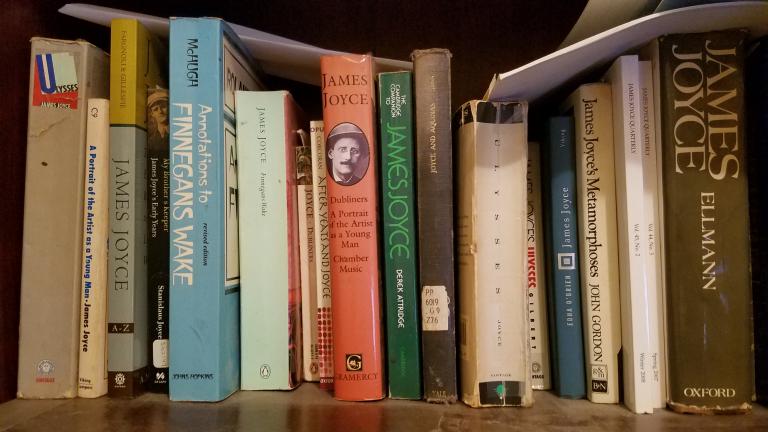
Wrapping up one of the most famous cases of censorship in the history of modern western literature, James Joyce’s monumental novel Ulysses was put on trial for obscenity in the United States in 1933 – and exonerated.
Prior to this, the book had been banned since 1920 in the United States. It was publicly burned in Ireland, England, the US, and Canada. It was formally banned in England in 1929. While Ulysses was never actually banned in the native Ireland of its expat author – who wrote it while residing in Europe – neither was it offered for sale, because sellers feared a backlash.
Nevertheless, champions of literature, art, and freedom of expression had done their best to make the ground-breaking novel available to readers. Ernest Hemingway himself smuggled copies into the U.S.
The 1933 ruling, by Judge John M. Woolsey of the United States district court, stands as a landmark event in the history of the struggle of art against censorship. Central to Woolsey’s conclusion is a decision that rests on the distinction between objective content and reader reaction. An objectively obscene work “as legally defined by the Courts is: tending to stir up the sex impulses or to lead to sexually impure and lustful thoughts.” Woolsey goes on to point out that this definition “must be tested by the Court’s opinion as to its effect on a person with average sex instincts” and later “it is only with the normal person that the law is concerned.” Namely, that the content in Ulysses is not designed to elicit a sexual response in a person with normal and healthy instincts or appetites. The Courts can not answer for abnormal appetites.
What this means is that the fact of a person being aroused by a work of art can not per se be taken as evidence that the work of art is intended to arouse.
Those who have unhealthy, abnormal, perverse, or immature sexual instincts might find any number of things provocative. Furniture. A corpse. A description of a kiss. Classical art.
When a person admits to being sexually aroused by that which is not intended to sexually arouse, that person is saying far more about themselves than about the work of art.
It may simply be a matter of immature and underdeveloped instincts. There’s a stage of adolescent sexuality at which everything is a turn-on; one of the goals of education is to lead people through and beyond this immature phase, into a realm of greater objectivity and self-control in which one is capable of viewing human experience in an objective and clear-headed manner. This is necessary especially in certain lines of work. If a medical professional can’t see a naked body without falling into paroxysms of lust, or if a counselor can’t listen to a story of sexual intimacy without succumbing to titillations, they should not be in these fields.
Incidentally, a person who is still in the adolescent stage of sexuality is not yet ready to enter into mature sexual relations themselves. In order to enjoy a healthy sex life, one has to be discriminating.
There are certainly works that are pornographic, and a broad array of works specifically intended to provoke arousal. My intention here is not to discuss those works, which themselves exist across a wide spectrum, from classical erotica of both Eastern and Western cultures, to early photographic erotica, to the highly artificial, dehumanizing, and damaging pornography available at your fingertips on the internet today.
But there are other works which, though dealing with sexual or erotic subject matter, are not pornographic nor even erotica. The role of the work, the art, the language, and the narration is such that it gives the viewer a distance from which to observe and discuss. The arousal takes place within the story, but does not reach out and enlist the viewer to join in.
There have been a few times in the past when people – never my students – questioned the works I was assigning in class. A frequent objection these people made was that explicit descriptions of bodies, or of certain sex acts. left them with “feelings they didn’t want to have.”
Did these people not realize what they were disclosing to me? What they intended as an accusation of certain books actually came off as revealing far too much about themselves, about their sexual immaturity and lack of self-discipline. Especially given the fact that I had students much younger than them, capable of coolly and thoughtfully discussing the scenes, and their implications, in an academic setting.
And unlike explicit material in a work of art, which is buffered by the parameters of art, revelations about “feelings I didn’t want to have” are deeply personal and, to my mind, inappropriate, especially when told to me by a member of the opposite sex. I am perfectly comfortable reading and discussing Joyce’s descriptions of masturbation, because they are enclosed within the “safe space” of art. I am less comfortable listen to a grown man tell me about the sexual feelings he didn’t want to have. That strikes me as far more immodest and inappropriate than a sex scene in a novel.
People who are up in arms about indelicate or difficult material in literary works of art are telling the literary world very little about the works of art. But they are telling us all far more than we ever wanted to know about themselves, and their sexual issues.
image credit: the author’s dusty bookshelf
Previous Post

January 12, 2019
A Pro-Life Gentleman Expresses his Concern to a Vulgar Strumpet
Next Post
January 18, 2019 Of Nazis, Toxic Masculinity, and the Privilege of Violence
Browse Our Archives
Select a Category abortion anti-semitism art Atwood Betrothed church clergy abuse coronavirus culture economics education environmentalism ethics faith family feminism gardening gun violence immigration Judaism literature MaddAddam New Pro Life Movement news pandemic personalism poem politics politics blue Pope Francis racism religion salvation sexuality social justice spirituality Station eleven Stephen King The Stand Trump Uncategorized war World Health Organization
Select a Month March 2021 February 2021 January 2021 December 2020 November 2020 October 2020 September 2020 August 2020 July 2020 June 2020 May 2020 April 2020 March 2020 February 2020 January 2020 December 2019 November 2019 October 2019 September 2019 August 2019 July 2019 June 2019 May 2019 April 2019 March 2019 February 2019 January 2019 December 2018 November 2018 October 2018 September 2018 August 2018 July 2018 June 2018 May 2018 April 2018 March 2018 February 2018 January 2018 December 2017 November 2017 October 2017 September 2017 August 2017 July 2017 June 2017 May 2017 April 2017 March 2017 February 2017 January 2017 December 2016 November 2016 October 2016 September 2016 August 2016 July 2016 June 2016 May 2016 April 2016 March 2016 February 2016
Follow Us!
TAKE THE
Religious Wisdom Quiz
What does Siloam mean?
Select your answer to see how you score.
Love Received Sent Gift
Support this
Column


Related posts from suspended in her jar

Immigrants: They Need Us, and We Need Them

Four Takeaways from Oprah’s Interview with the Duke...

Catholics Are De-Toxing From their Experiences With Traumatic...

Rush Limbaugh Would Never Have Succeeded In an...
TRENDING AT PATHEOS Catholic

Rejecting Doom: Christian Hope And Human Action
Christianity is a religion of hope. We are to have hope and...

It’s What Comes From Within Which Matters
One of the most difficult things for us to understand is why...

Why I Choose the Eucharist Over the Sermon
Choose the Eucharist, Not the Sermon What are we supposed to get...

5 Design Elements Found in Spiritually Rooted Homes
Putting Spirituality Into Home Decor Our homes are more than our living...

Credo: A Story of God Told with the...
About 10 years ago, I began to imagine a personal "Credo" that...

The Anatomy of Divine Revelation in Catholic Thought
The claim that God has made Himself known to human beings is...
view all Catholic blogs
Ad-Free & Subscriber Log-In Subscription Support
- About Us
- 2026 Calendar
- Videos
- Podcasts
- Library of World Religions
- Faith In Media Tracker
- Advertise With Us
- Write for Us
- Privacy Policy
- Terms of Service
- Do Not Sell My Data
- Contact Us
- Radiant Digital
- Manage Newsletter Subscriptions
- Unsubscribe From Notifications
- Sitemap
Copyright 2008-2026, Patheos. All rights reserved.
Subscription Support Ad-Free & Subscriber Log-In
Follow Patheos