
BuddhistCatholicContemplativeEvangelicalGeneral ChristianHinduJewishLatter-day SaintMuslimNew VisionsProgressive Christian
Beliefs
- Buddhist
- Catholic
- Contemplative
- Evangelical
- General Christian
- Hindu
- Jewish
- Latter-day Saint
- More Voices
- Muslim
- New Visions
- Pagan
- Progressive Christian
Topics
- Religion News
- Food and Religion
- Sports and Religion
- Religious Art
- Religious Music and Entertainment
- Religious Events
- History and Religion
- Style and Religion
- Politics and Religion
- Women in Religion
- Recreation Outdoors and Religion
- Business Finance and Religion
- Careers Workplace and Religion
- Education and Religion
- Family Parenting and Religion
- Health Fitness and Religion
- Home and Religion
- Relationships and Religion
- Technology and Religion
- Travel and Religion
Columnists
- Buddhist Columnists
- Business Finance and Religion Columnists
- Careers Workplace and Religion Columnists
- Catholic Columnists
- Contemplative Columnists
- Education and Religion Columnists
- Evangelists Columnists
- Family Parenting and Religion Columnists
- General Christian Columnists
- Health Fitness and Religion Columnists
- Hindu Columnists
- History and Religion Columnists
- Home and Religion Columnists
- Jewish Columnists
- More Voices Columnists
- Latter Day Columnists
- Muslim Columnists
- New Visions Columnists
- Nonreligious Columnists
- Pagan Columnists
- Politics and Religion Columnists
- Progressive Columnists
- Recreation Outdoors and Religion Columnists
- Relationships and Religion Columnists
- Religion News Columnists
- Religious Art Columnists
- Religious Events Columnists
- Religious Music and Entertainment Columnists
- Sports and Religion Columnists
- Style and Religion Columnists
- Technology and Religion Columnists
- Travel and Religion Columnists
- Women in Religion Columnists
Resource Library
- 2026 Calendar
- Library of World Religions
- The 100 Most Holy Places on Earth
- Patheos Answers
- Podcasts
- Videos
- Faith Leaders Database
- Anglican Episcopalian
- Bahai
- Baptist
- Buddhism
- Christianity
- Confucianism
- Eastern Orthodoxy
- Hinduism
- Holiness and Pentecostal
- ISKCON
- Islam
- Judaism
- Lutheran
- Methodist
- The Church of Jesus Christ of Latter-day Saints
- New Age
- Paganism
- Presbytarian and Reformed
- Protestantism
- Religion Behind the Scenes
- Roman Catholic
- Scientology
- Shia Islam
- Sikhism
- Sufism
- Sunni Islam
- Taoism
- Zen
- See all religions
Research Tools
 Ad-Free & Subscriber Log-In Subscription Support
Ad-Free & Subscriber Log-In Subscription Support
Follow Patheos 

- Trending:
- Forgiveness
- |
- Marriage
- |
- Consciousness
- |
- Death Penalty
- |
- Election
- |
- Halloween
 suspended in her jar
- Home
- Catholic
- Of Nazis, Toxic Masculinity, and the Privilege of Violence
Of Nazis, Toxic Masculinity, and the Privilege of Violence
Last updated on: January 18, 2019 at 10:57 pm by Rebecca Bratten Weiss
Of Nazis, Toxic Masculinity, and the Privilege of Violence 2019-01-18T22:57:12-04:00 Rebecca Bratten Weiss
Patheos Explore the world's faith through different perspectives on religion and spirituality! Patheos has the views of the prevalent religions and spiritualities of the world.
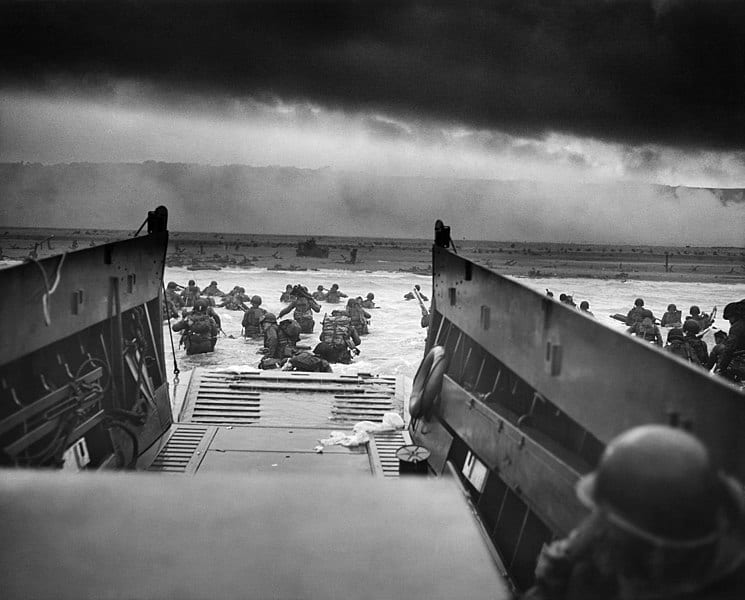
One of the sillier of many silly responses to the “men can do better” Gillette ad is a meme:
“No one called it ‘toxic masculinity’ when we were saving the world from Nazis.”
The answer to this is, of course, obvious: fighting Nazis IS fighting toxic masculinity. Or, it should be.
It is interesting, however, how “fighting Nazis” serves a particular rhetorical purpose in arguments like this. As though the function of “Nazis” in the equation has less to do with the actual evil their regime and ideology represent, and more to do with a sphere of permissiveness in which men are allowed to do violence against token targets, in order to display their manly prowess.
The symbolic purpose of the Nazi as target
Nazis serve the purpose, in this case, of justifying stereotypical ideas about male aggressiveness: real men fight Nazis. Or fill in the blank with some other approved villain.
This has been recapitulated in many American films in which Nazis are represented as the “bad guys” mostly because they stand as obstacles in the way of the all-American hero. In the Indiana Jones movies, for instance, there’s little emphasis on the vileness of white supremacist doctrines – Indy’s presuppositions are pretty racist, themselves – but a lot of emphasis on the manly man having some European goons to punch.
The token function of the Nazi not as a symbol of the evils of white supremacy, but rather as a target for approved white American male violence, is especially evident when you consider the many areas in which rhetoric about violence towards Nazis is deemed unacceptable. In the aftermath of Charlottesville, for instance, I saw far more cries for people to denounce the tactics of Antifa than I saw cries for people to denounce the actual Nazis and fascists Antifa was opposing.
Nazis and Americanism
Having been raised on a diet of World War II movies, Americans would, one imagines, be primed to be anti-Nazi across the board. But these were home-grown Nazis, so it was, apparently, different. And we haven’t really been trained to oppose the genuine evils of Nazism: racist and supremacist doctrines, ableism, authoritarianism, homophobia. If we had been, we would more readily do penance for our own sins and genocides. And we would not so easily make excuses for white supremacists in our own government.
One particular response to a post-Charlottesville meme depicting Nazis was revealing. “So anti-American!” one woman stated, about an image of men marching with a swastika.
Anti-American? Well, maybe. Insofar as yes, the American troops fought against the Nazi troops. But the rationale for opposing Nazism is not really reducible to its being anti-American, especially considering how deeply rooted the evils of white supremacy have been in our nation.
Who is allowed to punch Nazis, anyway?
It was especially amusing for me to encounter the meme about toxic masculinity given that I recently experienced a bizarre backlash as a result of a prose-poem I wrote, and had published on On the Seawall, in which I imagine myself enacting violence towards Nazi men.
In reality, I am a pacifist, though I make certain cautious exceptions in cases of defense of the vulnerable, especially defense of the vulnerable against white supremacists. However, I am also a Jewish woman, and in recent months have had to grapple with the rising specters of both anti-semitism and rampant misogyny, including within Catholic circles.
In the prose poem, I imagined myself as a devotee of the goddess Hekate, an image both of the unruly woman, and of protection for the marginalized. Hekate as a symbol is especially relevant considering the history of justifying violence against women by labeling them “witches” – a tradition that exists to this day in the demonization of women who don’t walk the line laid out male authorities. In the “virgin or whore” paradigm of sexist power structures, labeling a woman “witch” was a way of stripping her of the artifices of protection provided by the patriarchy – a protection that always has about it an aura of menace, because it can so easily be removed. Because it depends on the approval of men. Because it depends on women assenting to men when they say “we speak for God.” A woman who dares to go directly to the divine is a threat to this particular dogma of supremacy. Look what they did to Joan of Arc: burned her as a witch.
Women who playfully identify as witches do so in solidarity with these women, against the forces of violent hegemony that throughout history have attempted to appropriate divine authority for the dominant male. This means identifying not only with the unruly women of myth and fairy tale, but with many of the women saints of the church, as well, who suffered specifically at the hands of men.
In the coded system of who can do violence against whom, it is acceptable for the white American man to punch Nazis, but it is not acceptable for the marginalized woman, the weird woman, the unruly woman, to do so. Horrified responses to my prose poem indicated to me not only that there is a large segment of the religious public that is completely clueless about how to read metaphor and symbol, but also that there are a lot of men out there who, given the choice between Nazis on one hand, and liberated women on the other, will automatically side with the Nazis.
This shouldn’t be surprising, considering how readily far-right pundits rise to attack not only unruly women in general, but Jewish women in particular. Is it an accident that in recent months alt-right Catholic publications have printed diatribes against not only myself, but also Simcha Ficher, Jenn Morson, and Dawn Eden – all women of Jewish ethnicity?
That this same demographic should be triggered by rhetoric involving symbolized violence against Nazis is unsurprising. But it should remind us to be on the alert, especially when it comes to whom we choose to be allied with.
image credit: https://en.wikipedia.org/wiki/File:Into_the_Jaws_of_Death_23-0455M_edit.jpg
Previous Post

January 14, 2019
Maybe It's Not the Book That's the Problem. Maybe It's You
Next Post

January 21, 2019 On Covington Catholic: Broader Context, More Factors, Still Problematic
Browse Our Archives
Select a Category abortion anti-semitism art Atwood Betrothed church clergy abuse coronavirus culture economics education environmentalism ethics faith family feminism gardening gun violence immigration Judaism literature MaddAddam New Pro Life Movement news pandemic personalism poem politics politics blue Pope Francis racism religion salvation sexuality social justice spirituality Station eleven Stephen King The Stand Trump Uncategorized war World Health Organization
Select a Month March 2021 February 2021 January 2021 December 2020 November 2020 October 2020 September 2020 August 2020 July 2020 June 2020 May 2020 April 2020 March 2020 February 2020 January 2020 December 2019 November 2019 October 2019 September 2019 August 2019 July 2019 June 2019 May 2019 April 2019 March 2019 February 2019 January 2019 December 2018 November 2018 October 2018 September 2018 August 2018 July 2018 June 2018 May 2018 April 2018 March 2018 February 2018 January 2018 December 2017 November 2017 October 2017 September 2017 August 2017 July 2017 June 2017 May 2017 April 2017 March 2017 February 2017 January 2017 December 2016 November 2016 October 2016 September 2016 August 2016 July 2016 June 2016 May 2016 April 2016 March 2016 February 2016
Follow Us!
TAKE THE
Religious Wisdom Quiz
What is the correct order for putting off the old self and putting on the new self as described in Colossians?
Select your answer to see how you score.
Put to death earthly nature, rid yourself of anger/rage/malice, take off the old self, put on the new self, clothe yourself with compassion Rid yourself of anger, take off the old self, put to death earthly nature, put on the new self Clothe yourself with compassion, put on the new self, put to death earthly nature, rid yourself of anger Put on the new self, put to death earthly nature, clothe yourself with compassion, rid yourself of anger
Support this
Column


Related posts from suspended in her jar

Four Takeaways from Oprah’s Interview with the Duke...

Catholics Are De-Toxing From their Experiences With Traumatic...

Rush Limbaugh Would Never Have Succeeded In an...

Who Speaks for the Church? And Which Church?
TRENDING AT PATHEOS Catholic

Rejecting Doom: Christian Hope And Human Action
Christianity is a religion of hope. We are to have hope and...

It’s What Comes From Within Which Matters
One of the most difficult things for us to understand is why...

Why I Choose the Eucharist Over the Sermon
Choose the Eucharist, Not the Sermon What are we supposed to get...

5 Design Elements Found in Spiritually Rooted Homes
Putting Spirituality Into Home Decor Our homes are more than our living...

Credo: A Story of God Told with the...
About 10 years ago, I began to imagine a personal "Credo" that...

The Anatomy of Divine Revelation in Catholic Thought
The claim that God has made Himself known to human beings is...
view all Catholic blogs
Ad-Free & Subscriber Log-In Subscription Support
- About Us
- 2026 Calendar
- Videos
- Podcasts
- Library of World Religions
- Faith In Media Tracker
- Advertise With Us
- Write for Us
- Privacy Policy
- Terms of Service
- Do Not Sell My Data
- Contact Us
- Radiant Digital
- Manage Newsletter Subscriptions
- Unsubscribe From Notifications
- Sitemap
Copyright 2008-2026, Patheos. All rights reserved.
Subscription Support Ad-Free & Subscriber Log-In
Follow Patheos