
BuddhistCatholicContemplativeEvangelicalGeneral ChristianHinduJewishLatter-day SaintMuslimNew VisionsProgressive Christian
Beliefs
- Buddhist
- Catholic
- Contemplative
- Evangelical
- General Christian
- Hindu
- Jewish
- Latter-day Saint
- More Voices
- Muslim
- New Visions
- Pagan
- Progressive Christian
Topics
- Religion News
- Food and Religion
- Sports and Religion
- Religious Art
- Religious Music and Entertainment
- Religious Events
- History and Religion
- Style and Religion
- Politics and Religion
- Women in Religion
- Recreation Outdoors and Religion
- Business Finance and Religion
- Careers Workplace and Religion
- Education and Religion
- Family Parenting and Religion
- Health Fitness and Religion
- Home and Religion
- Relationships and Religion
- Technology and Religion
- Travel and Religion
Columnists
- Buddhist Columnists
- Business Finance and Religion Columnists
- Careers Workplace and Religion Columnists
- Catholic Columnists
- Contemplative Columnists
- Education and Religion Columnists
- Evangelists Columnists
- Family Parenting and Religion Columnists
- General Christian Columnists
- Health Fitness and Religion Columnists
- Hindu Columnists
- History and Religion Columnists
- Home and Religion Columnists
- Jewish Columnists
- More Voices Columnists
- Latter Day Columnists
- Muslim Columnists
- New Visions Columnists
- Nonreligious Columnists
- Pagan Columnists
- Politics and Religion Columnists
- Progressive Columnists
- Recreation Outdoors and Religion Columnists
- Relationships and Religion Columnists
- Religion News Columnists
- Religious Art Columnists
- Religious Events Columnists
- Religious Music and Entertainment Columnists
- Sports and Religion Columnists
- Style and Religion Columnists
- Technology and Religion Columnists
- Travel and Religion Columnists
- Women in Religion Columnists
Resource Library
- 2026 Calendar
- Library of World Religions
- The 100 Most Holy Places on Earth
- Patheos Answers
- Podcasts
- Videos
- Faith Leaders Database
- Anglican Episcopalian
- Bahai
- Baptist
- Buddhism
- Christianity
- Confucianism
- Eastern Orthodoxy
- Hinduism
- Holiness and Pentecostal
- ISKCON
- Islam
- Judaism
- Lutheran
- Methodist
- The Church of Jesus Christ of Latter-day Saints
- New Age
- Paganism
- Presbytarian and Reformed
- Protestantism
- Religion Behind the Scenes
- Roman Catholic
- Scientology
- Shia Islam
- Sikhism
- Sufism
- Sunni Islam
- Taoism
- Zen
- See all religions
Research Tools
 Ad-Free & Subscriber Log-In Subscription Support
Ad-Free & Subscriber Log-In Subscription Support
Follow Patheos 

- Trending:
- Forgiveness
- |
- Marriage
- |
- Consciousness
- |
- Death Penalty
- |
- Election
- |
- Halloween
 suspended in her jar
- Home
- Catholic
- When It Comes to the Clergy Abuse Scandals, the Laity Are Not Going to Save Us
When It Comes to the Clergy Abuse Scandals, the Laity Are Not Going to Save Us
Last updated on: December 8, 2018 at 12:28 am by Rebecca Bratten Weiss
When It Comes to the Clergy Abuse Scandals, the Laity Are Not Going to Save Us 2018-12-08T00:28:49-04:00 Rebecca Bratten Weiss
Patheos Explore the world's faith through different perspectives on religion and spirituality! Patheos has the views of the prevalent religions and spiritualities of the world.

In recent months, as revelations about the depth and breadth of the clerical sex abuse and institutional cover-ups continue to unfold, we Catholics return ever and again to the same question: what can be done about it? What changes are needed in the church, in order to prevent this atrocity ever from happening again, at least on so vast a scale?
For some, only a complete stripping down, overhaul, and reformation will suffice. Others have gone even further, to the point at which they no longer view the church, once their home, as authentic or valid. This is understandable, of course – but even many of us who understand and sympathize feel we must remain and work for change. But what change? What will make a difference. Clearly, greater transparency is needed. It seems obvious that the concentration of power in the hands of a few men – and only men – creates a breeding ground for abuse, on many levels. The church’s failures to deal directly with complex issues about sexuality need to be remedied. And yes, the laity need to be involved – much more involved.
However, simply dissipating the power of the clergy and distributing it among lay-persons is no automatic fix. This is evident in the extent to which lay women and men are themselves complicit in covering up sex abuse, both within the church, in its vicinities, and without.
Take, for instance, the many men who knew about Weinstein’s assaults on women, and kept their mouth shut. Consider the men – including Donald Trump, and Bill Clinton – who turned a blind eye to Jeffrey Epstein’s criminal exploits with underage girls – or even worked to cover them up, leaving his many young victims abandoned without justice.
Or consider the case of the superstar feminist professor Avital Ronell, accused of repeatedly assaulting a student. Did her fellow feminists call her out? Did #MeToo mean being consistent, even when it was a “friend in the field”? Regretfully, it did not. Even Judith Butler, who should have known better, came to the rescue of Ronell..
Now I get that it’s hard to stomach, when the accused is someone you respect of care for. And also, I get that “believe the victim” doesn’t mean “believe the victim without reservations.” It means, listen and take seriously what they say. It means, pay attention and give due process – don’t shut investigations down, and absolutely do not shut victims up.
But people who one minute are up in arms about sexual assault too often click the outrage switch to “off”, as soon as accusations are directed against any person or institution they esteem.
I was recently in a conversation with a number of conservatives who were expressing their horror about Pope Francis’s failings to clean up the mess in the church he inherited (my phrasing: these people didn’t want to admit that the mess predated Francis’ election). At some point in the conversation I made the same point that is indicated in the title of this piece: the laity alone are not going to save us. One woman asked what I meant by this, and I gave the example of Ronell, above – as well as the example of the assault cover-ups at Christendom and Franciscan University.
It was as though someone had rung a Pavlovian bell. The moment I mentioned the names of institutions dear to her, all of her concerns about reform, believing victims, and cleaning up the church vanished. She accused the victims and reporters of lying, and me of being biased (in spite of the fact that I had implicated a fellow feminist academic and her coevals in my charges).
Another instance: recently word came out about the crimes of a priest in our diocese, someone I’d known from teen years. I had no particular reason to think well of this man, nor to think poorly of him – but when I found out he’d confessed to statutory rape of an altar girl, I was sad for his family. Not surprised – just sad. In conversations with several others who knew the man, however, I found that the same people who had hitherto been all “chase the bastards out” were now muttering about “entrapment.” They didn’t want to see him punished.
Similarly, a recent article in Crisis attacks #MeToo on the basis of the assumption that “believe women” means “believe without reservation.” But does the author argue for a cool suspension of judgment? Not at all. When it comes to accusations against fraternity alumnus Brett Kavanaugh, or colleges such as Christendom, suspending judgment appears not to be on the books: the author goes so far as to mock and belittle the assault survivors who have been working to bring transparency to Christendom.
If only there had been some way to tie the assault cover-ups at Christendom to Pope Francis…
People are perhaps less rational and prudent than we like to think they are. That’s why populist dictatorships arise, and why movements of religious extremist take off. It’s also why abusers get away with it, in nearly every milieu, although circles where blind obedience and authoritarianism prevail are more susceptible.
Clericalism is a problem, yes, but emotive loyalty to one’s “side” isn’t just a clergy thing; it’s a human thing. I’m amazed by how often people think “I know X, and he’s a good friend of mine” is somehow an argument that X is innocent. Have we learned nothing from recent history? Or from history, at all, ever?
We need to deal with the problem of clericalism in the church for its own sake, and because it is part of the recipe for cleaning up – but simply letting the laity take greater part will be no cure at all unless we can be sure that those involved have a record of standing with the survivors, rather than covering up for the powerful.
image credit: https://commons.wikimedia.org/wiki/File:Hear_speak_see_no_evil_Toshogu.jpg
Previous Post

December 4, 2018
Dear Christians, Judaism Is Not Your Toy Box
Next Post
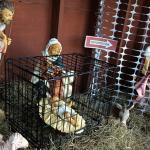
December 9, 2018 Baby Jesus In a Cage? Yes, It's Political
Browse Our Archives
Select a Category abortion anti-semitism art Atwood Betrothed church clergy abuse coronavirus culture economics education environmentalism ethics faith family feminism gardening gun violence immigration Judaism literature MaddAddam New Pro Life Movement news pandemic personalism poem politics politics blue Pope Francis racism religion salvation sexuality social justice spirituality Station eleven Stephen King The Stand Trump Uncategorized war World Health Organization
Select a Month March 2021 February 2021 January 2021 December 2020 November 2020 October 2020 September 2020 August 2020 July 2020 June 2020 May 2020 April 2020 March 2020 February 2020 January 2020 December 2019 November 2019 October 2019 September 2019 August 2019 July 2019 June 2019 May 2019 April 2019 March 2019 February 2019 January 2019 December 2018 November 2018 October 2018 September 2018 August 2018 July 2018 June 2018 May 2018 April 2018 March 2018 February 2018 January 2018 December 2017 November 2017 October 2017 September 2017 August 2017 July 2017 June 2017 May 2017 April 2017 March 2017 February 2017 January 2017 December 2016 November 2016 October 2016 September 2016 August 2016 July 2016 June 2016 May 2016 April 2016 March 2016 February 2016
Follow Us!
TAKE THE
Religious Wisdom Quiz
Who wrote many letters (epistles) in the New Testament?
Select your answer to see how you score.
Jude Paul John Peter
Support this
Column


Related posts from suspended in her jar

Four Takeaways from Oprah’s Interview with the Duke...

Catholics Are De-Toxing From their Experiences With Traumatic...

How Has the Pandemic Changed Us? Has It...

Rush Limbaugh Would Never Have Succeeded In an...
TRENDING AT PATHEOS Catholic

Rejecting Doom: Christian Hope And Human Action
Christianity is a religion of hope. We are to have hope and...

It’s What Comes From Within Which Matters
One of the most difficult things for us to understand is why...

Why I Choose the Eucharist Over the Sermon
Choose the Eucharist, Not the Sermon What are we supposed to get...

5 Design Elements Found in Spiritually Rooted Homes
Putting Spirituality Into Home Decor Our homes are more than our living...

Credo: A Story of God Told with the...
About 10 years ago, I began to imagine a personal "Credo" that...

The Anatomy of Divine Revelation in Catholic Thought
The claim that God has made Himself known to human beings is...
view all Catholic blogs
Ad-Free & Subscriber Log-In Subscription Support
- About Us
- 2026 Calendar
- Videos
- Podcasts
- Library of World Religions
- Faith In Media Tracker
- Advertise With Us
- Write for Us
- Privacy Policy
- Terms of Service
- Do Not Sell My Data
- Contact Us
- Radiant Digital
- Manage Newsletter Subscriptions
- Unsubscribe From Notifications
- Sitemap
Copyright 2008-2026, Patheos. All rights reserved.
Subscription Support Ad-Free & Subscriber Log-In
Follow Patheos