
BuddhistCatholicContemplativeEvangelicalGeneral ChristianHinduJewishLatter-day SaintMuslimNew VisionsProgressive Christian
Beliefs
- Buddhist
- Catholic
- Contemplative
- Evangelical
- General Christian
- Hindu
- Jewish
- Latter-day Saint
- More Voices
- Muslim
- New Visions
- Pagan
- Progressive Christian
Topics
- Religion News
- Food and Religion
- Sports and Religion
- Religious Art
- Religious Music and Entertainment
- Religious Events
- History and Religion
- Style and Religion
- Politics and Religion
- Women in Religion
- Recreation Outdoors and Religion
- Business Finance and Religion
- Careers Workplace and Religion
- Education and Religion
- Family Parenting and Religion
- Health Fitness and Religion
- Home and Religion
- Relationships and Religion
- Technology and Religion
- Travel and Religion
Columnists
- Buddhist Columnists
- Business Finance and Religion Columnists
- Careers Workplace and Religion Columnists
- Catholic Columnists
- Contemplative Columnists
- Education and Religion Columnists
- Evangelists Columnists
- Family Parenting and Religion Columnists
- General Christian Columnists
- Health Fitness and Religion Columnists
- Hindu Columnists
- History and Religion Columnists
- Home and Religion Columnists
- Jewish Columnists
- More Voices Columnists
- Latter Day Columnists
- Muslim Columnists
- New Visions Columnists
- Nonreligious Columnists
- Pagan Columnists
- Politics and Religion Columnists
- Progressive Columnists
- Recreation Outdoors and Religion Columnists
- Relationships and Religion Columnists
- Religion News Columnists
- Religious Art Columnists
- Religious Events Columnists
- Religious Music and Entertainment Columnists
- Sports and Religion Columnists
- Style and Religion Columnists
- Technology and Religion Columnists
- Travel and Religion Columnists
- Women in Religion Columnists
Resource Library
- 2026 Calendar
- Library of World Religions
- The 100 Most Holy Places on Earth
- Patheos Answers
- Podcasts
- Videos
- Faith Leaders Database
- Anglican Episcopalian
- Bahai
- Baptist
- Buddhism
- Christianity
- Confucianism
- Eastern Orthodoxy
- Hinduism
- Holiness and Pentecostal
- ISKCON
- Islam
- Judaism
- Lutheran
- Methodist
- The Church of Jesus Christ of Latter-day Saints
- New Age
- Paganism
- Presbytarian and Reformed
- Protestantism
- Religion Behind the Scenes
- Roman Catholic
- Scientology
- Shia Islam
- Sikhism
- Sufism
- Sunni Islam
- Taoism
- Zen
- See all religions
Research Tools
 Ad-Free & Subscriber Log-In Subscription Support
Ad-Free & Subscriber Log-In Subscription Support
Follow Patheos 

- Trending:
- Forgiveness
- |
- Marriage
- |
- Consciousness
- |
- Death Penalty
- |
- Election
- |
- Halloween
 suspended in her jar
- Home
- Catholic
- View From the Eye of the Storm, Part One: Observations on the Sex Abuse Scandal
View From the Eye of the Storm, Part One: Observations on the Sex Abuse Scandal
Last updated on: November 24, 2018 at 2:03 pm by Guest Contributor
View From the Eye of the Storm, Part One: Observations on the Sex Abuse Scandal 2018-11-24T14:03:42-04:00 Guest Contributor
Patheos Explore the world's faith through different perspectives on religion and spirituality! Patheos has the views of the prevalent religions and spiritualities of the world.
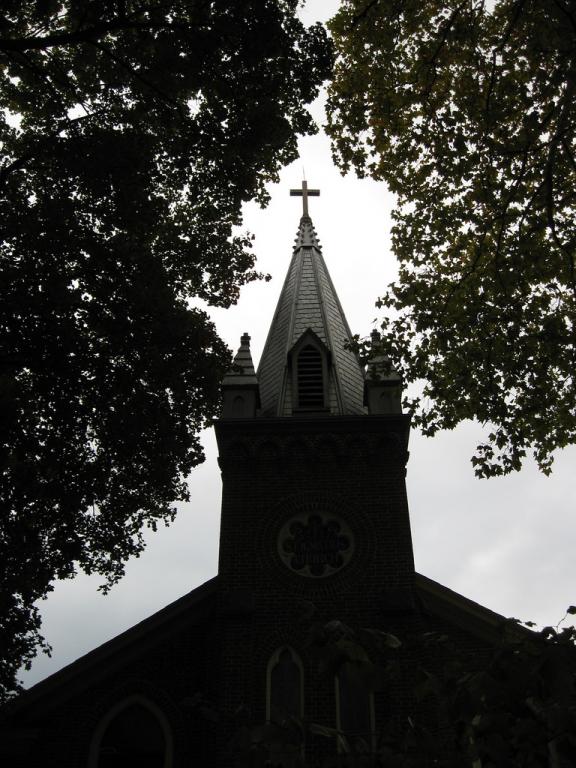
by guest contributor Teresa Messineo
I live in the eye of the storm that is the Pennsylvania clergy sex abuse scandal. The diocese named, the schools, parishes, bishops and sex abuse survivors are all with me here, at ground zero. Photographs of people crying, or staring stoically ahead, or holding on to each other as our attorney general finally read the findings of the two-year grand jury investigation – those people aren’t just human interest stories, or a way to sell more papers, or images to lead off internet articles. They are my high school classmates. My teammates. My friends.
And the priests named in that report – the men who wrote us demerit slips for chewing gum or rolling down our dress socks, while they raped and tortured children – I know them, too. They were our class advisors, our religion teachers; they heard our confessions and doled out penances for our petty sins while they exonerated themselves from all wrong-doing.
The Catholic Church stands at a crossroads, globally. But nowhere is that more apparent than here, in Pennsylvania. Every fourth person in our state is Catholic. I’ve gone to mass in Pittsburgh, where there were three Catholic churches in one square block. Older Philadelphians still give directions by parish. So, the uncertainty facing the future of our church is – to a large extent – a shared uncertainty about our own future, the two are so closely enmeshed.
Part of the problem, for me, is how much I love Jesus. I have been in love with Him for longer than I can remember. It has colored and imbued and shaped the entire course of my life, this passion, this inescapable love. And since the church brought me Christ, how could I not feel a loyalty, a devotion, even, towards the institution that first did that for me? But when that institution fails – and fails to such a degree – while that doesn’t alter my relationship with Christ (we two carry on very much as before), it does force all of us to reevaluate our relationship with that institution, and seek to discover if we, as the Catholic laity, have any recourse left, in all of this. To see if there are any legitimate options for church reform available to us. For it is to the laity that the lion’s share of responsibility for enacting reform must fall, if reform is to come, at all.
At the heart of this double-scandal (both the sexual assault itself, and the concerted cover-up afterward) is a sense of elitism, of being untouchable. What’s happening has less to do with sex than it has to do with unbridled power. The priests knew they could get away with it then. And, despite the PA grand jury report naming over 300 priests as the abusers of more than 1,000 children – some of those children intellectually disabled, some of those children orphaned or hospitalized, some of those children as young as 18 months-old – despite all this, those priests are getting away with it now.
One of the reasons for that, on the local level, is that Pennsylvania does not allow adults to file charges for sexual assault they experienced as minors, if the statute of limitations has run out. Based on everything we know about children and how they process abuse – about how long it can take them to heal from that kind of trauma, to be able to articulate what happened to them and then finally be able to name their abuser – this law is patently ridiculous. Since the grand jury report was released in August, I – along with thousands of other Pennsylvanians – have called our state senators (I, myself, called every single one) asking for justice. Asking that Senate Bill 261 (which passed in our House, and would have provided a two-year, retroactive window for filing cases) have its day in the Senate and be signed into law. All we were asking for was that our friends and classmates – who lacked the words when they were children – finally be allowed to speak, and file suit, and stand before their abusers, face to face, in a court of law. That bill ultimately stalled on our senate floor, before even being put to a vote. But, undaunted, only a few weeks later, those same survivors filed a class action suit against the United States Conference of Catholic Bishops and the Holy See itself – effectively, against the entire Catholic Church – under the Racketeering Influenced and Corrupt Organization (RICO) act. If this ultimately achieves the stated goal of a jury trial, it would be tantamount to convicting Al Capone on the charge of income tax evasion (come to think of it now, that actually worked).
No one is policing the hierarchy.
But moving beyond the immediate legal ramifications, what is happening in regard to clergy sexual abuse can be traced back to a gross lack of oversight, to an established system in which the only one policing the hierarchy is the hierarchy itself. Historically speaking, placing unrestricted power into the hands of (forgive me) rich, white men – without a corresponding system of checks and balances in place – has been disastrous for humankind, as a whole. That is why we have the Magna Carta. Why democracies sprung up. Why millions have died in the fight for freedom. Humans are (rightly) suspicious of our ability to handle unlimited power. John writes that Christ knew what was in man. Sadly, by this point in history, so do we.
For American Catholics, I think the following paradox causes us the most hesitation and – if we do not think our way through it – threatens to paralyze us completely. We are Catholics, surely, flying our pretty white-and-yellow flags in the back of church, and giving allegiance to Rome. But we are also Americans. We believe in democracy, in the value of freedom, in the worth of individuals, and individual conscience. We grew up reading Emerson and Thoreau; and, if we did not grasp what they were saying when we first read them as Freshmen, we do now, more than ever. As Americans, we may be divided as to what church (if any) we attend; on what or who we believe in; on what course we should take next, as a nation. So, we may disagree about what we are for. But nearly all of us are in agreement on what we are against. We are against tyranny. We are against dictators. We are against conglomerates that threaten to rob us of our individual freedoms. Nearly every American can look back at history and see the long procession of corrupt kings, indulgence-sellers, politicians and fanatics – from medieval barons, to Hitler and his incendiary speeches, to modern-day African terrorists executing aid workers in an attempt to enforce a state-controlled conformity – and say, this is what I am against. This is what we learned – and learned the hard way – will destroy us. Power tends to corrupt, Lord Acton warned us, and absolute power corrupts absolutely.
The church has no built-in system of checks and balances.
Currently, there is no standard protocol in place for a lay person seeking justice or trying to affect change. I cannot represent myself (or obtain representation) to officially air a grievance or voice a complaint. I cannot work towards any kind of meaningful reform, within the existing framework. My son returned from a vocations retreat and cheerfully repeated what he had been taught, ‘The church is not a democracy.’ I hope he meant we cannot vote out God the Father; or start using root beer floats instead of wine during communion; or proclaim Christ as the Savior and Redeemer of the Solomon Islands, only. When it comes to matters like these, I am all behind the kind of continuity that comes with such basic things not being up for debate. But we must be very clear in our own minds that the institution of the church – the everyday machinations of the world’s largest and richest corporation – is separate and distinct from our faith and morals. And since that institution directly affects the lives of nearly a billion people, there needs to be more transparency, more openness, and (dare I say the forbidden word) more democracy within that institution.
image credit: www.flickr.com/photos/dougtone/4037048096

About Teresa Messineo
Teresa Messineo is a graduate of DeSales, where she majored in English, Biology and Theology. She is the recipient of the Ross Baker Memorial Award for Writing, that university’s highest honor for writers. She spent seven years researching The Fire by Night, her historical fiction novel about frontline military nurses of the Second World War. HarperCollins published The Fire by Night in 2017, and it is currently available in three languages in seven countries. Teresa is also the mother of four children, whom she home schooled for twenty years. She is passionate about social justice and sticking up for the underdog, and publishes articles on those topics. Her other interests include swing dancing, public speaking, foreign language, church reform, distance swimming, medical relief work, hiking, travel and combating hunger. You can read more about the author here.
Previous Post

November 17, 2018
"Tradition" - You Keep Using That Word...
Next Post
November 21, 2018 View From the Eye of the Storm, Part Two: Suggestions For Church Reform
Browse Our Archives
Select a Category abortion anti-semitism art Atwood Betrothed church clergy abuse coronavirus culture economics education environmentalism ethics faith family feminism gardening gun violence immigration Judaism literature MaddAddam New Pro Life Movement news pandemic personalism poem politics politics blue Pope Francis racism religion salvation sexuality social justice spirituality Station eleven Stephen King The Stand Trump Uncategorized war World Health Organization
Select a Month March 2021 February 2021 January 2021 December 2020 November 2020 October 2020 September 2020 August 2020 July 2020 June 2020 May 2020 April 2020 March 2020 February 2020 January 2020 December 2019 November 2019 October 2019 September 2019 August 2019 July 2019 June 2019 May 2019 April 2019 March 2019 February 2019 January 2019 December 2018 November 2018 October 2018 September 2018 August 2018 July 2018 June 2018 May 2018 April 2018 March 2018 February 2018 January 2018 December 2017 November 2017 October 2017 September 2017 August 2017 July 2017 June 2017 May 2017 April 2017 March 2017 February 2017 January 2017 December 2016 November 2016 October 2016 September 2016 August 2016 July 2016 June 2016 May 2016 April 2016 March 2016 February 2016
Follow Us!
TAKE THE
Religious Wisdom Quiz
Who was struck dead for lying about money in the early church?
Select your answer to see how you score.
Simon the Sorcerer Demas Ananias and Sapphira Nicodemus
Support this
Column


Related posts from suspended in her jar

Immigrants: They Need Us, and We Need Them

Four Takeaways from Oprah’s Interview with the Duke...

Catholics Are De-Toxing From their Experiences With Traumatic...

How Has the Pandemic Changed Us? Has It...
TRENDING AT PATHEOS Catholic

Creation, Preservation, and Teleology in Catholic Theology
As I write this, it is very early Monday morning. Like millions...

The Parable Of The Sower And The Word...
One of Christ’s most famous parables is that of the sower who...

Rejecting Doom: Christian Hope And Human Action
Christianity is a religion of hope. We are to have hope and...

Why I Choose the Eucharist Over the Sermon
Choose the Eucharist, Not the Sermon What are we supposed to get...

5 Design Elements Found in Spiritually Rooted Homes
Putting Spirituality Into Home Decor Our homes are more than our living...

Credo: A Story of God Told with the...
About 10 years ago, I began to imagine a personal "Credo" that...
view all Catholic blogs
Ad-Free & Subscriber Log-In Subscription Support
- About Us
- 2026 Calendar
- Videos
- Podcasts
- Library of World Religions
- Faith In Media Tracker
- Advertise With Us
- Write for Us
- Privacy Policy
- Terms of Service
- Do Not Sell My Data
- Contact Us
- Radiant Digital
- Manage Newsletter Subscriptions
- Unsubscribe From Notifications
- Sitemap
Copyright 2008-2026, Patheos. All rights reserved.
Subscription Support Ad-Free & Subscriber Log-In
Follow Patheos