
BuddhistCatholicContemplativeEvangelicalGeneral ChristianHinduJewishLatter-day SaintMuslimNew VisionsProgressive Christian
Beliefs
- Buddhist
- Catholic
- Contemplative
- Evangelical
- General Christian
- Hindu
- Jewish
- Latter-day Saint
- More Voices
- Muslim
- New Visions
- Pagan
- Progressive Christian
Topics
- Religion News
- Food and Religion
- Sports and Religion
- Religious Art
- Religious Music and Entertainment
- Religious Events
- History and Religion
- Style and Religion
- Politics and Religion
- Women in Religion
- Recreation Outdoors and Religion
- Business Finance and Religion
- Careers Workplace and Religion
- Education and Religion
- Family Parenting and Religion
- Health Fitness and Religion
- Home and Religion
- Relationships and Religion
- Technology and Religion
- Travel and Religion
Columnists
- Buddhist Columnists
- Business Finance and Religion Columnists
- Careers Workplace and Religion Columnists
- Catholic Columnists
- Contemplative Columnists
- Education and Religion Columnists
- Evangelists Columnists
- Family Parenting and Religion Columnists
- General Christian Columnists
- Health Fitness and Religion Columnists
- Hindu Columnists
- History and Religion Columnists
- Home and Religion Columnists
- Jewish Columnists
- More Voices Columnists
- Latter Day Columnists
- Muslim Columnists
- New Visions Columnists
- Nonreligious Columnists
- Pagan Columnists
- Politics and Religion Columnists
- Progressive Columnists
- Recreation Outdoors and Religion Columnists
- Relationships and Religion Columnists
- Religion News Columnists
- Religious Art Columnists
- Religious Events Columnists
- Religious Music and Entertainment Columnists
- Sports and Religion Columnists
- Style and Religion Columnists
- Technology and Religion Columnists
- Travel and Religion Columnists
- Women in Religion Columnists
Resource Library
- 2026 Calendar
- Library of World Religions
- The 100 Most Holy Places on Earth
- Patheos Answers
- Podcasts
- Videos
- Faith Leaders Database
- Anglican Episcopalian
- Bahai
- Baptist
- Buddhism
- Christianity
- Confucianism
- Eastern Orthodoxy
- Hinduism
- Holiness and Pentecostal
- ISKCON
- Islam
- Judaism
- Lutheran
- Methodist
- The Church of Jesus Christ of Latter-day Saints
- New Age
- Paganism
- Presbytarian and Reformed
- Protestantism
- Religion Behind the Scenes
- Roman Catholic
- Scientology
- Shia Islam
- Sikhism
- Sufism
- Sunni Islam
- Taoism
- Zen
- See all religions
Research Tools
 Ad-Free & Subscriber Log-In Subscription Support
Ad-Free & Subscriber Log-In Subscription Support
Follow Patheos 

- Trending:
- Forgiveness
- |
- Marriage
- |
- Consciousness
- |
- Death Penalty
- |
- Election
- |
- Halloween
 suspended in her jar
- Home
- Catholic
- View From the Eye of the Storm, Part Two: Suggestions For Church Reform
View From the Eye of the Storm, Part Two: Suggestions For Church Reform
Last updated on: November 21, 2018 at 11:53 pm by Guest Contributor
View From the Eye of the Storm, Part Two: Suggestions For Church Reform 2018-11-21T23:53:04-04:00 Guest Contributor
Patheos Explore the world's faith through different perspectives on religion and spirituality! Patheos has the views of the prevalent religions and spiritualities of the world.
by guest contributor Teresa Messineo
How can the church become more transparent? (continued from Part One)
One way this can happen is by involving women more in the church, in positions of power where they can affect the most change. My apologies to every undergraduate student of theology I ever debated with against women being in those positions. I guess I automatically equated that with feminism to the point of being anti-male, or photographs of nuns in leotards dancing around a flaming altar I once saw in an old paperback book from the ‘60’s. But I am no longer the naïve young girl I was in college. I have a much, much higher estimation of the real, positive, transformative power women bring to the world. Of the power I bring to the world. A transformative power that has sorely been lacking from our church. Without the input and influence of women, we will only ever be half a church. Our present scandal is a perfect example. How long would clergy sexual abuse have been tolerated, if the mothers of those children had been in a place of authority? If any woman had been in a place of authority? Not only would there never have been a cover-up, but the ferocity with which those women would have routed out and sought retribution for those predator priests is second only to the Angel of Death’s. Correction, it is second to none.
Another way change can occur is by re-introducing married clergy. While celibacy is a legitimate vocation for many, for some individuals it can lead to an unhealthy sexual repression, the sequela of which we are now seeing in all its destructive permutations. Allowing priests to marry would also increase the ever-dwindling pool of prospective seminarians, young men who would bring so much more practical life experience to their ministry as priests, as a result of having families of their own.
The most important way change can take place is by Catholicism becoming all about Christ again. Sadly, for many Catholics, this scandal is irrelevant. They are no more likely to leave their parishes – some of which their families have attended for generations – than they would be to leave their political party if a high-profile member was accused of the same crimes. For them, being Roman Catholic is simply a social identity, something to turn to when someone is born, or marries or dies; customs that provide a framework that is comforting (or, at least, comfortable) but has very little to do with the Person of Jesus Christ. So, if their priests are morally bankrupt, they remain unfazed, blindly trusting in programs like ‘Protecting God’s Children’ (attorney-designed, diocese-mandated curricula) that teach a docile laity how to recognize and document clergy sexual abuse when it happens. That last line bears repeating. When it happens. Not if. But when did we, as a church, sink so low that our priests being rapists and torturers is the baseline from which we will proceed? ‘Limiting access,’ ‘reducing opportunity,’ is this really our goal? Knowing that a certain percentage of our children will become the next victims to our reluctance to work towards substantive change?
The hierarchy needs to stop victim blaming.
And while I am for a more a thoughtful and prayerful laity that strives to make Christ the center of their lives, the church must make a more appropriate response than the one it has been offering its members since this scandal broke. During homilies, we the people are encouraged to pray more. Try harder. Ask for forgiveness. Be better people. But this smacks of victim-blaming and derailment. As the Catholic laity, we do many, many things wrong – but that is a conversation for another day. We are asking for concrete answers to questions like, How could you have knowingly shuffled these predators from parish to parish? What has substantially changed in the power dynamic of our church to ensure this won’t happen again, to ensure independent oversight? And all we get are sound bites in return. Be patient. Be forgiving. We all make mistakes.
We do all make mistakes. But the kinds of mistakes I make are cutting out of work at 4:54 instead of 5:00, or eating the last coconut custard doughnut, or sleeping in when I (really) should go to the gym. Not raping children. Not hurting children. I used to belong to a moms’ group that met in a parish hall, and when we were told we’d have to leave (since we all hadn’t taken the ‘Protecting God’s Children’ workshop) I asked the pastor, point-blank, when the last time was that a mom had been convicted of sexually assaulting a child on church property, ‘tell me that and I’ll take the class.’ Of course, he couldn’t – because no mom had. Sure, I was a punk then. But I’m still enough of a punk now to say, stay on topic. If I am demanding accountability from my church, from my bishop and even from my pope – if I am asking, How dare you cover this up? How dare you sacrifice our children to save face, to indulge someone’s sick fantasy or criminal appetite? do not gaslight me by telling me to fast more, or pray more, or be a nicer woman. Stay on topic. Because I certainly intend to.
There are those who will counter all my arguments with, ‘But not all priests are bad. I know a good priest. I know a couple of them’ – but their very argument defeats them. They know one good priest. Or two. Or maybe three, if they’re lucky. Of course they do. If every single Catholic priest were a sexual predator, they would all be locked up by now, and this conversation moot. But that very defense – ‘I know a few good priests’ – speaks volumes of how low our standards have fallen. That we, even subconsciously, expect our priests to be evil men, and justify our remaining Catholic at all by reassuring ourselves, ‘Well, not all of them are that bad, I know a few who are okay.’ I, too, know a few priests who are okay. Who are more than okay. Who are Christ-like and loving, emotionally healthy and stable, who are life-long friends of mine I would trust with my life, with the lives of my children. But this should be our baseline, this should be our ‘normal.’
Why stay Catholic?
There are others who will ask, if I have such serious objections to both the corruption and structure of my church, why don’t I just join another denomination and be done with it? Clearly, there are more user-friendly congregations already in existence. And they would have a very good point (after all, what I am currently doing is protesting Rome, so I guess that does technically make me a protestant, albeit small p at this point). When Christ introduced the concept of the Eucharist to His followers, many ‘walked with Him no more.’ When He asked the twelve if they would leave Him, too, Peter’s reply of, ‘To whom else can we go? You have the words of eternal life,’ had always seemed rhetorical to me. But since the clergy sex abuse scandal broke, Peter’s words have never seemed more literal. Where else can we go? Given my particular faith experience, I feel I would starve without the sacraments. Purely commemorative or symbolic communion services – while beautiful and meaningful to those who participate in them – would, of necessity, disappoint me, given my beliefs about the Bread really being His Body and the Wine really being His Blood. And even for churches that share that belief (for example, the Greek Orthodox), they seem (from the outside, at least) even more patriarchal (their leaders are called patriarchs, after all), which I’m not sure would be a good fit for someone looking for more power and accountability to be given to the people.
Given the seemingly unassailable power of the established church; its rampant corruption; and the incredible odds against myself or any other rabble-rouser enacting meaningful reform, I cannot predict what will happen next. I do not know what will happen to me, my church, or what church – if any – I will ultimately belong to. I do not rule out the option of living in a treehouse like a self-styled Simeon Stylites, reading Civil Disobedience aloud to anyone who will listen. But, until that day, I will strive to take after my patron, Teresa of Ávila, remembered as much for her passionate love of Christ as for her innate stubbornness and tenacity. There are those in our church – in every church – who turn a blind eye to corruption in their childlike hope that it will consequently disappear; who pin all their hopes on the next world, forgetting the very real tasks that have been appointed to us here; who bury their heads in the sand of obedience, vainly trying to protect what they love by ignoring the threats all around them. But for those of us to whom all this still somehow matters; to whom our church is more than a country club to which we pay dues; in short, for thinking Catholics, there are only two alternatives left us. Either leave the church and no longer be associated with such corruption, or stay and fight against that corruption.
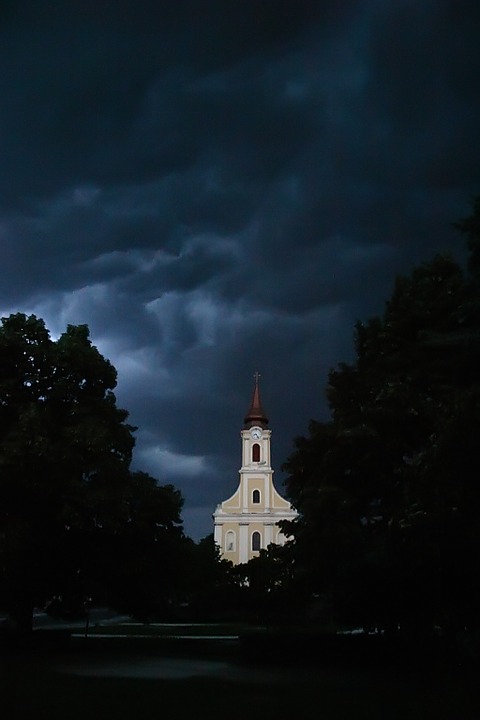
But, either way, a storm is coming. And I am the center of that storm.

About Guest Contributor
Teresa Messineo is a graduate of DeSales, where she majored in English, Biology and Theology. She is the recipient of the Ross Baker Memorial Award for Writing, that university’s highest honor for writers. She spent seven years researching The Fire by Night, her historical fiction novel about frontline military nurses of the Second World War. HarperCollins published The Fire by Night in 2017, and it is currently available in three languages in seven countries. Teresa is also the mother of four children, whom she home schooled for twenty years. She is passionate about social justice and sticking up for the underdog, and publishes articles on those topics. Her other interests include swing dancing, public speaking, foreign language, church reform, distance swimming, medical relief work, hiking, travel and combating hunger You can read more about the author here.


Browse Our Archives
Select a Category abortion anti-semitism art Atwood Betrothed church clergy abuse coronavirus culture economics education environmentalism ethics faith family feminism gardening gun violence immigration Judaism literature MaddAddam New Pro Life Movement news pandemic personalism poem politics politics blue Pope Francis racism religion salvation sexuality social justice spirituality Station eleven Stephen King The Stand Trump Uncategorized war World Health Organization
Select a Month March 2021 February 2021 January 2021 December 2020 November 2020 October 2020 September 2020 August 2020 July 2020 June 2020 May 2020 April 2020 March 2020 February 2020 January 2020 December 2019 November 2019 October 2019 September 2019 August 2019 July 2019 June 2019 May 2019 April 2019 March 2019 February 2019 January 2019 December 2018 November 2018 October 2018 September 2018 August 2018 July 2018 June 2018 May 2018 April 2018 March 2018 February 2018 January 2018 December 2017 November 2017 October 2017 September 2017 August 2017 July 2017 June 2017 May 2017 April 2017 March 2017 February 2017 January 2017 December 2016 November 2016 October 2016 September 2016 August 2016 July 2016 June 2016 May 2016 April 2016 March 2016 February 2016
Follow Us!
TAKE THE
Religious Wisdom Quiz
What bird did Noah release second from the ark?
Select your answer to see how you score.
A dove A raven A sparrow An eagle
Support this
Column


Related posts from suspended in her jar

Immigrants: They Need Us, and We Need Them

Four Takeaways from Oprah’s Interview with the Duke...

Catholics Are De-Toxing From their Experiences With Traumatic...

How Has the Pandemic Changed Us? Has It...
TRENDING AT PATHEOS Catholic

Creation, Preservation, and Teleology in Catholic Theology
As I write this, it is very early Monday morning. Like millions...

The Parable Of The Sower And The Word...
One of Christ’s most famous parables is that of the sower who...

Rejecting Doom: Christian Hope And Human Action
Christianity is a religion of hope. We are to have hope and...

Why I Choose the Eucharist Over the Sermon
Choose the Eucharist, Not the Sermon What are we supposed to get...

5 Design Elements Found in Spiritually Rooted Homes
Putting Spirituality Into Home Decor Our homes are more than our living...

Credo: A Story of God Told with the...
About 10 years ago, I began to imagine a personal "Credo" that...
view all Catholic blogs
Ad-Free & Subscriber Log-In Subscription Support
- About Us
- 2026 Calendar
- Videos
- Podcasts
- Library of World Religions
- Faith In Media Tracker
- Advertise With Us
- Write for Us
- Privacy Policy
- Terms of Service
- Do Not Sell My Data
- Contact Us
- Radiant Digital
- Manage Newsletter Subscriptions
- Unsubscribe From Notifications
- Sitemap
Copyright 2008-2026, Patheos. All rights reserved.
Subscription Support Ad-Free & Subscriber Log-In
Follow Patheos