
BuddhistCatholicContemplativeEvangelicalGeneral ChristianHinduJewishLatter-day SaintMuslimNew VisionsProgressive Christian
Beliefs
- Buddhist
- Catholic
- Contemplative
- Evangelical
- General Christian
- Hindu
- Jewish
- Latter-day Saint
- More Voices
- Muslim
- New Visions
- Pagan
- Progressive Christian
Topics
- Religion News
- Food and Religion
- Sports and Religion
- Religious Art
- Religious Music and Entertainment
- Religious Events
- History and Religion
- Style and Religion
- Politics and Religion
- Women in Religion
- Recreation Outdoors and Religion
- Business Finance and Religion
- Careers Workplace and Religion
- Education and Religion
- Family Parenting and Religion
- Health Fitness and Religion
- Home and Religion
- Relationships and Religion
- Technology and Religion
- Travel and Religion
Columnists
- Buddhist Columnists
- Business Finance and Religion Columnists
- Careers Workplace and Religion Columnists
- Catholic Columnists
- Contemplative Columnists
- Education and Religion Columnists
- Evangelists Columnists
- Family Parenting and Religion Columnists
- General Christian Columnists
- Health Fitness and Religion Columnists
- Hindu Columnists
- History and Religion Columnists
- Home and Religion Columnists
- Jewish Columnists
- More Voices Columnists
- Latter Day Columnists
- Muslim Columnists
- New Visions Columnists
- Nonreligious Columnists
- Pagan Columnists
- Politics and Religion Columnists
- Progressive Columnists
- Recreation Outdoors and Religion Columnists
- Relationships and Religion Columnists
- Religion News Columnists
- Religious Art Columnists
- Religious Events Columnists
- Religious Music and Entertainment Columnists
- Sports and Religion Columnists
- Style and Religion Columnists
- Technology and Religion Columnists
- Travel and Religion Columnists
- Women in Religion Columnists
Resource Library
- 2026 Calendar
- Library of World Religions
- The 100 Most Holy Places on Earth
- Patheos Answers
- Podcasts
- Videos
- Faith Leaders Database
- Anglican Episcopalian
- Bahai
- Baptist
- Buddhism
- Christianity
- Confucianism
- Eastern Orthodoxy
- Hinduism
- Holiness and Pentecostal
- ISKCON
- Islam
- Judaism
- Lutheran
- Methodist
- The Church of Jesus Christ of Latter-day Saints
- New Age
- Paganism
- Presbytarian and Reformed
- Protestantism
- Religion Behind the Scenes
- Roman Catholic
- Scientology
- Shia Islam
- Sikhism
- Sufism
- Sunni Islam
- Taoism
- Zen
- See all religions
Research Tools
 Ad-Free & Subscriber Log-In Subscription Support
Ad-Free & Subscriber Log-In Subscription Support
Follow Patheos 

- Trending:
- Forgiveness
- |
- Marriage
- |
- Consciousness
- |
- Death Penalty
- |
- Election
- |
- Halloween
 suspended in her jar
- Home
- Catholic
- What Does Wonder Know? The 2018 Festival of Friendship
What Does Wonder Know? The 2018 Festival of Friendship
Last updated on: October 10, 2018 at 10:07 pm by guest writer
What Does Wonder Know? The 2018 Festival of Friendship 2018-10-10T22:07:15-04:00 guest writer
Patheos Explore the world's faith through different perspectives on religion and spirituality! Patheos has the views of the prevalent religions and spiritualities of the world.
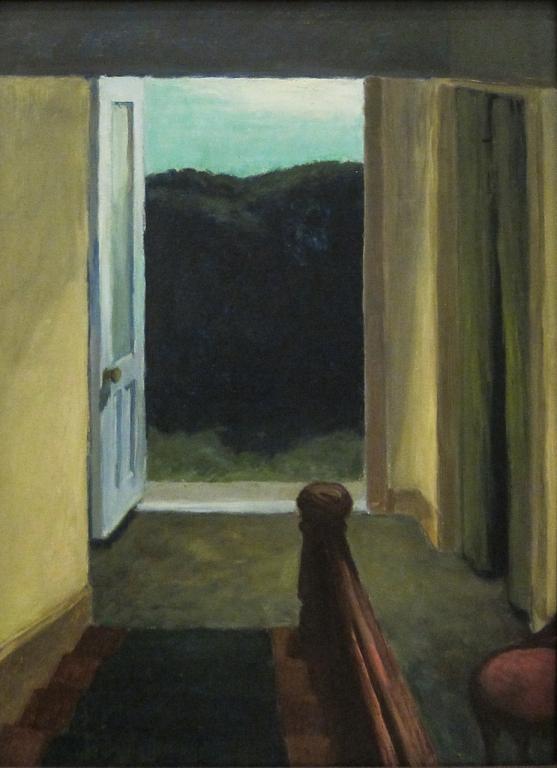
This was my third year of being involved in Revolution of Tenderness’s cultural event, the Festival of Friendship, which has now found its home in Pittsburgh PA (aka, the Rust Belt Paris). Last year I organized a mini literary conference in conjunction with the Festival, and this year I was there representing our literary journal Convivium, doing a free informal workshop, and best of all listening to the concerts and panel discussions.
There’s a lot to love about this event, but I think what I find most satisfying about it is that the Festival brings together such diverse themes, interests – and people.
I am not one to deplore political divisiveness. I think that what some call “being divisive” is really the work of justice against nihilism. My heroes of the past – in the feminist movement, the Resistance to the Nazis, and the civil rights movement – would probably be considered intolerably divisive by those who demand the false peace and cheap Gospel of compromise and hegemony.
But they were also bridge-builders, and lovers of beauty, driven not by mere human frustration but by the holy anger that arises when one sees life in all its multifarious oddity, and knows that it is sacred. Activism, in order not to degenerate, must be fed constantly with that which the mind and heart desire. Sometimes this means knowledge. Sometimes it means art. Either way, it reminds us of what we’re working for.
But unfortunately, the institutions that are supposed to keep us fed tend in the contemporary market-driven world to reduce all art and learning to commodities. And as commodities they must be walled off, kept in a condition of artificial scarcity to justify the prices paid – maintained as a niche product to be consumed only by the privileged.
The Fragmentation Problem
IN the academy, this is compounded by a spirit of radical fragmentation, in which the disciplines have nothing to say to one another. This is why we end up with some (though not all) schools of lit crit that seem completely divorced from the real reasons why readers return to literature again and again, as both readers and writers. We have philosophers coming up with constructs about humanity that have zero connection with the important discoveries being made in the sciences, and unfortunately traditional Catholics are especially ridiculous in this regard. Then on the other hand we have scientists who profess to despise philosophy, apparently unaware that they are using it every time they make a value judgment – even a bad one.
And then, in the arts, we have literary versus popular writing, classical versus popular music. Poetry is largely being produced by those who could afford to invest in writing programs, or were lucky enough to maintain a foothold in the echelons where those programs exist. Women writers who take time off to raise families find themselves left out in the cold. Many minority groups, or the economically underprivileged, never get a chance to get in at all. And this is unfortunate, because poetry is what we need right now – and a lot of wonderful poetry is being written, too.
The fault lines that we’ve allowed to form between popular and high-brow art are largely unnatural, and unreflective of the real way art is produced and enjoyed.
A festival of ideas
The Festival of Friendship is all about bringing together not only people but also ideas. So this year we had a panel on the art of Edward Hopper – with discussion of the influence of noire and horror film. Another panel discussed the friendship between Catholic priest Luigi Giussani with a community of Buddhist monks. One of my favorite panels was the one on hospitality, which appropriately bridged the gaps by bringing together a Muslim journalist, a Franciscan sister, a radical activist, and a pair of adoptive parents to speak on their unique experiences as hospitality both as a call and an offering.
The theme for the festival this year was “only wonder knows,” and the panel I most enjoyed was the one that explored this theme in a most surprising way, by bringing together experts in three radically different fields – philosophy, opera, and military history – to talk about their experience of wonder. After they had finished, we were invited, in the audience, to answer the question ourselves.
What does wonder know?
I was trained to understand that philosophy begins in wonder, but there’s something a little rote about repeating that – even if it is true: rather the way “beauty will save the world” has become more like a cliché to be repeated than a challenging and difficult revelation to be explored or even disputed. We need to be permitted to dispute things, if we are going to approach them in genuine wonder, and not blind submission.
My thought at the time was that wonder is not static. It doesn’t stop just with the “oh wow” moment. IN his dialogue Symposium, Plato writes about how love is fundamentally creative, and how the lover of beauty or the good is inspired, through eros and longing, not to grab at the “thing” as an object to be possessed, but to become creative and productive. I believe this is the same thing that happens when wonder is awakened.
So to circle back to my earlier point: if we are going to work for justice, we must have our wonder and love awakened. Plato writes about how the makers of just laws are inspired to create through love: the growing of a virtuous republic as creative act. And so opposition to an unjust regime can also become part of a creative act, but only if love and wonder are kept alive. The tendency to wall off inspiration as a select commodity, or enlightenment as a product for the elite, must be shattered.
We tend often to think of activism as fundamentally disruptive, but possibly the most disruptive thing – in a good way – is wonder itself, which reminds us ultimately that power is a lie.
Instead of power, seek solidarity. And solidarity can’t be forced, but must be organic, as we are drawn together in fascination towards the mysteries that startle and astonish us. Violence, at this point, is expected. What the purveyors of nihilism do not expect, and can not imagine, is joy.
Previous Post

October 6, 2018
"But He's A Good Person!"
Next Post

October 11, 2018 Two Catholic Churches - I'm Staying With One
Browse Our Archives
Select a Category abortion anti-semitism art Atwood Betrothed church clergy abuse coronavirus culture economics education environmentalism ethics faith family feminism gardening gun violence immigration Judaism literature MaddAddam New Pro Life Movement news pandemic personalism poem politics politics blue Pope Francis racism religion salvation sexuality social justice spirituality Station eleven Stephen King The Stand Trump Uncategorized war World Health Organization
Select a Month March 2021 February 2021 January 2021 December 2020 November 2020 October 2020 September 2020 August 2020 July 2020 June 2020 May 2020 April 2020 March 2020 February 2020 January 2020 December 2019 November 2019 October 2019 September 2019 August 2019 July 2019 June 2019 May 2019 April 2019 March 2019 February 2019 January 2019 December 2018 November 2018 October 2018 September 2018 August 2018 July 2018 June 2018 May 2018 April 2018 March 2018 February 2018 January 2018 December 2017 November 2017 October 2017 September 2017 August 2017 July 2017 June 2017 May 2017 April 2017 March 2017 February 2017 January 2017 December 2016 November 2016 October 2016 September 2016 August 2016 July 2016 June 2016 May 2016 April 2016 March 2016 February 2016
Follow Us!
TAKE THE
Religious Wisdom Quiz
What does "Gad" mean in Hebrew?
Select your answer to see how you score.
Joyful Chosen One Fortune Warrior
Support this
Column


Related posts from suspended in her jar

Immigrants: They Need Us, and We Need Them

Four Takeaways from Oprah’s Interview with the Duke...

How Has the Pandemic Changed Us? Has It...

Rush Limbaugh Would Never Have Succeeded In an...
TRENDING AT PATHEOS Catholic

The Parable Of The Sower And The Word...
One of Christ’s most famous parables is that of the sower who...

Rejecting Doom: Christian Hope And Human Action
Christianity is a religion of hope. We are to have hope and...

Why I Choose the Eucharist Over the Sermon
Choose the Eucharist, Not the Sermon What are we supposed to get...

5 Design Elements Found in Spiritually Rooted Homes
Putting Spirituality Into Home Decor Our homes are more than our living...

Credo: A Story of God Told with the...
About 10 years ago, I began to imagine a personal "Credo" that...

The Anatomy of Divine Revelation in Catholic Thought
The claim that God has made Himself known to human beings is...
view all Catholic blogs
Ad-Free & Subscriber Log-In Subscription Support
- About Us
- 2026 Calendar
- Videos
- Podcasts
- Library of World Religions
- Faith In Media Tracker
- Advertise With Us
- Write for Us
- Privacy Policy
- Terms of Service
- Do Not Sell My Data
- Contact Us
- Radiant Digital
- Manage Newsletter Subscriptions
- Unsubscribe From Notifications
- Sitemap
Copyright 2008-2026, Patheos. All rights reserved.
Subscription Support Ad-Free & Subscriber Log-In
Follow Patheos