
BuddhistCatholicContemplativeEvangelicalGeneral ChristianHinduJewishLatter-day SaintMuslimNew VisionsProgressive Christian
Beliefs
- Buddhist
- Catholic
- Contemplative
- Evangelical
- General Christian
- Hindu
- Jewish
- Latter-day Saint
- More Voices
- Muslim
- New Visions
- Pagan
- Progressive Christian
Topics
- Religion News
- Food and Religion
- Sports and Religion
- Religious Art
- Religious Music and Entertainment
- Religious Events
- History and Religion
- Style and Religion
- Politics and Religion
- Women in Religion
- Recreation Outdoors and Religion
- Business Finance and Religion
- Careers Workplace and Religion
- Education and Religion
- Family Parenting and Religion
- Health Fitness and Religion
- Home and Religion
- Relationships and Religion
- Technology and Religion
- Travel and Religion
Columnists
- Buddhist Columnists
- Business Finance and Religion Columnists
- Careers Workplace and Religion Columnists
- Catholic Columnists
- Contemplative Columnists
- Education and Religion Columnists
- Evangelists Columnists
- Family Parenting and Religion Columnists
- General Christian Columnists
- Health Fitness and Religion Columnists
- Hindu Columnists
- History and Religion Columnists
- Home and Religion Columnists
- Jewish Columnists
- More Voices Columnists
- Latter Day Columnists
- Muslim Columnists
- New Visions Columnists
- Nonreligious Columnists
- Pagan Columnists
- Politics and Religion Columnists
- Progressive Columnists
- Recreation Outdoors and Religion Columnists
- Relationships and Religion Columnists
- Religion News Columnists
- Religious Art Columnists
- Religious Events Columnists
- Religious Music and Entertainment Columnists
- Sports and Religion Columnists
- Style and Religion Columnists
- Technology and Religion Columnists
- Travel and Religion Columnists
- Women in Religion Columnists
Resource Library
- 2026 Calendar
- Library of World Religions
- The 100 Most Holy Places on Earth
- Patheos Answers
- Podcasts
- Videos
- Faith Leaders Database
- Anglican Episcopalian
- Bahai
- Baptist
- Buddhism
- Christianity
- Confucianism
- Eastern Orthodoxy
- Hinduism
- Holiness and Pentecostal
- ISKCON
- Islam
- Judaism
- Lutheran
- Methodist
- The Church of Jesus Christ of Latter-day Saints
- New Age
- Paganism
- Presbytarian and Reformed
- Protestantism
- Religion Behind the Scenes
- Roman Catholic
- Scientology
- Shia Islam
- Sikhism
- Sufism
- Sunni Islam
- Taoism
- Zen
- See all religions
Research Tools
 Ad-Free & Subscriber Log-In Subscription Support
Ad-Free & Subscriber Log-In Subscription Support
Follow Patheos 

- Trending:
- Forgiveness
- |
- Marriage
- |
- Consciousness
- |
- Death Penalty
- |
- Election
- |
- Halloween
 suspended in her jar
- Home
- Catholic
- It’s Not Puritanical To Object To Sexual Assault
It’s Not Puritanical To Object To Sexual Assault
Last updated on: September 17, 2018 at 12:28 am by Rebecca Bratten Weiss
It’s Not Puritanical To Object To Sexual Assault 2018-09-17T00:28:00-04:00 Rebecca Bratten Weiss
Patheos Explore the world's faith through different perspectives on religion and spirituality! Patheos has the views of the prevalent religions and spiritualities of the world.
I grew up learning that sexual morality is important. Many of us did. Depending on our ethical and religious milieu, we may have been taught different principles. Some were brought up in purity culture, where any sex outside of marriage is considered deeply sinful, while married sex is always anointed by God. Others were brought up to view sex as an area where responsibility, respect, and safety are crucial. Some, but unfortunately not all, were taught that no sexual act can be ethical without consent. For some consent is the whole of the law. For others, it is a necessary but not sufficient condition.
While my ideas on sexual ethics developed and matured over the years, the one thing I never imagined was that sexuality was some kind of magical ethics-free zone. I grew aware of grey area, and learned to see many things that I’d once imagined as objectively wrong were merely cultural taboos. I also learned to see that many things I’d accepted as normal were in fact harmful constructs of an oppressive patriarchy.
But at no point did I think that in sex, anything goes.
Among even the most promiscuous – among those for whom promiscuity is viewed as a good thing – sex is still regarded as a zone where right and wrong are relevant. Consent is the watchword. No matter what you do, and with whom, and with how many, in promiscuous, polyamorous, sex-positive, and BDSM cultures consent is still considered essential.
One has to seek far afield, in the ranks of MRAs and incels, to find those for whom sex is just a “get it if you can” commodity. Most who think this way are male, and most are probably unlikely to “get any” without some degree of coercion, so it’s no wonder that they’ve jettisoned consent.
Disturbing though this is, the moral value of consent in sexuality seems to be a relatively new discovery. For most of history, in most cultures, the question of consent wasnot really to the fore, in matters of marriage or sex ethics. Arranged marriages, forced marriages (legal rape, really) meant that woman’s consent, and sometimes even a man’s consent, was not sought.
I thought we had moved past that. In Catholic sex ethics, in spite of what people do in secret, in spite of the illicit uses they make of their power, we officially, at least, recognize that without mutual consent there can be no “mutual self-giving.”
But now suddenly those of us who emphasize consent – this basic, not-arcane, ethical principle – are being called the “new Puritans.” The #MeToo movement is being compared to a witch hunt.
This came up when we objected to Trump’s pussy-grab comment. It came up with the first Woman’s March. It came up when #MeToo really began to sweep the nation, and when #ChurchToo was added as a hashtag of collective shame. Now, with the furor over the nomination of Brett Kavanaugh as a prospective Supreme Court Justice, it’s coming up again.
Many of us women – and many men, too – think that a man who assaulted a fifteen-year-old girl, when he was seventeen, might not be fit to hold such a revered and powerful position. We think that writing this assault off as a “joke” diminishes the horror of the effects on his victim. We think that trying to justify this behavior as “natural” or “normal” undercuts everything we’re trying to teach our own sons about morality, and responsibility for their actions. We think that, should the allegations prove true, it’s not some kind of terrible punishment to deny him a position on the highest court of the land. We don’t think that Supreme Court nominations should be handed out like cookies, or that being denied one is some frightful fate. Many abuse victims have had to live with much worse suffering than “sorry, no Supreme Court seat for you.”
It’s not puritanical for us to stick by the single sine qua non for a sex act to be considered morally acceptable in a society that values personal dignity.
But puritanical sexuality is a thing. It’s because of puritanical sexuality that women have been shamed for out-of-wedlock pregnancies, kicked out of schools, fired from jobs, even driven to abortion. Puritans have blamed women for what they were wearing, when women were assaulted. Or even for having female bodies at all. Puritanical sexuality has taught thousands upon thousands of young men and women to hate and fear their own sexuality, setting them up for lifetimes of misery both in and out of marriage. It has created an environment of secrecy in which abuse flourishes. We Catholics know a little too much about that, by now, unfortunately.
It’s because of purity culture that so many Catholic women have taken years to come to discover Mary of Nazareth as our advocate, and not as our accuser.
So when we women – who have often had our lives made miserable by the real puritans, masquerading as magisters of Christian morality – stand up for basic sex ethics, calling us “puritans” seems to suggest one thing: that it’s only viewed as a bad kind of puritanism if it restricts heterosexual male behavior. All other judgments are, apparently, fair game.
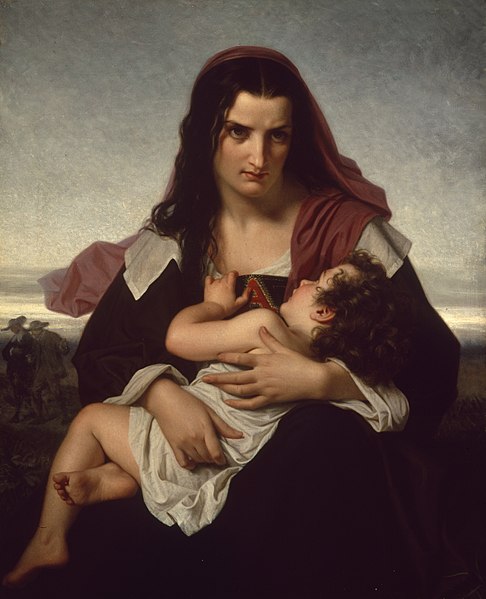
https://commons.wikimedia.org/wiki/File:Hugues_Merle_-_The_Scarlet_Letter_-_Walters_37172.jpg
Previous Post

September 13, 2018
How Do You Respond When The Perpetrator Is One Of Your Own?
Next Post

September 18, 2018 Off My Knees: A Victim Remembers
Browse Our Archives
Select a Category abortion anti-semitism art Atwood Betrothed church clergy abuse coronavirus culture economics education environmentalism ethics faith family feminism gardening gun violence immigration Judaism literature MaddAddam New Pro Life Movement news pandemic personalism poem politics politics blue Pope Francis racism religion salvation sexuality social justice spirituality Station eleven Stephen King The Stand Trump Uncategorized war World Health Organization
Select a Month March 2021 February 2021 January 2021 December 2020 November 2020 October 2020 September 2020 August 2020 July 2020 June 2020 May 2020 April 2020 March 2020 February 2020 January 2020 December 2019 November 2019 October 2019 September 2019 August 2019 July 2019 June 2019 May 2019 April 2019 March 2019 February 2019 January 2019 December 2018 November 2018 October 2018 September 2018 August 2018 July 2018 June 2018 May 2018 April 2018 March 2018 February 2018 January 2018 December 2017 November 2017 October 2017 September 2017 August 2017 July 2017 June 2017 May 2017 April 2017 March 2017 February 2017 January 2017 December 2016 November 2016 October 2016 September 2016 August 2016 July 2016 June 2016 May 2016 April 2016 March 2016 February 2016
Follow Us!
TAKE THE
Religious Wisdom Quiz
How many days and nights did it rain during the flood?
Select your answer to see how you score.
12 7 10 40
Support this
Column


Related posts from suspended in her jar

Immigrants: They Need Us, and We Need Them

Four Takeaways from Oprah’s Interview with the Duke...

Catholics Are De-Toxing From their Experiences With Traumatic...

How Has the Pandemic Changed Us? Has It...
TRENDING AT PATHEOS Catholic

Rejecting Doom: Christian Hope And Human Action
Christianity is a religion of hope. We are to have hope and...

It’s What Comes From Within Which Matters
One of the most difficult things for us to understand is why...

Why I Choose the Eucharist Over the Sermon
Choose the Eucharist, Not the Sermon What are we supposed to get...

5 Design Elements Found in Spiritually Rooted Homes
Putting Spirituality Into Home Decor Our homes are more than our living...

Credo: A Story of God Told with the...
About 10 years ago, I began to imagine a personal "Credo" that...

The Anatomy of Divine Revelation in Catholic Thought
The claim that God has made Himself known to human beings is...
view all Catholic blogs
Ad-Free & Subscriber Log-In Subscription Support
- About Us
- 2026 Calendar
- Videos
- Podcasts
- Library of World Religions
- Faith In Media Tracker
- Advertise With Us
- Write for Us
- Privacy Policy
- Terms of Service
- Do Not Sell My Data
- Contact Us
- Radiant Digital
- Manage Newsletter Subscriptions
- Unsubscribe From Notifications
- Sitemap
Copyright 2008-2026, Patheos. All rights reserved.
Subscription Support Ad-Free & Subscriber Log-In
Follow Patheos