
BuddhistCatholicContemplativeEvangelicalGeneral ChristianHinduJewishLatter-day SaintMuslimNew VisionsProgressive Christian
Beliefs
- Buddhist
- Catholic
- Contemplative
- Evangelical
- General Christian
- Hindu
- Jewish
- Latter-day Saint
- More Voices
- Muslim
- New Visions
- Pagan
- Progressive Christian
Topics
- Religion News
- Food and Religion
- Sports and Religion
- Religious Art
- Religious Music and Entertainment
- Religious Events
- History and Religion
- Style and Religion
- Politics and Religion
- Women in Religion
- Recreation Outdoors and Religion
- Business Finance and Religion
- Careers Workplace and Religion
- Education and Religion
- Family Parenting and Religion
- Health Fitness and Religion
- Home and Religion
- Relationships and Religion
- Technology and Religion
- Travel and Religion
Columnists
- Buddhist Columnists
- Business Finance and Religion Columnists
- Careers Workplace and Religion Columnists
- Catholic Columnists
- Contemplative Columnists
- Education and Religion Columnists
- Evangelists Columnists
- Family Parenting and Religion Columnists
- General Christian Columnists
- Health Fitness and Religion Columnists
- Hindu Columnists
- History and Religion Columnists
- Home and Religion Columnists
- Jewish Columnists
- More Voices Columnists
- Latter Day Columnists
- Muslim Columnists
- New Visions Columnists
- Nonreligious Columnists
- Pagan Columnists
- Politics and Religion Columnists
- Progressive Columnists
- Recreation Outdoors and Religion Columnists
- Relationships and Religion Columnists
- Religion News Columnists
- Religious Art Columnists
- Religious Events Columnists
- Religious Music and Entertainment Columnists
- Sports and Religion Columnists
- Style and Religion Columnists
- Technology and Religion Columnists
- Travel and Religion Columnists
- Women in Religion Columnists
Resource Library
- 2026 Calendar
- Library of World Religions
- The 100 Most Holy Places on Earth
- Patheos Answers
- Podcasts
- Videos
- Faith Leaders Database
- Anglican Episcopalian
- Bahai
- Baptist
- Buddhism
- Christianity
- Confucianism
- Eastern Orthodoxy
- Hinduism
- Holiness and Pentecostal
- ISKCON
- Islam
- Judaism
- Lutheran
- Methodist
- The Church of Jesus Christ of Latter-day Saints
- New Age
- Paganism
- Presbytarian and Reformed
- Protestantism
- Religion Behind the Scenes
- Roman Catholic
- Scientology
- Shia Islam
- Sikhism
- Sufism
- Sunni Islam
- Taoism
- Zen
- See all religions
Research Tools
 Ad-Free & Subscriber Log-In Subscription Support
Ad-Free & Subscriber Log-In Subscription Support
Follow Patheos 

- Trending:
- Forgiveness
- |
- Marriage
- |
- Consciousness
- |
- Death Penalty
- |
- Election
- |
- Halloween
 suspended in her jar
- Home
- Catholic
- Victims Have the Right To Be Heard – Whenever They Are Ready
Victims Have the Right To Be Heard – Whenever They Are Ready
Last updated on: August 30, 2018 at 12:59 pm by Guest Contributor
Victims Have the Right To Be Heard – Whenever They Are Ready 2018-08-30T12:59:05-04:00 Guest Contributor
Patheos Explore the world's faith through different perspectives on religion and spirituality! Patheos has the views of the prevalent religions and spiritualities of the world.
By guest contributor MJ Lisbeth
When I heard about the Pennsylvania grand jury report on children sexually abused by Roman Catholic priests, my reaction was, “Only 1000 kids? Only 300 priests?—over 70 years?”
I am not a lawyer or any sort of expert on laws regarding child sexual abuse (or on any other kind of law, for that matter). But I do know that in most states, it’s all but impossible for anyone over the age of 30 to bring charges against a priest or church for abuse suffered at age ten, fifteen or even twenty. Depending on the state, a victim can only file a suit up to a certain age or, perhaps worse, a certain number of years (usually five to ten) after the abuse.
This all but prevents most victims from bringing their perpetrators—or the churches or other institutions that harbored them—to account. I know: I am one.
More than three decades passed from the times I was sexually molested by a priest in the parish where I was an altar boy until the time I finally told someone: my partner at the time, as we were breaking up. Until then, I had experienced a failed marriage, a bunch of other failed relationships, difficulties with supervisors and other authority figures, substance abuse, suicide attempts, financial ruin and general confusion about my sexual orientation and gender identity—the latter of which I began to resolve only after telling my now-ex-partner about my abuse.
I had been abused—or, I should say, the experiences of abuse I can recall most vividly and terrifyingly—occurred when I was nine years old. I had received my first holy communion about a year and a half before that, and I was confirmed only a few months after the last of those incidents. The reason I recall those incidents most clearly and terrifyingly, I believe, has to do with the priest who committed them and the time in my life in which he victimized me. I will not get into either of them here; instead, I will try to answer the question of why it took so long for me to talk about them—and why the statutes of limitations regarding such abuse needs to be lengthened.
A Culture of Authority
That priest took advantage of my vulnerabilities—I was in a new school and didn’t have a very supportive home life—half a century ago, in the late 1960’s. That time is often associated with the Sexual Revolution and other changes in society, but those things could have just as well happened in a different world from the one in which I grew up. It was a milieu (a word nobody in that environment would have used) in which authority was to be, if not entirely trusted, then unquestioningly obeyed. Young men did not protest being drafted to fight in Vietnam: some even volunteered to go. Anyone who dared to question, let alone resist, fighting in the war was branded as a coward or traitor—or with the most damning epithet of all: Communist.
(My uncle, who was even more progressive than I am now on issues of race relations, gender roles and sexuality, nonetheless refused to watch any film, television program or other show in which “Hanoi” Jane Fonda appeared. He kept up this embargo until the day he died.)
Most of the men in my world—my own father, uncles and grandfathers, as well as those of nearly every kid with whom I grew up—were blue-collar workers. Many had fought in Korea or World War II; nearly all had military experience of some sort. And, just about all of us were children or grandchildren of immigrants who believed that their gratitude for what America offered them could be expressed only as unquestioning obedience, which they conflated with loyalty. I did, too, for a long time.
Most of them were also Roman Catholics, and their attitudes toward secular authority made them all-but-perfect candidates to follow the flock of their Good Shepherd—or, more precisely, his representatives on Earth. If you are of my generation and raised Catholic (I went to Catholic schools), you were taught that your parish priests, let alone the bishop of your diocese, were just that: your connection to God, as it were. That, in a church, where the Pope is considered infallible.
You may not have known about that last doctrine (officially defended under Pius IX, but asserted long before that) as a kid, but you probably knew—or, more important, felt—the weight of the trust and authority granted to your priests and bishops. It was even greater than any power your parents, teachers or other elders held over you. When you are living under such an imbalance of power, you realize early on that if you speak up against someone who is held in as high esteem as your principal, let alone your priests or bishop, your credibility cannot hold a candle to theirs.
That is, if you can even explain what happened to you.
Human anatomy, let alone sex education, wasn’t part of the fourth grade curriculum in my Catholic school—or most others, I imagine—in 1967. Or, for that matter, most kids’ homes, including mine. Even today, many parents avoid talking with their kids about the body’s processes, let alone sex, for as long as possible. In many families, even today, that discussion never takes place. I know it never did in mine.
So, when our parish priest molested me, I didn’t even know the names of the parts of my body he was touching. It almost goes without saying that I had no vocabulary, or any other way, to describe the ways in which my body reacted: I had not experienced anything like it before. I also did not have words, let alone expression, for the unease I felt: I knew that what he was doing wasn’t right, but I didn’t know why, and I never could have defended myself against those who would have blamed me for it. (Remember, this was at a time when the usual responses to rape were: What was she wearing? What was she doing there, at that time of day/night?) I am sure others abused by priest when they were children could say something similar.
Given the repressive conditions I’ve described—one in which authority is not questioned, church leaders have absolute authority and children do not learn about their own bodies, let alone how they can be used against them—is it any wonder that most victims don’t recount their abuse by priests to anyone but themselves—if, indeed, they ever do—until they are well into adulthood? Or that some never speak up about it: One reason, I’m sure, that the Pennsylvania report didn’t name more victims is that some have taken their stories to their graves. Needless to say, some are in those graves by their own doing. And, I’m sure, many priests part this vale of tears before their victims can confront them. Mine did, about two decades before I told anyone, although I didn’t realize it at the time.
Whenever they are ready.
Thus, as long as there are implicit as well as explicit rules and forces that enforce obedience and silence, particularly among children, victims need the freedom and the space to discuss their molestation whenever they are ready—whether at 20 or 40 or 80. Whenever it is, we can only hope that it’s before marriages fail, jobs are lost, families are broken up, substances are abused and lives are ended prematurely. Victims deserve the right to repair or reclaim their lives; there should not be a time limit on that.
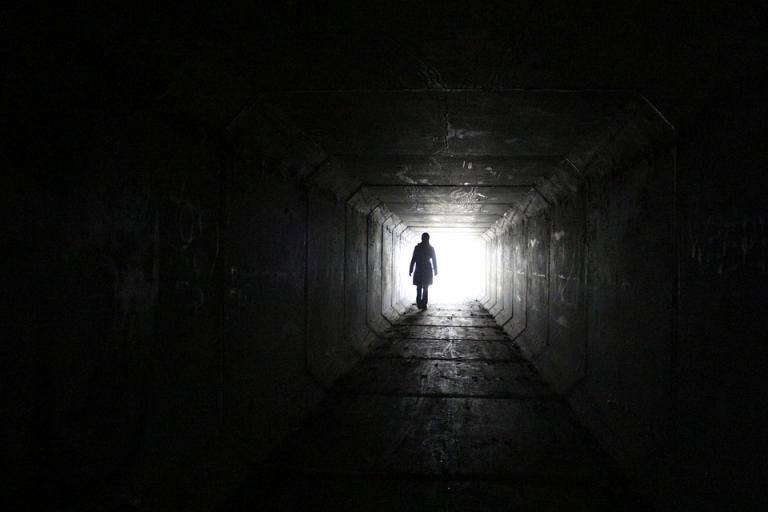
image credit: pixabay.com/en/tunnel-silhouette-mysterious-899053/
Pennsylvania grand jury report
Next Post
August 31, 2018 Forgiveness Is Not Enough, When It Comes To Healing For Victims
Browse Our Archives
Select a Category abortion anti-semitism art Atwood Betrothed church clergy abuse coronavirus culture economics education environmentalism ethics faith family feminism gardening gun violence immigration Judaism literature MaddAddam New Pro Life Movement news pandemic personalism poem politics politics blue Pope Francis racism religion salvation sexuality social justice spirituality Station eleven Stephen King The Stand Trump Uncategorized war World Health Organization
Select a Month March 2021 February 2021 January 2021 December 2020 November 2020 October 2020 September 2020 August 2020 July 2020 June 2020 May 2020 April 2020 March 2020 February 2020 January 2020 December 2019 November 2019 October 2019 September 2019 August 2019 July 2019 June 2019 May 2019 April 2019 March 2019 February 2019 January 2019 December 2018 November 2018 October 2018 September 2018 August 2018 July 2018 June 2018 May 2018 April 2018 March 2018 February 2018 January 2018 December 2017 November 2017 October 2017 September 2017 August 2017 July 2017 June 2017 May 2017 April 2017 March 2017 February 2017 January 2017 December 2016 November 2016 October 2016 September 2016 August 2016 July 2016 June 2016 May 2016 April 2016 March 2016 February 2016
Follow Us!
TAKE THE
Religious Wisdom Quiz
Which writer besides Solomon and David contributed to Proverbs?
Select your answer to see how you score.
Agur Nathan Moses Asaph
Support this
Column


Related posts from suspended in her jar

Immigrants: They Need Us, and We Need Them

Four Takeaways from Oprah’s Interview with the Duke...

Catholics Are De-Toxing From their Experiences With Traumatic...

How Has the Pandemic Changed Us? Has It...
TRENDING AT PATHEOS Catholic

Rejecting Doom: Christian Hope And Human Action
Christianity is a religion of hope. We are to have hope and...

It’s What Comes From Within Which Matters
One of the most difficult things for us to understand is why...

Why I Choose the Eucharist Over the Sermon
Choose the Eucharist, Not the Sermon What are we supposed to get...

5 Design Elements Found in Spiritually Rooted Homes
Putting Spirituality Into Home Decor Our homes are more than our living...

Credo: A Story of God Told with the...
About 10 years ago, I began to imagine a personal "Credo" that...

The Anatomy of Divine Revelation in Catholic Thought
The claim that God has made Himself known to human beings is...
view all Catholic blogs
Ad-Free & Subscriber Log-In Subscription Support
- About Us
- 2026 Calendar
- Videos
- Podcasts
- Library of World Religions
- Faith In Media Tracker
- Advertise With Us
- Write for Us
- Privacy Policy
- Terms of Service
- Do Not Sell My Data
- Contact Us
- Radiant Digital
- Manage Newsletter Subscriptions
- Unsubscribe From Notifications
- Sitemap
Copyright 2008-2026, Patheos. All rights reserved.
Subscription Support Ad-Free & Subscriber Log-In
Follow Patheos