
BuddhistCatholicContemplativeEvangelicalGeneral ChristianHinduJewishLatter-day SaintMuslimNew VisionsProgressive Christian
Beliefs
- Buddhist
- Catholic
- Contemplative
- Evangelical
- General Christian
- Hindu
- Jewish
- Latter-day Saint
- More Voices
- Muslim
- New Visions
- Pagan
- Progressive Christian
Topics
- Religion News
- Food and Religion
- Sports and Religion
- Religious Art
- Religious Music and Entertainment
- Religious Events
- History and Religion
- Style and Religion
- Politics and Religion
- Women in Religion
- Recreation Outdoors and Religion
- Business Finance and Religion
- Careers Workplace and Religion
- Education and Religion
- Family Parenting and Religion
- Health Fitness and Religion
- Home and Religion
- Relationships and Religion
- Technology and Religion
- Travel and Religion
Columnists
- Buddhist Columnists
- Business Finance and Religion Columnists
- Careers Workplace and Religion Columnists
- Catholic Columnists
- Contemplative Columnists
- Education and Religion Columnists
- Evangelists Columnists
- Family Parenting and Religion Columnists
- General Christian Columnists
- Health Fitness and Religion Columnists
- Hindu Columnists
- History and Religion Columnists
- Home and Religion Columnists
- Jewish Columnists
- More Voices Columnists
- Latter Day Columnists
- Muslim Columnists
- New Visions Columnists
- Nonreligious Columnists
- Pagan Columnists
- Politics and Religion Columnists
- Progressive Columnists
- Recreation Outdoors and Religion Columnists
- Relationships and Religion Columnists
- Religion News Columnists
- Religious Art Columnists
- Religious Events Columnists
- Religious Music and Entertainment Columnists
- Sports and Religion Columnists
- Style and Religion Columnists
- Technology and Religion Columnists
- Travel and Religion Columnists
- Women in Religion Columnists
Resource Library
- 2026 Calendar
- Library of World Religions
- The 100 Most Holy Places on Earth
- Patheos Answers
- Podcasts
- Videos
- Faith Leaders Database
- Anglican Episcopalian
- Bahai
- Baptist
- Buddhism
- Christianity
- Confucianism
- Eastern Orthodoxy
- Hinduism
- Holiness and Pentecostal
- ISKCON
- Islam
- Judaism
- Lutheran
- Methodist
- The Church of Jesus Christ of Latter-day Saints
- New Age
- Paganism
- Presbytarian and Reformed
- Protestantism
- Religion Behind the Scenes
- Roman Catholic
- Scientology
- Shia Islam
- Sikhism
- Sufism
- Sunni Islam
- Taoism
- Zen
- See all religions
Research Tools
 Ad-Free & Subscriber Log-In Subscription Support
Ad-Free & Subscriber Log-In Subscription Support
Follow Patheos 

- Trending:
- Forgiveness
- |
- Marriage
- |
- Consciousness
- |
- Death Penalty
- |
- Election
- |
- Halloween
 suspended in her jar
- Home
- Catholic
- Flowers For Virginia: A Visit to Monk’s House
Flowers For Virginia: A Visit to Monk’s House
Last updated on: June 7, 2018 at 10:51 pm by Rebecca Bratten Weiss
Flowers For Virginia: A Visit to Monk’s House 2018-06-07T22:51:37-04:00 Rebecca Bratten Weiss
Patheos Explore the world's faith through different perspectives on religion and spirituality! Patheos has the views of the prevalent religions and spiritualities of the world.
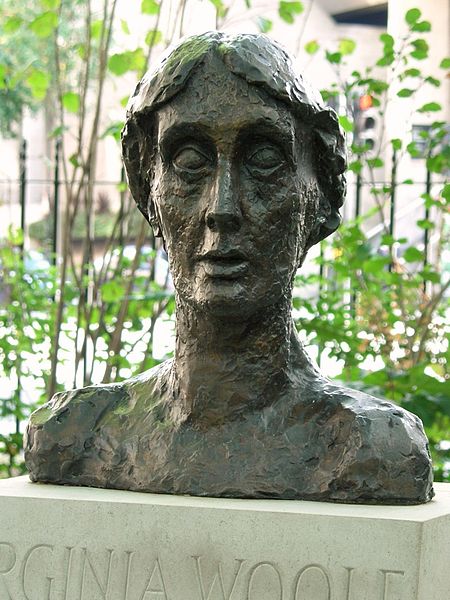
When I was a university teacher, my very favorite class to teach was Women Writers. I taught it every spring, from 2010 to 2017, and each time I taught it the course material grew richer for the involvement and contributions of my students. While the reading list changed gradually over the years, there were always a few novels that remained the solid backbone of the class: Jane Eyre, Frankenstein, and Beloved. And every semester, we began the class with the question: why this class? Why women writers?
To answer this question, we always started with Virginia Woolf’s classic, A Room of One’s Own. Nearly one hundred years after its writing, we can see the flaws in the work – the economic privilege, the narrowness of white feminism – but Woolf’s cautious and circuitous observations remain no less relevant today. She talks about the experience of being excluded, as a woman, from the intellectual centers where men dominate; about studying the Great Books written by men in which they muse over the nature of women without once bothering to ask us in on the conversation; about why men are so angry and resentful of women, when it ought to be the other way around. She invites the reader to consider the life of an imaginary “Shakespeare’s sister,” and to see the multiple obstacles such a woman would have faced, in an attempt even to begin to write.
There could be no female Shakespeare, Woolf concludes, not because women are less talented or driven, but because civilization was and is constructed to bar women from the spaces where literature happens.
Some things changed between Shakespeare’s time and Woolf’s – women were able, finally, to keep their own property after marriage, for instance – and more still has changed from Woolf’s day to ours – most colleges now do allow women – but the fundamental image, the idea of a room of one’s own, remains similarly compelling to the young woman writer fighting to carve out a space for herself.
It may be especially compelling for young women writing in a conservative religious community, where women’s education is still sometimes frowned on, and where women are still not permitted to identify themselves apart from domestic relationality. In such a setting, women still know what it feels like to have the spaces of privilege closed to them.
Another respect in which Virginia Woolf’s work remains relevant is in the realm of mental health. It is widely known that Woolf suffered from debilitating mental illness, probably Bipolar II. She suffered also from a series of misfortunes and tragedies, including sexual abuse and the early loss of loved ones. For all one can point to the shades of white upper-class privilege in her work, hers was not an easy life. Her bipolar may have been associated with her incredible periods of creative output, but it was also a torment to her, and in 1941 it finally drove her to take her own life. On a cold day in March she left a note for her husband Leonard, walked down to the River Ouse, filled her pockets with rocks, and walked into the water.
Woolf had the dreamy visionary look of a pre-Raphaelite goddess, and her mother had been a famed artist’s model for the pre-Raphaelite set, so it’s easy to imagine a stylized Ophelia scene, but for anyone who has ever struggled with severe mental illness and depression, the idea of her walk to the river, of the stones weighing heavy in her overcoat pockets, is not artistic and remote. It is painful and personal.
Last week I had the opportunity to visit Monk’s House, the little cottage in Sussex where Virginia lived the latter part of her life with her kindly husband, visited by family members and many literary friends, including T.S. Eliot, and the usual Bloomsbury set. My sister and I went through the rooms of the cottage, saw the books with covers she’d hand-painted to help stave off gloom, saw the real Room of her Own, small and tidy, with a door opening out into the gardens she’d planned meticulously with her husband. Earlier in the day we’d visited the much statelier and more opulent home and gardens of Woolf’s aristocratic friend and lover, Vita Sackville-West, but the gardens at Monk’s House are the sort that one can imagine recreating for oneself, gardens as a small paradise, roses and peonies and irises, a modest apple orchard, a stately elm tree.
It’s wrenching to think of the energy and love she devoted to her life, and to know that the terrible illness still overwhelmed her. It’s wrenching to think of others who have been similarly overwhelmed. We live in such a triumphalist society, with self-help slogans and reminders to bootstrap our way into happiness, but these messages ring hollow in the darkness where many have to find their way.
We made the walk from the cottage down to the river, and found it longer than we’d expected. We’d always imagined that the river just ran behind the house, that she’d slipped out the door and away, but she had half a mile’s walk through marshy fields, to reach the river that led to the sea. And down by the river it was all bleak and stony, surprisingly grim in an otherwise glorious country setting. There was no monument or marker to show that this was where she’d died. Maybe, we thought, it would be considered distasteful to mark the spot. Maybe people would rather remember her beautiful life, not her tragic death. Maybe there’s worry about over-emphasizing her suicide, even encouraging copy-cat incidents.
We wanted to leave some sign to remember her though, because the unmarked riverside seems to accentuate the solitude of that lonely figure who once stood there with her pocket full of rocks. She shouldn’t have had to take that last tormented journey alone.
Woolf was an atheist, and it’s not for me to guess whether she ever called in secret on transcendent powers. But we’d spent the day in places haunted by ghosts, ghosts who comfort us, with their words from decades past, ghosts who fought for us before we were born, and it seems we should try to fight for them now, too, in our turn.
A piece of a broken fence, in the shape of a cross, lay across a low hedge. We pulled it out and stuck it in the rocks by the riverside. No, Woolf didn’t believe in Jesus, but she would have understood that here was one who had suffered, too.
We picked daisies from the riverbank, and red clover, and buttercups, and left a chain and a bunch of flowers on the makeshift lopsided cross. If someone else made the walk from Monk’s House to the River Ouse, that day, they’d see that she’d been remembered there, too.
image credit: commons.wikimedia.org/wiki/File:Virginia_Woolf,_Tavistock_Square,_London.JPG
Previous Post

June 6, 2018
No, #MeToo is Not the Fault of the Sexual Revolution
Next Post
June 11, 2018 The Western Canon, Incels, and a Problem with Pedagogy
Browse Our Archives
Select a Category abortion anti-semitism art Atwood Betrothed church clergy abuse coronavirus culture economics education environmentalism ethics faith family feminism gardening gun violence immigration Judaism literature MaddAddam New Pro Life Movement news pandemic personalism poem politics politics blue Pope Francis racism religion salvation sexuality social justice spirituality Station eleven Stephen King The Stand Trump Uncategorized war World Health Organization
Select a Month March 2021 February 2021 January 2021 December 2020 November 2020 October 2020 September 2020 August 2020 July 2020 June 2020 May 2020 April 2020 March 2020 February 2020 January 2020 December 2019 November 2019 October 2019 September 2019 August 2019 July 2019 June 2019 May 2019 April 2019 March 2019 February 2019 January 2019 December 2018 November 2018 October 2018 September 2018 August 2018 July 2018 June 2018 May 2018 April 2018 March 2018 February 2018 January 2018 December 2017 November 2017 October 2017 September 2017 August 2017 July 2017 June 2017 May 2017 April 2017 March 2017 February 2017 January 2017 December 2016 November 2016 October 2016 September 2016 August 2016 July 2016 June 2016 May 2016 April 2016 March 2016 February 2016
Follow Us!
TAKE THE
Religious Wisdom Quiz
Who was the tax collector that Jesus called to follow Him?
Select your answer to see how you score.
Zacchaeus Nicodemus Levi Matthew
Support this
Column


Related posts from suspended in her jar

Immigrants: They Need Us, and We Need Them

Four Takeaways from Oprah’s Interview with the Duke...

Rush Limbaugh Would Never Have Succeeded In an...

We Need to Be Honest When We Talk...
TRENDING AT PATHEOS Catholic

Rejecting Doom: Christian Hope And Human Action
Christianity is a religion of hope. We are to have hope and...

It’s What Comes From Within Which Matters
One of the most difficult things for us to understand is why...

Why I Choose the Eucharist Over the Sermon
Choose the Eucharist, Not the Sermon What are we supposed to get...

5 Design Elements Found in Spiritually Rooted Homes
Putting Spirituality Into Home Decor Our homes are more than our living...

Credo: A Story of God Told with the...
About 10 years ago, I began to imagine a personal "Credo" that...

The Anatomy of Divine Revelation in Catholic Thought
The claim that God has made Himself known to human beings is...
view all Catholic blogs
Ad-Free & Subscriber Log-In Subscription Support
- About Us
- 2026 Calendar
- Videos
- Podcasts
- Library of World Religions
- Faith In Media Tracker
- Advertise With Us
- Write for Us
- Privacy Policy
- Terms of Service
- Do Not Sell My Data
- Contact Us
- Radiant Digital
- Manage Newsletter Subscriptions
- Unsubscribe From Notifications
- Sitemap
Copyright 2008-2026, Patheos. All rights reserved.
Subscription Support Ad-Free & Subscriber Log-In
Follow Patheos