
BuddhistCatholicContemplativeEvangelicalGeneral ChristianHinduJewishLatter-day SaintMuslimNew VisionsProgressive Christian
Beliefs
- Buddhist
- Catholic
- Contemplative
- Evangelical
- General Christian
- Hindu
- Jewish
- Latter-day Saint
- More Voices
- Muslim
- New Visions
- Pagan
- Progressive Christian
Topics
- Religion News
- Food and Religion
- Sports and Religion
- Religious Art
- Religious Music and Entertainment
- Religious Events
- History and Religion
- Style and Religion
- Politics and Religion
- Women in Religion
- Recreation Outdoors and Religion
- Business Finance and Religion
- Careers Workplace and Religion
- Education and Religion
- Family Parenting and Religion
- Health Fitness and Religion
- Home and Religion
- Relationships and Religion
- Technology and Religion
- Travel and Religion
Columnists
- Buddhist Columnists
- Business Finance and Religion Columnists
- Careers Workplace and Religion Columnists
- Catholic Columnists
- Contemplative Columnists
- Education and Religion Columnists
- Evangelists Columnists
- Family Parenting and Religion Columnists
- General Christian Columnists
- Health Fitness and Religion Columnists
- Hindu Columnists
- History and Religion Columnists
- Home and Religion Columnists
- Jewish Columnists
- More Voices Columnists
- Latter Day Columnists
- Muslim Columnists
- New Visions Columnists
- Nonreligious Columnists
- Pagan Columnists
- Politics and Religion Columnists
- Progressive Columnists
- Recreation Outdoors and Religion Columnists
- Relationships and Religion Columnists
- Religion News Columnists
- Religious Art Columnists
- Religious Events Columnists
- Religious Music and Entertainment Columnists
- Sports and Religion Columnists
- Style and Religion Columnists
- Technology and Religion Columnists
- Travel and Religion Columnists
- Women in Religion Columnists
Resource Library
- 2026 Calendar
- Library of World Religions
- The 100 Most Holy Places on Earth
- Patheos Answers
- Podcasts
- Videos
- Faith Leaders Database
- Anglican Episcopalian
- Bahai
- Baptist
- Buddhism
- Christianity
- Confucianism
- Eastern Orthodoxy
- Hinduism
- Holiness and Pentecostal
- ISKCON
- Islam
- Judaism
- Lutheran
- Methodist
- The Church of Jesus Christ of Latter-day Saints
- New Age
- Paganism
- Presbytarian and Reformed
- Protestantism
- Religion Behind the Scenes
- Roman Catholic
- Scientology
- Shia Islam
- Sikhism
- Sufism
- Sunni Islam
- Taoism
- Zen
- See all religions
Research Tools
 Ad-Free & Subscriber Log-In Subscription Support
Ad-Free & Subscriber Log-In Subscription Support
Follow Patheos 

- Trending:
- Forgiveness
- |
- Marriage
- |
- Consciousness
- |
- Death Penalty
- |
- Election
- |
- Halloween
 suspended in her jar
- Home
- Catholic
- The Stories Our Bodies Tell: Beyond the Theology of the Singular Body
The Stories Our Bodies Tell: Beyond the Theology of the Singular Body
Last updated on: May 30, 2018 at 8:00 pm by Rebecca Bratten Weiss
The Stories Our Bodies Tell: Beyond the Theology of the Singular Body 2018-05-30T20:00:56-04:00 Rebecca Bratten Weiss
Patheos Explore the world's faith through different perspectives on religion and spirituality! Patheos has the views of the prevalent religions and spiritualities of the world.
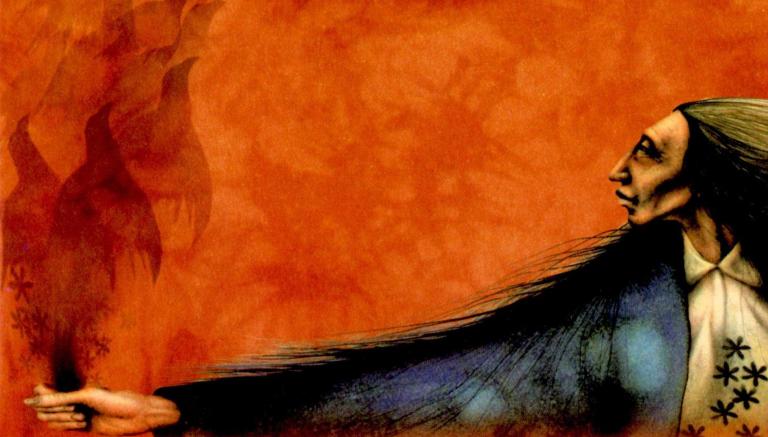
The idea of femininity as “receptivity,” is very popular among Theology of the Body promoters. This idea comes with several presumptions: that femininity is a real essence of nature, that talking about femininity means talking about women, that femininity exists in complementary relation to masculinity, and that all humanity can be divided into these two camps, which could also be termed “women and men.”
Or, perhaps, not so much “women and men” as “WOMAN and MAN.” Note the shades of difference in saying “woman is receptive” versus “women are receptive.” In the latter case, one could be asked to defend one’s statement by inductively reasoning on the basis of a representative group of women. One would also, then, have to explain not only that yes, these women are receptive, but also how one managed to figure this out. Which could get awkward.
Talking about “woman” relieves one of the burden of proof, as well as the embarrassment. It allows one to defer the discussion from individual women, who live as embodied personal subjects in the world, to an idealized or normative concept of “woman” without any particular reference to lived reality.
Now the emphasis on receptivity may be more echt Hans Urs Von Balsasar than echt Karol Wojtyla – Wojtyla tends to emphasize mutuality over difference – but either way, it’s everywhere in contemporary ToB talk.
It sounds nice. It’s definitely a lot less impersonal and reductive than the old way of regarding femininity as passivity.
But what does it really mean?
Christopher West, ToB popularizer par excellence, recently posted on his Facebook page a quotation from his book Theology of the Body for Beginners:
“The woman’s body primarily tells the story of receiving divine love while the man’s body primarily tells the story of offering that love, of pouring it out.”
Wait, what? Aside from the question of who “the woman” is (one particular woman? Women conceived of en masse? His imaginary woman?), everything about this quotation is reductive and wrong.
First, it reduces the female body to its reproductive function. What about eating? The process of digestion? Don’t try to tell me that has no theological importance, if you’re Catholic. What about work? What about art? Friendship? Sisterhood? Prayer? Fighting for justice?
But even if we stick with the reproductive functions, when it comes to offering love and pouring it out, any mother’s body has experienced this much more violently, more exhaustively, than most men – other than Jesus, perhaps – could ever realize. Everything about the reproductivity of a female body has to do with offering up and pouring forth. We release an egg, we spill our blood on a monthly basis. Sometimes our bodies conceive, and then miscarry. Sometimes we carry our babies to term, sustaining them with our bodies, pouring our own blood into them, before pouring them forth in a gush of new life, blood and water. Even the process of ovulation is connected with the flow of fertility, as any NFP practitioner knows. We produce milk to feed our babies. Sometimes it trickles out and wets our shirts. It’s messy, often painful, always some kind of offering.
Considering all this, defining women via receptivity means bracketing out whole categories of deeply personal, bodily, spiritual, and intellectual activity, bracketing out even most of our reproductive biology, and looking at women simply in terms of our capacity to be sexually penetrated. Sorry if that is blunt, but it’s pretty clear that this is the underlying presumption.
Our Bodies’ Stories
I discussed this with a group of women who had found the West quote – and the whole ideology behind it – similarly unappealing. Here are what a few of us had to say about the real stories our bodies tell – but these are just the CliffNotes versions:
My body tells a story of balancing all my body weight in two square inches of satin every day for hours and being generally ripped because it’s my job. If I wasn’t a dancer I would look like my mans Hagrid from Harry Potter.
My body tells the story of being a shorter lady who loves ice cream more than anything and who has had to learn that it’s ok to take up space on this planet. Of learning that exercise isn’t supposed to be punishment for not conforming to society’s expectations of side but rather, a way to enliven and strengthen the self. Of holding anxiety inside and feeling powerless when it eventually leaks out. Of finally learning to love the skin I’m in and realizing what a gift it is to feel alive and have energy to do the things I want. Of pregnancy and loss and feeling simultaneously broken but strong.
My body tells the story of a former athlete, covered in stretch marks but with a residual muscular stature with hidden self harm scars that are now made beautiful in meaningful and simple tattoos.
My body’s story is covered in scars and periodic episodes of cigarettes smoking and various psychiatric meds. And also it is the story of three children.
My body tells a very complicated, conflicting story. To view it through the lens of society, you wouldn’t find much value. It’s not symmetrical in some ways, and there’s too much of it. But if you look carefully and closely through the lens of experience and truth, it tells the story of a survivor. In my body lies the story of someone who fought an eating disorder, major self harm, emotional and physical abuse; the story of someone who has fought back old temptations when fertility related meds made her gain weight; of someone still figuring it all out, but still surviving.
My body tells the story of how everything went wrong but that just made me a fucking warrior.
My body tells the story of PCOS undiagnosed until age 27 and 10 cycles of fertility meds over the next 2 1/2 years. My arms carry the battle scars of an orthopedic surgery and countless rounds of vet tech vs scared fractious cat.
I don’t know what my body says. Mostly it creaks and cracks.
My body tells the story of knowing how to dance, ride, fight, and recover from addiction. It tells the story of drinking too much, cutting in secret, bearing six children, raising three, wading in the water, bounding up mountains, eating all the apples they told me not to eat.
Look, everywhere around you are bodies that are stories upon stories, no one of them like the other. They can’t be summed up in a single word or phrase, and even these statements might be what we’re saying to hide the true story, that maybe only God knows. But the religious experts don’t seem to want to talk about these stories. They want to write over us as a crude palimpsest, and afterwards read us as only one thing. They hunt for the divine in us only where they have written.
But we have far more tales to tell.
image credit: /twistedpositions.files.wordpress.com/2010/09/wise-one4.jpg
Previous Post
May 22, 2018
"Don't Talk Politics!" - A Privilege That Perpetuates Injustice
Next Post

June 4, 2018 Intelligent Catholics Need to Stop Taking Far-Right Reactionaries Seriously
Browse Our Archives
Select a Category abortion anti-semitism art Atwood Betrothed church clergy abuse coronavirus culture economics education environmentalism ethics faith family feminism gardening gun violence immigration Judaism literature MaddAddam New Pro Life Movement news pandemic personalism poem politics politics blue Pope Francis racism religion salvation sexuality social justice spirituality Station eleven Stephen King The Stand Trump Uncategorized war World Health Organization
Select a Month March 2021 February 2021 January 2021 December 2020 November 2020 October 2020 September 2020 August 2020 July 2020 June 2020 May 2020 April 2020 March 2020 February 2020 January 2020 December 2019 November 2019 October 2019 September 2019 August 2019 July 2019 June 2019 May 2019 April 2019 March 2019 February 2019 January 2019 December 2018 November 2018 October 2018 September 2018 August 2018 July 2018 June 2018 May 2018 April 2018 March 2018 February 2018 January 2018 December 2017 November 2017 October 2017 September 2017 August 2017 July 2017 June 2017 May 2017 April 2017 March 2017 February 2017 January 2017 December 2016 November 2016 October 2016 September 2016 August 2016 July 2016 June 2016 May 2016 April 2016 March 2016 February 2016
Follow Us!
TAKE THE
Religious Wisdom Quiz
How many days and nights did it rain during the flood?
Select your answer to see how you score.
12 7 10 40
Support this
Column


Related posts from suspended in her jar

Immigrants: They Need Us, and We Need Them

Four Takeaways from Oprah’s Interview with the Duke...

Catholics Are De-Toxing From their Experiences With Traumatic...

Rush Limbaugh Would Never Have Succeeded In an...
TRENDING AT PATHEOS Catholic

Rejecting Doom: Christian Hope And Human Action
Christianity is a religion of hope. We are to have hope and...

It’s What Comes From Within Which Matters
One of the most difficult things for us to understand is why...

Why I Choose the Eucharist Over the Sermon
Choose the Eucharist, Not the Sermon What are we supposed to get...

5 Design Elements Found in Spiritually Rooted Homes
Putting Spirituality Into Home Decor Our homes are more than our living...

Credo: A Story of God Told with the...
About 10 years ago, I began to imagine a personal "Credo" that...

The Anatomy of Divine Revelation in Catholic Thought
The claim that God has made Himself known to human beings is...
view all Catholic blogs
Ad-Free & Subscriber Log-In Subscription Support
- About Us
- 2026 Calendar
- Videos
- Podcasts
- Library of World Religions
- Faith In Media Tracker
- Advertise With Us
- Write for Us
- Privacy Policy
- Terms of Service
- Do Not Sell My Data
- Contact Us
- Radiant Digital
- Manage Newsletter Subscriptions
- Unsubscribe From Notifications
- Sitemap
Copyright 2008-2026, Patheos. All rights reserved.
Subscription Support Ad-Free & Subscriber Log-In
Follow Patheos