
BuddhistCatholicContemplativeEvangelicalGeneral ChristianHinduJewishLatter-day SaintMuslimNew VisionsProgressive Christian
Beliefs
- Buddhist
- Catholic
- Contemplative
- Evangelical
- General Christian
- Hindu
- Jewish
- Latter-day Saint
- More Voices
- Muslim
- New Visions
- Pagan
- Progressive Christian
Topics
- Religion News
- Food and Religion
- Sports and Religion
- Religious Art
- Religious Music and Entertainment
- Religious Events
- History and Religion
- Style and Religion
- Politics and Religion
- Women in Religion
- Recreation Outdoors and Religion
- Business Finance and Religion
- Careers Workplace and Religion
- Education and Religion
- Family Parenting and Religion
- Health Fitness and Religion
- Home and Religion
- Relationships and Religion
- Technology and Religion
- Travel and Religion
Columnists
- Buddhist Columnists
- Business Finance and Religion Columnists
- Careers Workplace and Religion Columnists
- Catholic Columnists
- Contemplative Columnists
- Education and Religion Columnists
- Evangelists Columnists
- Family Parenting and Religion Columnists
- General Christian Columnists
- Health Fitness and Religion Columnists
- Hindu Columnists
- History and Religion Columnists
- Home and Religion Columnists
- Jewish Columnists
- More Voices Columnists
- Latter Day Columnists
- Muslim Columnists
- New Visions Columnists
- Nonreligious Columnists
- Pagan Columnists
- Politics and Religion Columnists
- Progressive Columnists
- Recreation Outdoors and Religion Columnists
- Relationships and Religion Columnists
- Religion News Columnists
- Religious Art Columnists
- Religious Events Columnists
- Religious Music and Entertainment Columnists
- Sports and Religion Columnists
- Style and Religion Columnists
- Technology and Religion Columnists
- Travel and Religion Columnists
- Women in Religion Columnists
Resource Library
- 2026 Calendar
- Library of World Religions
- The 100 Most Holy Places on Earth
- Patheos Answers
- Podcasts
- Videos
- Faith Leaders Database
- Anglican Episcopalian
- Bahai
- Baptist
- Buddhism
- Christianity
- Confucianism
- Eastern Orthodoxy
- Hinduism
- Holiness and Pentecostal
- ISKCON
- Islam
- Judaism
- Lutheran
- Methodist
- The Church of Jesus Christ of Latter-day Saints
- New Age
- Paganism
- Presbytarian and Reformed
- Protestantism
- Religion Behind the Scenes
- Roman Catholic
- Scientology
- Shia Islam
- Sikhism
- Sufism
- Sunni Islam
- Taoism
- Zen
- See all religions
Research Tools
 Ad-Free & Subscriber Log-In Subscription Support
Ad-Free & Subscriber Log-In Subscription Support
Follow Patheos 

- Trending:
- Forgiveness
- |
- Marriage
- |
- Consciousness
- |
- Death Penalty
- |
- Election
- |
- Halloween
 suspended in her jar
- Home
- Catholic
- “Don’t Talk Politics!” – A Privilege That Perpetuates Injustice
“Don’t Talk Politics!” – A Privilege That Perpetuates Injustice
Last updated on: May 22, 2018 at 12:05 am by Rebecca Bratten Weiss
“Don’t Talk Politics!” – A Privilege That Perpetuates Injustice 2018-05-22T00:05:09-04:00 Rebecca Bratten Weiss
Patheos Explore the world's faith through different perspectives on religion and spirituality! Patheos has the views of the prevalent religions and spiritualities of the world.
Critics of “political correctness” often seem to object to simple kindness or courtesy, to the expectation that one should try to cause no harm. This is really rather an old-school expectation, connected with ideas about magnanimity and generosity. John Cardinal Newman defined a gentleman as one who will never willingly cause pain: by that definition, it would seem that the refusal to use politically correct language would be the act not of a gentleman, but of a lout (while I’m being Victorian about it).
Sometimes the criticism stems from ignorance of the fact that social norms change, language itself changes, and we have new rules of societally correct interaction now. Maybe people would be less wary if we termed the effort to give people the pronouns or descriptors they ask for as “social” rather than “political” correctness. Or perhaps they wouldn’t care. But at any rate, it would call into question the presumption that there is anything praiseworthy or courageous in willful rudeness. Congratulations, you won’t use the correct term. I suppose you chew with your mouth open, too, just to assert your independence over the tyranny of table manners?
But the comparison to etiquette only goes so far. Inasmuch as political correctness is associated not just with social propriety, and the refusal to cause pain – but also with social justice, and the determination to do good – it may veer far away from etiquette. It may have to.
Because, for all that the gentleman never willingly causes pain, rules of discourse have often been set in place not to ensure justice, but to hide injustice, or to protect existing power-structures.
A meme on my Facebook feed today reminded me of this: it was an image of a page from Austin Channing Brown’s I’m Still Here, shared by Rachel Held Evans, with the comment that “Just the ‘Nice White People’ chapter in #imstillhere is worth the price of the book, y’all.” The underlined quotation from Brown:
When you believe niceness disproves the presence of racism, it’s easy to start believing bigotry is rare, and that the label racist should be applied only to mean-spirited, intentional acts of discrimination. The problem with this framework – besides being a gross understanding of how racism operates in systems and structures enabled by nice people – is that it obligates me to be nice in return, rather than truthful. I am expected to come closer to the racists. Be nicer to them. Coddle them.
Reading this, I was hit by a series of waves of recognition, of the many times this niceness mechanism had functioned to silence me.
Every time people have responded with more anger against those who call out racism, than against racism itself.
Every time I’ve been assured someone couldn’t possibly be a racist, because “she’s so nice.”
Every time someone has invited me, implicitly, into an assumption of shared racial prejudice – invited me kindly, warmly, as though we were in for a fun time together. If I reject their invitation, does that make me cold? Mean?
Every time the rule “don’t talk religion or politics!” has obliged me to nod and smile rather than say “actually, there’s no such thing as reverse racism” or, “yes, cultural appropriation is real,” or “if you think it’s bad to be accused of racism once, imagine what it’s like to be the victim of racism every day of your life.” Saying these things means sticking out as the social pustule, the one making things unpleasant, raining on the happy white-person parade. It means not getting invited back.
This is true of other issues, too. The environment, for instance. It sucks that we’re all eventually going to smother in heaps of rubbish, but let’s not say anything about the conspicuous consumption of well-off westerners, because it will make everyone uncomfortable. And why spoil the fun of our little white children, by telling them that the toy they want was probably made by enslaved black children?
The price of justice for the oppressed is set so low, it is valued less than a moment’s comfort for the powerful. And our laws about civility often end up preserving this imbalance. “Don’t talk politics!” is a social privilege for those who can pretend politics doesn’t affect other people, often grievously.
We need to think more carefully, maybe, about how to differentiate between social norms that preserve the powerful from discomfort, on one hand, and social obligations to protect the vulnerable from genuine injustice, on the other. It might be a good idea to get I’m Still Here, or talk to people of color about their experiences of being silenced by polite white culture, too, because those of us who benefit from etiquette might have greater difficulty parsing it out.
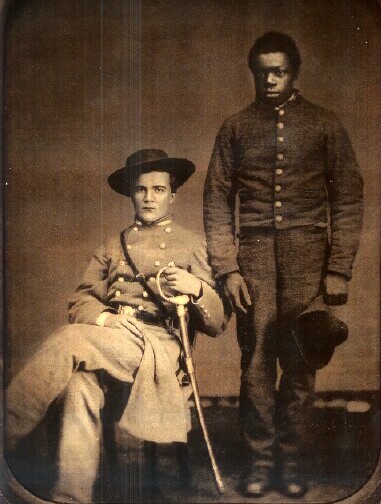
Image credit: Petersburg Express / Black Confederates
Previous Post

May 17, 2018
"I'll Eat You Up, I Love You So": Religion Where The Wild Things Are
Next Post
May 30, 2018 The Stories Our Bodies Tell: Beyond the Theology of the Singular Body
Browse Our Archives
Select a Category abortion anti-semitism art Atwood Betrothed church clergy abuse coronavirus culture economics education environmentalism ethics faith family feminism gardening gun violence immigration Judaism literature MaddAddam New Pro Life Movement news pandemic personalism poem politics politics blue Pope Francis racism religion salvation sexuality social justice spirituality Station eleven Stephen King The Stand Trump Uncategorized war World Health Organization
Select a Month March 2021 February 2021 January 2021 December 2020 November 2020 October 2020 September 2020 August 2020 July 2020 June 2020 May 2020 April 2020 March 2020 February 2020 January 2020 December 2019 November 2019 October 2019 September 2019 August 2019 July 2019 June 2019 May 2019 April 2019 March 2019 February 2019 January 2019 December 2018 November 2018 October 2018 September 2018 August 2018 July 2018 June 2018 May 2018 April 2018 March 2018 February 2018 January 2018 December 2017 November 2017 October 2017 September 2017 August 2017 July 2017 June 2017 May 2017 April 2017 March 2017 February 2017 January 2017 December 2016 November 2016 October 2016 September 2016 August 2016 July 2016 June 2016 May 2016 April 2016 March 2016 February 2016
Follow Us!
TAKE THE
Religious Wisdom Quiz
Who were Isaac and Rebekah's twin sons?
Select your answer to see how you score.
Cain and Abel Esau and Jacob Joseph and Benjamin Simeon and Levi
Support this
Column


Related posts from suspended in her jar

Immigrants: They Need Us, and We Need Them

Four Takeaways from Oprah’s Interview with the Duke...

How Has the Pandemic Changed Us? Has It...

Rush Limbaugh Would Never Have Succeeded In an...
TRENDING AT PATHEOS Catholic

Rejecting Doom: Christian Hope And Human Action
Christianity is a religion of hope. We are to have hope and...

It’s What Comes From Within Which Matters
One of the most difficult things for us to understand is why...

Why I Choose the Eucharist Over the Sermon
Choose the Eucharist, Not the Sermon What are we supposed to get...

5 Design Elements Found in Spiritually Rooted Homes
Putting Spirituality Into Home Decor Our homes are more than our living...

Credo: A Story of God Told with the...
About 10 years ago, I began to imagine a personal "Credo" that...

The Anatomy of Divine Revelation in Catholic Thought
The claim that God has made Himself known to human beings is...
view all Catholic blogs
Ad-Free & Subscriber Log-In Subscription Support
- About Us
- 2026 Calendar
- Videos
- Podcasts
- Library of World Religions
- Faith In Media Tracker
- Advertise With Us
- Write for Us
- Privacy Policy
- Terms of Service
- Do Not Sell My Data
- Contact Us
- Radiant Digital
- Manage Newsletter Subscriptions
- Unsubscribe From Notifications
- Sitemap
Copyright 2008-2026, Patheos. All rights reserved.
Subscription Support Ad-Free & Subscriber Log-In
Follow Patheos