
BuddhistCatholicContemplativeEvangelicalGeneral ChristianHinduJewishLatter-day SaintMuslimNew VisionsProgressive Christian
Beliefs
- Buddhist
- Catholic
- Contemplative
- Evangelical
- General Christian
- Hindu
- Jewish
- Latter-day Saint
- More Voices
- Muslim
- New Visions
- Pagan
- Progressive Christian
Topics
- Religion News
- Food and Religion
- Sports and Religion
- Religious Art
- Religious Music and Entertainment
- Religious Events
- History and Religion
- Style and Religion
- Politics and Religion
- Women in Religion
- Recreation Outdoors and Religion
- Business Finance and Religion
- Careers Workplace and Religion
- Education and Religion
- Family Parenting and Religion
- Health Fitness and Religion
- Home and Religion
- Relationships and Religion
- Technology and Religion
- Travel and Religion
Columnists
- Buddhist Columnists
- Business Finance and Religion Columnists
- Careers Workplace and Religion Columnists
- Catholic Columnists
- Contemplative Columnists
- Education and Religion Columnists
- Evangelists Columnists
- Family Parenting and Religion Columnists
- General Christian Columnists
- Health Fitness and Religion Columnists
- Hindu Columnists
- History and Religion Columnists
- Home and Religion Columnists
- Jewish Columnists
- More Voices Columnists
- Latter Day Columnists
- Muslim Columnists
- New Visions Columnists
- Nonreligious Columnists
- Pagan Columnists
- Politics and Religion Columnists
- Progressive Columnists
- Recreation Outdoors and Religion Columnists
- Relationships and Religion Columnists
- Religion News Columnists
- Religious Art Columnists
- Religious Events Columnists
- Religious Music and Entertainment Columnists
- Sports and Religion Columnists
- Style and Religion Columnists
- Technology and Religion Columnists
- Travel and Religion Columnists
- Women in Religion Columnists
Resource Library
- 2026 Calendar
- Library of World Religions
- The 100 Most Holy Places on Earth
- Patheos Answers
- Podcasts
- Videos
- Faith Leaders Database
- Anglican Episcopalian
- Bahai
- Baptist
- Buddhism
- Christianity
- Confucianism
- Eastern Orthodoxy
- Hinduism
- Holiness and Pentecostal
- ISKCON
- Islam
- Judaism
- Lutheran
- Methodist
- The Church of Jesus Christ of Latter-day Saints
- New Age
- Paganism
- Presbytarian and Reformed
- Protestantism
- Religion Behind the Scenes
- Roman Catholic
- Scientology
- Shia Islam
- Sikhism
- Sufism
- Sunni Islam
- Taoism
- Zen
- See all religions
Research Tools
 Ad-Free & Subscriber Log-In Subscription Support
Ad-Free & Subscriber Log-In Subscription Support
Follow Patheos 

- Trending:
- Forgiveness
- |
- Marriage
- |
- Consciousness
- |
- Death Penalty
- |
- Election
- |
- Halloween
 suspended in her jar
- Home
- Catholic
- The Toxic Spirituality of Fetishizing Suffering
The Toxic Spirituality of Fetishizing Suffering
Last updated on: April 20, 2018 at 12:54 pm by Rebecca Bratten Weiss
The Toxic Spirituality of Fetishizing Suffering 2018-04-20T12:54:42-04:00 Rebecca Bratten Weiss
Patheos Explore the world's faith through different perspectives on religion and spirituality! Patheos has the views of the prevalent religions and spiritualities of the world.

This piece is intended as part of a series of ongoing and interlocking conversations on NFP, sexuality, and Humanae Vitae, that have been hosted here, as well as by Sick Pilgrim, and on Melinda Selmys’s column.
Responses to these conversations have been diverse. Many people have said “thank you for addressing this” and proceeded to share their own stories. Others, however, seem to regard our truth-telling about our experiences as some kind of attack – whether on the church, or on the NFP market (because, yes, the market is involved. The market is always involved). Still others see our stories as the whinging of the discontented who lack the moral fortitude to do right.
I’ve touched already on the psychological and theological misconceptions inherent in these responses. What I wish to address here is a spiritual misconception the roots of which lie far deeper, and which is seen not only in the negative responses to our stories, but in a larger misapprehension about good and evil themselves.
The problem is that people think that suffering is in some way a good, or capable of being a good.
This is false. Suffering is always by its nature evil, a privation of a due good. The experience of suffering is the experience of encounter with evil. This is why in our traditional mythological depictions of heaven and hell, hell is always depicted as a “place” of terrible torture. This is why it is always morally wrong to inflict suffering on another, unless the principle of double effect is sufficiently at work – in the case, for instance, of a doctor administering painful chemo drugs to a cancer patient. The suffering is not the intended outcome. Healing is. Similarly, in working out, there may be periods of pain or discomfort, but pain and discomfort are not the intended end – and, often, too much pain or discomfort is indicative that something is being done, objectively, incorrectly. “Embrace the pain” is not a great way to pursue fitness, physically or spiritually.
One reason we latch onto spiritual masochism is that there’s a certain fear of pleasure built into the western tradition of philosophical thought. And while one is right to avoid the error of positing physical pleasure as an ultimate good, the reaction to this which views physical pleasure as dangerous is problematic.
But another reason we have latched on to this spiritual masochism may be to a misunderstanding of the centrality of the cross in the Christian life. The cross is a sign of ultimate love not because suffering itself is intrinsic to love, or a good in itself, or even necessary. The cross is what happens when perfect love comes into the world, and is rejected. It is a reminder that grace triumphs over suffering, and that the divine, rather than turning away from the flesh-and-bone pain of humanity, entered into it, and bore it with us.
Suffering is evil. It is a condition of the fall. In heaven there will be perfect love with no suffering, because suffering has no place in perfection. Yes, grace means that good can come out of suffering, but that is part of the divinely comedic narrative of salvation, and does not mean that suffering somehow becomes good, or a good, per se.
The failure to understand the nature of suffering means that one fails in spiritual discernment when looking at painful situations. A good spiritual director should be able to parse out whether the suffering experienced by a person or persons is such that yields genuine good – as in, the chemo drugs – or whether it is purely evil – as in, cancer itself.
When a condition in a marriage is bringing about suffering, it is possible that this suffering can lead to good, but it is also possible that this suffering is an indication that something is objectively amiss. Telling people simply to embrace their sufferings, without making this distinction, can lead to severe spiritual abuse.
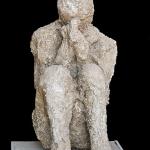
image credit: pixabay.com/en/suffering-fear-helplessness-pain-2417234/
Previous Post
April 18, 2018
Victimhood is an Objective Reality
Next Post

April 22, 2018 About That Church Militant Article Going Around, and That Alumni Letter...
Browse Our Archives
Select a Category abortion anti-semitism art Atwood Betrothed church clergy abuse coronavirus culture economics education environmentalism ethics faith family feminism gardening gun violence immigration Judaism literature MaddAddam New Pro Life Movement news pandemic personalism poem politics politics blue Pope Francis racism religion salvation sexuality social justice spirituality Station eleven Stephen King The Stand Trump Uncategorized war World Health Organization
Select a Month March 2021 February 2021 January 2021 December 2020 November 2020 October 2020 September 2020 August 2020 July 2020 June 2020 May 2020 April 2020 March 2020 February 2020 January 2020 December 2019 November 2019 October 2019 September 2019 August 2019 July 2019 June 2019 May 2019 April 2019 March 2019 February 2019 January 2019 December 2018 November 2018 October 2018 September 2018 August 2018 July 2018 June 2018 May 2018 April 2018 March 2018 February 2018 January 2018 December 2017 November 2017 October 2017 September 2017 August 2017 July 2017 June 2017 May 2017 April 2017 March 2017 February 2017 January 2017 December 2016 November 2016 October 2016 September 2016 August 2016 July 2016 June 2016 May 2016 April 2016 March 2016 February 2016
Follow Us!
TAKE THE
Religious Wisdom Quiz
Which Christian tradition developed the doctrine of the Holy Trinity most systematically?
Select your answer to see how you score.
Nicene Christianity Pentecostalism Quakerism Jehovah's Witnesses
Support this
Column


Related posts from suspended in her jar

Four Takeaways from Oprah’s Interview with the Duke...

Catholics Are De-Toxing From their Experiences With Traumatic...

How Has the Pandemic Changed Us? Has It...

Rush Limbaugh Would Never Have Succeeded In an...
TRENDING AT PATHEOS Catholic

Creation, Preservation, and Teleology in Catholic Theology
As I write this, it is very early Monday morning. Like millions...

The Parable Of The Sower And The Word...
One of Christ’s most famous parables is that of the sower who...

Rejecting Doom: Christian Hope And Human Action
Christianity is a religion of hope. We are to have hope and...

Why I Choose the Eucharist Over the Sermon
Choose the Eucharist, Not the Sermon What are we supposed to get...

5 Design Elements Found in Spiritually Rooted Homes
Putting Spirituality Into Home Decor Our homes are more than our living...

Credo: A Story of God Told with the...
About 10 years ago, I began to imagine a personal "Credo" that...
view all Catholic blogs
Ad-Free & Subscriber Log-In Subscription Support
- About Us
- 2026 Calendar
- Videos
- Podcasts
- Library of World Religions
- Faith In Media Tracker
- Advertise With Us
- Write for Us
- Privacy Policy
- Terms of Service
- Do Not Sell My Data
- Contact Us
- Radiant Digital
- Manage Newsletter Subscriptions
- Unsubscribe From Notifications
- Sitemap
Copyright 2008-2026, Patheos. All rights reserved.
Subscription Support Ad-Free & Subscriber Log-In
Follow Patheos