
BuddhistCatholicContemplativeEvangelicalGeneral ChristianHinduJewishLatter-day SaintMuslimNew VisionsProgressive Christian
Beliefs
- Buddhist
- Catholic
- Contemplative
- Evangelical
- General Christian
- Hindu
- Jewish
- Latter-day Saint
- More Voices
- Muslim
- New Visions
- Pagan
- Progressive Christian
Topics
- Religion News
- Food and Religion
- Sports and Religion
- Religious Art
- Religious Music and Entertainment
- Religious Events
- History and Religion
- Style and Religion
- Politics and Religion
- Women in Religion
- Recreation Outdoors and Religion
- Business Finance and Religion
- Careers Workplace and Religion
- Education and Religion
- Family Parenting and Religion
- Health Fitness and Religion
- Home and Religion
- Relationships and Religion
- Technology and Religion
- Travel and Religion
Columnists
- Buddhist Columnists
- Business Finance and Religion Columnists
- Careers Workplace and Religion Columnists
- Catholic Columnists
- Contemplative Columnists
- Education and Religion Columnists
- Evangelists Columnists
- Family Parenting and Religion Columnists
- General Christian Columnists
- Health Fitness and Religion Columnists
- Hindu Columnists
- History and Religion Columnists
- Home and Religion Columnists
- Jewish Columnists
- More Voices Columnists
- Latter Day Columnists
- Muslim Columnists
- New Visions Columnists
- Nonreligious Columnists
- Pagan Columnists
- Politics and Religion Columnists
- Progressive Columnists
- Recreation Outdoors and Religion Columnists
- Relationships and Religion Columnists
- Religion News Columnists
- Religious Art Columnists
- Religious Events Columnists
- Religious Music and Entertainment Columnists
- Sports and Religion Columnists
- Style and Religion Columnists
- Technology and Religion Columnists
- Travel and Religion Columnists
- Women in Religion Columnists
Resource Library
- 2026 Calendar
- Library of World Religions
- The 100 Most Holy Places on Earth
- Patheos Answers
- Podcasts
- Videos
- Faith Leaders Database
- Anglican Episcopalian
- Bahai
- Baptist
- Buddhism
- Christianity
- Confucianism
- Eastern Orthodoxy
- Hinduism
- Holiness and Pentecostal
- ISKCON
- Islam
- Judaism
- Lutheran
- Methodist
- The Church of Jesus Christ of Latter-day Saints
- New Age
- Paganism
- Presbytarian and Reformed
- Protestantism
- Religion Behind the Scenes
- Roman Catholic
- Scientology
- Shia Islam
- Sikhism
- Sufism
- Sunni Islam
- Taoism
- Zen
- See all religions
Research Tools
 Ad-Free & Subscriber Log-In Subscription Support
Follow Patheos 

- Trending:
- Advent
- |
- Forgiveness
- |
- Thanksgiving
- |
- Election
- |
- Seasonal Holidays
- |
- Marriage
 suspended in her jar
- Home
- Catholic
- NFP and the Cookie-Cutter Woman
NFP and the Cookie-Cutter Woman
Last updated on: April 13, 2018 at 4:05 pm by Rebecca Bratten Weiss
NFP and the Cookie-Cutter Woman 2018-04-13T16:05:10-04:00 Rebecca Bratten Weiss
Patheos Explore the world's faith through different perspectives on religion and spirituality! Patheos has the views of the prevalent religions and spiritualities of the world.

I want to preface this by saying that no woman is actually a cookie-cutter woman, unless perhaps future sex-robots with AI could be classed thusly.
But the way a lot of people talk about NFP, one would think that all women were meant to be basically the same.
This is apparent in the way we talk about women’s bodies, and in responses to women who go off script when talking about sexuality, reproduction, and marriage. I wrote last year about the broad ranges of experiences women have, and the impossibility of reducing female sexuality to a single person’s experience:
There’s this tendency to speak as though all female bodies are the same, and this is simply not true. Even aside from broader variants, each personal body is completely unique and irreplaceable, each person’s interiority uniquely her own.
That’s one reason why so much talk about NFP is frustrating. “I did it, you can too,” is never a viable response to someone who is suffering.
I was immediately attacked. Are you saying we need to use contraception?Are you disagreeing with Humanae Vitae? Oh, so you think the teachings need to be changed because they’re hard? Well, we’re called to suffer with Christ!
Mindy Selmys has written several excellent pieces on NFP, on the reality of her own experiences, and on the problematic history behind the document. She, too, was attacked, of course. “I did it, so she can too,” was a common refrain.
A Failure of Empathy
I wonder if people realize how heartless this sounds – and how stupid? I wonder whether people would be quite so comfortable if we were so devoid of empathy on other areas of women’s struggles. I keep my house clean, so why is she such a slob? I managed to lose the pregnancy weight, so why can’t she? I manage my anxiety, so why does she need to take those pills? I keep my kids under control, so what’s her problem?
It’s only in the area of sexuality – this private, intimate, vulnerable region – that some women feel perfectly at ease policing the lives of others, while they would consider it a terrible affront if I were to go into their house and lecture them about their dirty dishes.
Yes, for some women NFP works perfectly. For some, the requirements of the existing teaching allow for genuine flourishing in wholesome relationship. But this is not true for every woman, and this is not because of rebellion, or insufficient obedience, or just not having learned to do NFP right. It’s because every human is unique, every human body is unique, ever psyche is unique – and what is easy for one may not be even possible for another.
Whenever we say this, though, there is the same outcry. We didn’t give the required responses. We didn’t say “yes, it’s hard, but it’s worth it.” There’s a market in Catholic industries for women who will say the expected things, but if we dare to say that it doesn’t work that way for us, we’re shot down.
Look, women who struggle with the teaching are not trying to invalidate the experiences of those who do not. They aren’t saying “birth control for everyone!” or “no one should have so many kids” or “clearly you are not liberated enough.” Feminism is about recognizing a variety of legitimate choices women may make, after all.
Nor are they opposing the teaching. This is not rebellion; it’s a matter of asking whether we can look for possibilities within the teaching.
But those who silence them are invalidating the experiences of those who don’t fit the required mold.
Misunderstanding Teaching
Recently, Sick Pilgrim began a series on NFP, curating women’s stories about their experiences – some of them anonymous, which is itself telling, that it feels dangerous to speak out.
The responses to this series have been largely variations on “thank you! Finally we’re talking about it!”
But then there are the same criticisms, all with the subtext of silencing: why are they telling these stories? What’s the point? What are they trying to do? Are they trying to dissent from the teaching? There’s nothing more to be said – it’s fixed; it’s complete; the existing teaching covers all possible bases.
Along with the simplistic view of humans and human bodies, there’s a simplistic understanding of church teaching at work here, possibly because many have this idea that “good catechesis” means merely “being able to copy and paste relevant lines from the Catechism” rather than understanding the history and development of these teachings as only an aspect of the process Logos made manifest through tradition, liturgy, and sacrament – in a relation of love between creator and creature.
Catholics who think teachings are rigid and monolithic end up taking an inquisitorial stance, imagining that it is possible to draw hard lines between “assent” and “dissent.” But our tradition has been evolving and growing for centuries. Understanding present teaching requires recognizing where it came from, and how profoundly it has transformed over the years. It’s just a basic epistemological truism that if there is truth about the divine, this truth must be infinite; no human mind can ever fully encompass it, and certainly not in flawed, ambiguous human language.
It’s telling to me, typically, when there are areas of teaching one can’t talk about judiciously, without being shouted down, without provoking ugly and emotional responses rather than intelligent and reasoned debate. This suggests that there is an element of power at work in these areas, and an element of fear. Something is being threatened – some human influence, because the divine is never threatened. Women who refuse to be boxed in have a habit of provoking terror, after all.
As I write this, I am wondering how many readers will be willing to engage in the conversations about what is latent in the tradition that may need to be drawn out, how better we can help women and families – and how many people will immediately try to shut me down.
We’ll see.
image credit: pixabay.com/en/retro-housewife-family-cooking-1321078/
Next Post

April 17, 2018 Hey, Fellow White Folks: Listen to Black Folks!
Browse Our Archives
Select a Category abortion anti-semitism art Atwood Betrothed church clergy abuse coronavirus culture economics education environmentalism ethics faith family feminism gardening gun violence immigration Judaism literature MaddAddam New Pro Life Movement news pandemic personalism poem politics politics blue Pope Francis racism religion salvation sexuality social justice spirituality Station eleven Stephen King The Stand Trump Uncategorized war World Health Organization
Select a Month March 2021 February 2021 January 2021 December 2020 November 2020 October 2020 September 2020 August 2020 July 2020 June 2020 May 2020 April 2020 March 2020 February 2020 January 2020 December 2019 November 2019 October 2019 September 2019 August 2019 July 2019 June 2019 May 2019 April 2019 March 2019 February 2019 January 2019 December 2018 November 2018 October 2018 September 2018 August 2018 July 2018 June 2018 May 2018 April 2018 March 2018 February 2018 January 2018 December 2017 November 2017 October 2017 September 2017 August 2017 July 2017 June 2017 May 2017 April 2017 March 2017 February 2017 January 2017 December 2016 November 2016 October 2016 September 2016 August 2016 July 2016 June 2016 May 2016 April 2016 March 2016 February 2016
Follow Us!
TAKE THE
Religious Wisdom Quiz
The great day of the Lord is near—a day of wrath, distress, anguish, trouble, ruin, and what?
Select your answer to see how you score.
Fire and brimstone Blood and thunder Darkness and gloom Plague and famine
Support this
Column


Related posts from suspended in her jar
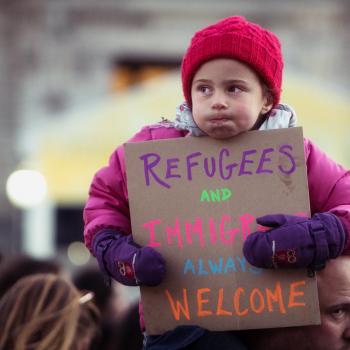
Immigrants: They Need Us, and We Need Them

Four Takeaways from Oprah’s Interview with the Duke...

Catholics Are De-Toxing From their Experiences With Traumatic...

Rush Limbaugh Would Never Have Succeeded In an...
TRENDING AT PATHEOS Catholic

The Kingdom Of God In Ordinary Life And...
The kingdom of God is all around us; it is in us...

How Discretion Guides Us Away From Extremes
Prudence is an important virtue for all of us. While we should...

If Baptism Washes Away Sin, Why Do Catholics...
The seven sacraments stand as the foundation of Catholic ecclesial life. The...

The Power of Setting a Good Example
Remember last August when the Chicago White Sox hosted a "Pope Hat...

A Catholic Critique of Biblical Unitarianism
If the statistics are to be believed, Unitarianism is rising worldwide. Although...

How Grandma Tourism Helps Grandparents Live Their Vocation
Grandma, The New Travel Influencer What started as a nostalgia-inspired social media...
view all Catholic blogs
Ad-Free & Subscriber Log-In Subscription Support
- About Us
- 2026 Calendar
- Videos
- Podcasts
- Library of World Religions
- Faith In Media Tracker
- Advertise With Us
- Write for Us
- Privacy Policy
- Terms of Service
- Do Not Sell My Data
- Contact Us
- Radiant Digital
- Manage Newsletter Subscriptions
- Unsubscribe From Notifications
- Sitemap
Copyright 2008-2026, Patheos, part of the Radiant Digital network of media brands. All rights reserved.
Subscription Support Ad-Free & Subscriber Log-In
Follow Patheos