
BuddhistCatholicContemplativeEvangelicalGeneral ChristianHinduJewishLatter-day SaintMuslimNew VisionsProgressive Christian
Beliefs
- Buddhist
- Catholic
- Contemplative
- Evangelical
- General Christian
- Hindu
- Jewish
- Latter-day Saint
- More Voices
- Muslim
- New Visions
- Pagan
- Progressive Christian
Topics
- Religion News
- Food and Religion
- Sports and Religion
- Religious Art
- Religious Music and Entertainment
- Religious Events
- History and Religion
- Style and Religion
- Politics and Religion
- Women in Religion
- Recreation Outdoors and Religion
- Business Finance and Religion
- Careers Workplace and Religion
- Education and Religion
- Family Parenting and Religion
- Health Fitness and Religion
- Home and Religion
- Relationships and Religion
- Technology and Religion
- Travel and Religion
Columnists
- Buddhist Columnists
- Business Finance and Religion Columnists
- Careers Workplace and Religion Columnists
- Catholic Columnists
- Contemplative Columnists
- Education and Religion Columnists
- Evangelists Columnists
- Family Parenting and Religion Columnists
- General Christian Columnists
- Health Fitness and Religion Columnists
- Hindu Columnists
- History and Religion Columnists
- Home and Religion Columnists
- Jewish Columnists
- More Voices Columnists
- Latter Day Columnists
- Muslim Columnists
- New Visions Columnists
- Nonreligious Columnists
- Pagan Columnists
- Politics and Religion Columnists
- Progressive Columnists
- Recreation Outdoors and Religion Columnists
- Relationships and Religion Columnists
- Religion News Columnists
- Religious Art Columnists
- Religious Events Columnists
- Religious Music and Entertainment Columnists
- Sports and Religion Columnists
- Style and Religion Columnists
- Technology and Religion Columnists
- Travel and Religion Columnists
- Women in Religion Columnists
Resource Library
- 2026 Calendar
- Library of World Religions
- The 100 Most Holy Places on Earth
- Patheos Answers
- Podcasts
- Videos
- Faith Leaders Database
- Anglican Episcopalian
- Bahai
- Baptist
- Buddhism
- Christianity
- Confucianism
- Eastern Orthodoxy
- Hinduism
- Holiness and Pentecostal
- ISKCON
- Islam
- Judaism
- Lutheran
- Methodist
- The Church of Jesus Christ of Latter-day Saints
- New Age
- Paganism
- Presbytarian and Reformed
- Protestantism
- Religion Behind the Scenes
- Roman Catholic
- Scientology
- Shia Islam
- Sikhism
- Sufism
- Sunni Islam
- Taoism
- Zen
- See all religions
Research Tools
 Ad-Free & Subscriber Log-In Subscription Support
Ad-Free & Subscriber Log-In Subscription Support
Follow Patheos 

- Trending:
- Forgiveness
- |
- Marriage
- |
- Consciousness
- |
- Death Penalty
- |
- Election
- |
- Halloween
 suspended in her jar
- Home
- Catholic
- Am I a Racist? An Examination of Conscience
Am I a Racist? An Examination of Conscience
Last updated on: January 15, 2018 at 2:36 pm by Rebecca Bratten Weiss
Am I a Racist? An Examination of Conscience 2018-01-15T14:36:03-04:00 Rebecca Bratten Weiss
Patheos Explore the world's faith through different perspectives on religion and spirituality! Patheos has the views of the prevalent religions and spiritualities of the world.
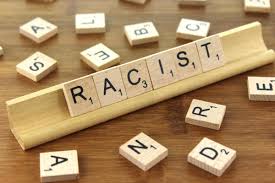 I am writing this for all of you other white folks who reside where I once was: in the “I’m not racist” zone.
The thing about racism is that for the most part, we recognize theoretically that it’s a bad thing. And as long as we imagine that it’s confined to wild-eyed hicks in white robes burning crosses, or robotic Nazis marching in the streets of some other city, far away and long ago, it’s easy to disavow it.
I’m not a Nazi or a KKK member; I don’t think black people should be enslaved, or that Jews should be exterminated. Ergo, I’m not racist. And it’s mean for you to call me racist.
Well, maybe it’s not helpful to call you a racist, if eradicating racism is one’s long-term goal. But toughen up a minute and listen: the reality is, not enslaving black people or putting Jews in ovens is an extremely low bar. It’s like the abusive husband who says “well, I don’t beat her.” Or the homophobe who says “hey, at least I don’t throw gay guys out of windows.”
You might not be a hardcore, flag-waving racist. But because racism is a sin, one can harbor it in one’s heart even if one doesn’t proudly claim it. I am not proud of being envious or slothful, but that doesn’t mean I’m not envious or slothful. Examining one’s conscience means admitting, there are evils lurking in one’s soul of which one would rather not speak.
This is an examination of conscience for myself, and for other white people who don’t want to be racist, who don’t like being called racist – but who have been bought up within a civilization founded on racist presuppositions, both explicitly and implicitly – who have achieved relative material comfort in an economy that was built on colonialism and dictates of ethnic and cultural supremacy – who have been educated to embrace narratives of white saviorhood according to which the injustices of racism are past, and were eradicated by far-thinking white heroes.
I’m not calling you out, by the way. I’m calling us out. This is our collective guilt. Mine, too. And here are some of the ways we mire ourselves more deeply in it.
- When you quote Dr. King but think that Black Lives Matter “goes too far”? Do you like to imagine that you would have marched with Civil Rights protesters back then, but that racial injustice is past, so there’s no need to side with activists now? The reality is, if you refuse to center black spokespersons now, you probably would have done the same then.
- When you accuse black activists of being “snowflakes” and think they should toughen up. Do you tell people they should “choose not to be a victim”? If you get angry and offended when accused of being racist, think about this. If it hurts to be called a racist one day out of 365, how much worse it must hurt to be subjected to racism every day out of 365. Ask yourself, who needs to toughen up, again?
- When you talk about the “problems that plague the black community” without ever stopping to look at the history behind these problems, and what caused them. As long as you don’t address the root causes of violence and poverty in black communities, what you’re doing is a sneaky bit of rhetoric: dangling an enthymeme in front of your audience, inviting them to fill in the missing terms of the argument. Chances are, what they’ll fill it with is black culture is inherently inferior, which is one step away from black people are inherently inferior. If that’s what you’re aiming at, then yes, you’re a racist. Consciously. If that’s not what you’re aiming for, then why do you bring it up this way? What are the subconscious prejudices prompting it?
- On that black culture thing. When you say “black people would get more respect if they behaved more respectably” and what you mean by respectable is “more like white people.” Note how easily we slide past and excuse the crimes of white people, especially white men, especially wealthy white men. We let their whiteness shine like a beacon of respectability, ignoring their sexual predations, their acts of injustice to the poor, their crude behavior, their drunkenness, their support of violence. As long as they’re wearing an oxford shirt, and listening to Coldplay, they’re “respectable” No wonder the bourgeois is a breeding ground for fascism.
- When you center only black spokespersons who mimic white culture, who promote white culture, and who repeat the mantras put forth by white leaders. Just as there’s such a thing as internalized misogyny, so also is there such a thing as internalized racism.
- When we choose to tell stories about this or that black person who was given a handout and didn’t succeed, who was caught committing a crime, who undermined his community’s trust. Why are you choosing to tell this particular story, in a political context? I’m not saying there are stories that can’t be told. Every story can be told. But if you’re talking about the need for reparations, the tale of one black college student who got a scholarship and then dropped out needs to be balanced against the many tales of white college students who had trust funds, and dropped out, who had scholarships, and ended up with bad grades, whose parents paid for a great college, but they just partied the whole time. After all, for the most part, young white people have been given more tools to succeed, and at the very least they don’t have to worry about being judged as less competent due to the color of their skin. So if we’re going to be picking on college students who failed, singling out black students certainly sounds like racism.
- When people make racist jokes and you stand by silently, because you don’t want to be the one who kills the vibe and makes everyone uncomfortable. As though the comfort of white people were so important, it’s better to collude with racism than to disrupt it.
- When you complain about “reverse racism.” First of all – see above: even if there were such a thing as reverse racism, you have not possibly been subjected to it as frequently as black persons have been subjected to racism. Secondly, racism is not simply “animosity to a person because of race or ethnicity.” An escaped slave who feared white people would not be racist. She would be operating out of self-defense. Racism is about systemic structures of oppression of one group by another, on the basis of theorized race. Members of oppressed groups may be suspicious, prejudiced, or rude, but that is not the same as being racist. For a parallel comparison: consider Irish people who hate the English. It might not be cool, it might not be ideal – but it would be ludicrous to examine Irish hatred of English people as being merely a reverse of English oppression of Irish people.
- When you accepted that comparison because you’ve always been relatively unfazed by Irish loathing of the English, maybe even sung Irish songs about killing Black and Tans, maybe even hated the English a little bit yourself – while also believing that black hatred of white people is somehow unjust and irrational.
- When you claim you’re not racist because you have black friends, or once dated a black person. It is perfectly possible that your black friends are only tolerating some aspects of your character, because they like other things about you. It’s also possible that what you think of as a great friendship is for the other person the source of great exasperation. It’s also possible to be involved in a romantic and sexual relationship without any guarantee of respect or trust. You might be simply fetishizing the other, as “exotic” – or showing off how open-minded you are. Also, consider abusive lovers. And consider that lots of black slave owners had sex with black women, but did so while treating them as property. Having sex with a black person is not a “get out of racism, free” card. Not in the least.
- When you say “I’m not racist.” The first step in freeing oneself from sin, after all, is admitting that one is sinful.
Next Post

January 17, 2018 The Story of the "Worst Date Ever" Was All Too Familiar
Browse Our Archives
Select a Category abortion anti-semitism art Atwood Betrothed church clergy abuse coronavirus culture economics education environmentalism ethics faith family feminism gardening gun violence immigration Judaism literature MaddAddam New Pro Life Movement news pandemic personalism poem politics politics blue Pope Francis racism religion salvation sexuality social justice spirituality Station eleven Stephen King The Stand Trump Uncategorized war World Health Organization
Select a Month March 2021 February 2021 January 2021 December 2020 November 2020 October 2020 September 2020 August 2020 July 2020 June 2020 May 2020 April 2020 March 2020 February 2020 January 2020 December 2019 November 2019 October 2019 September 2019 August 2019 July 2019 June 2019 May 2019 April 2019 March 2019 February 2019 January 2019 December 2018 November 2018 October 2018 September 2018 August 2018 July 2018 June 2018 May 2018 April 2018 March 2018 February 2018 January 2018 December 2017 November 2017 October 2017 September 2017 August 2017 July 2017 June 2017 May 2017 April 2017 March 2017 February 2017 January 2017 December 2016 November 2016 October 2016 September 2016 August 2016 July 2016 June 2016 May 2016 April 2016 March 2016 February 2016
Follow Us!
TAKE THE
Religious Wisdom Quiz
Which Psalm opens and closes with "Bless the Lord, O my soul"?
Select your answer to see how you score.
Psalm 22 Psalm 37 Psalm 1 Psalm 103
Support this
Column


Related posts from suspended in her jar

Immigrants: They Need Us, and We Need Them

Four Takeaways from Oprah’s Interview with the Duke...

How Has the Pandemic Changed Us? Has It...

Rush Limbaugh Would Never Have Succeeded In an...
TRENDING AT PATHEOS Catholic

Rejecting Doom: Christian Hope And Human Action
Christianity is a religion of hope. We are to have hope and...

It’s What Comes From Within Which Matters
One of the most difficult things for us to understand is why...

Why I Choose the Eucharist Over the Sermon
Choose the Eucharist, Not the Sermon What are we supposed to get...

5 Design Elements Found in Spiritually Rooted Homes
Putting Spirituality Into Home Decor Our homes are more than our living...

Credo: A Story of God Told with the...
About 10 years ago, I began to imagine a personal "Credo" that...

The Anatomy of Divine Revelation in Catholic Thought
The claim that God has made Himself known to human beings is...
view all Catholic blogs
Ad-Free & Subscriber Log-In Subscription Support
- About Us
- 2026 Calendar
- Videos
- Podcasts
- Library of World Religions
- Faith In Media Tracker
- Advertise With Us
- Write for Us
- Privacy Policy
- Terms of Service
- Do Not Sell My Data
- Contact Us
- Radiant Digital
- Manage Newsletter Subscriptions
- Unsubscribe From Notifications
- Sitemap
Copyright 2008-2026, Patheos. All rights reserved.
Subscription Support Ad-Free & Subscriber Log-In
Follow Patheos