
BuddhistCatholicContemplativeEvangelicalGeneral ChristianHinduJewishLatter-day SaintMuslimNew VisionsProgressive Christian
Beliefs
- Buddhist
- Catholic
- Contemplative
- Evangelical
- General Christian
- Hindu
- Jewish
- Latter-day Saint
- More Voices
- Muslim
- New Visions
- Pagan
- Progressive Christian
Topics
- Religion News
- Food and Religion
- Sports and Religion
- Religious Art
- Religious Music and Entertainment
- Religious Events
- History and Religion
- Style and Religion
- Politics and Religion
- Women in Religion
- Recreation Outdoors and Religion
- Business Finance and Religion
- Careers Workplace and Religion
- Education and Religion
- Family Parenting and Religion
- Health Fitness and Religion
- Home and Religion
- Relationships and Religion
- Technology and Religion
- Travel and Religion
Columnists
- Buddhist Columnists
- Business Finance and Religion Columnists
- Careers Workplace and Religion Columnists
- Catholic Columnists
- Contemplative Columnists
- Education and Religion Columnists
- Evangelists Columnists
- Family Parenting and Religion Columnists
- General Christian Columnists
- Health Fitness and Religion Columnists
- Hindu Columnists
- History and Religion Columnists
- Home and Religion Columnists
- Jewish Columnists
- More Voices Columnists
- Latter Day Columnists
- Muslim Columnists
- New Visions Columnists
- Nonreligious Columnists
- Pagan Columnists
- Politics and Religion Columnists
- Progressive Columnists
- Recreation Outdoors and Religion Columnists
- Relationships and Religion Columnists
- Religion News Columnists
- Religious Art Columnists
- Religious Events Columnists
- Religious Music and Entertainment Columnists
- Sports and Religion Columnists
- Style and Religion Columnists
- Technology and Religion Columnists
- Travel and Religion Columnists
- Women in Religion Columnists
Resource Library
- 2026 Calendar
- Library of World Religions
- The 100 Most Holy Places on Earth
- Patheos Answers
- Podcasts
- Videos
- Faith Leaders Database
- Anglican Episcopalian
- Bahai
- Baptist
- Buddhism
- Christianity
- Confucianism
- Eastern Orthodoxy
- Hinduism
- Holiness and Pentecostal
- ISKCON
- Islam
- Judaism
- Lutheran
- Methodist
- The Church of Jesus Christ of Latter-day Saints
- New Age
- Paganism
- Presbytarian and Reformed
- Protestantism
- Religion Behind the Scenes
- Roman Catholic
- Scientology
- Shia Islam
- Sikhism
- Sufism
- Sunni Islam
- Taoism
- Zen
- See all religions
Research Tools
 Ad-Free & Subscriber Log-In Subscription Support
Ad-Free & Subscriber Log-In Subscription Support
Follow Patheos 

- Trending:
- Forgiveness
- |
- Marriage
- |
- Consciousness
- |
- Death Penalty
- |
- Election
- |
- Halloween
 suspended in her jar
- Home
- Catholic
- When You Say You’re Not a Racist
When You Say You’re Not a Racist
Last updated on: November 9, 2017 at 11:17 am by Rebecca Bratten Weiss
When You Say You’re Not a Racist 2017-11-09T11:17:20-04:00 Rebecca Bratten Weiss
Patheos Explore the world's faith through different perspectives on religion and spirituality! Patheos has the views of the prevalent religions and spiritualities of the world.
“I’m not a racist…”
A statement almost invariably followed by something racist. But it’s okay, apparently, because one has already absolved oneself of racism. Being a racist, after all, is not nice. Sure, there are a few niche, shadowy groups where people openly boast of racism, but those who say “I am not a racist” are usually quick to point out that these groups are few and rare, and not representative of the culture as a whole.
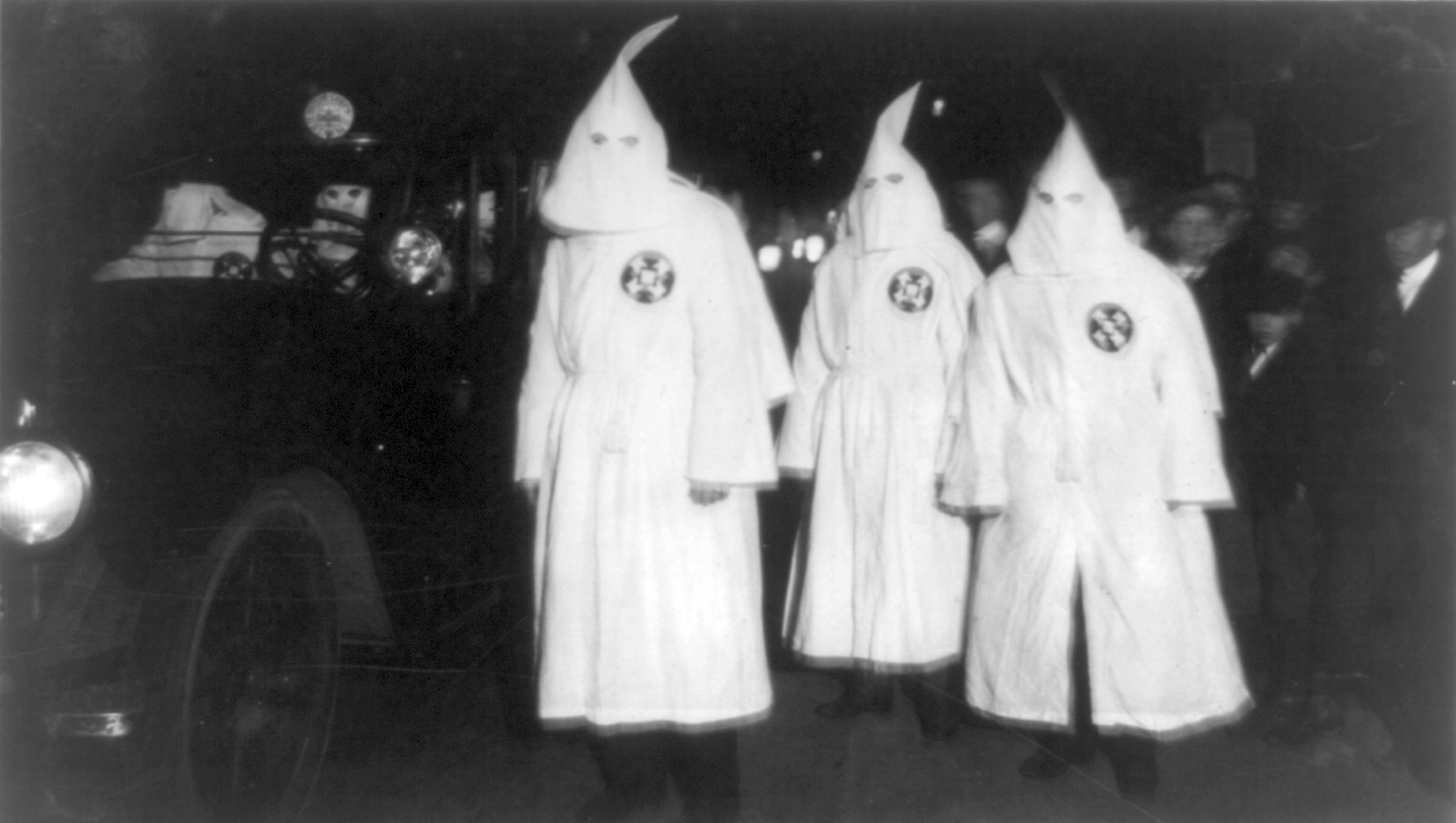
“I’m not a racist” means repudiating these groups. We have an image of racism as associated with KKK hoods, toothless oafs with bad grammar, trailer parks. No one wants to be assocated with these. We want to be able to say racist things without being racist.
Of course, envisioning racism as niche and toothless means closing our eyes to our own recent history. The Alt Right is spoken of as normalizing racism in slick suits and shiny white teeth, but this is not a new thing. Consider the affluent white people who opposed civil rights. Take a look at pictures from the Greensboro Sit-ins: clean cut respectable young white males harassing peaceful protesters, throwing eggs at them, even setting people on fire. And this was in 1960. My father was out of college by then (and on the side of the activists). What happened to the white men who harassed the activists? Did they see the error of their ways? Or did they retreat into safer, more subtle forms of racism? And what positions did they hold, in our nation, for the decades following the Civil Rights era?
Are they saying “I’m not a racist…”?
Projecting racism onto only a few weirdo groups has several rhetorical effects.
First, it scapegoats the less privileged. As Jesse A. Myerson wrote in a recent piece in The Nation:
But scapegoating poor whites keeps the conversation away from fascism’s real base: the petite bourgeoisie. This is a piece of jargon used mostly by Marxists to denote small-property owners, whose nearest equivalents these days may be the “upper middle class” or “small-business owners.” FiveThirtyEightreported last May that “the median household income of a Trump voter so far in the primaries is about $72,000,” or roughly 130 percent of the national median. Trump’s real base, the actual backbone of fascism, isn’t poor and working-class voters, but middle-class and affluent whites.
While not all Trump voters are racist, it is certainly the case that racism figures much more heavily in his base, and the scapegoating of poor whites for creating Trump runs parallel with the scapegoating of the poor rural “hick” as the locus of racism.
This, in turn, serves the purpose of deflecting from one’s own subtler, more respectable forms of racism. If we’re all focusing on a few raggedy oddballs living down in the holler, genteel racism goes unnoticed. Or, perhaps more dangerously, appears as just normal. It’s normal to make sad sounds about absent fathers in Black communities, without asking about the legacy of abuse and injustice that tore families apart for generations. It’s normal to tell funny stories about the behavior of Black persons, because it’s not like you want them whipped and handcuffed, right? So it must be okay.
The third effect here is that, by focusing only on extreme racism, one insinuates that racism isn’t really an issue. Since the toothless hick has no power, it would therefore follow that racism has no power.
And this, of course, allows one to deride activists and groups like BLM as “crybabies.” If there’s no real racism, everyone talking about it should just shut up and focus on real problems, like the moving of low-income families into our communities (I’m not a racist, but…).
“I’m not a racist” seems like a virtuous thing to say, because we know racism is bad, and we don’t want to be bad. But saying one isn’t a thing is not sufficient. If I murder, and say I’m not a murderer, this does not make me a better person; it just adds lying and cowardice to my list of sins. Saying one isn’t a racist doesn’t make it so.
If one recognizes that racism is evil, and truly wishes to avoid participating in evil, a better statement might be “I don’t want to be a racist” – because this leaves open the very real possibility that one might be harboring racist prejudices, without being aware of it. Racism is written into our culture, so it would be very hard, as a privileged White person, to grow up without absorbing some of it. Even as I make an effort to point out and citique racist trends to my children, I become aware of subtle way is which racism has slipped into my way of thinking.
At which point perhaps the best thing to say is in the form of a confessional: “I might be a racist.” As a Christian, especially, I should be alert to the fact that I am a sinner, and being a sinner often means doing bad things without realizing it. Or realizing it, and hoping no one notices. Trying to get away with it.
I might be a racist. I might tell jokes that demean and dehumanize a demographic that has already been subjected to injustice, and this is bullying (whereas mocking the powerful can be an act of virtue). I might instinctively judge Black persons according to certain stereotypes. I might view “Black-sounding names” as seeming less respectable. I might try to inhabit certain Black-woman stereotypes in order to cash in on performing sexuality, without considering the harm that has been done to Black women because men have hyper-sexualized them. I might simply not notice racism, because it doesn’t affect me. I might think it worse to be accused of racism once, then to be the victim of it my whole life.
When topics of racism come up, among White persons, how quickly the conversation turns to affront at having anyone judge them as racist. This becomes the whole point. Or maybe the point is the wonderful things we have done, personally, to be non-racist.
Recently I was in a conversation about race and racism, and a Black man stated that he no longer had any reason to trust White people. How offended I was. A series of thoughts went through my head: he’s painting with a broad brush…I’m not like them…I oppose racism…I did everything I could to oppose Trump…I’m Jewish, not even really White! This guy is nuts!
Then I thought: if this is how I react, to one singular instance of being regarded according to a stereotype, how can I possibly blame this man for thinking this way after a whole lifetime of being judged according to stereotypes, and not just be random persons online, but by teachers, law enforcement officers, employers, politicians, religious leaders?
The only thing left to say after that was: I’m sorry.
image credit: https://commons.wikimedia.org/wiki/File:Ku_Klux_Klan_Virgina_1922_Parade.jpg
Previous Post

May 15, 2017
the cultural ambiguity in our honoring of mothers
Next Post

May 19, 2017 What is Happening to Our Universities?
Browse Our Archives
Select a Category abortion anti-semitism art Atwood Betrothed church clergy abuse coronavirus culture economics education environmentalism ethics faith family feminism gardening gun violence immigration Judaism literature MaddAddam New Pro Life Movement news pandemic personalism poem politics politics blue Pope Francis racism religion salvation sexuality social justice spirituality Station eleven Stephen King The Stand Trump Uncategorized war World Health Organization
Select a Month March 2021 February 2021 January 2021 December 2020 November 2020 October 2020 September 2020 August 2020 July 2020 June 2020 May 2020 April 2020 March 2020 February 2020 January 2020 December 2019 November 2019 October 2019 September 2019 August 2019 July 2019 June 2019 May 2019 April 2019 March 2019 February 2019 January 2019 December 2018 November 2018 October 2018 September 2018 August 2018 July 2018 June 2018 May 2018 April 2018 March 2018 February 2018 January 2018 December 2017 November 2017 October 2017 September 2017 August 2017 July 2017 June 2017 May 2017 April 2017 March 2017 February 2017 January 2017 December 2016 November 2016 October 2016 September 2016 August 2016 July 2016 June 2016 May 2016 April 2016 March 2016 February 2016
Follow Us!
TAKE THE
Religious Wisdom Quiz
What does "Hosanna" mean in Hebrew?
Select your answer to see how you score.
The Lord reigns Praise be to God Holy One Save us now
Support this
Column


Related posts from suspended in her jar

Immigrants: They Need Us, and We Need Them

Four Takeaways from Oprah’s Interview with the Duke...

How Has the Pandemic Changed Us? Has It...

Rush Limbaugh Would Never Have Succeeded In an...
TRENDING AT PATHEOS Catholic

Rejecting Doom: Christian Hope And Human Action
Christianity is a religion of hope. We are to have hope and...

It’s What Comes From Within Which Matters
One of the most difficult things for us to understand is why...

Why I Choose the Eucharist Over the Sermon
Choose the Eucharist, Not the Sermon What are we supposed to get...

5 Design Elements Found in Spiritually Rooted Homes
Putting Spirituality Into Home Decor Our homes are more than our living...

Credo: A Story of God Told with the...
About 10 years ago, I began to imagine a personal "Credo" that...

The Anatomy of Divine Revelation in Catholic Thought
The claim that God has made Himself known to human beings is...
view all Catholic blogs
Ad-Free & Subscriber Log-In Subscription Support
- About Us
- 2026 Calendar
- Videos
- Podcasts
- Library of World Religions
- Faith In Media Tracker
- Advertise With Us
- Write for Us
- Privacy Policy
- Terms of Service
- Do Not Sell My Data
- Contact Us
- Radiant Digital
- Manage Newsletter Subscriptions
- Unsubscribe From Notifications
- Sitemap
Copyright 2008-2026, Patheos. All rights reserved.
Subscription Support Ad-Free & Subscriber Log-In
Follow Patheos