
BuddhistCatholicContemplativeEvangelicalGeneral ChristianHinduJewishLatter-day SaintMuslimNew VisionsProgressive Christian
Beliefs
- Buddhist
- Catholic
- Contemplative
- Evangelical
- General Christian
- Hindu
- Jewish
- Latter-day Saint
- More Voices
- Muslim
- New Visions
- Pagan
- Progressive Christian
Topics
- Religion News
- Food and Religion
- Sports and Religion
- Religious Art
- Religious Music and Entertainment
- Religious Events
- History and Religion
- Style and Religion
- Politics and Religion
- Women in Religion
- Recreation Outdoors and Religion
- Business Finance and Religion
- Careers Workplace and Religion
- Education and Religion
- Family Parenting and Religion
- Health Fitness and Religion
- Home and Religion
- Relationships and Religion
- Technology and Religion
- Travel and Religion
Columnists
- Buddhist Columnists
- Business Finance and Religion Columnists
- Careers Workplace and Religion Columnists
- Catholic Columnists
- Contemplative Columnists
- Education and Religion Columnists
- Evangelists Columnists
- Family Parenting and Religion Columnists
- General Christian Columnists
- Health Fitness and Religion Columnists
- Hindu Columnists
- History and Religion Columnists
- Home and Religion Columnists
- Jewish Columnists
- More Voices Columnists
- Latter Day Columnists
- Muslim Columnists
- New Visions Columnists
- Nonreligious Columnists
- Pagan Columnists
- Politics and Religion Columnists
- Progressive Columnists
- Recreation Outdoors and Religion Columnists
- Relationships and Religion Columnists
- Religion News Columnists
- Religious Art Columnists
- Religious Events Columnists
- Religious Music and Entertainment Columnists
- Sports and Religion Columnists
- Style and Religion Columnists
- Technology and Religion Columnists
- Travel and Religion Columnists
- Women in Religion Columnists
Resource Library
- 2026 Calendar
- Library of World Religions
- The 100 Most Holy Places on Earth
- Patheos Answers
- Podcasts
- Videos
- Faith Leaders Database
- Anglican Episcopalian
- Bahai
- Baptist
- Buddhism
- Christianity
- Confucianism
- Eastern Orthodoxy
- Hinduism
- Holiness and Pentecostal
- ISKCON
- Islam
- Judaism
- Lutheran
- Methodist
- The Church of Jesus Christ of Latter-day Saints
- New Age
- Paganism
- Presbytarian and Reformed
- Protestantism
- Religion Behind the Scenes
- Roman Catholic
- Scientology
- Shia Islam
- Sikhism
- Sufism
- Sunni Islam
- Taoism
- Zen
- See all religions
Research Tools
 Ad-Free & Subscriber Log-In Subscription Support
Ad-Free & Subscriber Log-In Subscription Support
Follow Patheos 

- Trending:
- Forgiveness
- |
- Marriage
- |
- Consciousness
- |
- Death Penalty
- |
- Election
- |
- Halloween
 suspended in her jar
- Home
- Catholic
- this is not the God of vengeance
this is not the God of vengeance
Last updated on: April 13, 2017 at 9:49 pm by Rebecca Bratten Weiss
this is not the God of vengeance 2017-04-13T21:49:38-04:00 Rebecca Bratten Weiss
Patheos Explore the world's faith through different perspectives on religion and spirituality! Patheos has the views of the prevalent religions and spiritualities of the world.
“And behold, one of those who accompanied Jesus put his hand to his sword, drew it, and struck the high priest’s servant, cutting off his ear. Then Jesus said to him, “Put your sword back into its sheath, for all who take the sword will perish by the sword. Do you think that I cannot call upon my Father and he will not provide me at this moment with more than twelve legions of angels.” (Matthew 26: 51-53)
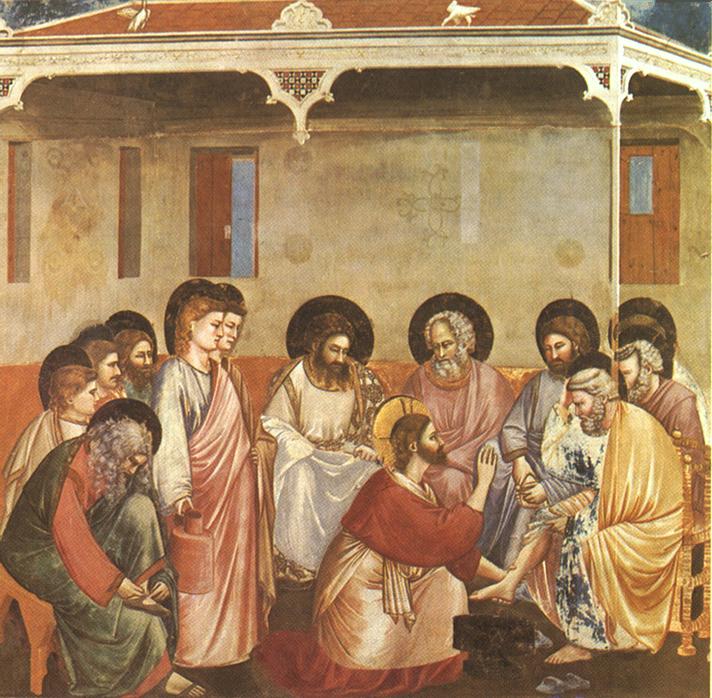
One feels, during Holy Week, weighted down with meaning, with the dread of it all, with the magnitude of the sacrifice – and, also, with the mystery, because even after two thousand years of interpretation, if you step aside and look for a moment at the Gospel passages, as for the first time, there is much that defies easy explanation.
In this particular passage, we note one of many surprising reversals that occurs on this day, along with the initiation of the Eucharist in what looks like a bizarre or even sacrilegious manipulation of established ritual. In the Old Testament, Yahweh could always be counted on to smite the enemy, and perhaps it was with anticipation of some worldly smiting that the disciples gathered that evening, after their master’s triumphant entry into Jerusalem. But God here does not punish. God, instead, prepares to be punished.
Insofar as we are called to model our behavior on that of Christ, the events of Holy Thursday, and those of the Passion on Good Friday, pose a terrifying challenge to all of our received wisdom. After centuries of worship of a God who could be counted on to open the earth to swallow evil-doers, slay every first-born in the land, and smash the very walls of the enemy, here God does not strike – even to save the most innocent. All that Jesus has taught up until now – the last shall be first; the Kingdom of Heaven belongs to the meek; when your enemy strikes you should turn the other cheek; be good to those that persecute you – lead up to this moment in which he actually does it, actually lives it out.
His disciples must really not have been paying attention to half his teachings, if they really expected him to lay waste to the Roman Empire.
Perhaps we still don’t really listen, don’t really pay attention. We focus on the indignity of it – how could they do this to Jesus?
But the form of the reading on Palm Sunday reminds us that we should rephrase it: how could we do this to Jesus.
Because this is, tragically, the role that we as Christians tend to easily to fall into, over and over: the ones who betray him. The ones who deny him. The ones who trade him out for Barabbas.
That which we do to the least of these we do to him. When we refuse the worker wages, when we mock the weak or disabled, when we use a person as a sexual object, when we cut off aid to the hungry, when we poison the poor with environmental toxins, when we discriminate because of race, when we send in bombs or drones for the sake of some vague overarching national necessity – we do it to Jesus.
Even when we are standing up for the poor or oppressed, the temptation to crucify Christ remains, because the temptation to use violence remains. Those of us who were conscientious objectors in the right-wing culture war would do well to remember that as followers of Christ, we are called to turn away from all war. The Jews were unjustly colonized and occupied by Roman forces. It was understandable that the disciples would hope for a new kingdom on earth, because the sins against their people cried out for vengeance.
But the God who was born in a stable and died on a cross is not the God of vengeance. The justice that we see with Christ is one in which the spotless victim dares give all in order to save the unworthy – ourselves – even knowing we will carry on crucifying him, over and over again.
image credit: https://upload.wikimedia.org/wikipedia/commons/1/11/Giotto_-_Scrovegni_-_-30-_-_Washing_of_Feet.jpg
Previous Post

April 10, 2017
Jesus was not an alpha
Next Post
April 15, 2017 Mary Magdalene - Preacher or Prostitute?
Browse Our Archives
Select a Category abortion anti-semitism art Atwood Betrothed church clergy abuse coronavirus culture economics education environmentalism ethics faith family feminism gardening gun violence immigration Judaism literature MaddAddam New Pro Life Movement news pandemic personalism poem politics politics blue Pope Francis racism religion salvation sexuality social justice spirituality Station eleven Stephen King The Stand Trump Uncategorized war World Health Organization
Select a Month March 2021 February 2021 January 2021 December 2020 November 2020 October 2020 September 2020 August 2020 July 2020 June 2020 May 2020 April 2020 March 2020 February 2020 January 2020 December 2019 November 2019 October 2019 September 2019 August 2019 July 2019 June 2019 May 2019 April 2019 March 2019 February 2019 January 2019 December 2018 November 2018 October 2018 September 2018 August 2018 July 2018 June 2018 May 2018 April 2018 March 2018 February 2018 January 2018 December 2017 November 2017 October 2017 September 2017 August 2017 July 2017 June 2017 May 2017 April 2017 March 2017 February 2017 January 2017 December 2016 November 2016 October 2016 September 2016 August 2016 July 2016 June 2016 May 2016 April 2016 March 2016 February 2016
Follow Us!
TAKE THE
Religious Wisdom Quiz
What does "Shiloh" (where the Tabernacle stood) mean?
Select your answer to see how you score.
House of Prayer Place of Peace Land of Bread Well of Water
Support this
Column


Related posts from suspended in her jar

Immigrants: They Need Us, and We Need Them

Four Takeaways from Oprah’s Interview with the Duke...

Catholics Are De-Toxing From their Experiences With Traumatic...

How Has the Pandemic Changed Us? Has It...
TRENDING AT PATHEOS Catholic

Rejecting Doom: Christian Hope And Human Action
Christianity is a religion of hope. We are to have hope and...

It’s What Comes From Within Which Matters
One of the most difficult things for us to understand is why...

Why I Choose the Eucharist Over the Sermon
Choose the Eucharist, Not the Sermon What are we supposed to get...

5 Design Elements Found in Spiritually Rooted Homes
Putting Spirituality Into Home Decor Our homes are more than our living...

Credo: A Story of God Told with the...
About 10 years ago, I began to imagine a personal "Credo" that...

The Anatomy of Divine Revelation in Catholic Thought
The claim that God has made Himself known to human beings is...
view all Catholic blogs
Ad-Free & Subscriber Log-In Subscription Support
- About Us
- 2026 Calendar
- Videos
- Podcasts
- Library of World Religions
- Faith In Media Tracker
- Advertise With Us
- Write for Us
- Privacy Policy
- Terms of Service
- Do Not Sell My Data
- Contact Us
- Radiant Digital
- Manage Newsletter Subscriptions
- Unsubscribe From Notifications
- Sitemap
Copyright 2008-2026, Patheos. All rights reserved.
Subscription Support Ad-Free & Subscriber Log-In
Follow Patheos