
BuddhistCatholicContemplativeEvangelicalGeneral ChristianHinduJewishLatter-day SaintMuslimNew VisionsProgressive Christian
Beliefs
- Buddhist
- Catholic
- Contemplative
- Evangelical
- General Christian
- Hindu
- Jewish
- Latter-day Saint
- More Voices
- Muslim
- New Visions
- Pagan
- Progressive Christian
Topics
- Religion News
- Food and Religion
- Sports and Religion
- Religious Art
- Religious Music and Entertainment
- Religious Events
- History and Religion
- Style and Religion
- Politics and Religion
- Women in Religion
- Recreation Outdoors and Religion
- Business Finance and Religion
- Careers Workplace and Religion
- Education and Religion
- Family Parenting and Religion
- Health Fitness and Religion
- Home and Religion
- Relationships and Religion
- Technology and Religion
- Travel and Religion
Columnists
- Buddhist Columnists
- Business Finance and Religion Columnists
- Careers Workplace and Religion Columnists
- Catholic Columnists
- Contemplative Columnists
- Education and Religion Columnists
- Evangelists Columnists
- Family Parenting and Religion Columnists
- General Christian Columnists
- Health Fitness and Religion Columnists
- Hindu Columnists
- History and Religion Columnists
- Home and Religion Columnists
- Jewish Columnists
- More Voices Columnists
- Latter Day Columnists
- Muslim Columnists
- New Visions Columnists
- Nonreligious Columnists
- Pagan Columnists
- Politics and Religion Columnists
- Progressive Columnists
- Recreation Outdoors and Religion Columnists
- Relationships and Religion Columnists
- Religion News Columnists
- Religious Art Columnists
- Religious Events Columnists
- Religious Music and Entertainment Columnists
- Sports and Religion Columnists
- Style and Religion Columnists
- Technology and Religion Columnists
- Travel and Religion Columnists
- Women in Religion Columnists
Resource Library
- 2026 Calendar
- Library of World Religions
- The 100 Most Holy Places on Earth
- Patheos Answers
- Podcasts
- Videos
- Faith Leaders Database
- Anglican Episcopalian
- Bahai
- Baptist
- Buddhism
- Christianity
- Confucianism
- Eastern Orthodoxy
- Hinduism
- Holiness and Pentecostal
- ISKCON
- Islam
- Judaism
- Lutheran
- Methodist
- The Church of Jesus Christ of Latter-day Saints
- New Age
- Paganism
- Presbytarian and Reformed
- Protestantism
- Religion Behind the Scenes
- Roman Catholic
- Scientology
- Shia Islam
- Sikhism
- Sufism
- Sunni Islam
- Taoism
- Zen
- See all religions
Research Tools
 Ad-Free & Subscriber Log-In Subscription Support
Ad-Free & Subscriber Log-In Subscription Support
Follow Patheos 

- Trending:
- Forgiveness
- |
- Marriage
- |
- Consciousness
- |
- Death Penalty
- |
- Election
- |
- Halloween
 suspended in her jar
- Home
- Catholic
- When Christian Women Tell You What We Hear
When Christian Women Tell You What We Hear
Last updated on: May 1, 2017 at 12:17 am by Rebecca Bratten Weiss
When Christian Women Tell You What We Hear 2017-05-01T00:17:07-04:00 Rebecca Bratten Weiss
Patheos Explore the world's faith through different perspectives on religion and spirituality! Patheos has the views of the prevalent religions and spiritualities of the world.
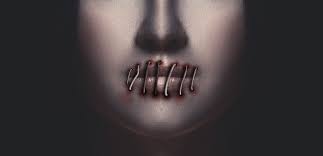
A few days ago on Twitter, Christian feminist writer Sarah Bessey started a conversation about the misogynistic things that “only Christian women hear.” And it went wild. Women (and a few men) of all denominations shared their experiences of a sexism ranging from well-meaning but misguided adulation, to downright abuse and victim-blaming. You can see some prime instances here, at the Church Leaders site.
I started a conversation about this topic on my Facebook page, and it blew up, with nearly 900 comments, mostly women sharing their experiences, reacting, commiserating. A few men also participated, some with empathy, though a few with criticism. A few women were critical as well. But the general sense was one of catharsis, getting it off our chests, laughing about it and raging about it and posting the appropriate head-desk emoticons. We’d heard most of it before. But it was good to share and experience solidarity. Some of the comments we brought up were from non-catholics – making assumptions about how stupid we are, to ally ourselves with the backwards superstition of religion, how benighted not to use birth control. Or surprise that someone who “seems smart” would be Catholic. But the majority of the complaints were about “Catholic on Catholic” misogyny.
“Your fulfillment comes from being obedient to your husband.”
This was said to a woman who recently escaped from a horribly abusive marriage. But the mechanism is in place to remind women that it’s probably our fault. A priest told a young woman in confessional:
“Boys will do whatever you let them, you know what I mean? You have all the power. You have to protect their purity.”
This is part of a skewed perspective on women, men, and marriage, in which a woman is made to be subordinate to men. Oh yes, the word “complementary” is tossed around a lot. Occasionally it is even spelled correctly. But there are various types of complementarity, and there’s a tendency to view women rather as garnish than as a valued equal component in a dialectical relationship, the “integral complementarity” Sr. Prudence Allen teaches.
“I suspect you have a vocation to marriage, and you’ll get the validation you need and your sense of self worth from your husband.”
And from a professor, to a classroom:
“Men should know who they are before they start dating, but women don’t need to worry about this. Who they are will be formed by their relationship.”
We’re regarded both as a male dependent, and as a means to the end of reproduction:
“Are you having another one soon?”
“You’ve been married for ten years, and you only have FIVE kids? Kinda lagging behind, dontcha think?”
“If you don’t like breastfeeding, you must have a problem with your Creator.”
And it is because of this, partially, that people can be so cruel to women when the issue of abortion comes up:
“I’m sending screenshots of this conversation of your abortion history to your priest to show you’re unworthy of receiving communion.”
Then, of course, there’s the issue of how we dress. It’s a guarantee that in “traditional” Catholic circles, any conversation about the dignity and vocation of women will eventually degenerate into a series of imperatives about covering our bodies:
“Women with curves have a greater responsibility to be modest, even though it’s difficult.”
“You are a distraction to the servers at Mass by not covering your head. Dress appropriately.” (from a priest)
“A woman is responsible for a man lusting after her. He has no control over his body and if you dress poorly he will lose control.”
“Wearing pants is a mortal sin– you WILL go to Hell!”
There was the usual denigration of women’s sense of vocation and purpose in any venue outside the home:
“You’re so pretty. Why don’t you just get married? There’s no future in philosophy anyways. *nervous laugh*” – from a male professor
“You can’t teach in a seminary. You’re a distraction to young vocations”
“Women who work are the ones who are messing up their kids by not being in the home”
“If you don’t like that women can’t be priests why don’t you just leave?” [be careful who you say that to, she might just take your advice.]
And, our very identity gets appropriated and explained:
“You can’t be Catholic and a feminist. It doesn’t work that way.”
“Women who wear makeup clearly don’t understand their metaphysical beauty without it.”
A favorite was one I’d heard already in person: about a male professor telling a female college student, aged twenty, that she should really check out NFP and learn about the effects of breastfeeding because “it will help me understand what my identity as a woman means.” I’m sure he meant well, but it is disheartening to think that the work women have done in getting to know our bodies internally as well as scientifically, and to train ourselves in this bodily awareness that is given to us, should be appropriated as some special form of knowledge possessed by men. Imagine if I, a female professor, were to tell a male student half my age that he should familiarize himself more with the functions of his genitalia? I would expect to be accused of harassment.
If you have read this far, you may be nodding your head, because you’ve heard it all before, and you’re glad it’s coming out in the open, and maybe even hoping that the communication technologies of social networking will allow these conversations to be addressed across a broader sphere, not just within closed bubbles or in solitary complaints. As several people pointed out, this is not an exclusively Catholic problem, nor a Christian one, nor even a religious one. My contention is that misogyny and sexism have no place in a true Christian ethos, not even gussied up as a form of faux feminism – and that the threads of sexism in our tradition came from external power-pressures, and of course from original sin. So naturally, sexism is found everywhere. It’s just very disheartening to find it so solidly rooted in some Christian cultures.
If you have read this far, you may also be wondering: what’s the point of complaining about this? Isn’t this just a bitch-fest? Why not just laugh it off and move on?
Well, a few points:
- Women need to share these stories with one another so that we can understand that what we are experiencing is part of a larger system, that it’s not just isolated incidents. We haven’t just happened to be unlucky. By sharing with one another we can achieve solidarity, and thus work together better to combat misogyny wherever is arises.
- And this means that those who have said these things are not necessarily motivated by personally cultivated, deliberate misogyny, but rather by structural sexism. We need to understand that often they are repeating what they have been told, so we know that what needs to be opposed is not these individual persons, but rather a broader web of ideology and power.
- We can laugh it off, certainly, and do. But since this is systemic injustice, we have to do more than laugh it off. Laughing at it can be a powerful weapon, and one that I enjoy using. But you can not demand that a woman who has been hurt and abused because of sexism should just bear it lightly. It’s not her job to make other people feel more comfortable about sexism. It’s our job to help her to heal, and to dismantle the structures that harmed her.
- Anyway, why is it that women are always expected to be so thick-skinned, if we are supposedly the weaker sex? I can’t count the number of times I’ve been called out for seeming to be overly critical of men. “A woman needs a man like a fish needs a bicycle” is taken as an unbearable affront, but I’m supposed to read all the nasty or denigrating things that significant male thinkers – even saints – have said about me, over the ages, and just shrug it off? I mean, I do shrug it off – personally. I’m not triggered by Aristotle. But ideologically and politically, I oppose it.
- Lastly, and this is huge: whenever we have an exchange like this, about the sexism we have experienced, someone will inform us that this actually is not a real problem. We only experience it because of where we live. Or because we somehow seek it out. We needed something to blog on. Anti-Catholics will tell us that we just need to leave the church, and be free (because there’s obviously no sexism in the secular world of fashion porn, militarist violence, and liberal politics. None). Catholics will tell us we’re blowing things out of proportion, or seeking melodrama, or have a victim mentality. But if this is the case, why do these topics always generate such explosive conversation? Why is the conversation not confined just to a few traddy circles? Why did the Religious Right throw enthusiastic support behind a self-proclaimed grabber of women, and his sidekick who is afraid even to dine with us because Sin? Often they’ll say : “the real sexism is with Islam.” But I have conversed with Muslim feminists and what we find, typically, is a series of parallel lines. We’ve had very similar experiences. And not just with the fundamentalists.
So, this is why we speak about what we hear. And we hope that finally others will begin to listen, and stop informing us that our experiences are somehow not important.
image credit: https://pixabay.com/en/woman-mouth-lips-silence-excluded-1445917/
Previous Post

April 19, 2017
who's listening when we talk about abortion?
Next Post

April 27, 2017 my other problem with the "Benedict Option"
Browse Our Archives
Select a Category abortion anti-semitism art Atwood Betrothed church clergy abuse coronavirus culture economics education environmentalism ethics faith family feminism gardening gun violence immigration Judaism literature MaddAddam New Pro Life Movement news pandemic personalism poem politics politics blue Pope Francis racism religion salvation sexuality social justice spirituality Station eleven Stephen King The Stand Trump Uncategorized war World Health Organization
Select a Month March 2021 February 2021 January 2021 December 2020 November 2020 October 2020 September 2020 August 2020 July 2020 June 2020 May 2020 April 2020 March 2020 February 2020 January 2020 December 2019 November 2019 October 2019 September 2019 August 2019 July 2019 June 2019 May 2019 April 2019 March 2019 February 2019 January 2019 December 2018 November 2018 October 2018 September 2018 August 2018 July 2018 June 2018 May 2018 April 2018 March 2018 February 2018 January 2018 December 2017 November 2017 October 2017 September 2017 August 2017 July 2017 June 2017 May 2017 April 2017 March 2017 February 2017 January 2017 December 2016 November 2016 October 2016 September 2016 August 2016 July 2016 June 2016 May 2016 April 2016 March 2016 February 2016
Follow Us!
TAKE THE
Religious Wisdom Quiz
What did Daniel’s vision of the ram and the goat represent?
Select your answer to see how you score.
The end of the world The fall of Jerusalem The Medo-Persian and Greek Empires The battle of good and evil
Support this
Column


Related posts from suspended in her jar

Immigrants: They Need Us, and We Need Them

Four Takeaways from Oprah’s Interview with the Duke...

Catholics Are De-Toxing From their Experiences With Traumatic...

How Has the Pandemic Changed Us? Has It...
TRENDING AT PATHEOS Catholic

The Parable Of The Sower And The Word...
One of Christ’s most famous parables is that of the sower who...

Rejecting Doom: Christian Hope And Human Action
Christianity is a religion of hope. We are to have hope and...

Why I Choose the Eucharist Over the Sermon
Choose the Eucharist, Not the Sermon What are we supposed to get...

5 Design Elements Found in Spiritually Rooted Homes
Putting Spirituality Into Home Decor Our homes are more than our living...

Credo: A Story of God Told with the...
About 10 years ago, I began to imagine a personal "Credo" that...

The Anatomy of Divine Revelation in Catholic Thought
The claim that God has made Himself known to human beings is...
view all Catholic blogs
Ad-Free & Subscriber Log-In Subscription Support
- About Us
- 2026 Calendar
- Videos
- Podcasts
- Library of World Religions
- Faith In Media Tracker
- Advertise With Us
- Write for Us
- Privacy Policy
- Terms of Service
- Do Not Sell My Data
- Contact Us
- Radiant Digital
- Manage Newsletter Subscriptions
- Unsubscribe From Notifications
- Sitemap
Copyright 2008-2026, Patheos. All rights reserved.
Subscription Support Ad-Free & Subscriber Log-In
Follow Patheos