
BuddhistCatholicContemplativeEvangelicalGeneral ChristianHinduJewishLatter-day SaintMuslimNew VisionsProgressive Christian
Beliefs
- Buddhist
- Catholic
- Contemplative
- Evangelical
- General Christian
- Hindu
- Jewish
- Latter-day Saint
- More Voices
- Muslim
- New Visions
- Pagan
- Progressive Christian
Topics
- Religion News
- Food and Religion
- Sports and Religion
- Religious Art
- Religious Music and Entertainment
- Religious Events
- History and Religion
- Style and Religion
- Politics and Religion
- Women in Religion
- Recreation Outdoors and Religion
- Business Finance and Religion
- Careers Workplace and Religion
- Education and Religion
- Family Parenting and Religion
- Health Fitness and Religion
- Home and Religion
- Relationships and Religion
- Technology and Religion
- Travel and Religion
Columnists
- Buddhist Columnists
- Business Finance and Religion Columnists
- Careers Workplace and Religion Columnists
- Catholic Columnists
- Contemplative Columnists
- Education and Religion Columnists
- Evangelists Columnists
- Family Parenting and Religion Columnists
- General Christian Columnists
- Health Fitness and Religion Columnists
- Hindu Columnists
- History and Religion Columnists
- Home and Religion Columnists
- Jewish Columnists
- More Voices Columnists
- Latter Day Columnists
- Muslim Columnists
- New Visions Columnists
- Nonreligious Columnists
- Pagan Columnists
- Politics and Religion Columnists
- Progressive Columnists
- Recreation Outdoors and Religion Columnists
- Relationships and Religion Columnists
- Religion News Columnists
- Religious Art Columnists
- Religious Events Columnists
- Religious Music and Entertainment Columnists
- Sports and Religion Columnists
- Style and Religion Columnists
- Technology and Religion Columnists
- Travel and Religion Columnists
- Women in Religion Columnists
Resource Library
- 2026 Calendar
- Library of World Religions
- The 100 Most Holy Places on Earth
- Patheos Answers
- Podcasts
- Videos
- Faith Leaders Database
- Anglican Episcopalian
- Bahai
- Baptist
- Buddhism
- Christianity
- Confucianism
- Eastern Orthodoxy
- Hinduism
- Holiness and Pentecostal
- ISKCON
- Islam
- Judaism
- Lutheran
- Methodist
- The Church of Jesus Christ of Latter-day Saints
- New Age
- Paganism
- Presbytarian and Reformed
- Protestantism
- Religion Behind the Scenes
- Roman Catholic
- Scientology
- Shia Islam
- Sikhism
- Sufism
- Sunni Islam
- Taoism
- Zen
- See all religions
Research Tools
 Ad-Free & Subscriber Log-In Subscription Support
Ad-Free & Subscriber Log-In Subscription Support
Follow Patheos 

- Trending:
- Forgiveness
- |
- Marriage
- |
- Consciousness
- |
- Death Penalty
- |
- Election
- |
- Halloween
 suspended in her jar
- Home
- Catholic
- female beauty, religion, and fetishism
female beauty, religion, and fetishism
Last updated on: March 27, 2017 at 2:35 pm by Rebecca Bratten Weiss
female beauty, religion, and fetishism 2017-03-27T14:35:52-04:00 Rebecca Bratten Weiss
Patheos Explore the world's faith through different perspectives on religion and spirituality! Patheos has the views of the prevalent religions and spiritualities of the world.
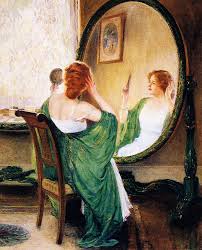
Female beauty: we all want it, right? Women want to be beautiful; men want to be loved by beautiful women. Beauty inspires art, transforms culture. Indeed, if we take Dostoevsky literally, it even saves the world.
Our market seems to support this notion, given the multi-billion dollar industries dedicated to the promotion of female beauty. Pop culture supports it: women in entertainment are expected to be beautiful, as men are not. The interplay between pop culture and market means that beautiful women in entertainment are used as images for selling products that have nothing to do with women, per se, or with beauty. Cars, snacks, beer, medicine – all are marketed via images of gorgeous women. “Sex sells” people say – indicating that in the collective imagination beautiful women are seen not so much as persons but as emblems of sex. As De Beauvoir pointed out, in the collective imagination, the idea of “man” is neutral; “woman” on the other hand, implies “the sex.”
And even in religion, female beauty is considered to be somehow required. As Naomi Wolf writes in The Beauty Myth:
“The skepticism of the modern age evaporates where the subject is women’s beauty. It is still – indeed, more than ever – described not as if it is determined by mortal beings, shaped by politics, history and the marketplace, but as if there is a divine authority who issues deathless scripture about what it is that makes a woman good to look at….A man’s right to confer judgment on any woman’s beauty while remaining himself unjudged is beyond scrutiny because it is thought of as God-given.”
Female beauty is seen as some kind of proof of divine goodness, as a symbol of purity and righteousness, as having spiritual significance – but, of course, at the same time, it is also depicted as potentially dangerous. Beauty, in Christian circles, is often qualified: it has to be “true beauty” (which means: feminine, modest, submissive, obedient). “True beauty” inspires and elevates. Beauty that is “merely external” is not “true beauty.” If a beautiful woman is unfeminine, immodest, domineering, or unruly, her beauty isn’t the real thing. Beauty is associated with certain specifically “feminine” virtues, such as purity, chastity, obedience, and modesty.
We’ve heard it all before. And if you happen to fall into the category of the Truly Beautiful woman – which means: white, small-nosed, slender, but with perky breasts (not too perky, though), smiling, winsome, healthy (but not mannishly muscular), happy in 1950s western gender roles, uninterested in philosophical dispute, delighted to twirl in long, full skirts – you probably nod your head and say: yes, this is my calling. I will be Truly Beautiful and Save the World.
The rest of us – the 99% who aren’t Truly Beautiful – are shaking our heads over here, thinking: this has nothing to do with me, or with being a person, or with being a Christian.
The problem with this elevation of female beauty is manifold. I will touch on only three of the problems with it, here.
First of all, it involves a confusion about ethics. Treating beauty as though it is somehow divinely commanded, and associated with virtuous living, implies that women who aren’t physically attractive have failed to be the sort of things God wants us to be. Of course, one could say, “we aren’t talking about physical beauty; we’re talking about True Beauty.” But that’s an evasion. Of course we are talking about physical beauty. Physical beauty is what the market is pushing, what the songs are celebrating. To pretend otherwise is both disingenuous and aesthetically problematic, because either you are lying, or you are pretending that there isn’t such a thing as physical beauty at all. And that would be a mistake, because when we talk about beauty in painting, architecture, music, design, and the rest, we are talking about something that has physicality, something perceived with the senses. Yes, it may shift in relation to culture and taste; it may be somewhat constructed – but it is physical. When we speak of the aesthetic values of a painting the actual physical properties of the work are relevant. However, aesthetic values are not morally mandated. It’s unavoidable that most of us will want to be beautiful, to some extent, in our lives. But that doesn’t mean we have to be. We’re totally free not to be. We can be physically ugly, and still be resplendent persons. The older we get, as women, the less obsessed we get with physical beauty, anyway: it just doesn’t seem as important as being interesting, as producing great art, as working for justice, as being kind.
Another problem is that this elevation of female beauty is a sort of fetishism, an objectification of the woman in a way that reduces her personhood. It may not be as overtly fetishism as pornography, but it serves a male demand that women present themselves as the right kind of Object, on which the gaze can rest pleasurably without any consequent pangs of guilt. The subtext is: I want to enjoy your beauty without feeling guilty about lust, and instead of dealing with my own inclinations to dehumanize, you just do the work for me.
Third, this view is connected with an approach to ethics that genders virtue. This is a kind of relativism, as though the call to virtue is relative to one’s sexuality. The virtues are not gendered. There is no such thing as masculine/male virtue, or female/feminine virtue. We are all called to be courageous, just, humble, and modest. We’re not called to be more some and less the other, just because of the kind of genitalia we have.
Maybe our word “beauty” is too broad, too ambiguous – rather like our word “love.” It’s true that even in aesthetics, much that we loosely term “beautiful” would be better served by another adjective. It’s also true that the power of eros, at the height of its spiritual perfection, allows us to see a certain kind of beauty of the person, an ontological goodness that radiates and attracts, so that we are drawn towards union with the beloved even if that person doesn’t have physical, aesthetic beauty. Charlotte Bronte’s Jane Eyre presents, wonderfully, the phenomenon of two physically unattractive people falling in love – not only spiritually, with a love of the mind, but with a truly bodily desire for unity.
We’re here at a liminal point, as Christians, because we know the body matters. But it doesn’t always matter in the way the forces of market and power say it does. The role of the Christian imagination – in philosophy and theology, as well as art and literature, and even in fashion – should be to explore the broad range of aesthetic possibilities, ethical obligations, and even sacramental meanings, of bodily being – neither rejecting it as frightening and gross, not embracing wholesale what the fetishized images of the market or the patriarchal tradition tell us it is.
With this in mind, to return to Dostoevsky: the beauty that saves the world will not be contrived by artists; it is not the beauty of a trim ankle or rosy lip. the beauty that saves the world is Christ, and we can find him not only in the images of the pure or lofty, but also in the wounds of the most broken.
image credit: https://commons.wikimedia.org/wiki/File:Guy_Rose_-_The_Green_Mirror.JPG
Previous Post

March 22, 2017
The Ever-Moving Goalpost of Eliminating Abortion Supply
Next Post

March 31, 2017 on the mike pence dining option, and why feminists are expressing criticism
Browse Our Archives
Select a Category abortion anti-semitism art Atwood Betrothed church clergy abuse coronavirus culture economics education environmentalism ethics faith family feminism gardening gun violence immigration Judaism literature MaddAddam New Pro Life Movement news pandemic personalism poem politics politics blue Pope Francis racism religion salvation sexuality social justice spirituality Station eleven Stephen King The Stand Trump Uncategorized war World Health Organization
Select a Month March 2021 February 2021 January 2021 December 2020 November 2020 October 2020 September 2020 August 2020 July 2020 June 2020 May 2020 April 2020 March 2020 February 2020 January 2020 December 2019 November 2019 October 2019 September 2019 August 2019 July 2019 June 2019 May 2019 April 2019 March 2019 February 2019 January 2019 December 2018 November 2018 October 2018 September 2018 August 2018 July 2018 June 2018 May 2018 April 2018 March 2018 February 2018 January 2018 December 2017 November 2017 October 2017 September 2017 August 2017 July 2017 June 2017 May 2017 April 2017 March 2017 February 2017 January 2017 December 2016 November 2016 October 2016 September 2016 August 2016 July 2016 June 2016 May 2016 April 2016 March 2016 February 2016
Follow Us!
TAKE THE
Religious Wisdom Quiz
Who said, "We ought to obey God rather than men"?
Select your answer to see how you score.
Peter Paul John James
Support this
Column


Related posts from suspended in her jar

Immigrants: They Need Us, and We Need Them

Four Takeaways from Oprah’s Interview with the Duke...

Catholics Are De-Toxing From their Experiences With Traumatic...

Rush Limbaugh Would Never Have Succeeded In an...
TRENDING AT PATHEOS Catholic

The Parable Of The Sower And The Word...
One of Christ’s most famous parables is that of the sower who...

Rejecting Doom: Christian Hope And Human Action
Christianity is a religion of hope. We are to have hope and...

Why I Choose the Eucharist Over the Sermon
Choose the Eucharist, Not the Sermon What are we supposed to get...

5 Design Elements Found in Spiritually Rooted Homes
Putting Spirituality Into Home Decor Our homes are more than our living...

Credo: A Story of God Told with the...
About 10 years ago, I began to imagine a personal "Credo" that...

The Anatomy of Divine Revelation in Catholic Thought
The claim that God has made Himself known to human beings is...
view all Catholic blogs
Ad-Free & Subscriber Log-In Subscription Support
- About Us
- 2026 Calendar
- Videos
- Podcasts
- Library of World Religions
- Faith In Media Tracker
- Advertise With Us
- Write for Us
- Privacy Policy
- Terms of Service
- Do Not Sell My Data
- Contact Us
- Radiant Digital
- Manage Newsletter Subscriptions
- Unsubscribe From Notifications
- Sitemap
Copyright 2008-2026, Patheos. All rights reserved.
Subscription Support Ad-Free & Subscriber Log-In
Follow Patheos