
BuddhistCatholicContemplativeEvangelicalGeneral ChristianHinduJewishLatter-day SaintMuslimNew VisionsProgressive Christian
Beliefs
- Buddhist
- Catholic
- Contemplative
- Evangelical
- General Christian
- Hindu
- Jewish
- Latter-day Saint
- More Voices
- Muslim
- New Visions
- Pagan
- Progressive Christian
Topics
- Religion News
- Food and Religion
- Sports and Religion
- Religious Art
- Religious Music and Entertainment
- Religious Events
- History and Religion
- Style and Religion
- Politics and Religion
- Women in Religion
- Recreation Outdoors and Religion
- Business Finance and Religion
- Careers Workplace and Religion
- Education and Religion
- Family Parenting and Religion
- Health Fitness and Religion
- Home and Religion
- Relationships and Religion
- Technology and Religion
- Travel and Religion
Columnists
- Buddhist Columnists
- Business Finance and Religion Columnists
- Careers Workplace and Religion Columnists
- Catholic Columnists
- Contemplative Columnists
- Education and Religion Columnists
- Evangelists Columnists
- Family Parenting and Religion Columnists
- General Christian Columnists
- Health Fitness and Religion Columnists
- Hindu Columnists
- History and Religion Columnists
- Home and Religion Columnists
- Jewish Columnists
- More Voices Columnists
- Latter Day Columnists
- Muslim Columnists
- New Visions Columnists
- Nonreligious Columnists
- Pagan Columnists
- Politics and Religion Columnists
- Progressive Columnists
- Recreation Outdoors and Religion Columnists
- Relationships and Religion Columnists
- Religion News Columnists
- Religious Art Columnists
- Religious Events Columnists
- Religious Music and Entertainment Columnists
- Sports and Religion Columnists
- Style and Religion Columnists
- Technology and Religion Columnists
- Travel and Religion Columnists
- Women in Religion Columnists
Resource Library
- 2026 Calendar
- Library of World Religions
- The 100 Most Holy Places on Earth
- Patheos Answers
- Podcasts
- Videos
- Faith Leaders Database
- Anglican Episcopalian
- Bahai
- Baptist
- Buddhism
- Christianity
- Confucianism
- Eastern Orthodoxy
- Hinduism
- Holiness and Pentecostal
- ISKCON
- Islam
- Judaism
- Lutheran
- Methodist
- The Church of Jesus Christ of Latter-day Saints
- New Age
- Paganism
- Presbytarian and Reformed
- Protestantism
- Religion Behind the Scenes
- Roman Catholic
- Scientology
- Shia Islam
- Sikhism
- Sufism
- Sunni Islam
- Taoism
- Zen
- See all religions
Research Tools
 Ad-Free & Subscriber Log-In Subscription Support
Ad-Free & Subscriber Log-In Subscription Support
Follow Patheos 

- Trending:
- Forgiveness
- |
- Marriage
- |
- Consciousness
- |
- Death Penalty
- |
- Election
- |
- Halloween
 suspended in her jar
- Home
- Catholic
- genetic testing and hereditary disease: some gifts we can not control
genetic testing and hereditary disease: some gifts we can not control
Last updated on: February 22, 2017 at 3:19 pm by Rebecca Bratten Weiss
genetic testing and hereditary disease: some gifts we can not control 2017-02-22T15:19:58-04:00 Rebecca Bratten Weiss
Patheos Explore the world's faith through different perspectives on religion and spirituality! Patheos has the views of the prevalent religions and spiritualities of the world.
There are many respects in which being of Jewish descent seems like a wonderful gift. Even as a practicing Catholic, my ties with my ancient heritage are very real. Because one half of my extended family is Jewish, we have the opportunity to participate directly in weddings and bar and bat mitzvahs, reminders of rich traditions of community, identity, and relation to the divine, that reach far into the past, and which survived against incredible odds. As my brother has remarked before: each Jewish feast can be summarized as “they tried to kill us, we survived, let’s drink.”
To be able to celebrate these feasts gives the year a special richness. Because we did not become Catholic until I was about twelve, Catholic rituals occasionally feel a little new and borrowed, still, compared with the prayers of Hannukah or the Seder, that I remember from long before I learned to pray the Hail Mary. I agree with practicing Jews that we should not try to “Christianize” the Jewish traditions. This would be cultural appropriation. But I do not consider that I gave up being Jewish in order to follow Christ.
Even if I did decide not to call myself Jewish anymore, secret messages hidden within my body would be there to remind me of my ties with a living, physical community of persons. I’m not talking just about the fact that my nose is not exactly pert or piquant, or any of the adjectives that go along with proper femininity. I mean, my genes themselves.
There are certain genetic misfortunes that go along with having an Ashkenazi Jewish heritage. The best known is the breast cancer gene. From the Fred Hutchinson Cancer Research Center:
Members of the Jewish community who trace their roots to Central or Eastern Europe are known as Ashkenazi Jews. Although today members of this community are found around the world, Ashkenazi Jews for centuries were a geographically isolated population. The isolation experienced by this population means its members can trace their ancestry back to a small number of members known as “founders.”
Over time, the genetic traits of these early Ashkenazi “founders” have been passed down through generations, including a greater frequency of carrying certain changes in genes known as BRCA1 and BRCA2, which are associated with an increased risk of cancer. Everyone has two copies of each of these genes, one that is inherited from their mother, and one from their father.
Some specific changes, or mutations, in BRCA1 and BRCA2 occur more frequently in Ashkenazi Jews than in the general population. These mutations increase the risk of certain types of cancer, including breast and ovarian in women and breast and prostate in men. About one out of every 40 individuals of Ashkenazi Jewish ancestry have a mutation in the BRCA1 or BRCA2 gene, as compared to one out of every 800 members of the general population, according to the Centers for Disease Control.
Being of Ashkenazi Jewish descent, then, means that if one is inclined towards hypochondria, one gets a little bit extra to worry about. In my case, I have good reason. My mother is a three-time survivor. She’s seventy now, and going strong, working full-time as the director of a history museum, and still more “with it” than I will ever be. She could be held up as the classic model of “survivor.”
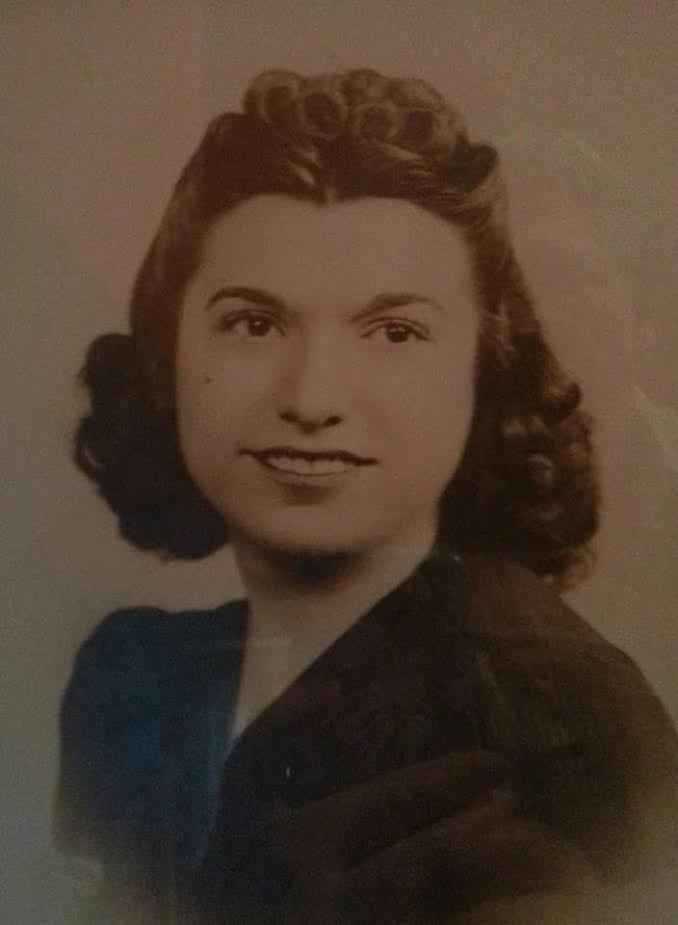
And she carries the gene. Her mother, my grandmother, probably carried it too, though she died very young, of breast cancer, long before I was born. I can only know her through stories, and pictures. We have a photo of her over the staircase in my parents house, and I can see just how much my mother resembled her, and I can see hints of her face in my own.
Because my family is very likely to lose our health insurance if the Trump regime succeeds in carrying out its plans (we are hoping ineptitude will triumph, through comedic irony) – I decided to request genetic testing, while I still had a chance to do something about it. Once the tech at the imaging center saw my paperwork on family history, she agreed. The process was remarkably simple: spit into a vial a few times. Fill out a form. Wait.
During the waiting period I talked to my doctor about possible options. Because I may be facing a long period of time without health care, in which the cost even of getting a mammogram could become prohibitive, and in which my family could be sunk perpetually into a swamp of debt should I require anything more extreme, my inclination was to go ahead and go the Angelina Jolie route: preventetive masectomy. The possibility of having my ovaries removed (the gene increases risk of ovarian cancer, too) I wasn’t ready to face, because the prospect of bringing on early menopause is a little daunting.
I got my email result a few days ago. It was such a simple, almost casual way to find out the answer, and I clicked on the link that would give me my answer with almost as little trepidation as I’d felt when taking the Pottermore Sorting Hat quiz (I’m Slytherin, by the way).
Negative. My test results were negative. Which, paradoxically, in this case is a positive thing. I’ve been walking around a little more lightly since then. It feels as though I somehow dodged a curse, but it also makes me sad, to think of those who didn’t.
Propounders of anti-semitic theories like to point to the suffering of the Jews as a “curse” for killing Christ, even though Christ was killed, historically, due to the collaborations of rigid religious leaders with colonizing imperial powers – and, theologically, by all of us. The “curse on the Jews” arises not from a special guilt born by our people, but because the spirit of sin and anti-christ continues to attack Jesus in his own person – in his own people.
But when I think about hereditary disease, and those who have not been as lucky as I am to escape carrying it, it does look a lot like a curse. Not the kind of curse that falls on you as a punishment, but the kind that descends for no reason, or because you made an innocent mistake: you plucked the white rose instead of the red. You opened the forbidden door. You fell asleep and let the candle burn down.
Stories of curses in fairy tales, and of fate in myths and legends, may seem superstitious to the rational modern, but they touch upon a reality that exists for everyone, even though in a liberal enlightenment civilization we are reluctant to admit it: this element of existence that is beyond our control, that we are “given” gifts for no good reason, not because of anything we have done to deserve them. Those who are suffering from illness, whether physical or mental, are often told to “be stong.” “Be a fighter.” This can be encouraging….or not. Because sometimes you realize that no amount of fighting will get you to the survival point.
Hereditary disease, or lack thereof, forces one to face this truth that much of who we become, what we do, how well we succeed, depends on things that are not only out of our hands, but may even be invisible or unknown to us. When my grandmother, a beautiful dark-haired young woman, a descendent of the ancient priestly tribe of Levi, met my grandfather for the first time, one lovely New York day on the Williamsburg Bridge – he was crossing with his friends from the Manhattan side, she with hers from the Brooklyn side – there was no sign to suggest that she was carrying her early death-sentence with her already. I am older now than she was when she died, and this is not due to anything I have done right. I have done pretty much everything wrong, as a matter of fact. “The rain falls on the just and the unjust.”
The science of genetics explains so many things about us: why we like cilantro, for instance (my mother hates it, but I love it, so maybe there’s a link there?). Some might feel terrified that as we learn more about genetics, this will undermine our concept of free will. But perhaps we have fetishized free will? Only God can ever be perfectly free, after all. The idea of freedom is really only applied to God analogously, so far is the divine from anything we label as “freedom” in human experience. We are contingent beings, limited in many ways. There are so many respects in whch our freedom is only up to a point, or respects in which no amount of exertion of the will can make a difference. The idea that we operate with a pure, scintillating freedom of the will except for in very special circumstances is actually rather hubristic. Certainly our intellects do not function that well. We understand only through shadows and glimpses of light; we rarely aspire to the Kierkegaardian purity of heart that “wills one thing.” I think Pope Francis understands this well, with his emphasis on our need for mercy, and his approach of gradualism in dealing with sinners who find themselves unable to snap their fingers and make themselves perfect. To know this is a fine antidote to Pelagianism. To know that much that we are, is what we have been given – both the joyful and the bleak – can be hard. But this, too, can be a gift.
image of her maternal grandmother, Shirley Solomon Lindell, from author’s collection
Previous Post

February 21, 2017
how should a christian respond to milo?
Next Post
February 27, 2017 talking to my child about privilege
Browse Our Archives
Select a Category abortion anti-semitism art Atwood Betrothed church clergy abuse coronavirus culture economics education environmentalism ethics faith family feminism gardening gun violence immigration Judaism literature MaddAddam New Pro Life Movement news pandemic personalism poem politics politics blue Pope Francis racism religion salvation sexuality social justice spirituality Station eleven Stephen King The Stand Trump Uncategorized war World Health Organization
Select a Month March 2021 February 2021 January 2021 December 2020 November 2020 October 2020 September 2020 August 2020 July 2020 June 2020 May 2020 April 2020 March 2020 February 2020 January 2020 December 2019 November 2019 October 2019 September 2019 August 2019 July 2019 June 2019 May 2019 April 2019 March 2019 February 2019 January 2019 December 2018 November 2018 October 2018 September 2018 August 2018 July 2018 June 2018 May 2018 April 2018 March 2018 February 2018 January 2018 December 2017 November 2017 October 2017 September 2017 August 2017 July 2017 June 2017 May 2017 April 2017 March 2017 February 2017 January 2017 December 2016 November 2016 October 2016 September 2016 August 2016 July 2016 June 2016 May 2016 April 2016 March 2016 February 2016
Follow Us!
TAKE THE
Religious Wisdom Quiz
What Christian group follows the "Watchtower" publication?
Select your answer to see how you score.
Pentecostals Baptists Seventh-day Adventists Jehovah’s Witnesses
Support this
Column


Related posts from suspended in her jar

Four Takeaways from Oprah’s Interview with the Duke...

Catholics Are De-Toxing From their Experiences With Traumatic...

How Has the Pandemic Changed Us? Has It...

Rush Limbaugh Would Never Have Succeeded In an...
TRENDING AT PATHEOS Catholic

Rejecting Doom: Christian Hope And Human Action
Christianity is a religion of hope. We are to have hope and...

It’s What Comes From Within Which Matters
One of the most difficult things for us to understand is why...

Why I Choose the Eucharist Over the Sermon
Choose the Eucharist, Not the Sermon What are we supposed to get...

5 Design Elements Found in Spiritually Rooted Homes
Putting Spirituality Into Home Decor Our homes are more than our living...

Credo: A Story of God Told with the...
About 10 years ago, I began to imagine a personal "Credo" that...

The Anatomy of Divine Revelation in Catholic Thought
The claim that God has made Himself known to human beings is...
view all Catholic blogs
Ad-Free & Subscriber Log-In Subscription Support
- About Us
- 2026 Calendar
- Videos
- Podcasts
- Library of World Religions
- Faith In Media Tracker
- Advertise With Us
- Write for Us
- Privacy Policy
- Terms of Service
- Do Not Sell My Data
- Contact Us
- Radiant Digital
- Manage Newsletter Subscriptions
- Unsubscribe From Notifications
- Sitemap
Copyright 2008-2026, Patheos. All rights reserved.
Subscription Support Ad-Free & Subscriber Log-In
Follow Patheos